


Pignata’s OAM Signals a New Era for Football Administration

In the Australian sporting landscape, administrative longevity is a rare commodity. The burnout rate for executives in the A-Leagues and state federations is notoriously high. It’s driven by the unique friction between commercial imperatives and grassroots politics. Consequently, the awarding of a Medal of the Order of Australia (OAM) to Football Tasmania CEO Tony Pignata is symbolic of more than individual recognition.

Pignata joins PFA founder Brendan Schwab, former Soccer Australia CEO Ian Holmes, and Alen Stajcic on this year’s Australia Day honour roll. However, Pignata offers a distinct blueprint for the modern sports executive. His trajectory moves from the banking sector to the Football Victoria boardroom, through high-pressure A-League franchises, and finally to the developing frontier of Tasmania.

A “Turnaround” Specialist

To understand Pignata’s executive philosophy, observers must look past the A-League. The mechanics of the Victorian Soccer Federation (VSF) in the mid-2000s tell the real story. Following the sudden departure of Damien Bown in 2004, Pignata inherited an organisation in crisis. Then-Chairman Manny Galanos described the body as being “on our hands and knees financially.”

Pignata leveraged a 17-year background in legacy financial institutions including NAB, AXA Australia, and HSBC. He applied corporate discipline to a chaotic sporting balance sheet. His tenure at the VSF (now Football Victoria) restored solvency and aggressively pursued commercial assets.

Pignata’s transition to the A-League demonstrated that these fundamental business principles could scale. His tenure across three clubs showed adaptability to different market conditions. Yet, his legacy remains inextricably linked to a singular, market-shifting transaction: the signing of Alessandro Del Piero.

In 2012, the A-League faced a relevance crisis. At its helm, Pignata executed a high-risk strategy that fundamentally altered the competition’s valuation. The Del Piero acquisition proved the league’s capacity to attract global brand equity. Pignata demonstrated that commercial viability requires bold capital investment backed by operational stability.

Bridging the “Old Soccer” Divide

Crucially, the OAM citation acknowledges a contribution that bridges the often-toxic divide between the “old soccer” NPL system and the “new football” professional era. Pignata is not a corporate outsider. His journey began as a junior at Salesian College and a player for Westall Inter and Box Hill Inter. He featured in the Reserves as the club ascended to the Premier League.

This “proximal” relationship with the grassroots gave him a unique license to operate. Long before the ubiquity of social media, Pignata engaged directly with stakeholders on public fan forums. He understood the importance of monitoring the digital pulse of its supporters when most administrators relied on press releases.

His unique ability to speak the language of both volunteer committee and corporate board drove organisational reforms in Victoria. He oversaw the rebranding to Football Federation Victoria and streamlined the V-League Academy by recruiting Eric Hollingsworth. His move to admit the Australian Institute of Sport (AIS) into the Premier League ensured elite youth talent had a vehicle for competitive match minutes. He prioritised technical development over short-term club politics.

The Tasmanian Mandate

Now 61, Pignata shows no signs of slowing down. His move to Football Tasmania in September 2023 signals a shift in the state’s ambition. Tasmania currently sits at a critical juncture, aggressively lobbying for A-League expansion and the requisite stadium infrastructure.

By appointing Pignata, Football Tasmania signalled to government partners that they are operationally ready for professionalisation. His presence de-risks the expansion proposition. He knows what a viable A-League licence looks like because he’s ran three of them.

His current focus on “high-performance pathways” addresses the state’s most pressing structural deficit: the talent drain to the mainland. Pignata’s mandate is to build an ecosystem where a Tasmanian junior sees a clear line of sight to professional football without leaving the state.

Ultimately, the OAM recognises a career defined by resilience and ROI. Pignata navigated the transition from the semi-pro era to the corporate demands of the A-League. He consistently delivered commercial growth and organisational stability.

“Football is more than a sport… it is a community, a pathway and a powerful connector,” Pignata said upon receiving the honour.

For the industry, Tony Pignata’s OAM is a benchmark. It rewards the “business of winning” off the pitch just as highly as the results on it. As he steers Football Tasmania toward a potential A-League future, the industry watches with interest. The “Pignata Effect” may yet deliver one final, historic expansion victory.


Previous ArticleNext Article

Finalissima 2026 Cancelled Following Alternative Date Rejections

Following discussions over rising global tensions and scheduling clashes, UEFA has cancelled the much-anticipated ‘Finalissima’ between Spain and Argentina.

No alternatives found

Organisers grew concerned as geopolitical tensions presented increasingly difficult obstacles ahead of the match scheduled on 27 March in Qatar. With such factors being unavoidable ahead of kick off next week, discussions took place to arrange an alternative date and location which accomodated both squads.

Despite several proposals and attempts to save the match, a solution could not be found, thus leaving UEFA and organising authorities in Qatar with no option but to cancel.

“It is a source of great disappointment to UEFA and the organisers that circumstances and timing have denied the teams of the chance to compete for the prestigious prize in Qatar,” said UEFA via official media release.

“With strong determination to save the important fixture, and despite the understandable difficulties of relocating a match of such importance at extremely short notice, UEFA explored other feasible alternatives but each ultimately proved unacceptable to the Argentinian Football Association.”

Alternative proposals included staging the match at the Santiago Bernabeu stadium (home to Real Madrid) with a 50:50 split fan allocation, playing over two legs (one in Madrid and one in Buenos Aires), or playing after the 2026 FIFA World Cup this summer.


Adapting to global circumstances

The news will, of course, come as a huge disappointment to those anticipating two juggernauts of world football going head-to-head in a match for the ages.

Furthermore, the cancellation will impact broadcasters, media crews, sponsors and organisers who will now miss out on coverage, content and exposure on football’s international stage. While the calendar sees one fewer game, teams of professionals behind the scenes endure major losses.

However, with football standing at the pinnacle of international popularity and exposure, adapting to global events and changing circumstances has become unavoidable.

While fans across the world were awaiting a grand final between the CONMEBOL Copa America 2024 and UEFA Euro 2024 champions, hosting the match in Qatar as scheduled became impossible.

Not merely because of logistics, but because the safety of fans and players will always remain the absolute priority.


Macca’s City Cup 2026: Providing the stage to perform in Victoria

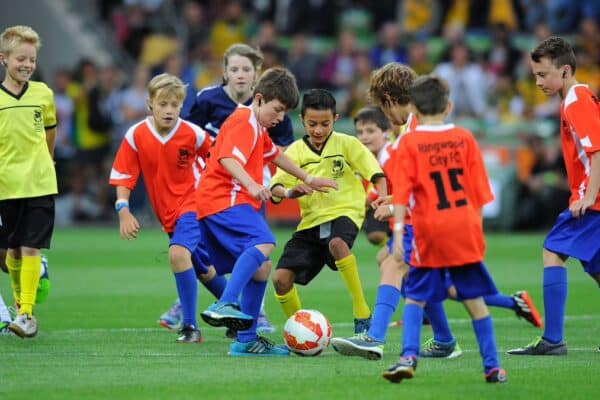
The fifth edition of the Macca’s City Cup, brought to the community by McDonald’s Victoria and Melbourne City FC, will unite thousands of players, supporters and coaches from across Victoria later this month.

Participation at an all-time high

Last year, the 2025 Macca’s City Cup was a resounding success for all players and participants involved.

Over a mere three days of action, the tournament saw 370 teams compete, bringing together over 4000 participants across 903 total games played. In fact, it became the biggest junior tournament in Australia.

Although these numbers are hugely impressive and prove that youth football participation is stronger than ever before, this year promises to go one step beyond.

With 384 teams registered, players and supporters alike can expect to see plenty of action and talent on display when the competition kicks off on Friday 27 March.

The chance to play and perform

The Macca’s City Cup is a shining display what truly matters when it comes to the grassroots game: encouragement, participation and competition. We spoke to Director of Australian Football Skool, Rolando Navas, about the tournament’s popularity and importance for young footballers in Victoria.

“We’ve been overwhelmed by the amount of teams that have registered this year,” said Director of Australian Football Skool, Rolando Navas.

“For this year, there will be 388 teams that we’ll admit into the competition. That equates to about over 5000 players,”

“We make an effort to make sure there are as many competitive games as possible, across all age groups. One of the really positive things I’ve seen is the number of girls teams that have joined this year – it’s been incredible.”


Combined community effort

Kids of all ages – boys and girls – will be arriving in their thousands for the biggest pre-season tournament in the state. The sheer number of participating teams is testament to AFS’ commitment to providing a supportive sporting environment year after year, as well as to the continued support from McDonald’s Victoria, Melbourne City FC and the City of Casey.

“We’re obviously using three venues this year: Casey Fields, Inez Hunter Reserve and Ramlegh Reserve,” Navas continued.

“They’re amazing fields and, without [the City of Casey], we wouldn’t be able to host such an event.”

It is thanks to the combined dedication of the organisers and partners that young footballers in Victoria will have the chance to showcase their ability once again and, most importantly, enjoy the sport they love the most.

Most Popular Topics

Editor Picks

Send this to a friend