



Okkulo: Training in the dark

Sports technology is advancing at a record pace, with new innovations constantly changing the game. Among the frontrunners in sport technology innovation is Okkulo, a United Kingdom-based company.

Since they were founded in 2018, their mission has been to transform the sporting world forever by setting new standards, breaking records, and creating heroes.

They aim to do this by turning the ‘marginal gains’ of athletes into ‘exceptional gains’. Okkulo recognises the importance of training the body, but they believe visual perception training is what propels athletes to new heights.  

Visual perception training is delivered via the Okkulo Vision Performance LAB. The chamber is 8m long, 6m wide and 3.4m high, giving users ample room for movement.

Inside, athletes undergo pre-training benchmarks and multi-week training cycles before they are evaluated using a proprietary Vision Board.

The training, which is almost entirely kinaesthetic, leads to significant improvements across visual pillars such as perception and reaction time.

Okkulo’s methods, which are backed by the science of light, have benefits off the pitch too. Their advanced light systems reduce stress and support mental health.

For this reason, Okkulo’s founder, Mel O’Connor, envisions a future where this technology becomes accessible for everyday use for the general public.

How it works

Okkulo optimises the neural pathways that connect the eyes and the brain, maximising the efficiency of the body’s visual and motor systems.

There are two specialised cells in the retina, called rods and cones, that detect light and convert it into signals that our brain interprets to provide vision.

These cells usually work separately, but Okkulo unlocks the ability for them to work simultaneously.

When they work together, visual processing pathways are significantly enhanced. The biological responses of the eyes and brain are slower under low-light environments.

Okkulo uses this to their advantage as training in these conditions forces the body to adapt by accelerating reaction times.

Athletes begin adapting to the ambient light levels within just three minutes of exposure.

30 minutes of training per week triggers adaptive plasticity, enhancing the athlete’s visual and cognitive performance under normal playing conditions.

Normal playing conditions feel slower; therefore, their perception of the world is significantly enhanced.

In essence, the rod and cone function is manipulated, causing the brain to rewire and the visual system to overperform.

Evidence and statistics

Independent scientific testing, conducted in partnership with Durham University, confirmed that the Okkulo can drastically improve physical performance.

Reaction speeds were boosted by up to 23%, while the velocity at which athletes can comfortably respond increased by 16%.

Another independent study by researchers from Europe and the United States also found the Okkulo system to offer several cognitive and visual improvements.

The study involved 24 professional football players, aged 18 to 30.

The participants trained using Okkulo’s chamber twice a week, while the control group performed identical drills under normal lighting conditions.

The findings are as follows:

  • 4% improvement in identifying moving targets
  • Recognition time improved by 17.2% (from 439.7 ms to 364.1 ms)
  • Sensory reaction time decreased by 17.2% (from 439.7 ms to 364.1 ms)
  • Motor reaction time decreased by 30.7% (from 255.8 ms to 177.3 ms)
  • Peripheral identification increased by 10.9% in accuracy and speed

Okkulo worked closely with the women’s Sunderland AFC team, in what the company calls a side project.

The team was struggling to compete in the season prior to Okkulo’s intervention, finishing second last in the league.

In the season with Okkulo implemented into their training routine, the girls finished third, with the goalkeeper winning the Golden Glove with 21 clean sheets.

Use in the Australian football ecosystem

With the exception of Leeds United and the Sunderland AFC women’s team, Okkulo’s product has not seen much use in elite football.

Despite this, research clearly demonstrates its strong potential to enhance cognitive and visual ability, optimising overall athletic performance.

As such, teams at the top of the Australian football ecosystem could benefit greatly from getting in early and partnering with Okkulo.

The A-League is behind the international standard in terms of quality, but technologies like this have the potential to help bridge that gap and elevate the players to a higher level.

Previous ArticleNext Article

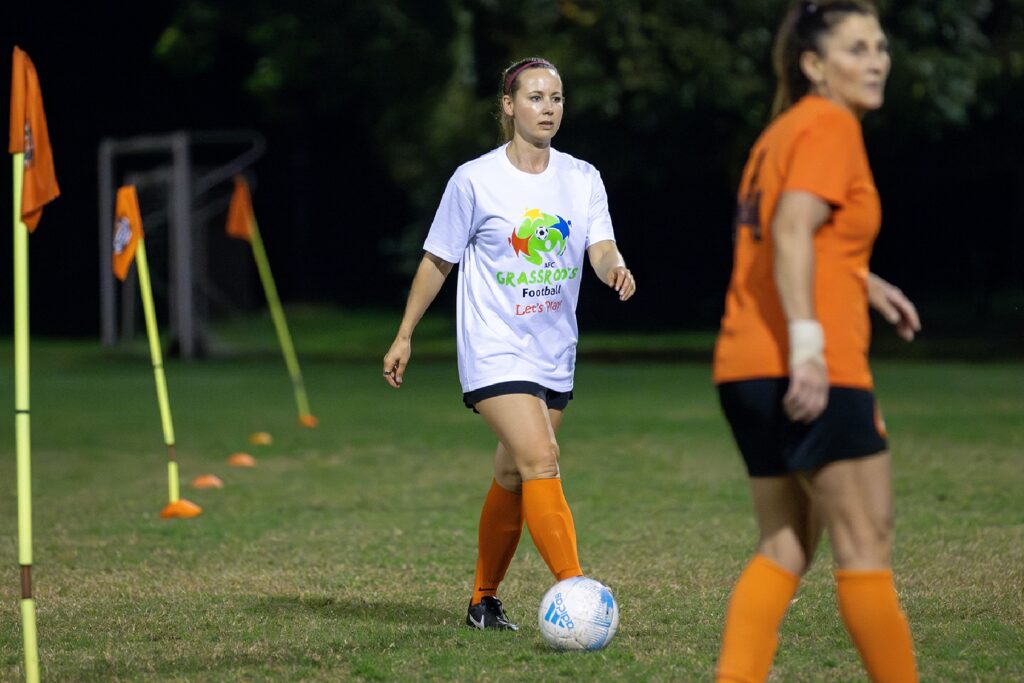
Community Spirit Shines on AFC Grassroots Football Day 2026

This week, Football Australia (FA) celebrated AFC Grassroots Football Day 2026, championing the people and communities who continue to hold up a safe, inclusive and supportive environment in the football landscape.

‘For all, for life’

In collaboration with Football NSW, Canterbury Football Association and community club, Balmain & District Football Club, the day reflected the very best of what football provides.

The event brought in participants of all ages – from 4-74 years-old – and reached a total of 400 people. Girls-only programs, all-abilities sessions and over-age football ensured all were catered for.

Such a diverse range of participants builds on a wider drive during FIFA World Football Week, which seeks to promote the sport not just as the dazzling lights of 100,000-seater stadiums, but as a way to foster community spirit and social development.

Furthermore, FA support through its Club Changer program was a welcome addition to the action, emphasising the organisation’s commitment to nurture a real love for the game across communities in Australia.

“Through Club Changer we support our clubs to provide a safe, fun and enjoyable environment where everyone is welcome; whether that be as a player, volunteer, referee or supporter,” explained National Program Manager Club Development at FA, Grace Lambourne.

“Everyone should feel they belong and are welcome to play, stay, and love the game.”


A welcome celebration

While the upcoming FIFA World Cup will no doubt inspire millions of future Socceroos and Matildas, events like the AFC Grassroots Football Day represent something beyond just inspiration.

It is a platform. An opportunity to express a love for football and to connect with others while doing so.

And connections between the professional and grassroots game is more important than ever if Australia is to nurture the next generation of talent.

This is particularly clear in the rise of women’s football across the nation. Since the FIFA Women’s World Cup, female participation rose by 32%, and registrations for the MiniTillies Program skyrocketed from 264 in 2023, to 1223 in 2024.

The professionals spark passion. But communities turn that passion into playing time.

That is why celebrating grassroots football – and the volunteers and families who sustain it – is a vital part of Australia’s football future. Together, FA and the AFC are creating strong foundations built on positivity, engagement, and inclusivity for all with a love for the beautiful game.

FA partners with Coca-Cola ahead of FIFA World Cup 2026

The two-year partnership will place the global soft-drink giants as the Official Supplier for Australia’s Men’s and Women’s senior national teams.


Global partner, global stage

As the Socceroos look to deliver performances on the pitch at this summer’s tournament, it is a move off the pitch which will capture the imagination of fans across the country.

Football Australia announced an exciting deal with Coca-Cola, designed to align the global reach of football – and of the brand itself – to unite and engage fans this summer as well as during the FIFA Women’s World Cup 2027.

Thus, through national campaigns featuring prize draws and the chance to access various rewards, Coca-Cola will help to drive passion and interest in upcoming major tournaments.

“This partnership brings together the global scale of Coca-Cola with the passion and reach of football in Australia, creating new opportunities to connect with fans across the country,” explained FA CEO, Martin Kugeler, via press release.

“The upcoming FIFA World Cup 2026 represents a key moment for the CommBank Socceroos, and the Coca-Cola campaigns will help bring supporters closer to the team through unique and engaging experiences.”

Furthermore, with the FIFA Women’s World Cup 2027 also set to enjoy similar campaigns by Coca-Cola, the partnership’s impact and reach will extend across both the men’s and women’s game.


Marketing power

As football continues to grow – both in financial power and population reach – collaborations with global brands are now an expected aspect of tournament build-ups.

The Royal Spanish Football Federation (RFEF) also struck a deal with fashion brand Loewe, set in place for the next four years. In a similar vein, England’s off-pitch teamwear will feature the marks of both Nike and Palace Skateboards, while France will receieve their prematch jersey from Nike and Jacquemus.

This is the state of the landscape. Aligning global brands and household names with a sport capable of reaching billions at once.

Values, reach and connecting with fans. Three key ingredients to a successful collaboration.

Such alignment is key to the partnership between FA and Coca-Cola, as recognised by Managing Director, Coca-Cola Europacific Partners, Orlando Rodriguez.

“For nearly 90 years, Coca-Cola has been a part of the fabric of Australian life – bring people together through shared moments,” said Rodriguez.

“Partnering with Football Australia reflects our continued commitment to connecting communities through experiences that unite the nation, with the CommBank Socceroos and Matildas at the heart of that.”

Most Popular Topics

Editor Picks

Send this to a friend