


Keisuke Honda’s venture capital secures $158M to back AI startups

Former Japanese soccer star Keisuke Honda has scored another win off the pitch, his venture capital firm, X&KSK Fund, has secured $158 million to invest in tech start-ups specialising in AI and cutting-edge business solutions.

Over 20 investors are supporting Honda’s fund, including prominent Japanese financial institutions like Sumitomo Mitsui Banking Corp, Nomura Holdings, and SBI Holdings. Notably, SBI Holdings and SBI Shinsei Bank have contributed a combined $20.46 million (¥2 billion), making them the fund’s largest stakeholders.

Shohei Yamada, a partner at SBI Investment, highlighted that the goal of this investment is to expand its network of international investors and promote Japanese start-ups. In Japan, where the number of so-called “unicorn” companies—those valued at over $1.61 billion—remains limited, this initiative represents a significant step forward for the local start-up ecosystem.

Keisuke Honda, known for his stellar performances at CSKA Moscow, AC Milan, and three consecutive World Cups, has been expanding his business ventures. Together with American actor Will Smith, he co-founded Dreamers VC. His goal is to create a “decacorn”—a private company valued at over $16.17 billion in Japan.

Honda is aware establishing a decacorn is rare in Japan, however, he is assertive it can be achieved.

“I’m aware that creating a decacorn in Japan is a very difficult challenge, but considering what the Japanese have already achieved, I believe it is possible,” he said via email interview.

The former AC Milan midfielder recognized that his soccer fame opens doors to profitable investment opportunities. He also pointed out that, unlike in the U.S., celebrities in Japan are typically reluctant to openly talk about their investments.

Although the number of start-ups in Japan is on the rise, the country still falls short in producing unicorns. A report from Japan’s Ministry of Economy, Trade, and Industry highlights that fostering start-up growth requires improved access to significant funding.

In 2022, Japanese start-ups raised a record ¥978.2 billion (10.01 billion AUD), but this figure dropped to ¥803.9 billion (8.22 billion AUD) in the following year. Despite the decline, it still represents a fivefold increase compared to 2014.

The X&KSK Fund seeks to back innovative projects and promote cutting-edge technologies. This initiative marks a significant milestone for Keisuke Honda and Japan’s emerging start-up ecosystem, bringing fresh momentum to its expansion.

Keisuke Honda’s involvement in the X&KSK Fund represents a significant shift in how athletes, especially football players, are positioning themselves within the broader business and tech world.

Historically, athletes, particularly in football, have often focused on careers post-retirement that include media ventures, sponsorships, or brand endorsements. However, Honda’s active role in venture capital, particularly in sectors like AI and tech innovation, signals a new wave of athlete entrepreneurs taking a more hands-on approach in shaping the future industries.

This shift is particularly important because football players, given their fame and influence, have the potential to leverage their personal brands to foster meaningful change within industries beyond sports.

Players such as Honda, who have gained global recognition, can access exclusive investment opportunities that might otherwise be difficult to reach for traditional investors.

By actively participating in initiatives like Dreamers VC, Honda is not just a figurehead—he’s an active contributor to the creation of business ecosystems that can have a lasting impact on both the tech industry and Japan’s start-up scene.

Moreover, for footballers, particularly those who achieve global success, such investments can be a smart way to secure long-term financial stability post-retirement, as they can often face a shorter career span.

The increased involvement of athletes in high-level investments allows them to diversify their portfolios and contribute to industries that influence the future of society. This trend is beginning to reshape how sports figures are perceived, from being athletes to being influential business leaders and investors.
Previous ArticleNext Article

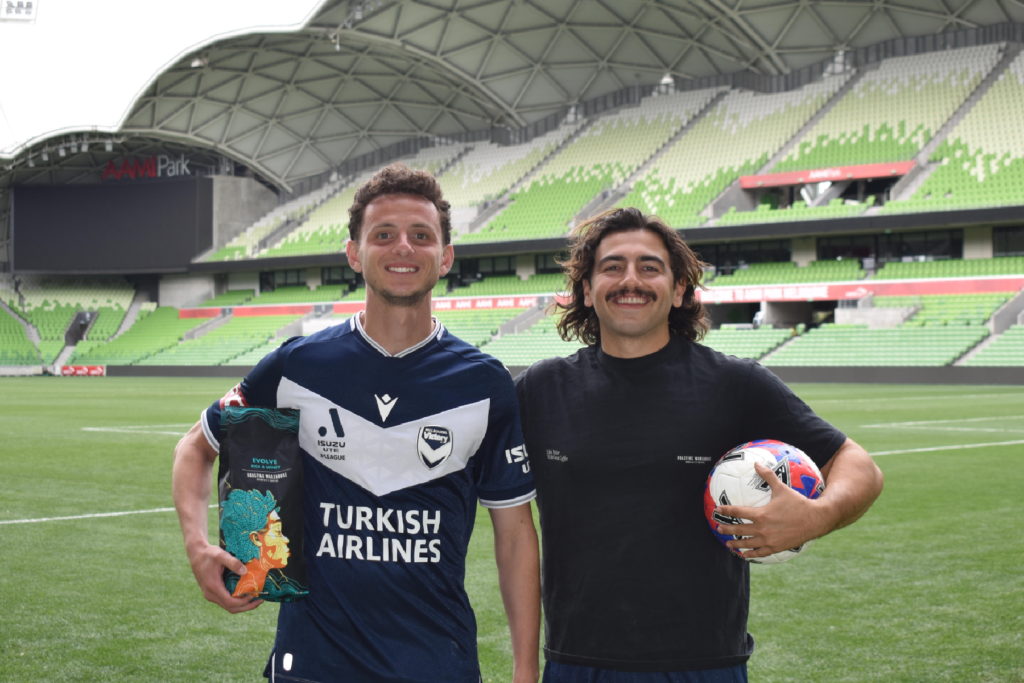
Victory unites with Roasting Warehouse in culture-led partnership

The Melbourne-based anf family-owned business will join the Victory family, uniting two institutions which represent the city’s culture and identity.

A partnership with local roots

As the newest partner of Melbourne Victory, Roasting Warehouse joins forces with a vital part of the city’s sporting landscape.

The club’s Managing Director, Caroline Carnegie, outlined why the partnership bears so much value to both parties.

“We are excited to collaborate with Roasting Warehouse, a community-oriented destination for high-quality coffee, proud of its foundations in Melbourne,” said Carnegie via official media release.

“Football and coffee sit at the epicentre of Melbourne’s culture. The two go hand-in-hand, consistently at the centre of the conversation that stirs Melburnians, which is no different to the conversation sport and Melbourne Victory stir in the State.”

Indeed, this is a partnership which combines the identity, passions and culture of an entire city, therefore giving it the foundations required for long-term, mutual success.

Representing the best of Melbourne

Both Victory and Roasting Warehouse are hugely successful in their respective industries. They are institutions with community-oriented philosphies, who pride themselves on craft and quality.

“We’re incredibly proud to partner with Melbourne Victory, a club that represents the heart, passion, and ambition of Melbourne,” revealed Roasting Warehouse Head of Brand, Alexander Paraskevopoulos.

“As a Melbourne-founded, family-run business, supporting a team that means so much to the local community feels very natural for us.”

Furthermore, through their high-quality blends, Roasting Warehouse will look to prepare Victory’s players and staff for high performances on the pitch as the seasons nears completion.

But this is about far more than just fueling athletes.

This is a partnership which embodies and unites two of Melbourne’s greatest strengths and cultural markers – a connection forged from the city’s very own DNA.


For more information about Roasting Warehouse, click here.

“20 Years Ahead”: The System Quietly Reshaping Korean Football

For all its consistency, Korean football has long carried an underlying tension.

On paper, it works. The national teams remain competitive, the player pool is technically sound, and the country continues to produce athletes capable of performing on the continental stage. But beneath that surface-level success, a more uncomfortable question has persisted about whether Korea has been simply maintaining its position while others evolve.

That question has driven the Korea Football Association (KFA) toward one of the most ambitious structural overhauls in modern football development: the Made in Korea (MIK) Project. Rather than focusing on short-term gains or isolated improvements, the initiative attempts to do something far more complex. It is rebuilding the foundations of how football is taught, understood and executed across the entire ecosystem.

Internally, the project has been described as having “brought Korean football 20 years ahead.” Whether that claim ultimately proves accurate remains to be seen, but what is already clear is the scale of the shift taking place.

From talent to system

The starting point was not talent, but structure. For years, concerns had been growing within Korean football circles about a lack of uniqueness in players, inconsistencies in long-term planning and an over-reliance on safe, risk-averse styles of play. The system, while producing disciplined and technically capable footballers, was not consistently producing players equipped to thrive in the most demanding environments. Environments such as Europe, where tempo, decision-making speed and adaptability define success.

Rather than attempting to patch these issues, the KFA chose to reimagine the system itself.

At the core of the MIK Project is the idea that high performance is not the result of individual excellence alone, but of an interconnected structure that allows that excellence to emerge consistently. Coaching, sports science, performance analysis, leadership and education are no longer treated as separate pillars, but as components of a single, integrated system designed to evolve continuously.

A new operating model

This philosophy is most clearly expressed through the project’s adoption of a cell-based operating model. In place of traditional hierarchies, the system is organised into small, cross-functional units, called “cells”. These cells are given autonomy over their work while remaining connected through shared frameworks and objectives. Each unit is responsible not only for delivery, but for learning, adapting and refining its approach on a constant cycle.

The intention is to bring decision-making closer to the pitch, allowing those working directly with players to respond faster and more effectively to the realities of the game. In an environment where marginal gains are often decisive, that speed of adaptation can be critical.

Closing the gap

Yet structure alone is not enough. The project is equally shaped by a clear-eyed assessment of where Korean football currently stands in relation to the world’s elite.

Comparative analysis has highlighted several consistent gaps: technical execution under pressure, the ability to operate at higher game speeds and effectiveness in decisive moments such as one-on-one situations. These are not deficiencies of talent, but of context. Korean players, while highly capable, have often developed within systems that prioritise control and precision over risk and spontaneity.

The consequence is a style that can become predictable under pressure.

Training for reality

To address this, the MIK Project has fundamentally shifted training methodology. Sessions are increasingly designed to replicate the intensity and unpredictability of real matches, placing players in situations where decisions must be made quickly, under pressure, and often in confined spaces. The focus is no longer on rehearsing ideal scenarios, but on preparing players for imperfect ones.

This approach reflects a broader philosophical shift that prioritises adaptability over perfection, and decision-making over repetition.

Evolving the Korean identity

Importantly, this evolution does not come at the expense of Korea’s existing strengths. Discipline, work ethic and technical proficiency remain central to the national identity. What the MIK Project seeks to do is build upon those foundations, combining them with the creativity, speed, and tactical awareness required at the highest level of the game.

It is, in many ways, an attempt to reconcile tradition with modernity.

A global ambition

The ambition underpinning the project is unmistakable. The KFA is not simply aiming to remain competitive within Asia, but to re-establish itself among the world’s leading football nations. That means producing players capable of not only reaching Europe, but succeeding there.

More than a project

What makes the MIK Project particularly compelling is that it does not present itself as a finished solution. Instead, it is designed as a system that evolves, adjusts and refines itself over time. In a sport where trends shift rapidly and competitive edges are constantly eroded, that capacity for continuous development may prove more valuable than any single innovation.

For other football nations, Korea’s approach offers an instructive case study. While many federations continue to debate philosophical direction, the KFA has committed to structural transformation, embedding its ideas not only in theory, but in practice.

Whether the project ultimately delivers on its boldest ambitions will depend on time, execution, and the unpredictable nature of the game itself. But one thing is already evident.

Korean football is no longer standing still.

Most Popular Topics

Editor Picks

Send this to a friend