



MLS soccer wraps up record season

The 2024 Major League Soccer regular season was the most successful for the American-based football competition yet. The regular season wrapped up in October and shattered several records, proving that the competition is in a healthy state and set up for long-term success.

More fans are consuming the MLS product than ever before, and it is experiencing year-over-year growth. Growing soccer in America has proven to be challenging, but the record-setting attendance highlights the breakthrough MLS is achieving.

The attendance average for the MLS season was the highest in the league’s history, at 23,234 fans per regular-season game, a +5.1% increase from the 2023 MLS regular season. In total, 11.4 million fans attended matches during the regular season, smashing the 2023 number of 10.9 million.

These figures will grow throughout the 2024 Audi MLS Cup Playoffs, from October 24th to December 7th. Based on their regular season numbers, MLS has projected that they will be in the top three across all soccer leagues globally in terms of attendance average after the 2024 Audi MLS Cup Playoffs, alongside the English Premier League and Bundesliga.

Due to the successful season, the league has experienced a 13% sponsorship revenue increase and a 13% club sponsorship revenue increase compared to the 2023 MLS season.

Ten out of the 29 clubs beat or tied their regular season attendance average, this statistic highlights communal growth beyond the Lionel Messi effect and keeps the league in a healthy spot going forward.

MLS social media grew faster in 2024 than the rival major men’s North American sports leagues, which consist of the National Basketball Association, Major League Baseball, and the National Hockey League.

  • MLS TikTok saw a 26% growth in followers
  • MLS YouTube saw a 21% growth in subscribers
  • MLS Instagram saw a 10% growth in followers

The MLS x Adidas Archive Collection was credited with huge financial success, and on July 16, 2024, the MLS retail store had its most successful day in history.

Beyond the American audience, MLS has been making waves in the European market. Attempts to expand the league overseas were pioneered by opening 800+ MLS retail stores across France, Spain, Germany, and other major European countries in partnership agreements with Primark and Bershka retail stores.

The broadcast deal between MLS and Apple TV, signed in 2022 for 10 years and worth 3.7 billion dollars, has injected valuable funds into the league to improve its overall product from broadcasting and on-field standpoints.

Apple TV, which broadcasts all MLS games, invites fans to easily access the league while airing MLS content beyond the live match broadcast. The investment has shown success since 2023, but fans have criticised the league for its match scheduling, Apple TV broadcasts in 100 countries, so the platform opportunity for MLS is substantial.

The mass financial figure has been credited with being a key reason why the league has been able to sign the likes of Lionel Messi, an 8-time winner of the Ballon d’Or and the captain of the 2022 FIFA World Cup-winning side Argentina.

The bigger picture for the MLS competition will be the continual rise of quality international players choosing to sign into the MLS and improving the match quality. The 2024 MLS season had a very successful summer transfer window, including star players Olivier Giroud, France’s all-time leading goal scorer, and Borussia Dortmund and Germany international Marco Reus.

Common fan complaints have been centred around the season’s kick-off in February and the Audi MLS Cup Playoffs finishing in December. The lengthy season means that the league is miserable to attend during winter from a fan’s perspective, the freezing and windy weather hurts the product, while thunderstorm delays have been common for the league in these cold months.

MLS games being played in Canada and Northeast America during the winter months will continue to jeopardise the product and growth of the sport.

Additionally, the gripes come from the lack of pauses throughout the 10-month season, which leads to a mass exodus of players from MLS teams during the international break, again hurting the product.

Given that the competition has 29 teams, broadcasting the matches in the evening on Saturdays and Wednesdays, with rare occasions when matches are played in other time slots, has made it challenging for football enthusiasts to follow the league as a whole.

Hosting games in earlier windows invites a family aspect to the matches, with Saturday/Sunday afternoon games working for the Premier League.

A huge positive of the Apple TV broadcasting deal is MLS 360, which takes fans all around the league with live coverage of the matchday. MLS 360 showcases the best action of every game, from goals to saves, play-by-play and analyst breakdowns of teams.

The analyst and play-by-play team consists of 60 people broadcasting in English and Spanish. Key football minds hosting the MLS 360 are Kevin Egan, Sacha Klejstan, Kaylyn Kyle, and Bradley Wright-Phillips.

As the MLS prepares for the 2024 Audi MLS Cup Playoffs, a recent change in playoff formatting kicked off in 2023 and proved to be a successful business model. The format was changed to include a best-of-three series with no ties and a mix of single individual knockout matches.

Also, allowing 19/29 MLS teams into the playoffs from a business standpoint meant more matches, more revenue, and more opportunities to grow the league as a whole.

Each MLS team has a fluid salary cap, this is to keep the league fair for all teams and give each team an equal opportunity to win on paper. There are ‘designated players’, such as Messi, who each team is allowed to sign even if it breaks the salary cap in an attempt to boost the league’s big-name talent. 

The absence of a regulation/promotion system and a player draft awarding lower-ranked teams with better talent is a welcome site for struggling teams to rebuild faster. This system improves the quality of the MLS competition and is a tool to prevent lopsided affairs. 

Garber has credited MLS teams’ business approach to investing in soccer-specific stadiums with the growth of team evaluations. Investing significant funding into building these stadiums for teams to risk relegating would harm the league and its revenue/team sponsorship. 

The 2026 FIFA World Cup in North America is gearing up to be a potential takeover opportunity for American soccer. MLS is expecting mass residual effects from this, similar to Australia and New Zealand hosting the 2023 Women’s FIFA World Cup.

The MLS’ business-savvy approach to running the league and ability to adapt to the sporting landscape surrounding it in an oversaturated sports market has worked in favour of the league. There’s a lot to be excited about looking at the future landscape for the MLS.

This league’s continual growth and development have fans in the box seat to enjoy some of the best football action in the world.

Previous ArticleNext Article

Tasmania’s State Budget Commits $350,000 to Football Facility Planning as $80 million Home of Football Moves Closer to Reality

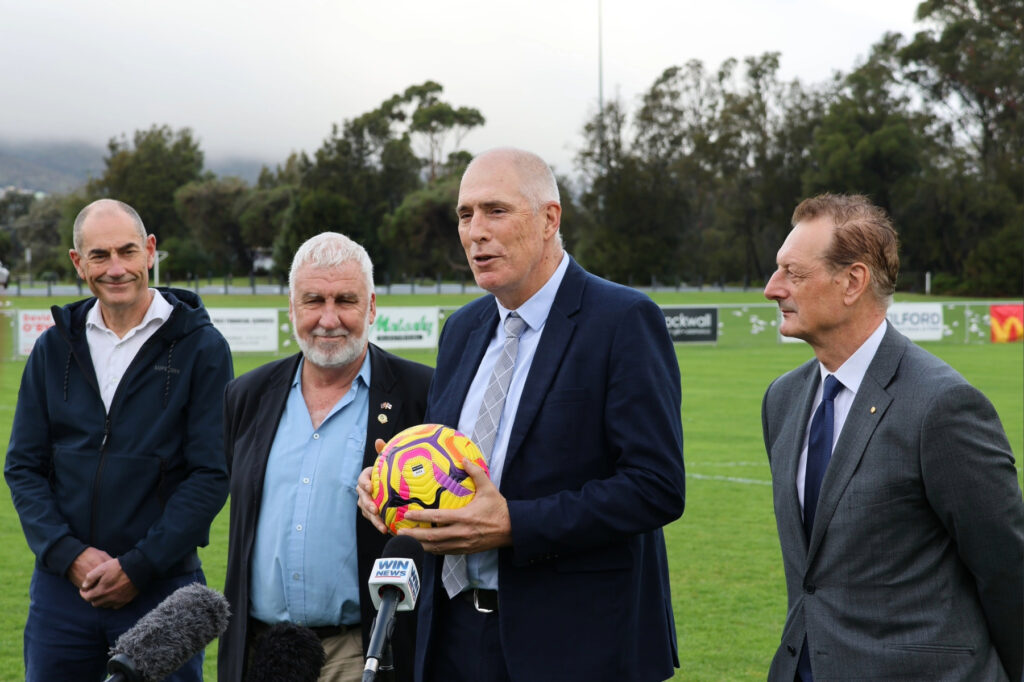
The Tasmanian State Government has committed $350,000 in seed funding for the next stage of planning for Football Tasmania‘s proposed Home of Football, moving the state’s most significant football infrastructure project closer to construction and signalling political recognition that demand for rectangular facilities in Tasmania has outgrown what currently exists.

The funding, confirmed in the 2026-27 State Budget handed down last week, sits within an almost $200 million investment in sport and recreation across the budget and forward estimates: a package the government describes as designed to improve access and participation for Tasmanians of all ages. The football allocation is listed alongside a $25 million community sporting infrastructure commitment at Kingborough, $12.5 million for new multipurpose indoor sporting courts at New Town Bay, and $8 million for the Domain Tennis Centre redevelopment.

Football Tasmania CEO Tony Pignata OAM welcomed the commitment as an acknowledgement of the structural gap between participation numbers and available infrastructure, particularly in the state’s south.

“The State Government’s delivery on this commitment shows us that they understand that demand outstrips supply for rectangular facilities in the state,” Pignata said. “If we are to continue to grow and develop future Matildas and Socceroos, we need to invest in the infrastructure our game so desperately needs.”

The proposed $80 million facility would include six full-sized pitches, three synthetic and three turf, alongside four five-a-side pitches, modern changerooms for both men and women, and dedicated training facilities. The design is intended to serve every level of the game simultaneously, from grassroots junior competitions through to national-level tournaments.

From grassroots to A-League ambitions

Football Tasmania has framed the facility’s purpose across a deliberately wide range of uses. At the community end, it would provide a permanent home for junior games and regional tournaments that currently compete for limited rectangular ground availability across the state. At the elite end, it would create the capacity to host national competitions including the Emerging Matildas and Emerging Socceroos Championships, flagship state competitions such as the Statewide Cup finals, and potentially, in time, an A-League team.

That last ambition is the most significant and the most distant. Pignata was measured but direct in raising it, situating a Tasmanian A-League club alongside the NBL’s Jackjumpers, the WNBL’s Jewels and the AFL’s Devils as part of the state’s emerging identity as a home for national sporting competition.

“One day down the track, we anticipate this would become home to our very own A-League team, so that we take our rightful place in the nation’s elite competition,” he said.

The pathway from planning funding to A-League admission is long and would require sustained political and commercial support well beyond the current commitment. But the logic is consistent with how football infrastructure investment has worked elsewhere in Australia. The facility comes first, and the competitive pathway follows. Without a purpose-built ground that meets the standards required for elite competition, the conversation about an A-League team cannot begin in earnest.

The equity dimension

The inclusion of modern women’s and men’s changerooms in the facility’s design carries more weight than it might appear. Community and semi-professional football facilities across Australia have historically been built to male standards, with women’s changerooms added as afterthoughts or not included at all. That inadequacy has been consistently identified as a barrier to female participation and to the hosting of women’s competitions at venues that cannot accommodate them properly.

A purpose-built facility that treats women’s infrastructure as a design requirement rather than a retrofit positions the Home of Football to serve the growth of women’s football in Tasmania in a way that existing facilities cannot. The state recorded 41,395 registered football participants in 2025, a number that has been growing and that the current rectangular facility stock was not built to support at this scale.

Additionally, the government’s Ticket to Play program, which provides eligible children with two vouchers worth up to $100 each for sporting participation, and the Ticket to Wellbeing program offering $100 vouchers to eligible seniors, represent indirect but meaningful support for football participation across the state’s communities.

Pignata also acknowledged outgoing Football Tasmania President Bob Gordon, who he said had dedicated almost a decade to the organisation and had been instrumental in lobbying for this and other facilities across the state.

The $350,000 planning commitment is a beginning. The $80 million facility it is intended to progress remains subject to further government investment and development approval.

Community Spirit Shines on AFC Grassroots Football Day 2026

This week, Football Australia (FA) celebrated AFC Grassroots Football Day 2026, championing the people and communities who continue to hold up a safe, inclusive and supportive environment in the football landscape.

‘For all, for life’

In collaboration with Football NSW, Canterbury Football Association and community club, Balmain & District Football Club, the day reflected the very best of what football provides.

The event brought in participants of all ages – from 4-74 years-old – and reached a total of 400 people. Girls-only programs, all-abilities sessions and over-age football ensured all were catered for.

Such a diverse range of participants builds on a wider drive during FIFA World Football Week, which seeks to promote the sport not just as the dazzling lights of 100,000-seater stadiums, but as a way to foster community spirit and social development.

Furthermore, FA support through its Club Changer program was a welcome addition to the action, emphasising the organisation’s commitment to nurture a real love for the game across communities in Australia.

“Through Club Changer we support our clubs to provide a safe, fun and enjoyable environment where everyone is welcome; whether that be as a player, volunteer, referee or supporter,” explained National Program Manager Club Development at FA, Grace Lambourne.

“Everyone should feel they belong and are welcome to play, stay, and love the game.”


A welcome celebration

While the upcoming FIFA World Cup will no doubt inspire millions of future Socceroos and Matildas, events like the AFC Grassroots Football Day represent something beyond just inspiration.

It is a platform. An opportunity to express a love for football and to connect with others while doing so.

And connections between the professional and grassroots game is more important than ever if Australia is to nurture the next generation of talent.

This is particularly clear in the rise of women’s football across the nation. Since the FIFA Women’s World Cup, female participation rose by 32%, and registrations for the MiniTillies Program skyrocketed from 264 in 2023, to 1223 in 2024.

The professionals spark passion. But communities turn that passion into playing time.

That is why celebrating grassroots football – and the volunteers and families who sustain it – is a vital part of Australia’s football future. Together, FA and the AFC are creating strong foundations built on positivity, engagement, and inclusivity for all with a love for the beautiful game.

Most Popular Topics

Editor Picks

Send this to a friend