



The Queensland Election: the promises for the sporting community

Queenslanders will go to the voting booths on October 26th, as the political campaigns ramp up for the final weeks, below are the outlined sporting election promises from major parties.

A big issue for voters at this year’s election is the growing development for the 2032 Olympic and Paralympic games and the expensive ordeal that comes with hosting one of the world’s biggest sporting events.

Outlined below are the promises and plans made by the differing parties.

Queensland Labor Party

The Queensland Labor Party is focused on the 2022 Activate! Queensland Strategy Accelerated its 5-year plan to 2025 and has recently brought out several sporting grants for next year to assist Queenslanders in grassroots sport.

The Minor Infrastructure Fund utilises 45 million dollars to make local sports grounds safe, easily accessible and encourages more inclusivity in the sporting environment.

Fair play vouchers under the new premier Steven Miles have been revamped with vouchers being upgraded from $150 to $200 to deal with the cost-of-living crisis. The Number of vouchers has also been upgraded number from 50,000 to up to 200,000.

The Community and Recreational Assets Recovery and Resilience Program, assisted by the federal government is a 75-million-dollar project to help sporting facilities damaged by the natural disasters of 2021-22.

The Labor party made headlines when it was decided that it wouldn’t build new venues for the 2032 Olympics, however, they did invest to restructure current venues.

Liberal National Party of Queensland (LNP)

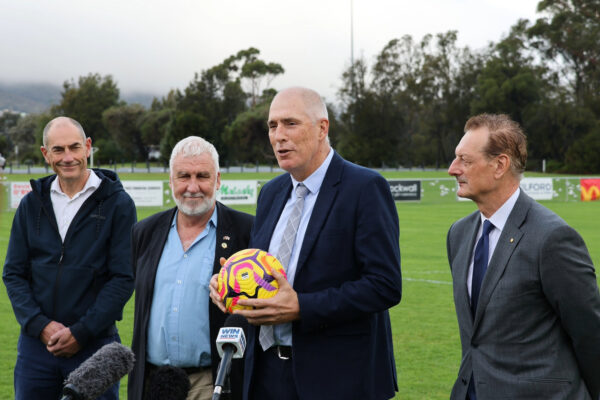
Recently the Liberal party leader at Pine Rivers Football Club committed to investing 3.8 million dollars to the local facility. This launched the party’s proposed sports program Games On!

Up to 250 million dollars dedicated to grassroots sporting clubs up to the 2032 Olympics. This funding will help deliver new or upgraded fields and courts, clubhouses, changerooms, or lighting.

David Crisafulli running state premier for the LNP has also said they will do a 100-day review on the infrastructure for the Olympic games and if there is a need for private and public funding for a new stadium for the Olympics.

The Queensland Greens

The Greens have been more vocal about sporting options announcing a $2.53 billion sporting package aimed at getting every young Queenslander into the game.

The Free Season pass plan will offer every Queenslander under 18 one free sporting program and a $150 equipment bonus costing $381 million on a four-year program.

Local sporting clubs are set to receive a major boost with $25,000 annual grants for registered clubs. The Greens are investing $50 million yearly to accommodate an expected surge of 110,000 new players.

Additionally, 200 million dollars will be dedicated to securing new sporting fields, with a strategic focus on flood-prone areas and high-growth suburbs facing space shortages.

Overall, all parties mentioned have delivered a range of plans to continue to support the sporting community in Queensland.

The Labor Party, as the current government is maintaining their original strategy from years past till 2025, more expansive plans will have to come later, though not expressing them leaves questions for their future endeavours.

The Liberals have announced their major funding but haven’t presented the promise with much detail to the public, it’s an exciting endeavour and if they win the majority in the coming election, the public will demand more understanding of how this funding will work out.

The Greens have outlined a comprehensive strategy to help sport but their position as a minor party puts them in a difficult place for gaining any power to deliver.

Elections at the state level focus on the big issues at heart and sport, especially football, has many times taken the backseat.

However, football, the state’s most participated sport, holds great importance in the local communities and their reliance on government funding does not go unnoticed by the general public.

With the Olympic games putting the spotlight on the state, will these parties keep their promises to promote Queensland sports and football? Time will tell.

Previous ArticleNext Article

Tasmania’s State Budget Commits $350,000 to Football Facility Planning as $80 million Home of Football Moves Closer to Reality

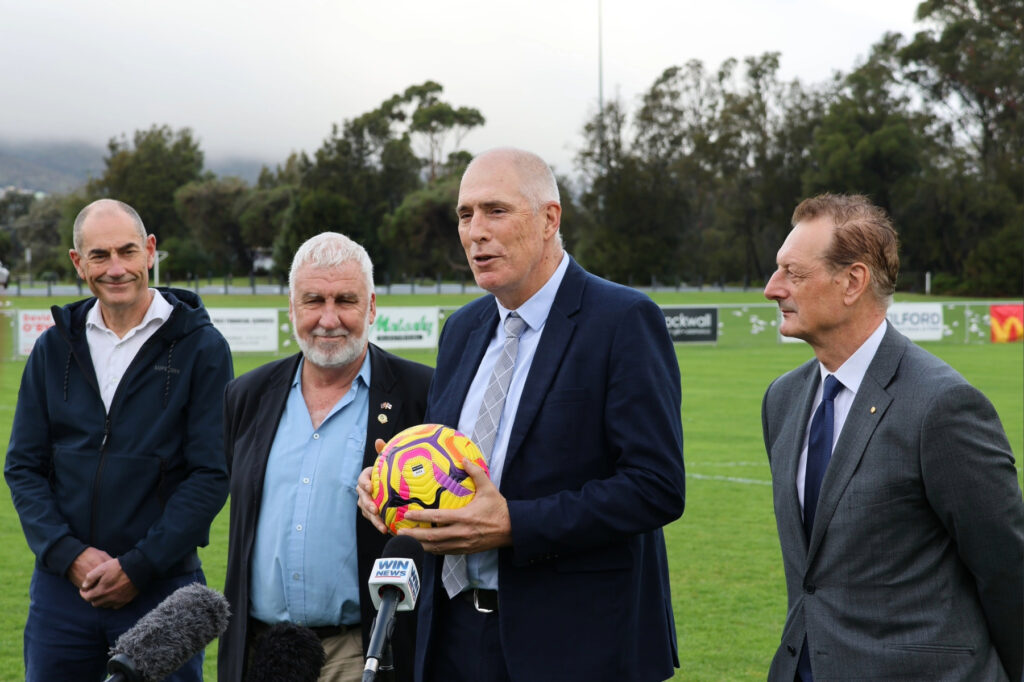
The Tasmanian State Government has committed $350,000 in seed funding for the next stage of planning for Football Tasmania‘s proposed Home of Football, moving the state’s most significant football infrastructure project closer to construction and signalling political recognition that demand for rectangular facilities in Tasmania has outgrown what currently exists.

The funding, confirmed in the 2026-27 State Budget handed down last week, sits within an almost $200 million investment in sport and recreation across the budget and forward estimates: a package the government describes as designed to improve access and participation for Tasmanians of all ages. The football allocation is listed alongside a $25 million community sporting infrastructure commitment at Kingborough, $12.5 million for new multipurpose indoor sporting courts at New Town Bay, and $8 million for the Domain Tennis Centre redevelopment.

Football Tasmania CEO Tony Pignata OAM welcomed the commitment as an acknowledgement of the structural gap between participation numbers and available infrastructure, particularly in the state’s south.

“The State Government’s delivery on this commitment shows us that they understand that demand outstrips supply for rectangular facilities in the state,” Pignata said. “If we are to continue to grow and develop future Matildas and Socceroos, we need to invest in the infrastructure our game so desperately needs.”

The proposed $80 million facility would include six full-sized pitches, three synthetic and three turf, alongside four five-a-side pitches, modern changerooms for both men and women, and dedicated training facilities. The design is intended to serve every level of the game simultaneously, from grassroots junior competitions through to national-level tournaments.

From grassroots to A-League ambitions

Football Tasmania has framed the facility’s purpose across a deliberately wide range of uses. At the community end, it would provide a permanent home for junior games and regional tournaments that currently compete for limited rectangular ground availability across the state. At the elite end, it would create the capacity to host national competitions including the Emerging Matildas and Emerging Socceroos Championships, flagship state competitions such as the Statewide Cup finals, and potentially, in time, an A-League team.

That last ambition is the most significant and the most distant. Pignata was measured but direct in raising it, situating a Tasmanian A-League club alongside the NBL’s Jackjumpers, the WNBL’s Jewels and the AFL’s Devils as part of the state’s emerging identity as a home for national sporting competition.

“One day down the track, we anticipate this would become home to our very own A-League team, so that we take our rightful place in the nation’s elite competition,” he said.

The pathway from planning funding to A-League admission is long and would require sustained political and commercial support well beyond the current commitment. But the logic is consistent with how football infrastructure investment has worked elsewhere in Australia. The facility comes first, and the competitive pathway follows. Without a purpose-built ground that meets the standards required for elite competition, the conversation about an A-League team cannot begin in earnest.

The equity dimension

The inclusion of modern women’s and men’s changerooms in the facility’s design carries more weight than it might appear. Community and semi-professional football facilities across Australia have historically been built to male standards, with women’s changerooms added as afterthoughts or not included at all. That inadequacy has been consistently identified as a barrier to female participation and to the hosting of women’s competitions at venues that cannot accommodate them properly.

A purpose-built facility that treats women’s infrastructure as a design requirement rather than a retrofit positions the Home of Football to serve the growth of women’s football in Tasmania in a way that existing facilities cannot. The state recorded 41,395 registered football participants in 2025, a number that has been growing and that the current rectangular facility stock was not built to support at this scale.

Additionally, the government’s Ticket to Play program, which provides eligible children with two vouchers worth up to $100 each for sporting participation, and the Ticket to Wellbeing program offering $100 vouchers to eligible seniors, represent indirect but meaningful support for football participation across the state’s communities.

Pignata also acknowledged outgoing Football Tasmania President Bob Gordon, who he said had dedicated almost a decade to the organisation and had been instrumental in lobbying for this and other facilities across the state.

The $350,000 planning commitment is a beginning. The $80 million facility it is intended to progress remains subject to further government investment and development approval.

FA partners with Coca-Cola ahead of FIFA World Cup 2026

The two-year partnership will place the global soft-drink giants as the Official Supplier for Australia’s Men’s and Women’s senior national teams.


Global partner, global stage

As the Socceroos look to deliver performances on the pitch at this summer’s tournament, it is a move off the pitch which will capture the imagination of fans across the country.

Football Australia announced an exciting deal with Coca-Cola, designed to align the global reach of football – and of the brand itself – to unite and engage fans this summer as well as during the FIFA Women’s World Cup 2027.

Thus, through national campaigns featuring prize draws and the chance to access various rewards, Coca-Cola will help to drive passion and interest in upcoming major tournaments.

“This partnership brings together the global scale of Coca-Cola with the passion and reach of football in Australia, creating new opportunities to connect with fans across the country,” explained FA CEO, Martin Kugeler, via press release.

“The upcoming FIFA World Cup 2026 represents a key moment for the CommBank Socceroos, and the Coca-Cola campaigns will help bring supporters closer to the team through unique and engaging experiences.”

Furthermore, with the FIFA Women’s World Cup 2027 also set to enjoy similar campaigns by Coca-Cola, the partnership’s impact and reach will extend across both the men’s and women’s game.


Marketing power

As football continues to grow – both in financial power and population reach – collaborations with global brands are now an expected aspect of tournament build-ups.

The Royal Spanish Football Federation (RFEF) also struck a deal with fashion brand Loewe, set in place for the next four years. In a similar vein, England’s off-pitch teamwear will feature the marks of both Nike and Palace Skateboards, while France will receieve their prematch jersey from Nike and Jacquemus.

This is the state of the landscape. Aligning global brands and household names with a sport capable of reaching billions at once.

Values, reach and connecting with fans. Three key ingredients to a successful collaboration.

Such alignment is key to the partnership between FA and Coca-Cola, as recognised by Managing Director, Coca-Cola Europacific Partners, Orlando Rodriguez.

“For nearly 90 years, Coca-Cola has been a part of the fabric of Australian life – bring people together through shared moments,” said Rodriguez.

“Partnering with Football Australia reflects our continued commitment to connecting communities through experiences that unite the nation, with the CommBank Socceroos and Matildas at the heart of that.”

Most Popular Topics

Editor Picks

Send this to a friend