



NWSL’s groundbreaking CBA highlights ALW’s growing gap

Mary Fowler - Women's World Cup 2023

The National Women’s Soccer League (NWSL) has confirmed a major update to its collective bargaining agreement (CBA) with players, effective until 2030.

This move to abolish the draft was expected with the NWSL competing with European leagues for talent and growing at an extraordinary rate, leaving them to focus more on player welfare.

Key changes in the new CBA include:

Draft System Abolished: The NWSL will no longer use a draft system, making it the first major U.S. sports league to do so. This means players will have more control over their team choices.

Revenue Sharing and Salary Cap: The salary cap will increase significantly, from $3.3 million in 2025 to at least $5.1 million by 2030. Players will also benefit from a new revenue-sharing model that ties their salaries to the league’s media and sponsorship income.

Improved Player Benefits: The minimum salary will rise from $48,500 to $82,500 by 2030. All player contracts will now be guaranteed. Additional benefits include expanded parental leave, childcare support, mental health services, and access to more health professionals.

Travel and Commercial Opportunities: Teams will have more charter flight options, and the league will commercialise player performance data. Players will also be more accessible to fans and media, and the number of games per season may increase.

Overall, these changes aim to improve player autonomy, compensation, and support while aligning the NWSL with global standards for women’s football.

Comparison to the A-League Women’s structure

The lack of professionalism in the A-League Women’s competition is a stark contrast to the NWSL’s incredible rise, and while it’s unfair to compare one for one in terms of money, the foundations of its success hinged on its ability to pay players properly in the early doors of its existence.

In the 2023/24 season, the minimum wage for ALW players increased to $25,000 by virtue of the extended season, which went to a full home-and-away schedule for the first time.

Players were typically contracted for 35 weeks for a 22-round regular season, with four extra weeks for finals, factoring in preseason training.

The PFA survey conducted an important survey at the end of last season which found many players unhappy with the pay disparity to the A-League Men’s, failing to provide enough remuneration for players to live.

In the survey, 66% of respondents said $60,000 a year would enable them to put 100 per cent focus into their football career whilst 3 in every 5 (60%) claimed to have a second job other than their football, 46% of the players who worked a second job put more than 20 hours in a week at their other occupation.

By contrast, only 15% of A-League Men players were doing some work outside of playing this season, and 93% of those worked less than ten hours per week.

This lack of professionalism has recently forced the hand of top ALW talent like Macey Fraser, Courtnee Vine and Charlotte McLean who all made the move this winter to the NWSL, leaving behind a fair drop in talent for the domestic competition.

A reminder that in the Matildas World Cup squad, every single player had started their career in the A-League Women’s competition, and it continues to lack the investment required to truly grow.

What is required for the sport to grow and for players to develop properly in this country is better standards for player welfare, giving top talent a reason to play domestically and growing the game in its own backyard.

Without this, the league will continue to be a stepping stone into Europe or the US with the talent pool suffering over here, which in turn stagnates the marketability of a league that should be growing rapidly following an incredible 2023 FIFA WWC.
Previous ArticleNext Article

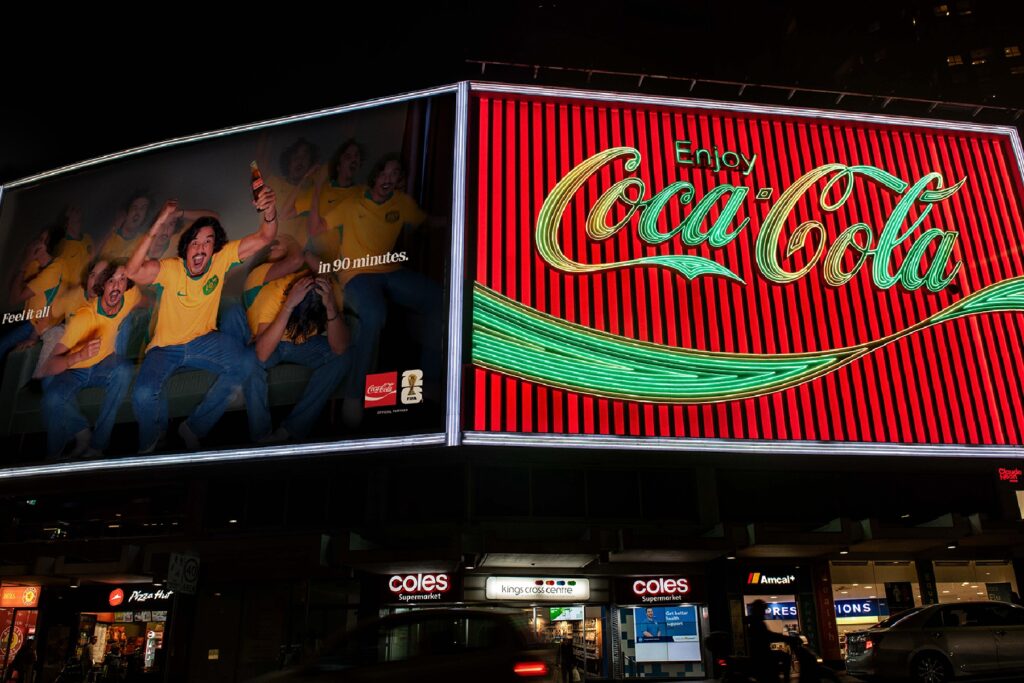
FA partners with Coca-Cola ahead of FIFA World Cup 2026

The two-year partnership will place the global soft-drink giants as the Official Supplier for Australia’s Men’s and Women’s senior national teams.


Global partner, global stage

As the Socceroos look to deliver performances on the pitch at this summer’s tournament, it is a move off the pitch which will capture the imagination of fans across the country.

Football Australia announced an exciting deal with Coca-Cola, designed to align the global reach of football – and of the brand itself – to unite and engage fans this summer as well as during the FIFA Women’s World Cup 2027.

Thus, through national campaigns featuring prize draws and the chance to access various rewards, Coca-Cola will help to drive passion and interest in upcoming major tournaments.

“This partnership brings together the global scale of Coca-Cola with the passion and reach of football in Australia, creating new opportunities to connect with fans across the country,” explained FA CEO, Martin Kugeler, via press release.

“The upcoming FIFA World Cup 2026 represents a key moment for the CommBank Socceroos, and the Coca-Cola campaigns will help bring supporters closer to the team through unique and engaging experiences.”

Furthermore, with the FIFA Women’s World Cup 2027 also set to enjoy similar campaigns by Coca-Cola, the partnership’s impact and reach will extend across both the men’s and women’s game.


Marketing power

As football continues to grow – both in financial power and population reach – collaborations with global brands are now an expected aspect of tournament build-ups.

The Royal Spanish Football Federation (RFEF) also struck a deal with fashion brand Loewe, set in place for the next four years. In a similar vein, England’s off-pitch teamwear will feature the marks of both Nike and Palace Skateboards, while France will receieve their prematch jersey from Nike and Jacquemus.

This is the state of the landscape. Aligning global brands and household names with a sport capable of reaching billions at once.

Values, reach and connecting with fans. Three key ingredients to a successful collaboration.

Such alignment is key to the partnership between FA and Coca-Cola, as recognised by Managing Director, Coca-Cola Europacific Partners, Orlando Rodriguez.

“For nearly 90 years, Coca-Cola has been a part of the fabric of Australian life – bring people together through shared moments,” said Rodriguez.

“Partnering with Football Australia reflects our continued commitment to connecting communities through experiences that unite the nation, with the CommBank Socceroos and Matildas at the heart of that.”

Geelong Regional Football Hub vision one step closer to reality

A process five years in the making, the Geelong Regional Football Hub (GRFH) will now build its home at Sutcliffe Reserve in Corio.

A major advancement

The project promises to be a major boost for the football community in Victoria’s west.

But the approval isn’t just about addressing the current issues facing players in and around Geelong (with just one football pitch found per 6,971 people), it symbolises an all-important promise to players, coaches and supporters:

A promise to invest, support and grow.

So now, following an extensive process of potential site assessments and council approvals, Football Victoria (FV) will prepare to lay the physical foundations at Sutcliffe Reserve in Corio – ten minutes away from Geelong CBD.

“This is a brilliant result for the sport in Victoria and the start of something truly exciting for football in Geelong and the surrounding area,” said FV CEO, Dan Birrell, via press release.

But despite the obvious anticipation over site approval, there remains one more bridge to cross to bring this project from blueprint to building block: securing funding.


What is the GRFH?

Beyond a mere community football centre, the GRFH will become a world-class hub for playing opportunities, development pathways and venue for several of FV’s most popular competitions.

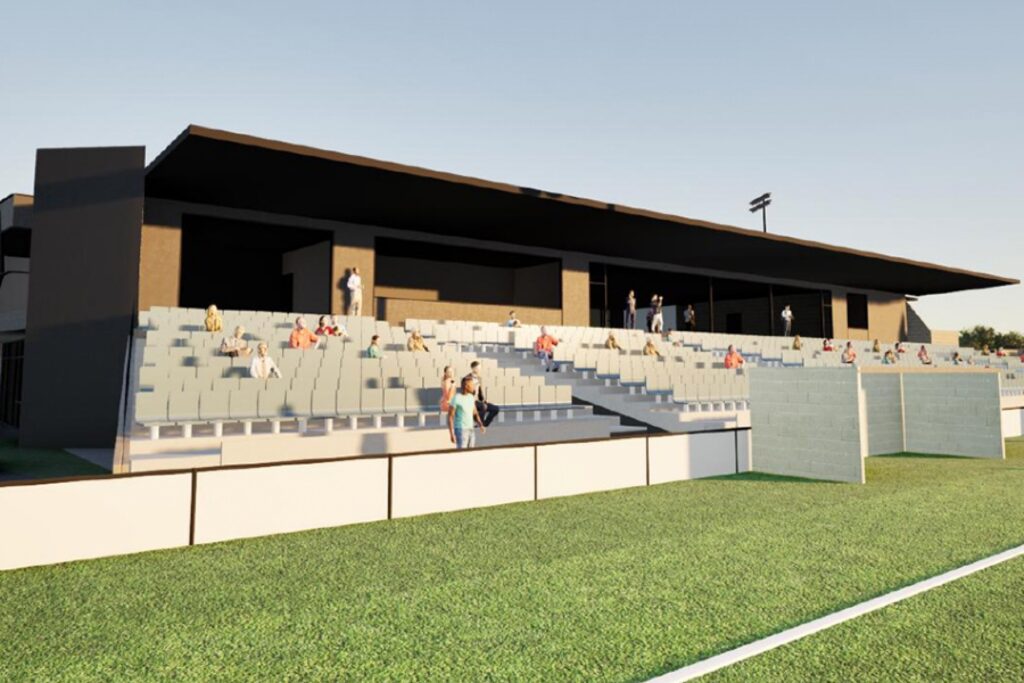
The proposed site will include five pitches, of which two will boast seated stands, as well as two pavilions, social spaces, kitchen and bar areas, media spaces, and facilities for players and match officials.

Such extensive, thorough infrastructure will therefore ensure the site can host an array of competitions for players across the landscape to showcase their talent. From supporting everything from school competitions to NPL VIC Men’s and Women’s games, the GRFH will be a place for player growth, opportunity and community engagement with the beautiful game.

And as Geelong Mayor, Stretch Kontelj, highlighted, the current demand requires investment of this nature as soon as possible.

“With more than 7,370 registered players across the Geelong region, the scale of demand is undeniable. A regional football hub would be genuinely transformational,” Kontelj said via press release.

“It would drive participation across all genders, abilities and levels of the game, strengthen education and development pathways, attract major events and tournaments and deliver lasting social and economic benefits for Geelong and the broader region.

The demand is there. The support is unwavering.

All that remains is the financial backing to bring about real, tangible results for those driving this vision forward.

Most Popular Topics

Editor Picks

Send this to a friend