




Stan Lazaridis – Taking Perth Back to the Glory Days

In March 2024, Perth Glory made a significant personnel decision by appointing former Socceroo great, Stan Lazaridis, as its Football Director.

After a challenging season in 2023/24 when Glory was placed in administration, the cobwebs were removed with the purchase of the club by the Pelligra Group.

It was none other than Harry Redknapp, the legendary West Ham manager, who witnessed the talents of the flying wingback on a preseason tour Downunder in May, 1995 and immediately penned Lazaridis’ signature.

A distinguished career followed from 1995 to 2006 when he played 260 league matches for West Ham and Birmingham City, while becoming a crowd favourite with his brilliant and penetrating runs out of defence which made even the toughest opponents cringe with fear.

Lazaridis was also a mainstay for the Socceroos, appearing in 60 internationals from 1993-2006 and fulfilling his greatest moment as part of the squad which qualified for the World Cup Finals in West Germany after a 32-year absence.

However, Stan Lazaridis faces a new challenge in his new role at Perth Glory after their rock bottom performance last season.

Nevertheless, if anybody can make it happen, it’s the mild mannered and creative thinker who knows how critical this season is for A-League football in Perth.

In this interview with Roger Sleeman, Stan Lazaridis talks about his new role, the patient rebuilding of the club under the watchful eye of new owner Ross Pelligra and the dawn of a new era for the once great club.

Stan Lazaridis addresses the media as Football Director. (Photo by Paul Kane/Getty Images)

ROGER SLEEMAN

What is your feeling after coming back into the game after an absence of 11 years?

STAN LAZARIDIS

It feels Iike I’m starting all over again when I was a player because I never thought I’d ever get another opportunity again in Perth.

I was almost resigned to this impasse but after meeting the new Board and owners, it just fell into place.

When you’re out of the game you miss it so much and you wonder to yourself how your approach could’ve been different.

I can really thank Marco Bresciano and Vince Grella but also the director, Jason Bon Tempo, who played a major part in my appointment.

It was Bon Tempo who facilitated my introduction to Ross Pelligra and after our first meeting, the new owner remarked it’s almost like I know you well and know all about you.

Significantly, Pelligra is trusting me with his money and granted me the power to achieve the best outcomes for the club.

Marco Bresciano and Stan Lazaridis after the 2-2 draw in the FIFA World Cup Germany 2006 Group F match between Croatia and the Socceroos. (Photo by Robert Cianflone/Getty Images)

R.S.

What is Ross Pelligra’s commitment to the club?

S.L.

He’s a very passionate man and a winner. He started business at a young age when he was pouring concrete at 13, so he earned money the hard way and learned to value it more.

Apart from his investment in real estate, his company owns basketball and ice hockey clubs, but he saw the opportunity to acquire Perth Glory and turn its fortunes around.

Pelligra knows the club’s potential, particularly in light of the success of Tony Popovic at the club and in previous seasons.

Also, he knows how hard it is to beat the team in Perth after you’ve travelled five hours and have to confront that special kind of atmosphere when there’s a full stadium.

R.S.

How hard will it be to restore the wonder days of Perth Glory in the NSL under the ownership of Nick Tanna?

S.L.

You have to go back to why it was successful when it was an honest and entertaining system of play.

The players were heroes which has been lacking and we now have players like Faisal who is being compared to Mohamed Salah and is getting more hits than Taylor Swift.

Adam Bugharia is like an old fashioned Hristo Stoichkov who the fans can identify with and can hit the ball on target from distance with considerable power.

Nathanael Blair, an old fashioned striker, is over 1.9 metres tall and is strong as an ox with speed to boot and the Vietnamese striker Khoa Ngo has the skills of a Maradona.

I firmly believe these players will create great atmosphere this season.

Stan Lazaridis in action for the Socceroos in 2005, during the Australia v Iraq international friendly match. (Photo by Robert Cianflone/Getty Images)

R.S.

How does the club erase the disappointing season of 23/24 in terms of overcoming financial problems and a better place in the A-League?

S.L.

This is why I was brought in and we released 15 players. Everything is new with my team, new owner, new staff and the signing of 17 players.

There’s no point dwelling in the past because we know we were well off the pace and we can’t place the blame on former coach Alen Stajic because he simply wasn’t given the tools to succeed.

Surviving the administration gave us a second chance to go out and get the people back by investing more and playing a brand of football which the fans will want too see and which will also inspire the kids.

After our recent Australia Cup match against Melbourne City, the fans stayed back and clapped for the performance for over 30 minutes.

Also, I believe we’re going to develop some young players who will eventually play for the Socceroos and that will be one of my legacies.

Goalkeeper Cameron Cook alongside Stan Lazaridis.

R.S.

What led to David Zdrilic’s appointment as head coach?

S.L.

After my first week in the job, I sat round the table with the CEO Anthony Radich and coach Alan Stajic, and they asked me which team do you like in the A-League and I replied Sydney FC.

It’s not just their playing group, there’s an energy and entertainment value which reminded me of past Glory outfits which I wanted to bring back to the club.

I started looking at young players who could play this high energy system and with four experienced players to complete the combination.

I told them we’re not fit and I expected fitness levels comparable with Sydney FC.

I started trying to recruit top players but with a seven million dollar debt, that wasn’t going to be easy.

After the disaster of the last five games in 2023/24  the situation had to be reversed. I remember clearly after one match we were trailing 4-0 and Ross Pelligra called me and told me to fix it because we can’t have his club with an image like this.

We conducted a review, and after Alan Stajic had received the offer from the Wanderers, I spoke to three or four coaches but it just didn’t click as there style of play didn’t register with me.

Co-incidentally, I bumped into David Zdrilic one day and we had a brief talk despite knowing he’d received offers from other clubs. He liked the idea of being able to start fresh with a new club and it just connected when we talked about players.

It was like the stars just suddenly lined up as we were remarkably on the same page.

Interestingly, Zdrilic was prepared to take a pay cut because he could see this opportunity and after I spoke to Kevin Muscat for two hours, he advised you have gut instinct, so trust that.

All those feelings came true with Zdrilic and fortunately he could be released by Sydney FC and the deal was done.

Stan Lazaridis (left) with David Zdrilic and Glory CEO Anthony Radich at the A-League Head Coach announcement. (Photo by Paul Kane/Getty Images)

R.S.

Are you happy with the new signings and confident the squad can vastly improve from last year?

S.L.

I’ve picked players who will entertain and Abdul Faisal is a winger who takes players on but needs more coaching to know when to use his weapons.

Adam Bugarija as previously mentioned is a great talent, Taras Gomulka doesn’t know how good he is and Zach Lisolajski – who we call Alexander the Great – didn’t get a chance with Western United.

For Nathanael Blair, the sky is the limit and Lochie Barr from Adelaide is a great addition in defence.

Remember we also have Brandon O’Neill, David Williams and Adam Taggart who scored all those goals last year.

Fortunately, we have the luxury of virtually having two players in every position.

R.S.

How much have you tried to reconnect the former Perth Glory players with the club?

S.L.

I’ve reached out to Dino Djulbic and Bobby Despotovski and we must talk to people like Scott Miller and Gary Marocchi amongst others.

It’s not going to be a token gesture because we want them involved as much as possible.

Stan Lazaridis in action during Round 19 of the A-League between Perth Glory and Central Coast Mariners at Members Equity Stadium in 2008. (Photo by Paul Kane/Getty Images)

R.S.

What is the general feeling about the Glory brand from the Perth football community?

S.L.

At first, there was a reaction to the signing of young players as there were question marks whether they could do the job.

We were asked; why weren’t we signing major names but after three or four matches the response has been unbelievable.

The talk around town is the style of play we’re playing and some older supporters are thanking me for it.

Even when you play from home you can still play attractive football.

However, we have the basics in place with our structure at the back.

Also, the pattern of play involving shape and pressing is a work in progress but it takes three to six months to perfect this.

R.S.

How do you rate the standard of the A-League?

S.L.

Overall, every team has three or four outstanding players and I want to see young players from every club given a chance and a pathway leading to a super Socceroos team.

We have some great local coaches in Zdrilic, Sterjovski, Corica and Stanton who all have their own style of play which bodes well for the League.

However, financial considerations are centre stage, especially in light of the reduction in funding to the clubs from the APL.

Stan Lazaridis in Perth Glory’s boot room.

R.S.

How is your Academy progressing?

S.L.

We’re reshaping it because it needs work and it’s a work in progress.

However, it’s part of the overall revival of the club which will take time, remembering I’ve only been in the job since March.

R.S.

Can the glory days of the club be relived?

S.L.

I think they can if we reconnect with the fans and business community, while showcasing a good brand of football and achieving favourable results.

We have a great Board and competent staff and I’ve witnessed nothing but strong unity since I started the job.
Previous ArticleNext Article

Melbourne Victory’s reaffirmed partnership backs local businesses

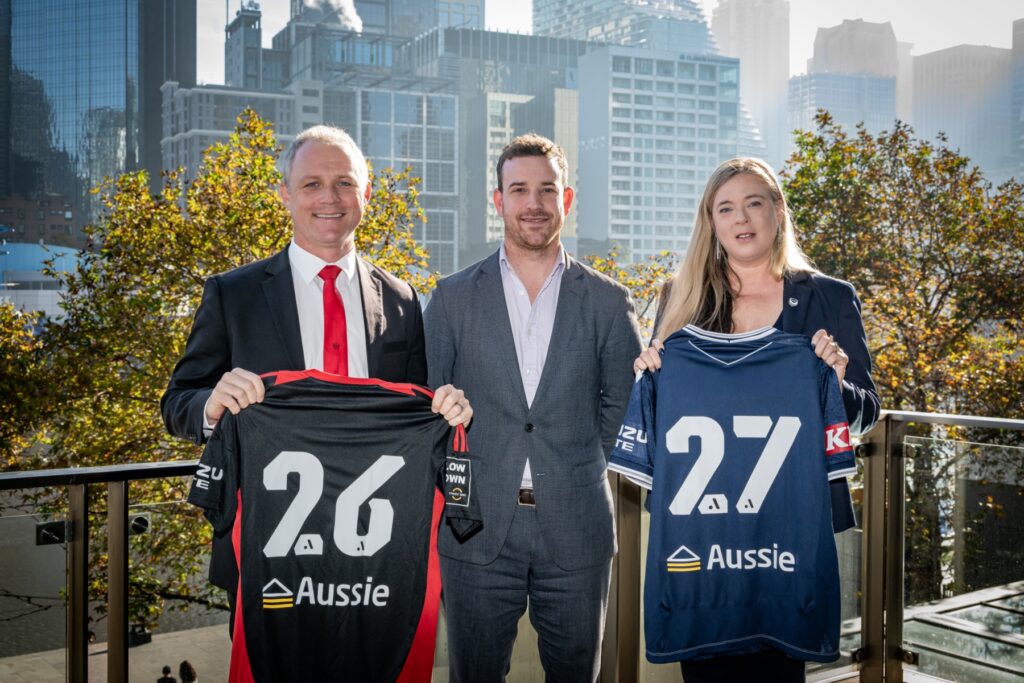
In an announcement made on Tuesday, Melbourne Victory revealed their continued alliance with the Committee for Melbourne. The partnership aims to unite and support local businesses, and grow sporting communities across Victoria.

The intersection for business and sport

The partnership between Melbourne Victory and the Committee for Melbourne stands as a reflection of the city’s leading culture for both business and sport.

The Committee for Melbourne strives to provide Melbourne with a better present and future, focusing on affordability, livability and sustainability. It is the result of a merger between two organisations – the Committee and the Melbourne Chamber of Commerce – resulting in an oragnisation backed by 200 years of combined expertise.

Furthermore, Melbourne Victory, through the Victory in Business (VIB) network, proudly presented by AGL, have facilitated over $225 million in transactions between member companies. It is one of Australia’s largest corporate sporting network groups with over 100 members.

Thus, uniting two organisations of such prestige and past success is an exciting development for business leaders and Victoria’s wider sporting landscape.

Together, they represent something far more important than business partners. Reflected in their extensive support network, they show that connection, success and identity can all be delivered at once.


Representing the best of Melbourne

Melbourne Victory Managing Director, Caroline Carnegie, outlined why the connection with the Committee for Melbourne is so important for members and for the city as a whole.

“Melbourne Victory is proud to represent the whole of Victoria – and proud to partner with the Committee for Melbourne to strengthen the link between sport and business,” Carnegie explained.

“Together, we’re building a network that connects people, creates opportunity and celebrates everything that makes Melbourne great.”

Moreover, Committee for Melbourne Chief Executive, Scott Veenker, reflected on the partnership’s connection to Victoria’s culture for business, sport and a united community.

“Business and sport are fundamental to Victoria’s identity and sucess. This partnership connects those worlds – from the boardroom to the pitch – creating real pathways for collaboration, innovation and growth,” Veenker said.


A meaningful partnership

As symbols of the city’s passion for sport and business, Melbourne Victory and the Committee for Melbourne have therefore built a connection which benefits all.

It is an alliance built on a shared identity, culture and dedication to making Melbourne an even more united, inclusive and competitive place.

How Sunbury United Is Defying the Odds to Keep Grassroots Football Alive

Sunbury United stands as a cornerstone of the local community in Melbourne’s outer northwest. But for all the hard work given by local families and volunteers, the lack of funding continues to prohibit a level of growth which matches both ambition and potential.


Consolidating growth across the club

Soccerscene recently spoke to Club President, Sherridan Long, about the club’s ambitions going forward, the family-oriented culture, and the challenges of operating at grassroots level in Australia.

“It’s gone really well in retention of players from 2025, [and] recruiting some players who have been really keen to come to the club and are really contending over just a small handful of spots,” explained Long.

“That’s been really rewarding to see the popularity of our programme and what the team is trying to develop in terms of culture and performance, to be somewhere that people want to go to.”

Furthermore, Sunbury United’s reputation in the community continues to inspire waves of prospective junior players, who are lining up for squad vacancies.

“We’ve got waitlists for almost every age group,” Long continued.

“We’ve seen a growth in interest coming into the club and girls wanting to play football, but also lots of families wanting to move to Sunbury and join our club, or move from other clubs.”

Sunbury United is ensuring that its culture and matchday atmosphere remains a safe, welcoming place for those who matter most in grassroots football: families, players and volunteers who sustain it every week.

Planning for success on and off the pitch

Despite solidifying a successful culture off the pitch, Sunbury United are refusing to slow down. From the senior men’s team to junior age groups, high-performance remains a key objective.

“Everyone is trying to win leagues – this is something we’ve been working towards for a few years,” said Long.

“Each little milestone across the year means we’re getting closer to a senior men’s promotion or championship – it’s been over ten years since a promotion or championship at the club.”

Although several years have passed since Sunbury United saw success in the form of silverware, the club’s progress in recent seasons may yet lead to a trophy in the very near future.

But reaching this goal requires not only a cohesive effort from players and coaches, but from all stakeholders and participants within the club space. To this end, Sunbury United underwent a strategic plan set-up to align their operations with the ambitions and thoughts of everyone involved.

“We undertook some survey and stakeholder analysis through our members to understand what it is they love about Sunbury United, why they participate, where they see the club going and how they can be a part of that.”

“It was nice to hear exactly what they wanted, what they thought of and what they felt by being part of United. So that shaped our strategic plan in terms of performance, community and working together as a team.”

Ultimately, it is this balance of performance, teamwork and trust in the community which can set clubs up for success. Whether at grassroots or professional level, if everyone involved operates under shared values and vision, the silverware becomes a question of when, not if.


Challenges of the grassroots game

As with any club or organisation in sport, progress inevitably encounters barriers, hiccups and challenges along the way. Facility access, infrastructure quality and investment are common issues not just for Sunbury, but for all in the grassroots space.

“Most places share winter and summer sports so you can only use your space a certain amount of months a year before it turns to the summer sport,” Long outlined.

“It means that there’s no space for juniors to conduct a proper pre-season, so they’re doing it at other reserves in Hume Council and not actually at our home.”

Indeed, we have seen already the lack of investment directed towards the football community. Soccerscene recently looked into The City of Hume’s current budget, which revealed a 10:1 funding imbalance between AFL and the beautiful game. For Sunbury United, and many other clubs, the impact is undeniable.

“We can’t fill the second or third women’s team because there’s no infrastructure to facilitate changing between boys and girls changing room on the flick of a dime. You’re not only balancing access between two squads and gendered safe spaces, but also junior and senior spaces,” Long explained.

“We’re limited by aspirations being within the lines and being within the physical building that we have. Investment in football infrastructure would be a game-changer.”

It’s a common theme in Australia’s grassroots landscape. Clubs with loyal supporters, interested players and a desire to develop, continue to be restricted by the boundaries of their facilities.

It is not about demand. It’s about necessity. If clubs like Sunbury United are to continue working towards player development and squad expansion, external investment is a must-have.


Fighting for the future

As Sunbury United continues to strengthen bonds with the surrounding community and within the club, the foundations are ready for the seasons to come. From youth teams to seniors, the club continues to emphasise connection as a fundamental principle.

“We sit under one umbrella. We’re not two separate committees or two clubs,” Long revealed, expressing the idea behind a connected senior’s and junior’s set-up.

“It’s important to the long-term sustainability and longevity of our club, not just to the performance side, that everyone’s invested and feels a part of something, and that they can be involved.”

One club, one philosophy and one family. Grassroots football will continue to throw its challenges for years to come, but Sunbury are, and will be, more united than ever.

Most Popular Topics

Editor Picks

Send this to a friend