


Assessing the path of A-League Women to become full-time

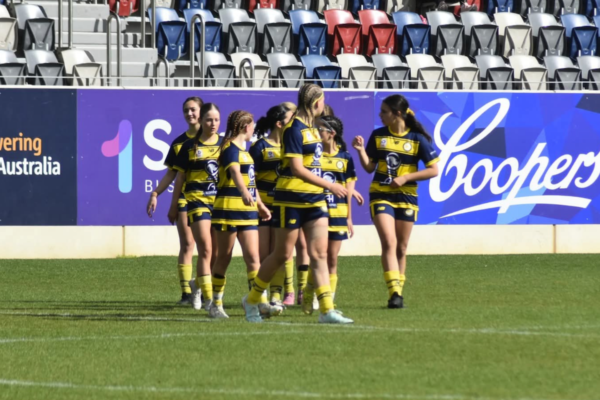
To ensure there is a deep-rooted legacy from the 2023 Women’s World Cup, the A-League Women becoming a full-time profession should be a matter of importance to develop the Australian game.

As the competition improves, the expectations on individual players increases, whereas the careers provided to them are not yet adequate for most players to financially support themselves merely through football.

Until the players are provided with full-time year-round employment structure, majority of the sportswomen are in the firing line juggling the physical and mental aspects of their commitments to football and part-time employment, of which three in five of those players work outside of football.

This topic of discussion was raised back in February during a two-day women’s football congress that was hosted by the players’ union, Professional Footballers Australia (PFA).

Under the 2021-2026 A-Leagues Collective Bargaining Agreement, the base limit was $20,608 in 2022-23 season for a 29-week contract for the ALW, with most of the players earned at or close to the minimum that season.

However, the remuneration for the past season rose to $25,000, which for the very first time it was transformed to a full home-and-away schedule, the current athletes are under contract for a 22 round regular season for 35 weeks, along with four extra weeks for finals.

Former Matilda and PFA executive member Elise Kellond-Knight expressed her opinion on this matter.

“We need aspirational leaders. We don’t need a long-term, 10-year strategy to get to full-time professionalism. Like, this is 2024. We need it tomorrow. We needed it yesterday,” she said.

“It’s important that the girls understand where we’ve come from and how much hard work we’ve had to do. Things don’t get handed to female athletes you have to stand up, you have to ask for it, you have to fight for it.

“It’s really important that we embed that philosophy in the next generation to come.”

In contrast to the A-League Men, just 15 percent had some type of job outside of their football commitments, 93 percent of those individuals worked less than 10 hours on a weekly basis.

The survey comments portray an evocative of the not so sustainable football/work/life balance the individuals have to commit to:

“I don’t want to feel like I have to work between seasons (for example: most of us do not get paid in the off season). It is a lot to juggle, especially going away for national team camps and the immense amount of traveling. I feel this weight on my shoulders from my work obligations.”

“If my work and football commitments clash, I am expected by my coach to skip work (where I get paid more and am respected more), and I am expected by my boss to skip soccer, and neither care if you suffer financially or reputation wise for it.”

According to the survey, it was made aware that all but three clubs had failed to provide players the desired two-month in advance training calendar as well as the seven day notice period, which makes matters even more complicated for those coping with various jobs to plan in advance.

The PFA admit changes such as this won’t occur overnight, generally speaking, to implement full-time professional contracts is the righteous thing to do for women players, but as the PFA report put it “should also be seen as an investment, not a cost.”

The full-time pay is such a significant goal for women’s football in this country, but the clubs can ease their path to that goal and can do a whole lot more to make sure those changes are modified sooner rather than later.

Previous ArticleNext Article

Melbourne Victory commits to player wellbeing with P3 Recovery

In an announcement made yesterday, Victory revealed that P3 Recovery will become the club’s Official Recovery Partner.


Maximised recovery, guaranteed results

As a nationwide organisation specialising in recovery, performance and wellbeing, P3 Recovery’s alliance with Melbourne Victory promises to be hugely beneficial for players and members alike.

“As industry leaders, serving to inspire through the world’s game, very edge matters, and partnering with P3 Recovery provides a new dynamic to the support afforded to our players,” explained Melbourne Victory Managing Director, Caroline Carnegie.

“Melbourne Victory looks forward to seeing a positive uplift in recovery through this partnership.”

Indeed, with an extensive range of recovery methods on offer – from infrared saunas to hyperbaric oxygen therapy and more – P3 Recovery stands as a valubale partner for players looking to maximise performance and recovery during the season.

Although the partnership is new, P3’s Richmond location already provides team recovery sessions and injury rehabilitation. Their commitment to Victory’s physical and mental wellbeing is unquestionable, so it is not surprising why P3 Recovery are the latest local business to join the Victory family.

Supporting professionals and public

While P3 Recovery will help Victory’s A-league Men’s and A-League Women’s team with physical recovery, the alliance will bring many benefits to locals seeking guidance on health and lifestyle choices.

“We’re passionate about helping people take control of their health through expert-led therapies, everyday performance tools and a welcoming space designed to help you feel better, move better and live better,” said P3 Franchisee, Naum Sekulovski.

“Whether you’re managing injury, chasing a goal or just need to reset, P3 is where recovery becomes a lifestyle.”

And with sport and physical activity such a huge factor in the lives of so many Melburnians, a partnership with Victory shows the entire city that when it comes to optimal recovery and service, P3 is there to support everyone in their sporting or personal goals.

Beyond the Pitch: Miyuki Kobayashi on the Real Challenges Facing Japan’s Women’s Game

Last week, Soccerscene spoke to pioneer of women’s football in Japan, Miyuki Kobayashi, about the game’s development in Japan and the intersection between sporting and social change in the country.


Talent, quality and recent silverware

After Japan’s recent AFC Women’s Asian Cup victory in the final against Australia, the women’s national team solidified its standing as the No.1 team in Asia.

Throughout the last 15 years, Japan’s women’s national team has grown into a formidable opponent, boasting a World Cup trophy, an Olympic silver medal, as well as three AFC Women’s Asian Cups.

The talent is undeniable. The quality is unwavering. And the team shows no signs of slowing down.

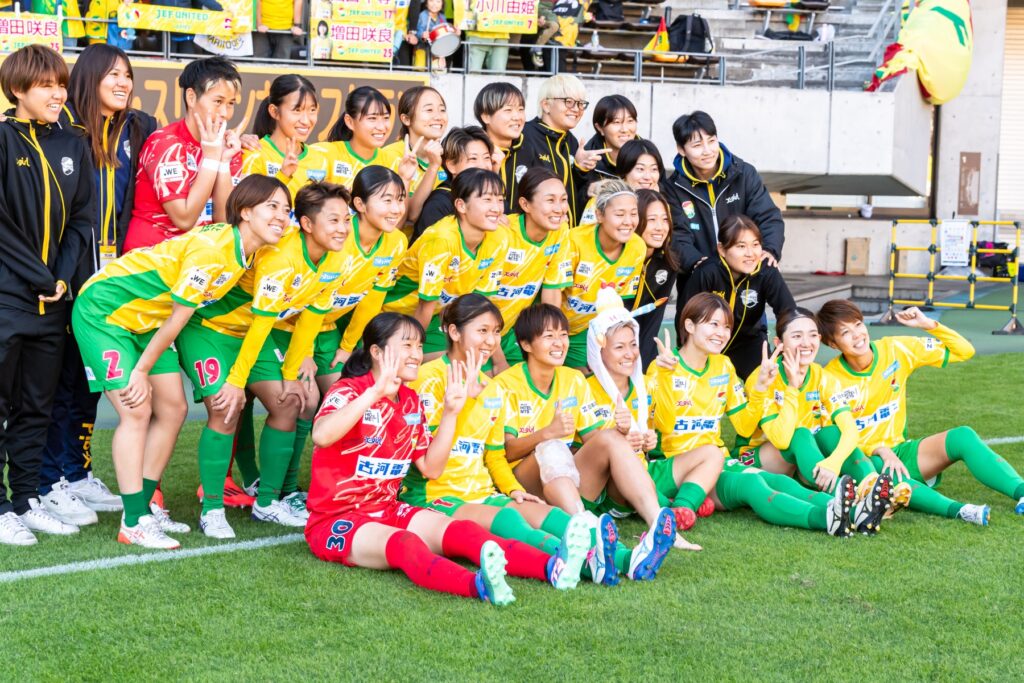
But these victories and trophies on the world stage wouldn’t be possible without the leaders behind the scenes – none more so than Miyuki Kobayashi, former WE League Board Member and current JEF United Ladies Scout and Academy Chief.


Laying the foundations

Kobayashi has led the charge for women’s football in Japan, promoting not only a sport which values success, but one which empowers female footballers across the nation.

“At university, not many girls were playing and we didn’t have an official team. I went to the US and the environment was so different,” Kobayashi explained.

“That opened my eyes – women can play. That’s how I started the women’s soccer league when I came back: to make an environment for girls to play.”

Thus, accessibility and opportunity became driving factors behind Kobayashi’s work, not only for those on the pitch, but for those in the dugout.

“I got involved at the JFA (Japanese Football Association) to promote women’s football. We wanted to create the opportunity for women to be coaches.”

“They are coached by men all the time, so even when the top players leave the football world, they never think to be involved.”

Furthermore, as a former coach of JEF United Ladies Youth and General Manager, Kobayashi was intent on employing as many female coaches as possible. It was not merely a personnel change, but a challenge to widespread social attitudes.

“When I started to employ female coaches, the girls’ parents asked why the coach wasn’t a man. But gradually, we started to make it equal – they didn’t talk about the gender, but about the quality of the coach.”


The mission to empower

In 2011, the same year Japan’s women won the World Cup, the domestic league was yet to become professional. Known as the Nadeshiko League, players would work during the day and train in the evenings.

The transition from an amateur to the current professional league required time, resilience and a change in perspective.

“The sports world in Japan is more traditional – it is dominated by men,” said Kobayashi.

“If you want to make the environment even, or (want) more women to come into the (football) world, you can change the mind of the players.”

Since 2021, the WE League has embodied a sense of growth and positive change for the women’s game. In name and nature, it looks to empower players, coaches and all involved in the industry.

“I was in charge of mission achievement for women’s empowerment. We wanted to educate the players, to inspire girls and women who watch the game.”

However, the drive to empower women in football was not without backlash and challenges.

“Some people don’t like that word: ’empowerment’. It’s too strong for them. Some women really appreciate it, but it’s not easy to change the mind of society through football,” Kobayashi admitted.


Growing and attracting talent

Although WE League clubs are accelerating youth development and expanding pathways across U15, U18 and first team football, Kobayashi acknowledged that the overall product must improve to bring foreign players to Japan and entice homegrown talent to stay.

“Most of the national team players go to Europe or North America. I don’t say it’s a problem, but from a young age, girls who can play in the WE League want to go abroad,” Kobayashi outlined.

Indeed, when looking at the starting XI in last month’s AFC Women’s Asian Cup final, only one player – Hana Takahashi – plays in the WE League.

But the key to attracting domestic and international players to the WE League, is aligning financial investment and industry attitudes.

“The reason why women’s football has developed in European countries is the social thinking – you have to be equal and have the same opportunities as men in football. The Japanese way of thinking, especially in the football world, is not that at all,” Kobayashi continued.

“When I speak to people at Spanish clubs, women’s football is not a charity, but an investment.”

“We have assets. We have good, young players, but we’re exporting them, so we need to import too.”

Indeed, Spain is a perfect example of what can happen when investment becomes intentional, not optional. Back-to-back UEFA Women’s Nations League titles, 90% television viewership increase since 2016, and record-breaking crowd numbers reflect what can happen when the industry aligns in vision and commitment.

Japan has the players to compete against any nation in the world. Purposeful investment, combined with its overall quality of players and style, could transform the WE League into a true, global powerhouse.


The vision for the future

Moving forward, Kobayashi hopes that girls progressing through JEF United’s academies develop confidence and resilience, whether as players or people.

“We want to make the girls – even if they aren’t in JEF United – continue playing football and continue to be leaders,” Kobayashi said.

“Some of them have a dream to be a coach or a leader off the field too, so that’s one of the attributes we want to develop.”

This resilience, reflected by the club’s ‘never give up’ philosophy, is testament to the vision of empowerment championed by Kobayashi across the women’s game.

Even in the face of social obstacles and a lack of financial investment, perseverance and hard work is at the bedrock of women’s football in Japan. It is not just that these values exist, but that they are consistently manifested on and off the pitch, which can show future generations that football is a sport for all – men and women alike.


Final thoughts

There is no limit to what the WE League and the national team can achieve if given the resources it deserves. All the ingredients are there: individual quality, a distinct playing style, football philosophy and ambitions to grow.

By following the example of industry leaders like Kobayashi, women’s football in Japan can hopefully continue to make waves of impact – in the sporting landscape and society as a whole.

Most Popular Topics

Editor Picks

Send this to a friend