

Transplant Australia FC Chairman Ante Kelic: “There is no shortage of people who need support”

In an event that has been a long time coming, Transplant Australia Football Club will hold the inaugural Transplant Football World Cup in Cervia, Italy on September 8-14, 2024.

Due to COVID-19 being a major roadblock, the tournament has not been able to lift off – however with the dedication and perseverance of Transplant Australia and the World Transplant Games Federation, it is now going to be a reality.

It is headed by Transplant Australia, which is a charity that supports transplant recipients and their families, while also lending support to people on the waiting list, donor families, living donors, healthcare professionals and everyone associated with organ and tissue donation.

Transplant Australia FC is one example of the many sports and activities on offer that encourage physical activity for an increased chance of survival in transplant recipients.

As the Chairman of Transplant Australia FC, Ante Kelic has gone through his own experience and is now the perfect role model for others in a similar position, while also managing the operations ahead of September’s tournament.

In this interview with Soccerscene, Kelic discusses his involvement with Transplant Australia, an update on the World Cup, building a community and looking ahead over the coming months.

Tell us about your background and why you are involved?

Ante Kelic: I started playing in junior competitions for St Albans Dinamo out in Melbourne’s west.

I grew up with the game very much part of my life, however around the age of 18 years I started having a few health issues and was diagnosed with a liver condition called primary sclerosing cholangitis (PSC).

There was not too much trouble apart from the initial onset symptoms and flare ups such as a headache and swelling and for the most part I did not feel the full effect of it for another 3-4 years.

In the year 2000, I also got diagnosed with Crohn’s disease which isn’t uncommon for people who suffer from PSC.

At that time, I broke  into the seniors for St Albans, but it all came to a halt when I required surgery for Crohn’s disease at the age of 20. From 80 kilograms being a fit and active player, my weight  dropped down to 54kg.

The recovery was slow and through all the medications and treatments, I was hoping to get back to playing Premier League senior football but the side effects such as weight gain as a result of  fluid retention  lead me to   player in the lower divisions.

At the age of 34 I was playing social soccer, however I was told during that time  I needed a transplant as cirrhosis was getting to a serious stage of liver failure.

It was in 2014 that I got put on the transplant list and needed to wait seven months before I was offered the lifesaving transplant. At the same time my wife was four months pregnant and thankfully my daughter Iva was born soon after without major hiccups.

How did you find out about Transplant Australia FC?

Ante Kelic: It was in 2018 that I found out about the team through the late Matty Hempstalk who established the team two years prior.

I was introduced to the team by participating in an exhibition match which was known as the Doujon Zammit Shield – this was in honour of Doujon who passed away, but his parents donated his organs to save multiple lives.

A few years later, Matt – along with the CEO of Transplant Australia – came up with the idea to create an inaugural World Cup for transplant recipients and I thought that I could give a helping hand as it was something that involved heaps of work to organise.

With Matt’s passing, coupled with the pandemic, it has taken us a bit of time to recover and get back on our feet but now it is something I will contribute towards.

You had an Expression of Interest period for participants, what are the numbers looking like?

Ante Kelic: We ran a large campaign for a couple months that saw around 50 applications from men and women all around Australia who want to join the club.

In addition, we are going to run a development camp in Sydney on March 16-17 to get people together and support each other based on their transplant journeys.

Our main purpose is to help people with ongoing health issues and encourage active participation.

The underlying reason why we are there is to create awareness and educate people on the life saving gift of organ donation and the donation sign up process.

On your role as Chairman, what are the main priorities?

Ante Kelic: There is no shortage of people who need support before and after transplant.

Peronsally I have had not only with liver transplant recipients, but also those undergoing cancer treatment and that shock of being unwell and going into hospital where your life changes from that point – that is where I am willing to offer support and advice drawn upon my health journey.

To have someone to talk to is super important and I have also reached out to people myself when there were instances I lost energy or motivation during the difficult times.

The wait time for transplants can be mentally challenging – I waited seven months but some other recipients in my support group had to wait for more than two years. If you throw in the fact that hospital call ups do not always guarantee a transplant due to an inadequate match occurring, it is not easy to comprehend – I know of someone that had received the news four times.

Unfortunately, you do not know how far you get through the waiting list in terms of pecking order, so this is a challenge that we offer support and advice for.

How is it juggling your responsibilities?

Ante Kelic: There are some challenges to fit it all in with a young family and running my own business, but we do have some staff at Transplant Australia who do an excellent job supporting the club.

Part of the reason that the development camp in Sydney is going ahead is down to the Transplant Australia team securing a grant to benefit recipients.

Particularly for us, one of the factors is the distance between team members, making it costly to hold events due to travel and accommodation costs.

There is representation Australia-wide, so we offer in some instances where possible to subsidise recipients for travel, accommodation and meals for them to be able to attend these camps and remain active

Even though recipients recover from transplants, they can still have ongoing issues with their health they need to manage which affects their work and earning capacity. As a club, and Translpant Australia, we want to build longevity and sustainability to support the recipients in every way we can.

A lot of recipients reach out stating they want to do something more regularly and having a club in local competitions would be a great milestone.

Our goal is to increase the participation numbers and generate awareness through the amazing stories shared about the life saving donations that people have received.

However, we cannot do that without government, community and corporate sponsorship support.

Previous ArticleNext Article

Western Strikers Nominated FSA Club of the Month for Equity Outcomes

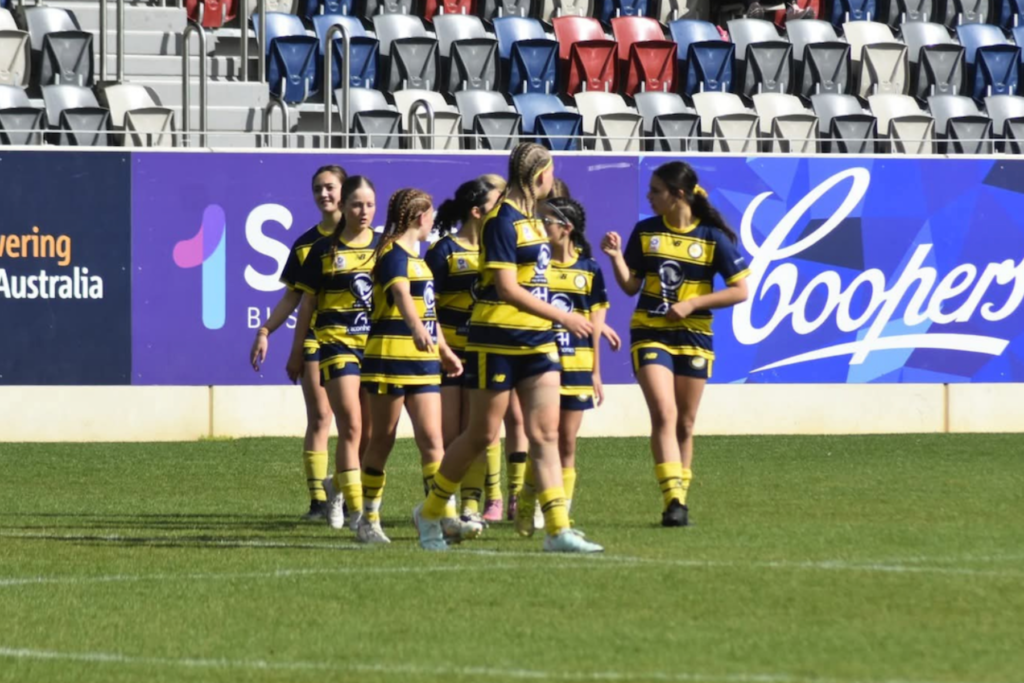
Western Strikers SC has been nominated for Club of the Month after a period of deliberate structural investment in its female program that is already producing measurable outcomes, and offering a model for how community clubs can drive participation growth through equity-focused planning rather than passive goodwill.

The nomination recognises a program that has moved beyond surface-level commitment to women’s football and into the kind of structural change that determines whether female players actually stay. Improved lighting across training and match pitches, equitable scheduling, extended training hours and dedicated pitch allocation have addressed the practical barriers that clubs often overlook. It’s conditions that tell players, implicitly or otherwise, whether the game was built for them.


Leadership as Infrastructure

Central to Western Strikers’ approach is a leadership structure that takes female football seriously as a technical and administrative priority. Women’s Coordinator Michelle Loprete and Technical Director Georgia Iannella, a former Matilda, provide the program with both organisational direction and the kind of visible role modelling that shapes whether younger players can picture themselves progressing through the game.

The presence of a former international player in a technical leadership role at a community level isn’t incidental. It signals to junior players that the pathway from their Friday night training session to elite football is real and navigable, and it gives the club’s coaching staff access to experience and credibility that most community programs cannot offer.

That pipeline is already functioning. Western Strikers’ Under-13 to Under-16 girls teams all qualified for finals in the Youth Premier League this season. Under-15 goalkeeper Sian Schopfer made her debut in the Women’s State League team which is a direct product of a club environment designed to move players upward.


The Friday-night model

One of the more quietly significant initiatives at Western Strikers is the scheduling of Friday night women’s matches, with junior girls training beforehand encouraged to stay and watch senior football. The structure is straightforward but its implications are meaningful. Aspiration in sport is not abstract. It’s built through proximity, through watching players a few years older doing what you want to do, in the same kit, at the same club.

The absence of that experience is one of the more consistent reasons girls disengage from football in their mid-teens. When junior female players cannot see where the game goes after their age group, the logical conclusion is that it goes nowhere. Western Strikers’ scheduling decision addresses that directly, at minimal cost, and whose effects are starting to manifest.


The Club Changer framework

The club’s participation in Football South Australia’s Club Changer Program has provided a structured framework for identifying and addressing barriers that might otherwise go unexamined. Pitch allocation, training structures and safety conditions are the kinds of issues that accumulate quietly in club environments; not because of deliberate exclusion but because the default systems were built around male participation and have never been comprehensively reviewed.

The Club Changer Program creates accountability for that review. Western Strikers’ ability to project an additional 146 female players over the next three years is a product of planning rather than optimism.


Industry implications

Western Strikers’ model matters beyond its own membership. At a time when women’s football in Australia is navigating the challenge of converting a participation surge into sustainable long-term growth, the question of what community clubs actually do with increased interest is among the most consequential in the sport.

Record crowds at the AFC Women’s Asian Cup and sustained national visibility have opened the door. Whether players walk through it and stay depends on whether the club on the other side looks anything like Western Strikers

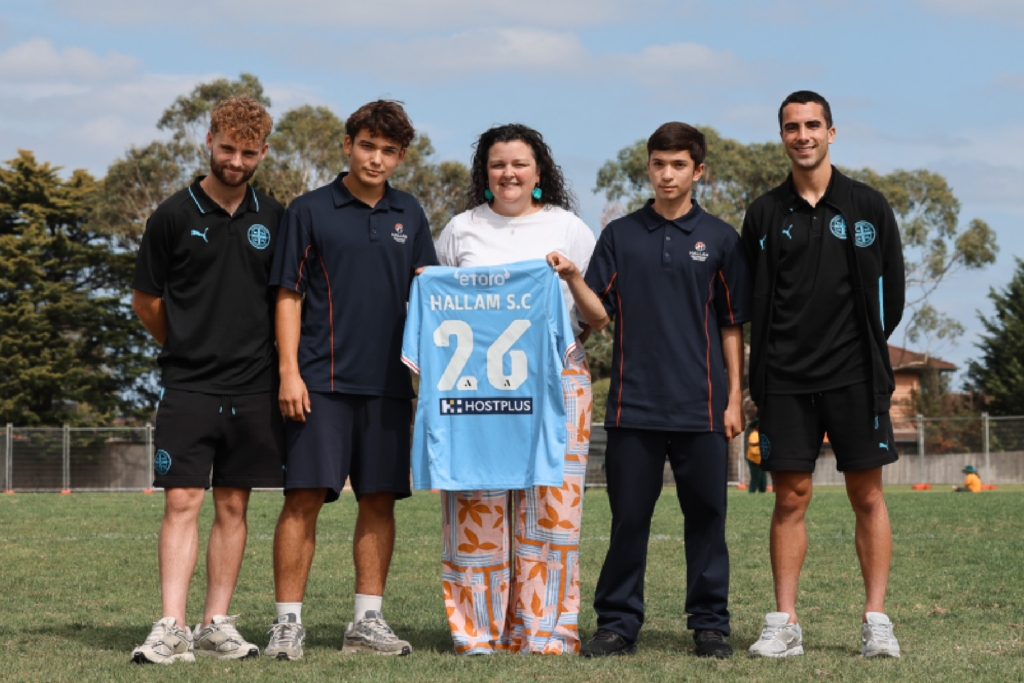
Melbourne City expand youth program with Hallam Secondary College

The school will join the City Futures Program in its mission to consolidate pathways and community bonds for students.

From pupils to players

Hallam is the latest school in Melbourne’s South-East to join the City Futures Program. Also backing the program’s ambitions are Narre Warren South P-12 College, Gleneagles Secondary College and Timbarra P-9 School.

Partnerships between professional clubs like Melbourne City and local schools help to promote community connection, as well as providing pathways from the classroom to the stadium.

“City Futures is about creating genuine opportunities for young people to stay engaged in their education while feeling connected to something bigger,” said Head of Community, Sunil Melon, via press release.

“By bringing the Club into schools and providing access to our environment, we’re helping students build confidence, explore future pathways and see what’s possible both within football and beyond.”

Gone are the days when young players must choose between football and education. Through the City Futures Program, they can enjoy both worlds and still have the opportunities to develop.


What City Futures provides

Hallam sudents will be at the centre of the benefits provided by the connection to Melbourne City.

For example, high-quality coaching sessions delivered twice a week will instill confidence and teamwork skills into young participants. And as Melbourne City coaches are set to deliver the sessions, the students will truly learn from the best in Australia’s footbal landscape.

Furthermore, participants can visit Casey Fields, home to the City Football Academy, where they can experience the ins and outs of how an A-League club operates and trains.

“We’re proud to be part of the City Futures Program,” outlined Acting Principal at Hallam Secondary College, Shelly Haughey.

“Seeing our students come together and commit to their training is setting them up for success both on and off the pitch, and we look forward to building a strong and lasting partnership with Melbourne City FC.”


The future of football pathways

This isn’t the first – nor will it be the last – partnership to connect football and education in Australia.

Earlier this year, Queensland-based John Paul College embarked on an exciting journey with Spanish outfit, RCD Espanyol, to provide unique coaching support, player education, and pathway opportunities.

But these partnerships aren’t merely about giving young talents a place in the starting XI.

They are designed to ensure all participants develop into confident young people – whether their future lies on the pitch, in the dugout or in the boardroom.

Most Popular Topics

Editor Picks

Send this to a friend