


How the APL hopes to take Australian football to the next level

Last week the Australian Professional Leagues (APL) revealed a key strategic move for professional football in Australia, collectively rebranding the men’s, women’s and youth leagues, with all of them now falling under the ‘A-Leagues’ moniker.

The recent revelations are set to be the start of a host of other strategic priorities which look to revitalise the professional game in Australia, in the coming months.

Speaking to Football Nation Radio (FNR), APL Managing Director Danny Townsend outlined the organisation’s viewpoint on the need to revamp attitudes within the game, particularly when it came to equality for female athletes.

“I think where the naming convention change came from was that we sat back and looked at what was the genesis of the naming of the A-League,” he said.

“Where did it come from, what did it mean and what did it stand for? The information we got was the ‘A’ stood for Australia, it stood for ‘A’ quality, it was the ‘A’ elite competition for football in Australia, which all made sense.

“Then we looked into the genesis of the W-League and where that name came from, and it was a real short bit of work, it was ‘W’ stands for woman.

“So, we thought, if the ‘A’ in the A-League stands for all those wonderful things, why are those things only attached to the men’s game and not the women’s game. We felt we needed to change the brand architecture of the sport to elevate the women’s game…you need young aspiring female athletes to feel that they are part of a football movement that puts the same value on their football as their male counterparts.”

Whilst name changes are easy to do, actions ultimately matter, and when it comes to the women’s side of the game the APL has recently announced the introduction of three more A-League Women’s teams by 2023.

It’s a good show of commitment to the women’s game, with an extended season also part of the APL’s future plans, when financially viable.

On the topic of finances, a huge factor which has helped secure the future of the professional game in Australia is the APL’s recent $200 million TV deal with ViacomCBS.

ViacomCBS – who own Network 10 in Australia, have also acquired a small equity stake in the APL under terms of the deal.

Townsend explained to FNR why the APL’s partnership with ViacomCBS was the best way forward for the game.

“When we went sat down with ViacomCBS and their leadership, they looked across the table and said ‘we believe in your sport, we love your vision for your sport and we want to make it the number one sport on our network’,” he said.

“We wanted a partner that was in the trenches with us, because they are business partners.

“That’s why the shareholding for ViacomCBS in APL was really a symbolic thing. As much as it was great for us to have an organisation of their scale and experience involved, it was what it said about their commitment to football which made this thing work. They’ve been fantastic to deal with.”

The deal will give increased exposure to the A-Leagues across Network 10 properties such as The Project and Studio 10. Alongside this, A-League Men’s matches will be shown on 10’s main channel on Saturday night, with A-League Women’s matches to be shown on Sunday afternoons on 10BOLD.

“The Saturday night free-to-air game was really critical to us, both for the men’s league on the Saturday night and the women on the Sunday,” Townsend said.

“It’s ensuring that we carve out a window in the free-to-air environment that’s about football. From 6.30 to 10:00 on Saturday night, it will football night on a main channel, free-to-air…it will be great for us.”

However, the most important strategic piece to the puzzle according to Townsend is the APL’s $30 million digital football hub – which is set to be revealed later this month.

The hub will give fans the content they want, when they want it, something which the APL Managing Director believes the game has fallen short on over time.

“The challenge we’ve had in our game is there has been a vacuum of football content in Australia,” he said.

“I believe the most critical part of our strategy is what we’re launching before the season, which is the one stop shop for football in Australia, digitally.

“It is the biggest single investment football has made in itself. It’s a $30 million investment into digital infrastructure and data infrastructure that will serve the football fan. It won’t be the home of Australian football; it will be Australia’s home of football.

“What it will deliver is content – audio-visual, editorial and everything else you need. Part of the reason we are doing that, and investing in what we are calling APL studios, is ensuring that by organising the football community in one place we are able to deliver the utility in their everyday lives and focus on how they choose to consume football. If you do that they’ll keep coming back, you put great content in there, you serve it, you understand that fan and their preferences.

The APL will look to showcase A-League Youth games, reinvigorate the fantasy gaming sector and produce a range of unique programming on the digital hub, amongst other initiatives, which will target all types of football fans.

“On the programming around all of the A-Leagues, part of APL studios is actually creating that content – that wasn’t there in previous times,” Townsend said.

“Those midweek wrap up shows, those highlight shows, those debate shows with a focus on getting different cohorts of our fan base engaged. We will do shows for younger fans on the mixture of football culture on things like boots & music and all those things that that fan cohort wants.

“Because we have that flexibility with the studio to do that, you’ll see a lot more content. It’s not just about the studio, it’s about the ability to surface it to fans. With the digital platform that we’ll have, we’ll be able to ensure our content is seen by the different pockets of fans in different demographics.”

With new commercial partners to be announced in the coming weeks, the APL have started their transition away from the FA strongly, with all eyes set to be on the professional game when the leagues kick off from November 19.

Previous ArticleNext Article

Football Victoria and VicHealth partner on anti-racism program as community sport data reveals systemic problem

Football Victoria has partnered with the Victorian Health Promotion Foundation to roll out the Set The Standard initiative across the state’s football clubs, in a collaboration that signals a significant shift in how Australia’s most popular club-based sport is approaching racism and cultural exclusion at the grassroots level.

The partnership brings together the state’s peak football governing body and its primary health promotion agency around a shared finding that can no longer be treated as incidental. According to the 2025 report Enhancing the Capacity of Victorian Community Sport to Tackle Racism, 56 per cent of surveyed participants had experienced or witnessed racism in community sport. In a state where football draws participants from some of the most culturally diverse communities in the country, that figure represents a systemic failure the sport can no longer address through conduct policies alone.

Clubs that subscribe to the Set The Standard newsletter will be entered into a draw to win one of three $1,000 vouchers, available for equipment, facility improvements, events or other community initiatives. The incentive is designed to drive early engagement with a program whose ambitions extend well beyond a newsletter subscription.

What the Partnership Signals

Racism in sport has historically been treated as a conduct and governance issue, managed through complaints mechanisms that require incidents to be formally reported and tend to significantly undercount the actual prevalence of harm. VicHealth’s framing of racism as a public health problem repositions the entire conversation.

Experiences of racism are associated with measurable negative health outcomes including anxiety, depression and social withdrawal. When community sport, which governments and health agencies actively promote as a vehicle for physical and mental wellbeing, becomes a source of those same harms, the public health cost is direct and quantifiable.

Resources, not Rhetoric

For Football Victoria, the partnership brings something the governing body cannot provide on its own. VicHealth’s credibility, resources and public health framework give the initiative a foundation that a sporting organisation working alone would struggle to establish. Set The Standard offers clubs practical tools and guidance built around progress rather than perfection, which reflects a realistic understanding of how cultural change works inside volunteer-run community organisations.

The $1,000 vouchers are not a side note. Most community clubs operate on tight margins, depend on volunteer administrators and are already stretched managing growing participation demands. Finding room to invest in cultural development programs on top of everything else is difficult. Providing tangible resources directly addresses that constraint at the point where clubs are most likely to disengage.

The program also arrives at a consequential moment. Football in Victoria is absorbing significant participation growth following the AFC Women’s Asian Cup and sustained increases in junior registrations, bringing new communities into the game in large numbers. The 2025 data suggests the environments those communities are entering are not consistently safe or welcoming. Participation growth and cultural safety work need to move together. A sport that grows larger without becoming more inclusive has not actually improved the experience of the people playing it.

The Man Who Built a Women’s Football Program from Nothing is now an Award-Winning Gender Equity Leader

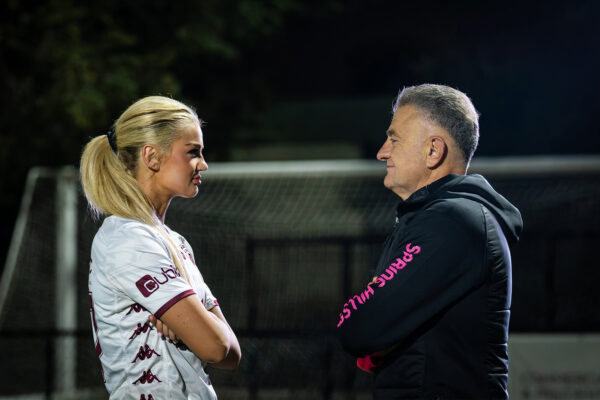
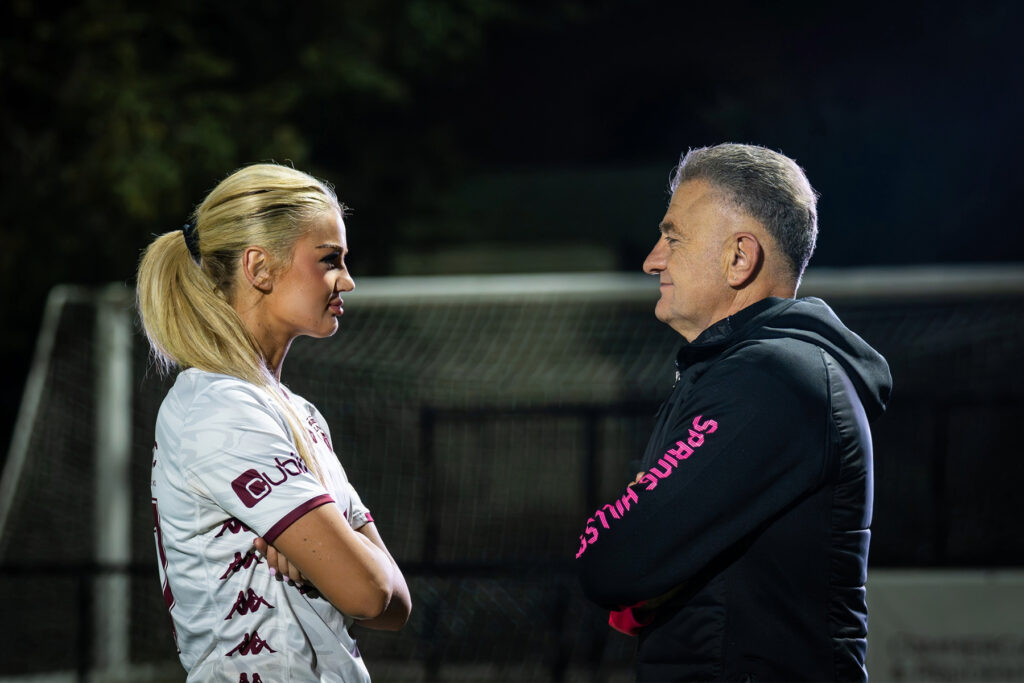
Eight years ago, Spring Hills Football Club did not have a girls’ team. Today it has one of the most recognised women’s programs in Melbourne’s west, a senior NPLW side, and a head coach who has just been named Gender Equity Leader of the Year at the Melton City Council Volunteer Achievement Awards.

Tom Markovski, Spring Hills’ NPLW Head Coach, received the award at a ceremony coinciding with National Volunteer Week, recognised for his community leadership, promotion of gender equality and commitment to advancing the status of women and people of all genders in sport. The recognition comes from outside the football community entirely, awarded by a local council celebrating volunteers across every sector of civic life in one of Melbourne’s fastest-growing regions.

Building from scratch

When Markovski arrived at Spring Hills, women’s football at the club did not exist. His first act was to champion the establishment of the club’s first all-girls team, a process that required persuading a club culture built around men’s football that the investment was worth making.

Women’s football in community clubs has historically struggled to access the same facilities, scheduling priority, coaching resources and institutional support as the men’s game. Clubs have been slow to invest in programs whose return is less immediately visible than a senior men’s premiership, and in a growing outer-suburban community like Melton, where volunteer capacity is finite and demand across every program is high, the case for building something new always has to compete with the urgency of maintaining what already exists.

Markovski made the case anyway, and kept making it across eight years of coaching senior and junior NPL teams while simultaneously building the structural foundations of a women’s program designed to outlast any individual’s involvement. The club’s first all-girls team became multiple junior girls teams. Those junior teams created the pipeline for a senior women’s side. The senior women’s side created visible pathways for younger players to see where the game could take them within their own club.

The outcome is a program that Spring Hills now holds up as central to its identity rather than supplementary to it. The club has become a leader in female participation in Melbourne’s west, and recently made history within the NPLW Victoria structure by fielding junior teams coached entirely by female coaches, a milestone that reflects the depth of the program Markovski helped build.

What the Award Recognises

The Melton City Council’s decision to name Markovski its Gender Equity Leader of the Year places his work in a frame that extends beyond football. Melton is one of the fastest-growing local government areas in Australia, a diverse and rapidly expanding community where the institutions that bring people together, like schools, councils, sporting clubs, carry an outsized responsibility for social cohesion.

Mayor Cr. Lara Carli, speaking at the awards ceremony, reflected on the role volunteers play in communities like Melton’s. “Volunteering creates friendships, strengthens communities and builds a sense of belonging,” she said. “It helps people feel connected, supported and valued, and those things are more important than ever in a growing and diverse community like ours.”

For the girls now playing football at Spring Hills who were not playing anywhere eight years ago, Markovski’s contribution is not abstract. It is the specific and concrete fact of having somewhere to play, someone to coach them, and a pathway that leads somewhere.

Most Popular Topics

Editor Picks

Send this to a friend