
Dig Inclusion makes digital access available for everyone 

For stadiums around the world, infrastructure has been created to cater for people with disabilities, however access to club websites and apps cannot be overlooked. 

In the past, stadiums had been designed so people with disability can still access the venues. As we know with COVID outbreaks, attention has now shifted towards how we get these people into the grounds by using apps and in particular to scan a QR code for contact tracing. 

As we have seen in 2021, the QR system has become a mandatory tool, while at the same time we have seen the need to go with virtual tickets, rather than the printed out copies we had always been accustomed to. 

For clubs and stadiums, they want to ensure that fan experience is at the optimal level, so that means they have to assess the accessibility for disabled people and ways for them to have entry to venues without an enormous amount of hassle. 

This is where Dig Inclusion can help. They are a digital accessibility service who ensures that football club websites and apps are equally available for everyone. 

For clubs, they should be asking themselves whether disabled fans have the same opportunity to buy tickets online as everybody else, while the other consideration should be if news feeds, match statistics, websites and apps are as user friendly as they need to be. 

For digital accessibility, Dig Inclusion takes into account people who are colour blind, dyslexic or have cognitive impairments (including people living with dementia). Through a club’s website or app design process – from the use of font, to language, to colour contrast – are all highly important so nobody feels overwhelmed when accessing a club’s resource. 

For example, if a disabled fan wants to buy some club merchandise, then they will have the same opportunity to browse and make that purchase just like any other person would, with tailored options available to assist anyone who needs it. 

When teams partner with Dig Inclusion, they are there for every step of the way, from accessible testing, research and strategy, to accessible development and content creation, and finally a check on websites, mobile apps, PDF documents and ebooks among some of the benefits. 

All of Dig Inclusion’s services are designed to help clubs keep pace in a rapidly changing digital age: 

Accessible design review: To highlight visual aspects of a design that need to be checked for accessibility, such as colour contrast and positioning. This looks at common accessibility pitfalls and turns this into what would be the ultimate experience for all customers. 

Accessibility help desk: Advice and support from someone who understands the company and what they do, offering fast response times and specialist knowledge for any stucks in the digital accessibility process. 

Mobile accessibility: Helping to get the most out of tablet and smartphone users, with those devices more often used than desktop or laptop. This is very important for disabled or elderly fans who would like to use mobile technology. 

Web accessibility: Advising organisations about the Web Content Accessibility Guidelines (WCAG) in an easy-to-understand manner, as design agencies and web developers may find it difficult to grasp or keep pace with updates as they become available. 

Disabled user testing: It’s not only digital content meeting accessibility guidelines that is important, but also making sure that the experience of a disabled person using a product is a good one. 

PDF accessibility: Accessibility guidelines are not just designed for webpages, but anything that a customer downloads is also included. Dig Inclusion can produce PDF documents that go alongside WCAG with equal access as a typical website. 

Video accessibility: When businesses make advertising material, they can be supported with transcripts, captions, subtitles, or audio descriptions that they probably would have not used before on their own. 

Ebook accessibility: Tablets have been a valuable way for people to virtually read books and other publications. An accessible ebook gives all readers instant access to fit their needs, regardless of print disability. 

Dig Inclusion provides ways for clubs to navigate the challenges associated with building an app or website for equal opportunities. To learn more on Dig Inclusion, you can find it here. 

Previous ArticleNext Article

Football NSW calls on clubs to Make It Red for Heart Health Round

Football NSW is calling on clubs and associations across the state to register for the 2026 Make It Red campaign, joining a national awareness movement aimed at reducing heart-related deaths on sporting grounds ahead of Heart Health Round on the weekend of June 5 to 7.

The campaign, developed by the Heartbeat of Football Foundation, asks sporting clubs to wear red, raise funds and build awareness around heart disease and sudden cardiac arrest, which is the leading single cause of disease burden and death in Australia for both men and women, and one that health authorities say is largely preventable through modifiable risk factors.

The call to action comes as the Foundation continues its work to map and register Automated External Defibrillators across NSW sporting facilities, a project that has already engaged twelve football associations and fed data into both the NSW Ambulance GoodSAM registry and NSW Health’s public AED map. The availability of a functioning, registered AED on site is among the most significant determinants of survival following sudden cardiac arrest, with survival rates declining sharply for every minute without defibrillation.

Football NSW is encouraging clubs to engage with the campaign across three areas. Clubs can register for the Make It Red campaign to help fund research, education and prevention programs. Participants, particularly those aged over 35, are encouraged to seek a free heart health screening test from their local GP or enquire about hosting a Heartbeat of Football testing day. Clubs are also urged to ensure their grounds have active, accessible AEDs in place, with guidance available through Football NSW’s Rescue Ready Guide.

The Make It Red campaign runs from June 5 to July 12, with Heart Health Round taking place across the opening weekend. Clubs can register and access participation resources at makeitred.org.

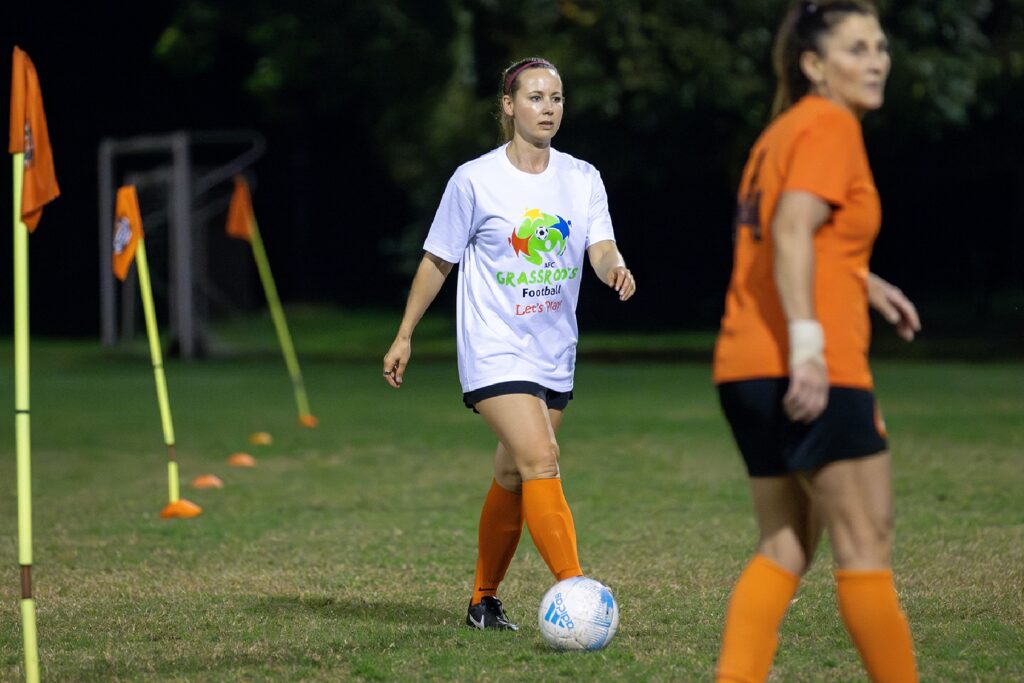
Community Spirit Shines on AFC Grassroots Football Day 2026

This week, Football Australia (FA) celebrated AFC Grassroots Football Day 2026, championing the people and communities who continue to hold up a safe, inclusive and supportive environment in the football landscape.

‘For all, for life’

In collaboration with Football NSW, Canterbury Football Association and community club, Balmain & District Football Club, the day reflected the very best of what football provides.

The event brought in participants of all ages – from 4-74 years-old – and reached a total of 400 people. Girls-only programs, all-abilities sessions and over-age football ensured all were catered for.

Such a diverse range of participants builds on a wider drive during FIFA World Football Week, which seeks to promote the sport not just as the dazzling lights of 100,000-seater stadiums, but as a way to foster community spirit and social development.

Furthermore, FA support through its Club Changer program was a welcome addition to the action, emphasising the organisation’s commitment to nurture a real love for the game across communities in Australia.

“Through Club Changer we support our clubs to provide a safe, fun and enjoyable environment where everyone is welcome; whether that be as a player, volunteer, referee or supporter,” explained National Program Manager Club Development at FA, Grace Lambourne.

“Everyone should feel they belong and are welcome to play, stay, and love the game.”


A welcome celebration

While the upcoming FIFA World Cup will no doubt inspire millions of future Socceroos and Matildas, events like the AFC Grassroots Football Day represent something beyond just inspiration.

It is a platform. An opportunity to express a love for football and to connect with others while doing so.

And connections between the professional and grassroots game is more important than ever if Australia is to nurture the next generation of talent.

This is particularly clear in the rise of women’s football across the nation. Since the FIFA Women’s World Cup, female participation rose by 32%, and registrations for the MiniTillies Program skyrocketed from 264 in 2023, to 1223 in 2024.

The professionals spark passion. But communities turn that passion into playing time.

That is why celebrating grassroots football – and the volunteers and families who sustain it – is a vital part of Australia’s football future. Together, FA and the AFC are creating strong foundations built on positivity, engagement, and inclusivity for all with a love for the beautiful game.

Most Popular Topics

Editor Picks

Send this to a friend