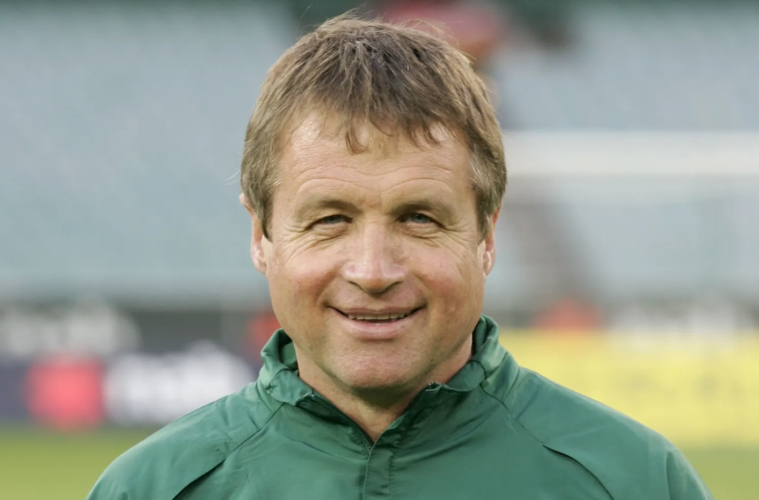





As a captain of both Sheffield United and the Central Coast Mariners throughout his career, one would be hard-pressed to unearth a figure as prepared as Nick Montgomery to lead a renewed Mariners into the upcoming A-League season.
A player distinguished by his displays of leadership and hard work on and off the pitch, Montgomery’s arrival as Head Coach at the Mariners provides him with the opportunity to build on the success of the recently departed Alen Stajcic – whilst forging the team in his own image.
Rising through the Mariners’ coaching ranks with several triumphs at youth level, having taken out double premierships and a Grand Final with the Under-23s and the Under-20s, equips Montgomery with the know-how to facilitate success.
Ahead of the season, Montgomery has likened his takeover of the Head Coach role from Stajcic – following a resurgent 2020/21 season – to the pathway forged by Melbourne City’s Patrick Kisnorbo. Similarly motivated by a desire to emulate the success of Kisnorbo, who took over at City from previous coach Erick Mombaerts after a season where a Grand Final win eluded the side and proceeded to follow it up with the impressive feat of an A-League Premiership and Championship double, Montgomery is poised to build on the side’s positive momentum. Undoubtedly for Mariners fans, this would be as enticing a prospect as one could ask for.

Q: Just to start off, how are you feeling now that you’ve been announced as the Head Coach of the Mariners?
Nick Montgomery: Obviously it’s a great honour for me to get the Head Coach role at such a special club. [I’m] just really excited to get into being the Head Coach and I’m looking forward to next season’s A-League kicking off.
Q: As someone who has been at the club through incredible highs and challenging lows, what have you seen in the club lately that has helped to turn it around? Has it been a case of pushing through the tough times or is it something else?
Nick Montgomery: I’m fortunate to have been in football for a long time. I’ve been at the club for nine years and I’ve seen the good times and the bad times. I’ve got my own reasons for why the club has struggled but I think that’s all in the past now.
The good thing when you become Head Coach is that it’s now in my hands to implement what I want in terms of how I want the club to be known and in terms of the foundations we’ve laid in the academy. [It’s about] building on last season to try and make the club sustainable and that [involves] developing players like Alou Kuol. Players who come in and are given the opportunity to not only play at the highest level here but to play at the highest level overseas and to achieve their dreams.
Player development is something I’m passionate about, but also winning games of football. It’s just about finding the right balance.

Q: The Mariners U-23s side is currently sitting at fourth in NPL 2, and last year you won the competition. It is clear that a focus on youth development is a big part of the Mariners identity, do you have an ambition to build on that success and momentum with the youth as Head Coach?
Nick Montgomery: Definitely. Like I said when talking about the foundation of the club it’s the academy and developing our own players through our academy.
When I first came out here in 2012, [if you] look at the team we had when we won the Grand Final we moved on Bernie Ibini, Oliver Bozanic, Tom Rogic, Mat Ryan. So many of those players went on overseas and have had fantastic careers as well as playing currently for the Socceroos.
I think the club lost its way a little bit over the years and to be honest it’s a great idea to develop your own players, but unless you’ve got the knowledge of doing that recruitment, coaching, mentoring and developing this generation of young players then you may struggle. There are some very good young players in this country and the challenge is bringing them in, identifying them and giving them that pathway to push on into the first team.
With Alou, we scouted him, brought him in and sort of bypassed a lot of big clubs that weren’t willing to look at him because we understand player development and we understand potential in players, and I think that equips me really well for the role at the Mariners.
I think the club has to be known for that and my vision – [which is] a shared vision – and goal for the club is to continue to do that. Obviously as you mentioned there in terms of last year and NPL, we dominated both Under-20s and First Grade, won both leagues and Grand Finals which was fantastic for the club. And from that success we had seven or eight players that pushed on and not only played in the A-League, but made a massive impact as everybody saw. I think that with the ability to do that and to be known as a club that can give young players pathway, we hope to attract the best players from around the country because we know that we can give them an opportunity here.
The big clubs are going to be spending big money again post-Covid and opportunities will not be as clear as they probably have been this year at a lot of clubs because obviously everyone’s now chasing Melbourne City. So, for us it’s an opportunity to try and bring in some of these really good young players and give them an opportunity to come play first-team football.

Q: Obviously last season was a resurgent year for the Mariners, what do you believe are the key aspects from last season that need to be maintained for this season?
Nick Montgomery: In terms of the squad, we’ve got a real good core group of senior players that understand what the club’s about – Bozanic, Matt Simon, Mark Birighitti, Ruon Tongyik, Kye Rowles – and these are players that have been at the club for a couple of years so they understand the club. There are players in there that have won championships, you’ve got Marco Ureña; for me he can be the best foreign striker in the league and I think you saw that towards the end of last season.
In terms of that there is a wealth of experience and young boys with enthusiasm behind them. We just need to search the market and try and bring in a couple of players within our budget. On top of that, we’ve got some very good players coming through the academy that I expect to make an impact next season in the A-League.
Q: Having been involved in the Mariners setup for a number of years now, you’d have a great insight into the personality and expectations of their passionate fans. What do you identify as the key values off the pitch that need to be represented on it?
Nick Montgomery: It’s a real community club and a family club. We’re not in Sydney or Melbourne, we know we need the community behind us and we need the sponsors behind us. And that’s [about] engaging with the fans and that’s making the players that come here understand what the club is about.
So, you know for me as Head Coach I won’t be bringing any player in here that doesn’t understand what the club is about before we sign them. Because they have to know what the club is about and they have to buy into the culture. One thing I know from being a player here, if we can perform on the pitch then fans will come to the stadium because it’s a fantastic club and it’s the only club on the Central Coast so it’s quite unique.
But we have to give the fans something to come and watch and that’s enjoyable football and winning games of football. So, that’s my job as Head Coach to make sure I do that. And when we do that and get the stadium packed it’s a fantastic atmosphere, we’ve got some amazing fans.

Q: What of your own values do you try to impart on your players?
Nick Montgomery: Look, I’m demanding, hard-working – I’m honest, I’ll always be honest with the players. Fortunately, I’ve worked with some of the best coaches in the world that are coaching at some of the best Premier League clubs in the world as well. So, I’ve got a lot of mentors and people I can call on for advice. Any coach will tell you that [with] your experiences as a player, as a coach and with the people you’ve worked with, you take the good and the bad and the things you like and disregard the things you don’t like. I think that really does mold you into the coach that you are.
But, like I said, I’m fortunate to have captained two clubs that I played at as well. So, in terms of leadership skills I think that that’s a strength of mine. I really want to be a leader now of this club moving forward and try everything I can to bring success back.
Q: With so much happening in Australian football at the moment, including the announcement of television rights and the push towards alignment, what do you feel are the things Australian football needs to get right over the next few years?
Nick Montgomery: It’s obviously been a big transition with new owners taking over the league and the TV deal. There’s been a lot of noise around the last couple of years, but in terms of what needs to be improved I think there’s a severe lack of Australian players going overseas at the minute and making a name overseas. And that impacts on the national team and its future as well.
It’s a very good league here. I think too many young players have this pipe dream of wanting to go to Europe or overseas without actually making a name in the A-League. When you go overseas it’s very cutthroat and for me playing in the A-League, or going overseas and playing at a lower level, I don’t see how they’re developing when they could be playing first team football here. With a few seasons of success and games under your belt here you’re more equipped to go overseas.
The amount of young players that have contacted me during my time at the Mariners, and now since I’ve become Head Coach, that are overseas and are desperate to get back here who think that just because they’ve been overseas, you’ll put them back into the first team is so far off the mark. For anyone coming back you have to understand that we’ve got good players in all these NPL teams that have chosen to stay here and fight to get into the A-League.
A lot of players who are coming back from overseas and who haven’t played first team football think they’ve got the right to get into the A-League, and that’s something I don’t understand. Once they come back, they realise the need to knuckle down, work their way through the NPL system and be a standout in the NPL because that’s a very good pathway for kids to get into the A-League.

Q: What do you want the 2021/22 season to be for you and the Mariners? What can the fans expect?
Nick Montgomery: They can expect that we’ll build on last season. They can expect that we’ll go out and try and win games of football – we’ll be passionate and we’ll be youthful and energetic. We’ll have a real team effort and that’s what the Mariners are about. We can’t compete with everybody financially but football is 11 versus 11 and for me, in my experience, we can put the right blend of youth and experience together and have that team mentality. It’s amazing, anything is achievable [with that mentality] and for me I want to aim for the top and that’s where you start.
I did my UEFA Pro Licence with Patrick Kisnorbo, so I am motivated by a desire to emulate what he’s done, with a much bigger club, in the season ahead with the Mariners.