



For Yarraville Glory FC, football isn’t just about competition—it’s about connection. Whether through the partnerships with Mells Football Academy & Summer Holiday Football, or fundraising efforts like Think Pink, the club is creating more than just players; it’s building a stronger, more inclusive community.
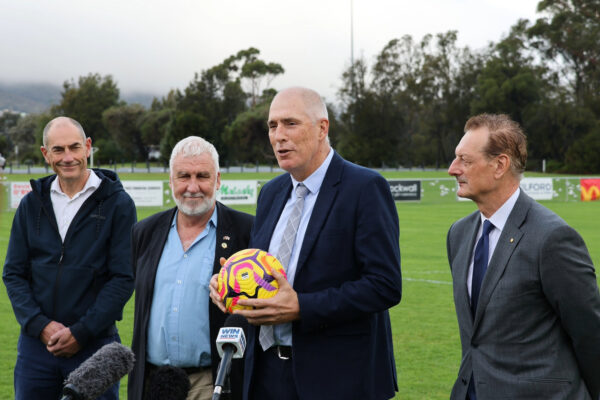
Speaking with Soccerscene, President of Yarraville Glory FC Jim Babatzanis discusses how the club is making football accessible for all and turning the game into a powerful tool for junior growth and family bonding.
Can you tell us about the club’s mission when it comes to community involvement? How has that shaped Yarraville Glory’s identity?
Jim Babatzanis: Our goal is to get everyone together—parents, kids, seniors—all involved together. We want to bring it back to when we played as kids, when you would stay at the ground all day, and parents would connect with parents from other teams. It’s about making the club feel like a family, not just a community. We’re starting to bring that back slowly, and we can already see the positive impact.
How do you ensure that football at Yarraville Glory FC is accessible and inclusive for people of all backgrounds and abilities?
Jim Babatzanis: We’ve done indigenous training; we’ve done all different types of training. Last year, we had African community leaders come in and have a chat with us as well. We want to include everyone because, at the end of the day, we’re all the same—our differences don’t matter.
Yarraville Glory FC has recently formed an official partnership with Mells Football Academy. What does this collaboration mean for the club, and how does it fit into the club’s long-term vision?
Jim Babatzanis: For us, this partnership provides more training for our juniors in a smaller, more intimate environment. Coaches will be handling 15 kids and aren’t able to coach individually; they have to coach for a team environment. For us, the vision is for us to guide our juniors all the way to the senior team. George Mells, who has played in the A-League and overseas, has helped us in these academies, bringing invaluable experience to help develop young players. As well as this, James Golding, our technical director, his work that he does with us is unbelievable. I’m most excited about seeing the kids improve their skills and play at the highest possible level they can achieve.
Could you please tell us a bit about the Summer Holiday Football Camp? What should players and parents expect from this camp, and could you walk us through how the camp was structured and what makes it a unique opportunity for young footballers?
Jim Babatzanis: Firstly, it gives them time to be away from technology and be out and about, and George creates a fun environment for the kids. They spend the day there playing, training, learning new skills, and meeting new people as well. It’s not just kids from our club that go to it; kids from multiple clubs come for the camp. Every school holiday, every term, they have these camps available.
How does the Summer Holiday Football Camp align with the broader goals of Yarraville Glory FC in terms of developing young players, fostering team spirit, and instilling a love for football in the community?
Jim Babatzanis: Keeping the kids playing the game, the game that they enjoy. For me, the more the kids play the game, the more they fall in love with it. I know from my kids, even though they play in the girls, when they’re not there, they won’t be as inclined to play it. Kids these days have different varieties to pick from. Keeping them in love with it, that’s all it is.
Could you walk me through the origins of the GO Family Program and how the partnership was formed? What were the initial goals of this collaboration, and how did it all come together?
Jim Babatzanis: The GO Family Program was formed through the council and Football Victoria. They approached us and other clubs like Maribyrnong Swift and Footscray United Rangers on if we would like to participate, and we agreed. Our first term had solid numbers, but the second term was a bit harder since many kids were already training with their clubs. Still, it’s a great initiative; families that have enjoyed it and had the chance to have a kick with their kids, usually the parents don’t get that opportunity.
The Think Pink campaign has been a significant initiative for the club. Could you share more about how it started and how the club involves its members and supporters in the fundraising efforts?
Jim Babatzanis: Pink Ribbon Day started a long time ago, way past my time being in the committee and president. It began after one of our supporters wives battled breast cancer. We wanted to give back to a good cause. Everyone gets involved—volunteering, donating, and participating in activities like jumping castles, cake stalls, and popcorn machines. One of the most memorable initiatives was when our technical director, James, shaved his long hair to raise funds. The kids loved it, even spray-painting his hair pink before cutting it off.
Could you share a memorable moment from a fundraising event that really showed the community spirit of Yarraville Glory FC?
Jim Babatzanis: That hair-shaving event was probably one of the most memorable events on the pink ribbon day. Seeing all the kids having a laugh, the parents watching on, and the whole community being involved—it was a special moment.
Thinking back on your time as president, what has been the most fulfilling or rewarding experience for you when it comes to the club’s work within the community?
Jim Babatzanis: Growing our junior bases. When our committee took over, we had 180 registered players at the club. Now, we have 420 players and counting. Our female program as well; we went from two female teams to nine since my presidency. For us, that’s been huge, and for me personally, that has been really rewarding.
With the club’s focus on both sporting excellence and community engagement, how do you manage to strike a balance between those two aspects?
Jim Babatzanis: It’s hard because there is a fine line you’re tinkering on. Kids want to play for fun, but they also want to win. We work to nurture both aspects by improving our coaching staff and training methods. Our technical director, James, plays a big role in this, assisting our coaches in developing the kids. Knowing that each team is different and being around it is important. Feeling the vibe of the team and parents can be challenging, as the president when it comes to winning and losing. You don’t want to lose that community feel of the club.