

Wheelchair football’s Victorian return comes with challenges still to face

Football Victoria’s Wheelchair Football Volunteer Coordinator Daniel Levy admits that the onset of the pandemic was more than a challenge for all abilities football.

Across 2020 and 2021, the wheelchair competition barely played a handful of games. But that didn’t deter Levy or FV, who he says are now more supportive than ever.

Both wheelchair and powerchair football competitions have gotten underway after a very successful All Abilities April. The month saw come and try days held across the country as well as initiatives like Football West’s ‘Football for all’.

More than anything though, the return of wheelchair football in the state meant the most to the players.

“Everyone was frustrated for the past two years, because a lot of our players had other activities cancelled,” Levy told Soccerscene.

“They were just over the moon to be back and life getting back to normal. We had a good turnout and everyone was really rapt to be out.

“The first couple of weeks are always really tough because they’re not in the routine and some of them turned up late, but it’s all good.

“They have to rely on maxi taxis which often pick up more than one person at a time and drop people off on the way and things like that. Something always goes wrong at the last minute, but we’re pretty flexible.”
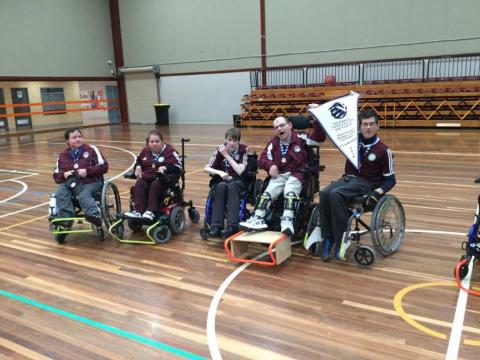
While the return is a major positive for the competition and inclusive football as a whole, the next stage for the organisers is to continue to grow the competition to a point where it can sustain itself better.

Victoria’s wheelchair football competition is run out of just one location in Keysborough currently, as there isn’t a high enough participation level to justify more.

“It’s a long haul for a lot of our players. One is in Chum Creek, near Healesville, we’ve got some that are out near the airport,” Levy explained.

“They have to come a long way, and that’s not cheap. If we were able to grow the competition, we could have a north and south competition so that people didn’t have so far to travel.”

Initiatives like All Abilities April will give wheelchair football and other inclusive competitions the chance to continue that growth.

“The All Abilities Month is an additional opportunity to get the word out there,” Levy continued.

“FV’s helping us with a marketing campaign, printing out posters that we can put up in leisure centres and things like that.

“It’s been a great initiative for us, and two of our players wrote their stories and that got published by FV as part of their social media campaign. We’re getting the word out there, but we certainly need to do more work to attract more players.”

For the players, who Levy says he’s ‘grown up with’ after being involved with wheelchair football for 17 years, the process provides them with more opportunities as well.

“To be honest for most of the players, it’s not that much about the competition, it’s mostly social,” he said.

“It’s being able to get out and be with people, spending time with them and having fun. Are all of our players diehard sportspeople? No they’re not.

“They want to get out and have some exercise, but most of their enjoyment comes from the social interaction.”

Previous ArticleNext Article

Geelong Regional Football Hub vision one step closer to reality

A process five years in the making, the Geelong Regional Football Hub (GRFH) will now build its home at Sutcliffe Reserve in Corio.

A major advancement

The project promises to be a major boost for the football community in Victoria’s west.

But the approval isn’t just about addressing the current issues facing players in and around Geelong (with just one football pitch found per 6,971 people), it symbolises an all-important promise to players, coaches and supporters:

A promise to invest, support and grow.

So now, following an extensive process of potential site assessments and council approvals, Football Victoria (FV) will prepare to lay the physical foundations at Sutcliffe Reserve in Corio – ten minutes away from Geelong CBD.

“This is a brilliant result for the sport in Victoria and the start of something truly exciting for football in Geelong and the surrounding area,” said FV CEO, Dan Birrell, via press release.

But despite the obvious anticipation over site approval, there remains one more bridge to cross to bring this project from blueprint to building block: securing funding.


What is the GRFH?

Beyond a mere community football centre, the GRFH will become a world-class hub for playing opportunities, development pathways and venue for several of FV’s most popular competitions.

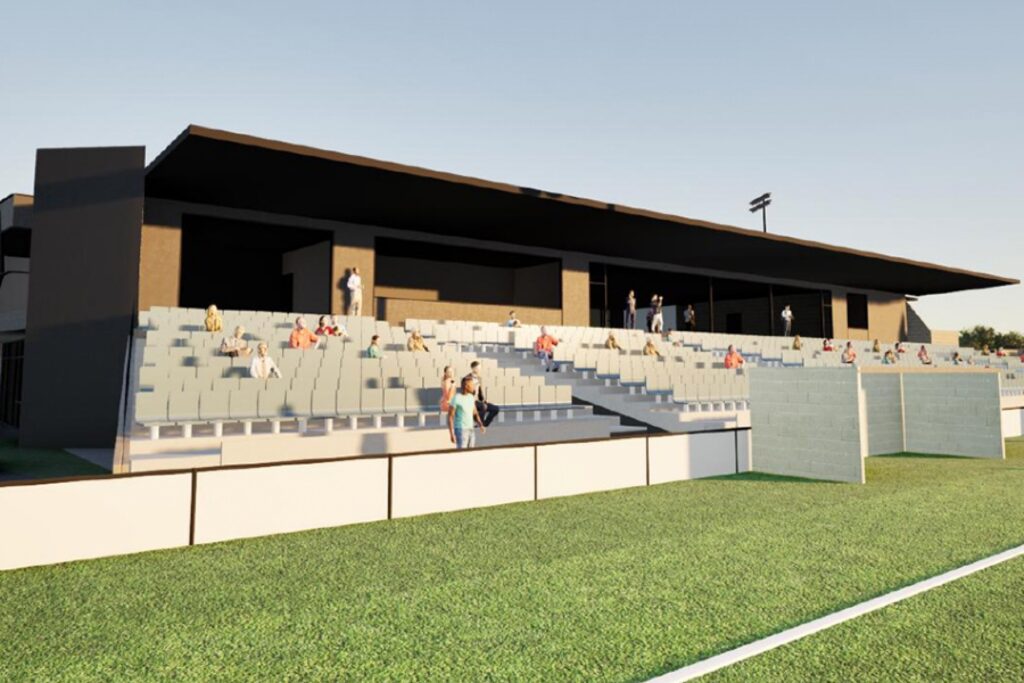
The proposed site will include five pitches, of which two will boast seated stands, as well as two pavilions, social spaces, kitchen and bar areas, media spaces, and facilities for players and match officials.

Such extensive, thorough infrastructure will therefore ensure the site can host an array of competitions for players across the landscape to showcase their talent. From supporting everything from school competitions to NPL VIC Men’s and Women’s games, the GRFH will be a place for player growth, opportunity and community engagement with the beautiful game.

And as Geelong Mayor, Stretch Kontelj, highlighted, the current demand requires investment of this nature as soon as possible.

“With more than 7,370 registered players across the Geelong region, the scale of demand is undeniable. A regional football hub would be genuinely transformational,” Kontelj said via press release.

“It would drive participation across all genders, abilities and levels of the game, strengthen education and development pathways, attract major events and tournaments and deliver lasting social and economic benefits for Geelong and the broader region.

The demand is there. The support is unwavering.

All that remains is the financial backing to bring about real, tangible results for those driving this vision forward.

Football Victoria and VicHealth partner on anti-racism program as community sport data reveals systemic problem

Football Victoria has partnered with the Victorian Health Promotion Foundation to roll out the Set The Standard initiative across the state’s football clubs, in a collaboration that signals a significant shift in how Australia’s most popular club-based sport is approaching racism and cultural exclusion at the grassroots level.

The partnership brings together the state’s peak football governing body and its primary health promotion agency around a shared finding that can no longer be treated as incidental. According to the 2025 report Enhancing the Capacity of Victorian Community Sport to Tackle Racism, 56 per cent of surveyed participants had experienced or witnessed racism in community sport. In a state where football draws participants from some of the most culturally diverse communities in the country, that figure represents a systemic failure the sport can no longer address through conduct policies alone.

Clubs that subscribe to the Set The Standard newsletter will be entered into a draw to win one of three $1,000 vouchers, available for equipment, facility improvements, events or other community initiatives. The incentive is designed to drive early engagement with a program whose ambitions extend well beyond a newsletter subscription.

What the Partnership Signals

Racism in sport has historically been treated as a conduct and governance issue, managed through complaints mechanisms that require incidents to be formally reported and tend to significantly undercount the actual prevalence of harm. VicHealth’s framing of racism as a public health problem repositions the entire conversation.

Experiences of racism are associated with measurable negative health outcomes including anxiety, depression and social withdrawal. When community sport, which governments and health agencies actively promote as a vehicle for physical and mental wellbeing, becomes a source of those same harms, the public health cost is direct and quantifiable.

Resources, not Rhetoric

For Football Victoria, the partnership brings something the governing body cannot provide on its own. VicHealth’s credibility, resources and public health framework give the initiative a foundation that a sporting organisation working alone would struggle to establish. Set The Standard offers clubs practical tools and guidance built around progress rather than perfection, which reflects a realistic understanding of how cultural change works inside volunteer-run community organisations.

The $1,000 vouchers are not a side note. Most community clubs operate on tight margins, depend on volunteer administrators and are already stretched managing growing participation demands. Finding room to invest in cultural development programs on top of everything else is difficult. Providing tangible resources directly addresses that constraint at the point where clubs are most likely to disengage.

The program also arrives at a consequential moment. Football in Victoria is absorbing significant participation growth following the AFC Women’s Asian Cup and sustained increases in junior registrations, bringing new communities into the game in large numbers. The 2025 data suggests the environments those communities are entering are not consistently safe or welcoming. Participation growth and cultural safety work need to move together. A sport that grows larger without becoming more inclusive has not actually improved the experience of the people playing it.

Most Popular Topics

Editor Picks

Send this to a friend