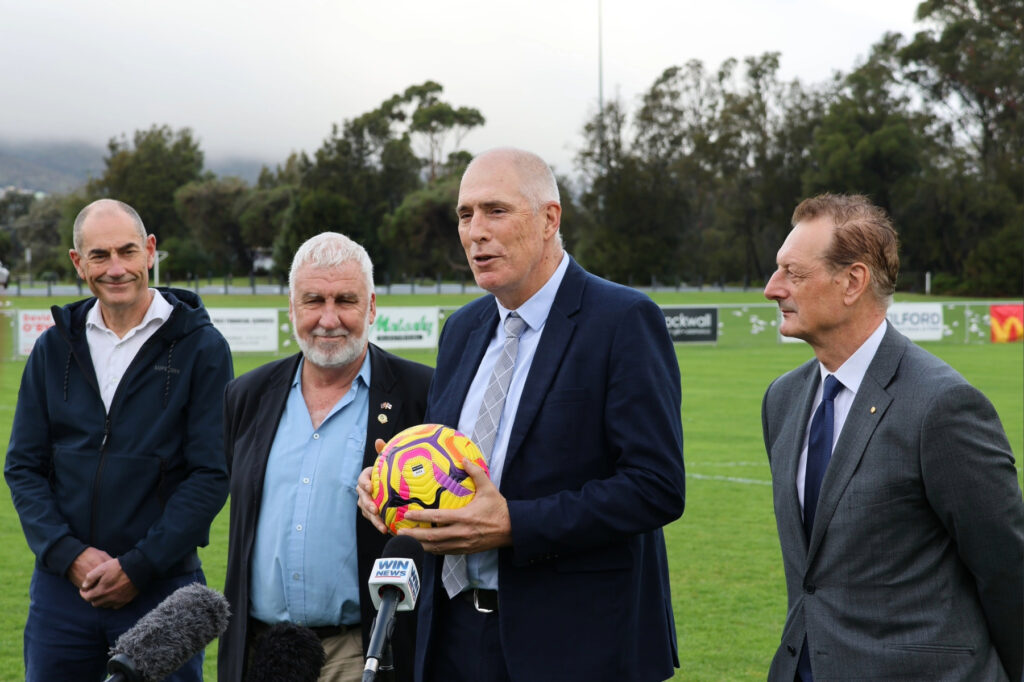




Western United have had a tumultuous start to life in the A-League. After weathering the start of the pandemic, Chief Executive Officer Chris Pehlivanis talks to Soccerscene about his involvement in football, building a stadium and the future of the A-League.
Q. How did you first become involved in football?
Pehlivanis: I started playing football when I was five years of age. I was the middle child of three boys, and we all played for a club called East Bentleigh Soccer Club. That was our first taste of it, and I continued to play until the age of 18 where I unfortunately had a knee reconstruction at 17 and again at 18. I started refereeing for about 13 or 14 years and became a sports administrator, worked at FFA, then at the AFL and now at Western United.
Q: When the did the opportunity to be involved with Western United first arise?
I was working at Essendon Football Club, I was CFO (Chief Financial Officer) there for eight years. The people who won the bid, I had a relationship with them, and during their journey they identified me as someone they wanted to bring into the organization. I was really interested in the project, there was more than just a football club, and as such it was really appealing. You don’t get the opportunity to work with a startup or work with an organisation where you get the chance to build the foundations, the culture and build something special. We are two years into this journey and loving every moment of it.
Q: What have you learned from your time with WU throughout the Pandemic?
Pehlivanis: The pandemic was challenging for everyone – for us, it was especially challenging when we were trying to build a new brand, and bring in new fans on the journey. Not being able to physically connect with people and share experiences in the beginning, we lost that. In our first season we played finals, and we didn’t get to enjoy that with our fans, which was heartbreaking for me.
That was a missed opportunity and then you go into the second year, and the matches are stop start – fans had to be resilient with games moving venues left, right and centre – we haven’t been able to get into the community like we planned to, visit schools and clubs in the west, take Western United to the west.
All those things have been challenging, but at the end of the day we are a club holds important values, and we are going to find ways to activate everything we are trying to do, be more resilient and go on this journey. The club isn’t about one or two years, it’s about what we are going to build for the next 20 years.
Q: Has there been any unforeseen challenges?
Pehlivanis: There are always challenges in any startup, and there are always the challenges of people, there are always challenges of players, staff and when you bring a group of 100 people together for the first time. The pandemic has clearly been the most significant. The ability to work in an environment where we play in purpose built stadiums, I think has been the biggest challenge we have to face and that is why we are building a stadium.
It has really highlighted in our state that we don’t have enough purpose built stadiums that create good atmosphere needed to connect with your fans. It is something we continue to work on, and something that challenges us, but this is something that will be fixed in our journey as we continue to build our stadium.
Q: Are boutique purpose built stadiums the future of Australian football?
Pehlivanis: I think so, definitely. It is the atmosphere, we live it and breathe it. When you get to a stadium and it is purpose built for your code there is nothing better. It allows us to activate in a manner that our fans want, so I think it is the future of our game. We need to work with all the key stakeholders, government, and private investors to ensure that we create enough assets, and that is the legacy we want to leave behind. Not only us as Western United, but with the Women’s World Cup coming to this country. The biggest challenge we have in our game is infrastructure, at grassroots level and at senior level. Our game is the best game in Australia, but it lacks infrastructure. As soon as we can get government investment, and private investment into those areas, its only going to mean better things at those levels.

Q: Is the plan to play at AAMI Park for next season?
Pehlivanis: We are working on a solution, and that is our intention. We will still go to Ballarat and Tasmania as part of existing deals, and they are opportunities for us to expand our brand. The majority of the games will be hosted at AAMI Park, because that is a purpose built stadium in Melbourne that caters to A-League games.
Q: How important is the new TV deal to the continued success of the A-League?
Pehlivanis: This is the best game in Australia, it just needs the right investment. Channel 10 has backed our game, and it is a really good message to the community. My view is that the game is in a good place, and what it needs is a partner that will back it. What I mean by that is a partner who will invest in the product, invest in the brand and marketing, and invest in everything other than what is on the pitch, because we will invest in what is on the pitch and ensure it continues to grow.
I think they are ready to grow the game with us, they’ve done it with the Big Bash and the racing, by sticking around and investing in them to turn them into spectacles. I’m really excited by Channel 10 and where we are going, but ultimately it’s going to need everyone to work together to get our game to where it needs to go. For Channel 10 to support on us on this journey sends a really clear message that the next five years of this deal will be really special for the game and help us take it to the next level.
Q: How important will next season be to engage with fans?
Pehlivanis: We’re still on the journey to our forever stadium, and the reality is that every year it is important we continue to grow our brand, our market and build a genuine connection with our fans – these people are our family. Our aim is to turn every football fan, and any potential fans that lives in the west, into a Western United supporter and member. That doesn’t happen overnight, we need to take these people on a journey with us. But we’re patient, and we have time. We want genuine fans that fall in love with Western United.
We are in our third year, we need to keep embracing these challenges and opportunities to enter new markets and connect with people before we get into our new stadium. That will be the time where we showcase our brand at its optimal level. Everything we do for these first few years is foundational, and that is why it is important we continue to work closely with the community and be successful on the park. Our commercial partners are strong, and continue to grow, and without their support we wouldn’t be able to continue to grow. We are going into the season this year with most of our partners re-signed, which is something that didn’t happen in our first two seasons.
From our point of view, we are excited about the upcoming season. We think the game will go to another level, and we are on the verge of some really big announcements regarding coaches and additional players in the squad. The next year will be a really big opportunity to continue growing and build on those foundations.