

The NSW Government’s Level the Playing Field Program gives women’s football a necessary boost

Harnessing the popularity of the 2023 FIFA Women’s World Cup, the NSW Government’s Level the Playing Field Program is investing $30 million into supporting 26 new women’s sports projects.

Since the 2023 FIFA Women’s World Cup, the amount of women participating in club football has increased by 17%.

This huge influx is a massive opportunity for Football NSW to support the growth in the women’s game with ambitious schemes.

The NSW Government website says the program investment will revive sports facilities by providing new or upgrading existing sports facilities, amenities, and sporting fields.

Funding will also support the provision of new and upgraded lighting that will enable more women and girls to train and compete in sport in a safe and inclusive environment.

The investments are said to be at least $200,000 and at most two million meaning these grants are only presented to large infrastructure or facility development.

All construction is planned to be started by September 2024 and completed by September 2026.

If they can’t match it, however, they can apply for financial hardship and outline why this is necessary for their case.

If they are non-government organisations, a financial contribution isn’t required – it is looked upon favourably if a partial contribution is presented.

Football received one of the largest portions of the grant with (34%) or nine million dollars’ worth being distributed to the footballing community.

Football NSW Clubs and Associations received a total of $5.3 million, representing 19% of the total program.

Below is a table showcasing some of the prospected developments.

Club Venue Project Amount
All Saints Hunters Hills FC Gladesville Reserve New Amenity Building $1,905,678
Illawarra Stingrays FC Lakelands Oval Field, Amenity and Lighting Upgrade $2,000,000
Southern Tablelands FA Cookbundoon Sporting Complex Lighting Upgrade $872,744

Football NSW’s HQ Valentine Park has also been successful in receiving $600,000 in funding for upgrades to two fields and the futsal stadium.

Football Australia had a crucial role in the FIFA Women’s World Cup and helped cultivate this increase in popularity for women’s sports and primarily football.

This program will build upon this upward trajectory, increasing the structure and capabilities of the women’s game at association levels.

These investments will not only attract women to the sport but are functional enough that can maintain the players and involvement.

From this base, there is a growing avenue for more investment and engagement in the women’s game from grassroots all the way up the pyramid.

This large investment is integral to the upholding of the 50/50 participation equality mission by the FA for 2026-2027.

Minister for Sport Steve Kamper summed up well how the program aims to support women’s sport.

“By transforming and expanding sports facilities across NSW we are enabling more women and girls to participate in sport,” he said via media release.

“But most importantly, we are providing safer, more comfortable and more inclusive facilities, breaking down the barriers that have traditionally prevented many women from participating in sport.”

It’s encouraging signs of the commitment to women’s football, not to mention the wider elevation of women’s sport as a whole.

These grants prove that the women’s game is not stopping anytime soon and is a constantly growing part of football and sport in Australia.

It is a massive step in the right direction and not an opportunity for a fan or shareholder to be missed.

For further information on the Level the Playing Field Program, visit: www.sport.nsw.gov.au/grants/level-the-playing-field-program

Previous ArticleNext Article

Football NSW releases $600,000 towards Grassroots Grants to meet Participation Pressure

The Victorian State Government has announced new grants and funding for 11 new community infrastructure projects for local football clubs, totalling $3.8 million.

Sixty-five football clubs across New South Wales have secured a combined total of nearly $600,000 in funding through the NSW Office of Sport’s Local Sports Grant Program. It follows as a result of Football NSW’s scale of demand for community sport support and the growing pressure on clubs struggling to keep pace with surging participation.

The grants, covering 69 individual projects across the Football NSW footprint, will fund facility upgrades, equipment purchases, participation programs and accessibility improvements: the unglamorous but essential infrastructure that determines whether community clubs can function at the level their members require.

The Local Sports Grant Program made up to $4.65 million available statewide in 2025, with $50,000 allocated to each electoral district and individual grants capped at $20,000. Football’s share of nearly $600,000 reflects the sport’s status as the largest participation code in NSW, and the degree to which that status has not always been matched by corresponding investment in the facilities and resources required to sustain it.

Volunteers carrying an unsustainable load

The announcement arrives against a backdrop of mounting pressure on the volunteer workforce that keeps community football operational. Across NSW, thousands of volunteers dedicate significant unpaid time each week to administration, ground preparation, canteen operation and the logistical demands of running competitive junior and senior programs. As participation numbers climb, driven in part by the sustained visibility of the AFC Women’s Asian Cup and the legacy of the 2023 FIFA Women’s World Cup, those demands have intensified without a corresponding increase in the resources available to meet them.

“As the largest participation sport in NSW it is pleasing to see almost $600,000 will be reinvested back into supporting our players, coaches, referees and volunteers to improve the football experience across our community clubs,” said Helen Armson, Football NSW’s Group Head of Strategic Partnerships and Corporate Affairs.

The equity dimension

The distribution of the grants across 65 clubs and 69 projects also speaks to the geographic breadth of football’s footprint in NSW, and to the uneven distribution of resources that has historically characterised community sport in this country. Clubs in outer metropolitan and regional areas tend to operate with smaller budgets, older facilities and thinner volunteer bases than their inner-city counterparts. Grant programs structured around electoral allocation, rather than club size or existing resource base, provide a degree of equity that market-driven funding cannot.

The kinds of projects funded under this program disproportionately benefit clubs serving communities where the barriers to participation are highest. A club that cannot offer adequate facilities or equipment is a club that turns players away, often without intending to.

Football NSW has used the announcement to call on the NSW Government to maintain and extend its investment in the sport. “We urge the government to continue to invest in football,” Armson said, in the midst for a nation-wide push for a $343 million decade-long infrastructure fund to address the facilities gap across the state.

The nearly $600,000 secured through this round is meaningful. Against the scale of what is needed, it is also a measure of how far the investment still has to go.

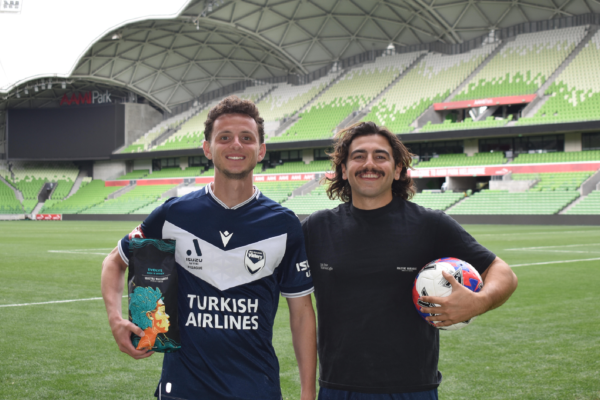
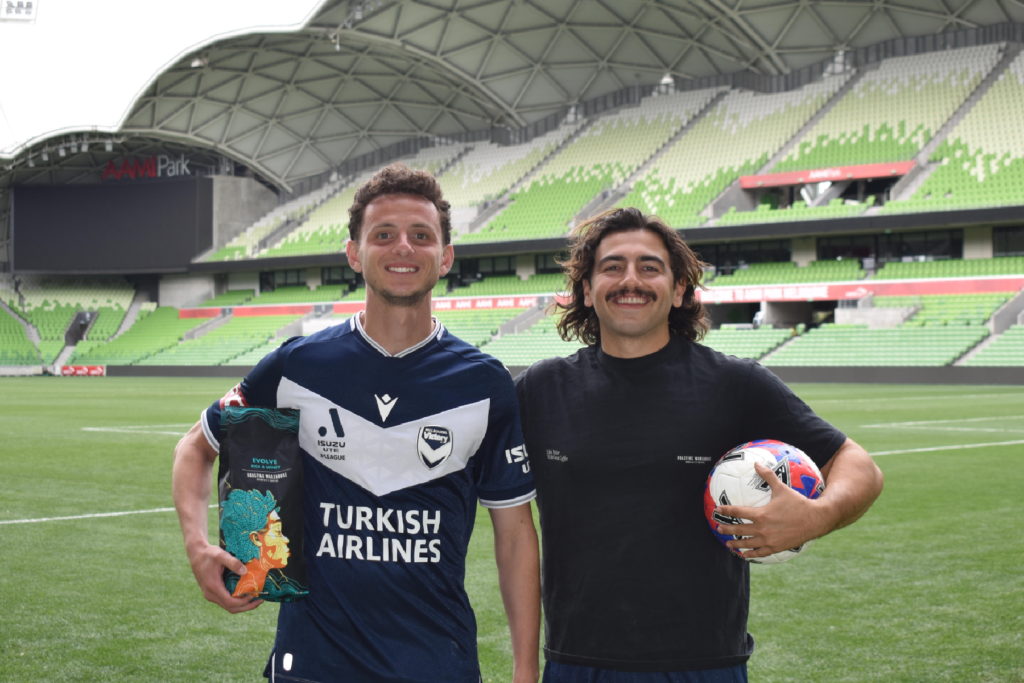
Victory unites with Roasting Warehouse in culture-led partnership

The Melbourne-based anf family-owned business will join the Victory family, uniting two institutions which represent the city’s culture and identity.

A partnership with local roots

As the newest partner of Melbourne Victory, Roasting Warehouse joins forces with a vital part of the city’s sporting landscape.

The club’s Managing Director, Caroline Carnegie, outlined why the partnership bears so much value to both parties.

“We are excited to collaborate with Roasting Warehouse, a community-oriented destination for high-quality coffee, proud of its foundations in Melbourne,” said Carnegie via official media release.

“Football and coffee sit at the epicentre of Melbourne’s culture. The two go hand-in-hand, consistently at the centre of the conversation that stirs Melburnians, which is no different to the conversation sport and Melbourne Victory stir in the State.”

Indeed, this is a partnership which combines the identity, passions and culture of an entire city, therefore giving it the foundations required for long-term, mutual success.

Representing the best of Melbourne

Both Victory and Roasting Warehouse are hugely successful in their respective industries. They are institutions with community-oriented philosphies, who pride themselves on craft and quality.

“We’re incredibly proud to partner with Melbourne Victory, a club that represents the heart, passion, and ambition of Melbourne,” revealed Roasting Warehouse Head of Brand, Alexander Paraskevopoulos.

“As a Melbourne-founded, family-run business, supporting a team that means so much to the local community feels very natural for us.”

Furthermore, through their high-quality blends, Roasting Warehouse will look to prepare Victory’s players and staff for high performances on the pitch as the seasons nears completion.

But this is about far more than just fueling athletes.

This is a partnership which embodies and unites two of Melbourne’s greatest strengths and cultural markers – a connection forged from the city’s very own DNA.


For more information about Roasting Warehouse, click here.

Most Popular Topics

Editor Picks

Send this to a friend