

Robert Cavallucci: “We are no longer going to accept playing second fiddle to other sports”

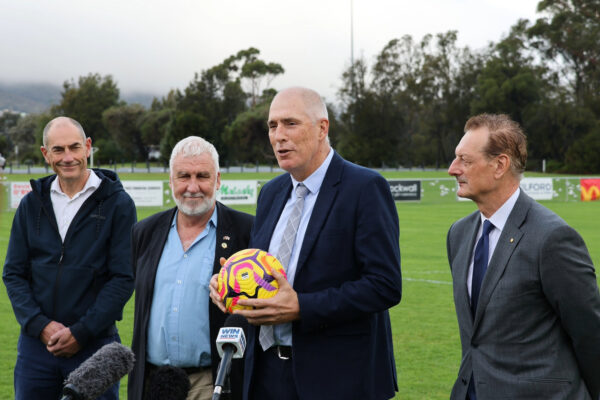
With the COVID-19 restrictions easing in Queensland, CEO of Football Queensland Robert Cavallucci is travelling the state to conduct club summits as part of the Future of Football 2020+ consultation process.

The strategy aims to provide a voice for people involved within the football industry. Administrators, coaches, players, and other stakeholders are being encouraged to constructively participate in high-level discussions and provide recommendations.

After conducting several summits and scheduling many more, Cavallucci spoke exclusively with Soccerscene to share his insights into the current state of investment, infrastructure, and regional football in Queensland and also to discuss some of the challenges ahead.

“We are conducting an extensive state-wide consultation process and the main purpose of it is to listen. It is about asking football stakeholders their vision of the game and ultimately, we will bring it all together in a report where we will outline opportunities across four key areas of focus. Governance, administration, competition reform, and affordability,” Cavallucci says.

One of the major goals for Football Queensland moving forward will be to amplify the level of investment that the State and Federal governments provide. With participation rates steadily increasing, Cavallucci fears the current level of infrastructure will struggle to meet the growing demand caused by more players and more staff.

“The level of infrastructure and financial support is mixed. Some areas have fantastic facilities and others have suffered from years of underinvestment,” he says.

“Underinvestment has been a systemic problem for Australian football. In the past our sport has failed to work with governments in a meaningful way. In Australia and in Queensland, we have failed to demonstrate our value and our contribution to the community. We have failed to stand up for ourselves and we have failed to make the case as to why our sport deserves significantly better investments from the government.”

“We now can demonstrate with data that we are clearly the biggest game, particularly for girls and women. We have the Women’s World Cup on the way and it is absolutely our responsibility to make the case as to why they need to support our game. There is an imbalance of investment and our infrastructure can simply not accommodate the growth, let alone the nature of the game which is changing and becoming far more inclusive and accessible than ever before.”

Although there is a need for more financial backing, recent years have seen a positive trend in the amount of wages Football Queensland have been able to allocate to staff working within the industry.

Data provided by Cavallucci reveals that for men’s football, the annual budget allotted to coaches and other staff in the state was $178,000 in 2017. This rose to $316,000 in 2018 and to more than $551,000 in 2019.

For the women’s side of the game there has also been a substantial increase of funding to meet the demand driven by participation rates. In 2018 $65,000 was being invested into staff wages, a figure which rose to more than $200,000 in 2019 and is set to increase further.

Football has long overtaken the traditional powers of Rugby League and Rugby Union as the most popular organised sport in Queensland and the successful Women’s World Cup bid will certainly add to the world game’s momentum. Football Queensland is optimistic of seizing the opportunities that are presenting themselves by implementing a level of planning and professionalism that has not previously existed.

“For the first time we have created a state-wide infrastructure plan which clearly outlines our motives for the next four years, how we plan to deliver these motives, and how we will work with the government to achieve them. It’s the first time all these types of things are being done and documented,” Cavallucci says.

“Football is the biggest and greatest sport; we are no longer going to accept playing second fiddle to other sports.”

While Football Queensland is working towards high-level reform, the current summits are also focusing heavily on regional and grass-roots football.

One of the major challenges top level administrators currently face in Queensland is the sheer vastness of the state. Townships and regions are often separated by hours of travel so providing equality in terms of competition, infrastructure and development pathways has always been difficult.

“We’re absolutely keen to develop regional football further, but Queensland is a very big state. The tyranny of distance presents immense challenges to ensure we have the opportunity for all participants to have access to the same services, pathways, facilities, opportunities for coaches, and referees. It presents enormous challenges,” Cavallucci says.

“That being said, regional football in Queensland is in a fantastic place. We have great local competitions and there has been some major growth in participation figures for across both genders.”

Cavallucci adds that a theme of the feedback, particularly from those in northern Queensland has been around restructuring the competitive zones. The state is currently split into 10 geographical zones which although designed with the best intentions may be holding clubs back.

“From our perspective, there needs to be a willingness to be open to new ideas. Many of the clubs want broader regions because they feel constrained within their geographical boundaries. The feedback around that has been really strong as the boundaries may limit what some of the more aspirational clubs are wanting to do,” he says.

The Future of Football 2020+ consultation process is expected to include more than 186,000 participants, 317 clubs, and 12 stakeholder groups. For more information or to register for a focus group, visit footballqueensland.com.au/future-of-football.

Previous ArticleNext Article

Community Spirit Shines on AFC Grassroots Football Day 2026

This week, Football Australia (FA) celebrated AFC Grassroots Football Day 2026, championing the people and communities who continue to hold up a safe, inclusive and supportive environment in the football landscape.

‘For all, for life’

In collaboration with Football NSW, Canterbury Football Association and community club, Balmain & District Football Club, the day reflected the very best of what football provides.

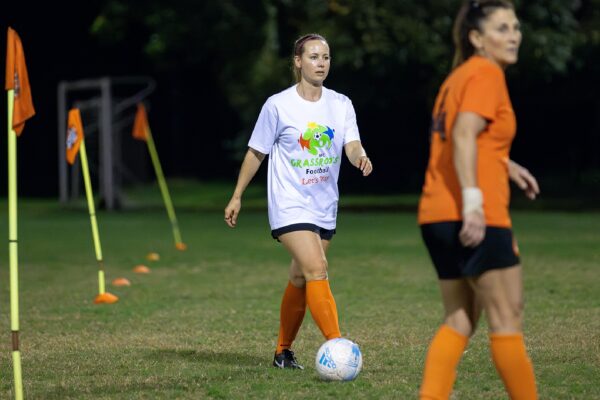
The event brought in participants of all ages – from 4-74 years-old – and reached a total of 400 people. Girls-only programs, all-abilities sessions and over-age football ensured all were catered for.

Such a diverse range of participants builds on a wider drive during FIFA World Football Week, which seeks to promote the sport not just as the dazzling lights of 100,000-seater stadiums, but as a way to foster community spirit and social development.

Furthermore, FA support through its Club Changer program was a welcome addition to the action, emphasising the organisation’s commitment to nurture a real love for the game across communities in Australia.

“Through Club Changer we support our clubs to provide a safe, fun and enjoyable environment where everyone is welcome; whether that be as a player, volunteer, referee or supporter,” explained National Program Manager Club Development at FA, Grace Lambourne.

“Everyone should feel they belong and are welcome to play, stay, and love the game.”


A welcome celebration

While the upcoming FIFA World Cup will no doubt inspire millions of future Socceroos and Matildas, events like the AFC Grassroots Football Day represent something beyond just inspiration.

It is a platform. An opportunity to express a love for football and to connect with others while doing so.

And connections between the professional and grassroots game is more important than ever if Australia is to nurture the next generation of talent.

This is particularly clear in the rise of women’s football across the nation. Since the FIFA Women’s World Cup, female participation rose by 32%, and registrations for the MiniTillies Program skyrocketed from 264 in 2023, to 1223 in 2024.

The professionals spark passion. But communities turn that passion into playing time.

That is why celebrating grassroots football – and the volunteers and families who sustain it – is a vital part of Australia’s football future. Together, FA and the AFC are creating strong foundations built on positivity, engagement, and inclusivity for all with a love for the beautiful game.

What do Football Queensland’s Annual Numbers mean for Australian Football?

Football Queensland has released its 2025 Annual Report, revealing record total revenue of $25.3 million, participation exceeding 296,000 and more than 94,000 female participants across the state, as the organisation positions itself for a decade of growth leading into the Brisbane 2032 Olympic and Paralympic Games.

The report, released following the Annual General Meeting on Friday May 22, documents a year in which Football Queensland recorded a pre-depreciation surplus of $306,599 while maintaining participant registration fees at their lowest level among all Australian member federations for the fifth consecutive year. A statutory deficit of $269,860 after depreciation was recorded following the recognition of a $295,953 impairment against a long-outstanding debt owed by Football Australia, a matter the board and executive indicated they would continue to pursue.

Total revenue grew from $23.9 million in 2024 to $25.3 million in 2025, driven by increases across registration income, community and advanced football programs, and other income streams. Commercial revenue declined slightly from $3.66 million to $3.36 million across the same period.

Growth on and off the field

The participation figures embedded in the report underscore the scale of the challenge and opportunity facing Queensland football. Women’s and girls’ participation reached 94,165 across all programs, with club-based women’s and girls’ participation growing to 37,946. Coles MiniRoos participation climbed seven percent to 46,448, with female MiniRoos participation up ten percent.

Girls United programs welcomed more than 3,500 participants across leagues, social sessions and carnivals statewide, while the Q-League Schools Competition has now delivered playing opportunities to close to 1,000 students since its inception. Walking Football continued to expand, with the 7th Annual QUT Walking Football Cup attracting 39 teams and more than 300 participants.

Digital engagement also reached new heights, with FQTV livestream views climbing to 2.47 million and women’s viewership surging 67 percent across the year, a figure that reflects the growing audience for female football at state competition level and points to the commercial opportunity the women’s game represents for Queensland football governance.

Coach registrations grew 22.9 percent, with Football Queensland delivering courses to close to 3,000 participants across the state including dedicated all-female Foundation of Football, C Diploma and B Diploma programs. Referee registrations grew 6.3 percent, supported by 170 courses delivered to more than 2,100 attendees and a landmark Memorandum of Understanding with three of Queensland’s leading school sport associations to strengthen referee development pathways.

The 2032 dimension

Perhaps the most consequential element of the 2025 report is Football Queensland’s progress on the Brisbane 2032 infrastructure agenda. The organisation submitted a comprehensive proposal to the Queensland Government’s 100-Day Olympic Infrastructure Review, advocating for a purpose-built Tier 2 rectangular stadium, upgrades to Perry Park and the establishment of a Queensland State Home of Community Football at Meakin Park.

The submission secured meaningful outcomes, with Queensland Government contributions toward Perry Park and a State Home of Community Football included in the government’s 2032 Delivery Plan. The infrastructure foundations being laid now will determine whether the Games leave a lasting legacy for football in Queensland or a missed opportunity.

CEO Robert Cavallucci said the year had been defined by investment in the structures that make participation possible.

“Our priority remained the delivery of accessible and inclusive participation opportunities for all Queenslanders as our community and social programs reached thousands of players in every corner of the state,” Cavallucci said.

Most Popular Topics

Editor Picks

Send this to a friend