Nick Maikousis: National Second Division a “golden opportunity to unify football”

Long before the ‘Golden Generation’ went on to achieve stardom and represent the Australia at the 2006 FIFA World Cup, many modern household names earned their stripes during the 1990s in Australia’s National Soccer League (NSL). The division was unrelenting and highly competitive – factors many successful Socceroos credit with shaping them into the players they became.

South Melbourne FC president Nick Maikousis believes the introduction of a National Second Division will promote home-grown talent in a similar vein and play a significant role in resurrecting Australia’s youth development pathways.

“The reality is with the number of Visa players in the A-League there isn’t as much opportunity for young Australians compared to what used to exist. The view of South Melbourne and the Australian Association of Football Clubs (AAFC) working group is that the second division will predominately be made up of Australian talent,” Maikousis said.

“Introducing a second tier will mean exposing young Australian talent to regular competitive football. The quality of the game will improve as young boys and girls are given exposure and experience – the results can only be positive.”

Australia has still enjoyed recent periods of success, most notably winning the 2015 AFC Asian Cup, but during the past decade there has been a tangible decline in the number of Socceroos playing in the world’s top leagues.

Experts argue a multitude of reasons for this downturn, but a trend has emerged of young talented players moving overseas early in their careers only to become lost in the cutthroat European system, ultimately stagnating in their development.

SMFC sold a young Kevin Muscat to Crystal Palace for £35,000 in 1996. One example of many homegrown NSL players who went on to succeed in Europe.

“There were obviously inherent issues with the competition in those days, but if you look at our success during the 2006 World Cup campaign, most of the squad was produced locally before they went on to the highest levels of European football,” Maikousis added.

“Ange Postecoglou’s South Melbourne teams that won back-to-back titles in 1998/99 and then went to Rio de Janeiro for the FIFA Club World Championship in 2000 were full of Aussie players. The model that we are to create will also promote home-grown talent in the same way.”

Maikousis and others in the football world are also optimistic that a second division will lead to a mature domestic transfer market through the unification of the game into one linked football pyramid. This would allow FFA to regulate and encourage player movement, paving the way for a model that mimics those in many international environments.

“Clubs would have a financial incentive to develop their young talent as they would be compensated if A-League clubs or rival clubs acquired their players,” Maikousis said.

“Again, going back to the NSL, South Melbourne sold so many players overseas and we believe that would become part of the model in addition to player pathways, the idea that clubs develop players and are remunerated for it.”

Many football administrators would be excited by the prospect of an operation transfer market which rewards youth development, but a potential second tier would also create many additional financial benefits for Australia’s clubs.

From South Melbourne’s point of view, Maikousis believes the club already has the foundations and fanbase to compete at a higher level.

“South Melbourne would grow exponentially. We have done a lot of modelling when we were putting together our official A-League bid. In terms of sponsorships, memberships, gate attendances, and player development we believe the club would generate significant revenue,” Maikousis said.

“In our research we established through our social media channels that we have roughly 100,000 followers. This figure already ranks comparatively with some of the A-League clubs and we’re comfortable we would convert a percentage of these into members.”

“I think the critical thing to understand is the capability of these potential second division clubs. There will be significant long-term benefits because it allows South Melbourne and other clubs to better themselves and also puts pressure on the A-League clubs to continue to better themselves as it will create a competitive environment.”

During recent months there has been considerable speculation about what a potential National Second Division will look like. AAFC has formed a working group of clubs supporting a second tier, dubbing the division ‘The Championship’.

To date, 35 clubs have officially joined the group, including South Melbourne FC. The working group has publicly stated it hopes to see the second division implemented in 2022.

Maikousis (L) with SMFC captain Brad Norton and Greece legend Giorgios Karagounis.

“Progress has been very productive. We’ve had a number of AAFC meetings. The first was an invitation to all NPL clubs across Australia to see who is in a position to play in a potential second division and also to see who is prepared to fund the work that’s required,” Maikousis said.

“There are various working groups this week as well so there is more to come.”

Although the concept is still in its infancy, momentum is growing and The Championship working group is modelling and consulting with game stakeholders to provide recommendations to FFA.

“FFA is very much accepting that this is going to happen. It has been working with all the stakeholders to make sure we create a model that works for everybody. James Johnson and Chris Nikou have a chance to unify the game and I cannot think of a better way to unify football in this country than to build a system which acknowledges everyone and every club,” Maikousis said.

“FFA have asked us to consider a conference system instead of a broader European-style system. I can say from South Melbourne FC’s point of view, our preference is a traditional European-style national second division but the working groups will do the relevant work to provide recommendations based on what is best for the majority.”

While there is still much work to do, the official formation of the National Second Division now appears an achievable prospect. For more information on The Championship, please visit HERE.


Previous ArticleNext Article

Football Victoria recognised in Pride in Sport Index 2026

The Silver Status shows Football Victoria‘s commitment to providing Victorians with a safe, inclusive landscape for all to enjoy the beautiful game.

Everyone’s game

Earlier this month, the Australian Pride in Sport Awards recognised several organisations and individuals across the nation who continue to champion inclusive spaces in the world of sport.

Among the nominees was Football Victoria, who received the Silver Status. FV Executive Manager Equity, Programs and Government Relations, Karen Pearce, expressed her pride at the achievement.

“Achieving Silver Status in the Pride in Sport Index is an important reflection of the work being done across Football Victoria to ensure LGBTQ+ people feel safe, welcomed and included in our game,” Pearce said via official press release.

“We remain committed to embedding inclusive practices across all levels of football, and continuing to create environments where everyone can belong, participate and thrive.”


Inclusion matters

While recognition is always a positive reflection of successful work behind the scenes, it is important to remember what the work intends to achieve.

Football – and sport in general – is a unique opportunity to bring diverse communities together, and to compete, spectate and enjoy the game on an equal playing field.

Furthermore, as custodians of ‘the world’s game’, governing bodies, fans and players around the world all share the responsibility to empower marginalised groups to feel included.

Two months ago, The Premier League introduced their own initiative – Premier League With Pride – reflecting their own commitment to ensuring football grounds, schools and academies remain welcoming.


Final thoughts

There is no place for hate or abuse in football, whether on a grassroots field or professional stadium.

Football Victoria will continue its journey and commitment to supporting the LGBTQ+ community – at all levels of the game – for many seasons to come.

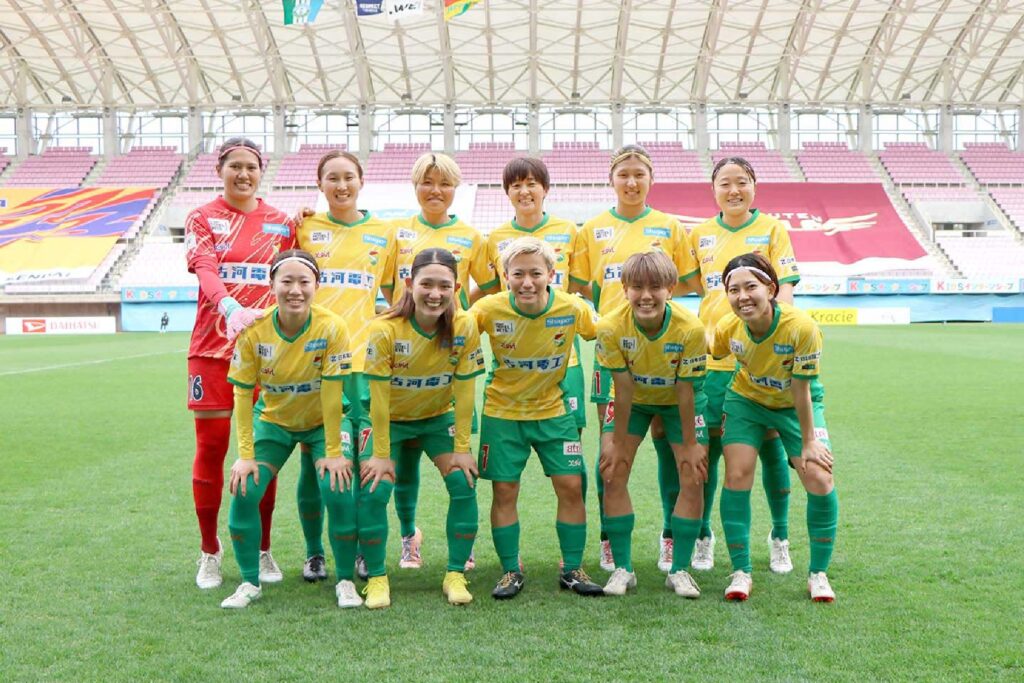
Beyond the Pitch: Miyuki Kobayashi on the Real Challenges Facing Japan’s Women’s Game

Last week, Soccerscene spoke to pioneer of women’s football in Japan, Miyuki Kobayashi, about the game’s development in Japan and the intersection between sporting and social change in the country.


Talent, quality and recent silverware

After Japan’s recent AFC Women’s Asian Cup victory in the final against Australia, the women’s national team solidified its standing as the No.1 team in Asia.

Throughout the last 15 years, Japan’s women’s national team has grown into a formidable opponent, boasting a World Cup trophy, an Olympic silver medal, as well as three AFC Women’s Asian Cups.

The talent is undeniable. The quality is unwavering. And the team shows no signs of slowing down.

But these victories and trophies on the world stage wouldn’t be possible without the leaders behind the scenes – none more so than Miyuki Kobayashi, former WE League Board Member and current JEF United Ladies Scout and Academy Chief.


Laying the foundations

Kobayashi has led the charge for women’s football in Japan, promoting not only a sport which values success, but one which empowers female footballers across the nation.

“At university, not many girls were playing and we didn’t have an official team. I went to the US and the environment was so different,” Kobayashi explained.

“That opened my eyes – women can play. That’s how I started the women’s soccer league when I came back: to make an environment for girls to play.”

Thus, accessibility and opportunity became driving factors behind Kobayashi’s work, not only for those on the pitch, but for those in the dugout.

“I got involved at the JFA (Japanese Football Association) to promote women’s football. We wanted to create the opportunity for women to be coaches.”

“They are coached by men all the time, so even when the top players leave the football world, they never think to be involved.”

Furthermore, as a former coach of JEF United Ladies Youth and General Manager, Kobayashi was intent on employing as many female coaches as possible. It was not merely a personnel change, but a challenge to widespread social attitudes.

“When I started to employ female coaches, the girls’ parents asked why the coach wasn’t a man. But gradually, we started to make it equal – they didn’t talk about the gender, but about the quality of the coach.”


The mission to empower

In 2011, the same year Japan’s women won the World Cup, the domestic league was yet to become professional. Known as the Nadeshiko League, players would work during the day and train in the evenings.

The transition from an amateur to the current professional league required time, resilience and a change in perspective.

“The sports world in Japan is more traditional – it is dominated by men,” said Kobayashi.

“If you want to make the environment even, or (want) more women to come into the (football) world, you can change the mind of the players.”

Since 2021, the WE League has embodied a sense of growth and positive change for the women’s game. In name and nature, it looks to empower players, coaches and all involved in the industry.

“I was in charge of mission achievement for women’s empowerment. We wanted to educate the players, to inspire girls and women who watch the game.”

However, the drive to empower women in football was not without backlash and challenges.

“Some people don’t like that word: ’empowerment’. It’s too strong for them. Some women really appreciate it, but it’s not easy to change the mind of society through football,” Kobayashi admitted.


Growing and attracting talent

Although WE League clubs are accelerating youth development and expanding pathways across U15, U18 and first team football, Kobayashi acknowledged that the overall product must improve to bring foreign players to Japan and entice homegrown talent to stay.

“Most of the national team players go to Europe or North America. I don’t say it’s a problem, but from a young age, girls who can play in the WE League want to go abroad,” Kobayashi outlined.

Indeed, when looking at the starting XI in last month’s AFC Women’s Asian Cup final, only one player – Hana Takahashi – plays in the WE League.

But the key to attracting domestic and international players to the WE League, is aligning financial investment and industry attitudes.

“The reason why women’s football has developed in European countries is the social thinking – you have to be equal and have the same opportunities as men in football. The Japanese way of thinking, especially in the football world, is not that at all,” Kobayashi continued.

“When I speak to people at Spanish clubs, women’s football is not a charity, but an investment.”

“We have assets. We have good, young players, but we’re exporting them, so we need to import too.”

Indeed, Spain is a perfect example of what can happen when investment becomes intentional, not optional. Back-to-back UEFA Women’s Nations League titles, 90% television viewership increase since 2016, and record-breaking crowd numbers reflect what can happen when the industry aligns in vision and commitment.

Japan has the players to compete against any nation in the world. Purposeful investment, combined with its overall quality of players and style, could transform the WE League into a true, global powerhouse.


The vision for the future

Moving forward, Kobayashi hopes that girls progressing through JEF United’s academies develop confidence and resilience, whether as players or people.

“We want to make the girls – even if they aren’t in JEF United – continue playing football and continue to be leaders,” Kobayashi said.

“Some of them have a dream to be a coach or a leader off the field too, so that’s one of the attributes we want to develop.”

This resilience, reflected by the club’s ‘never give up’ philosophy, is testament to the vision of empowerment championed by Kobayashi across the women’s game.

Even in the face of social obstacles and a lack of financial investment, perseverance and hard work is at the bedrock of women’s football in Japan. It is not just that these values exist, but that they are consistently manifested on and off the pitch, which can show future generations that football is a sport for all – men and women alike.


Final thoughts

There is no limit to what the WE League and the national team can achieve if given the resources it deserves. All the ingredients are there: individual quality, a distinct playing style, football philosophy and ambitions to grow.

By following the example of industry leaders like Kobayashi, women’s football in Japan can hopefully continue to make waves of impact – in the sporting landscape and society as a whole.

Most Popular Topics

Editor Picks

Send this to a friend