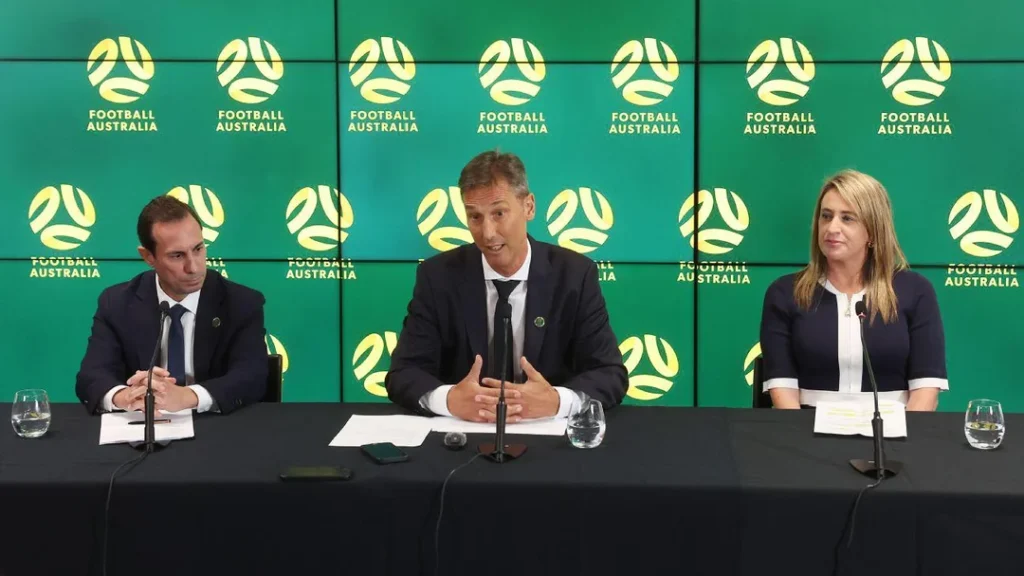



Nick Galatas on addressing the link between National Second Tier with promotion and relegation

The National Second Tier (NST) competition is building towards its expected start date of March/April 2025, but its final structure has not been settled.

While eight teams were initially announced with representation from Victoria and New South Wales, we are still yet to find out who will make up the rest of the ‘national’ component.

We will at least have an update on this around June 2024, as the Request for Proposal (RFP), Assessment & Review and Completion Phases are all completed.

Association of Australian Football Clubs (AAFC) Chairman Nick Galatas has been a vocal advocate and involved in establishing the NST from its inception, but despite the previously announced foundation clubs, there is still work to do to ensure the NST starts in the best possible shape.

At this stage, eight foundation clubs have been confirmed, but there is a push to increase the number to at least 12.

Despite 26 clubs advancing to the RFP phase, only 8 foundation clubs proved to be a major drop off from what appeared a healthy pool of teams to choose from.

“There were 26 clubs that looked to be in a great position to be selected to start in the new NST,” Galatas told Soccerscene.

“From those, it would be expected to get 12 for a kick-off in 2024 but didn’t pan out that way.”

A lack of structure around how promotion and relegation will work with the NPL does leave some uncertainty for the clubs left out of the NST. Many clubs remain eager to be part of the expected four additional teams to be added for the competition’s commencement early in 2025.

For Football Australia, consistency will need to be applied across the board about how clubs go up and down between the NST and NPL when promotion and relegation commences. Football Queensland has made rules that a Queensland coming into the NST will revert to the competition it was in before it joined the NST. That is inconsistent with the approach of other member federations.

For example, with Preston Lions FC competing in Victoria Premier League 1 in 2024 prior to the commencement of NST, if they get relegated is it one step below to NPL Victoria or the original league they are in now?

Galatas outlined how everyone must be on the same page to form a unified system.

“As a scenario, we can think ahead to, say, 2027 and it’s the third year of competition, which is may also have expanded by then and include Queensland teams,” he said.

“For example, if, say, Preston Lions from Victoria and Sunshine Coast Fire FC from Queensland are relegation candidates in that season, it’s untenable that those teams would face different predicaments if relegated with Preston to the NPL and Sunshine Coast to oblivion.

“Hypothetically if we talk about relegation, everyone agrees that a Victorian-based club would be relegated to NPL Victoria even if originally from a lower league.

“However, when you compare it to a Queensland club, getting relegated means that they go into oblivion, which doesn’t add up. It’s fundamental and accepted practice that a relegated team goes down one rung and it has the chance to come up again.

“Football Australia needs to discuss a relegation scenario with all of the member federations and ensure there is a consistent approach. It will run the competition and must ensure the member federations work together with it and the clubs to achieve this outcome.”

Galatas outlined what he hopes to see out of the upcoming application process, moving one step closer to an Australia-wide competition.

“Instead of the eight confirmed teams we see now, it should be 12 teams from hopefully at least four states or territories to achieve the best competition,” he said.

“I would have liked to have seen a 2024 start date with 12 teams and have all the big players ready to go, but instead we’ve had a delay. But so long as we use the additional time to start strongly, the extra year to wait is not important in the overall picture.

“Having Queensland plus at least one of South Australia, Tasmania and Canberra to include four states from the get-go is the ideal platform to build on.

“Then we can look at Western Australia and the remaining areas as we build – we are just starting. We can grow the competition without rushing into it too much from a logistical point of view.”

Previous ArticleNext Article

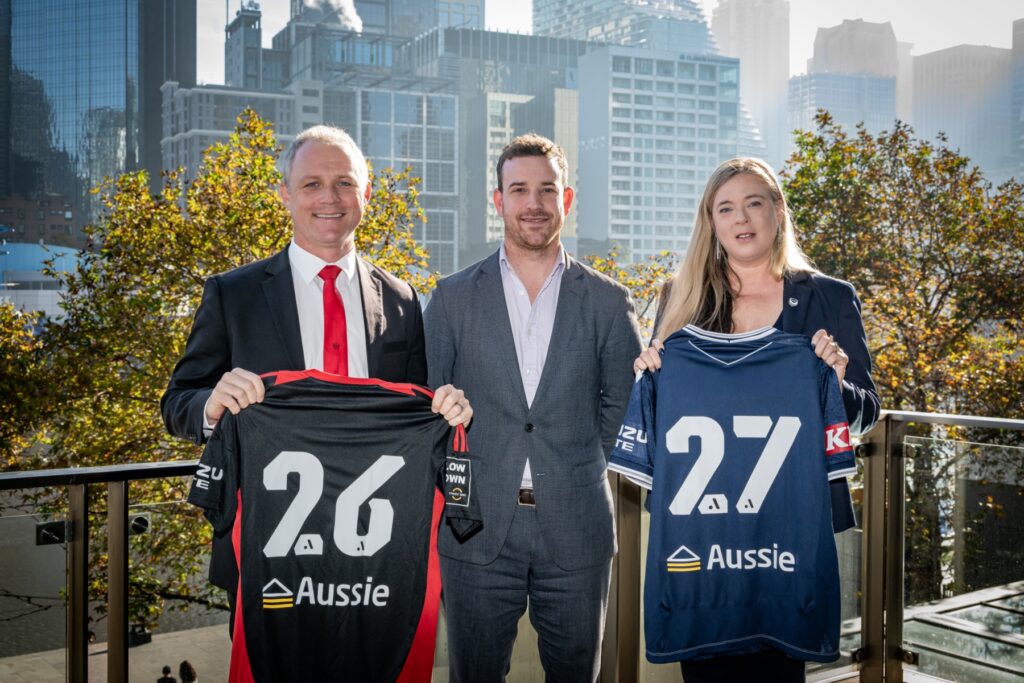
Aussie partners with two A-League clubs in cross-state alliance

Australia’s largest retail mortgage broker will team up with Melbourne Victory and Western Sydney Wanderers, representing Aussie’s commitment to supporting and connecting people through football.


Opposing teams, United partners

The alliance between Aussie, Melbourne Victory and Western Sydney Wanderers reflects a unique approach to investing in Australia’s football landscape.

It encompasses both communities and supporters across Melbourne and Sydney, with Aussie’s presence in both cities now firmly embedded into local, grassroots networks.

“We’re excited about this partnership because it represents much more than a traditional sponsorship,” explained Aussie National Manager, Strategic Partnerships, Ryan Ferguson via press release.

“It’s about connection, community, and being part of something that reaches people in a meaningful and authentic way.”

Both Melbourne Victory and Western Sydney Wanderers also commented on the unique nature of the partnership.

“The joint venture is a game-changer in how brands and sports teams can collaborate beyond the traditional instruments of a partnership and stands apart from the existing relationships in our sporting landscape for the betterment of our stakeholders,” said Melbourne Victory Managing Director, Caroline Carnegie.

“For the first time, two iconic clubs are coming together in a joint-venture sponsorship that delivers unmatched reach, community impact and business innovation,” added Western Sydney Wanderers CEO, Scott Hudson.


National stage, local commitment

As Australians grapple with soaring property prices and financial uncertainty, having access to a platform like Aussie is immensely valuable.

So now that Aussie will begins its venture alongside Melbourne Victory and Western Sydney Wanderers – two clubs with extensive fanbases – it now has the means to make real, local impact.

Two major cities. Two footballing identities. All aligned under the same vision for community reach, growth and innovation.

“Aussie is a national brand, but at our heart, we are built on local relationships,” continued Ferguson.

“Every day, our brokers are working with customers in their communities, helping them navigate the journey of finding, buying and owning their own home. That’s why this partnership feels like such a natural fit.”

Ultimately, while the alliance will build on the business and community networks of the two A-League outfits, the impact will extend far beyond the boundaries of the pitch.

More Than One in Five Football Australia Staff to Lose Jobs Amid Growing Financial Losses

Australian football finds itself in a curious position.

From the outside, the game appears to be riding a wave of momentum. Attendances, visibility and public interest have all experienced significant uplift in recent years, while major international tournaments and growing discussion around football’s future continue to place the sport firmly within the national conversation.

Yet behind that momentum, Football Australia is now confronting a far more challenging internal reality.


A compounding deficit

Chief Executive Martin Kugeler has reportedly indicated the governing body’s projected financial losses for 2025 are expected to exceed the organisation’s reported $8.5 million deficit from the previous year. Accompanying the financial outlook are substantial organisational changes, with reporting from Tracey Holmes indicating more than one in five Football Australia employees are expected to lose their positions through restructuring measures.

The figures represent more than a difficult balance sheet. They point toward a significant period of recalibration inside the organisation responsible for overseeing the sport nationally.


Losing the wisdom of existing staff members

For governing bodies, restructures are often framed as strategic necessities for future sustainability. However, workforce changes on this scale also raise broader questions around the challenges of such a transition.

People are often the carriers of knowledge, relationships and long-term strategic understanding. When organisations undergo significant structural change, the effects can extend beyond immediate financial outcomes.


Contradicting timing

The timing is what makes the developments particularly notable.

Football in Australia has spent recent years discussing expansion, growth and long-term opportunity. The conversation surrounding the game has increasingly centred on future potential. Often headlining stronger pathways, larger audiences, infrastructure development and greater visibility.

Against that backdrop, news of deep financial losses and substantial staffing reductions creates a different conversation: one focused not on where the game wants to go, but on what may be required to sustain that journey. Therefore, this announcement points toward stagnancy, rather than growth.

Further detail surrounding Football Australia’s strategy and long-term direction will likely emerge over coming months. For now, the developments serve as a reminder that growth stories are rarely straightforward.

Often, the periods that appear strongest from the outside can also be the moments organisations face their most significant internal tests.

Most Popular Topics

Editor Picks

Send this to a friend