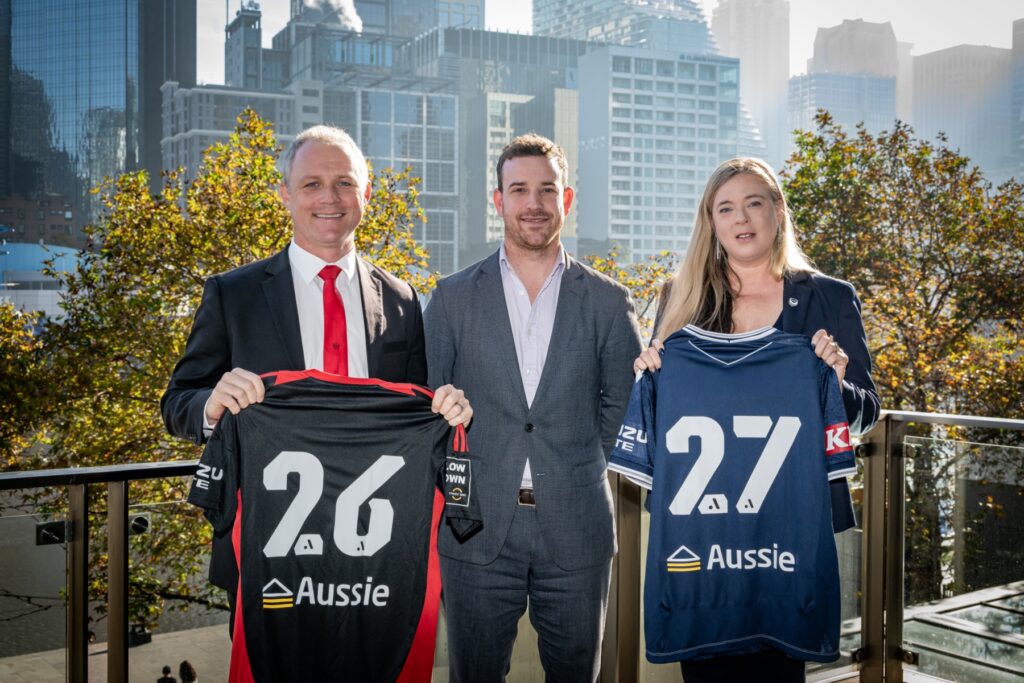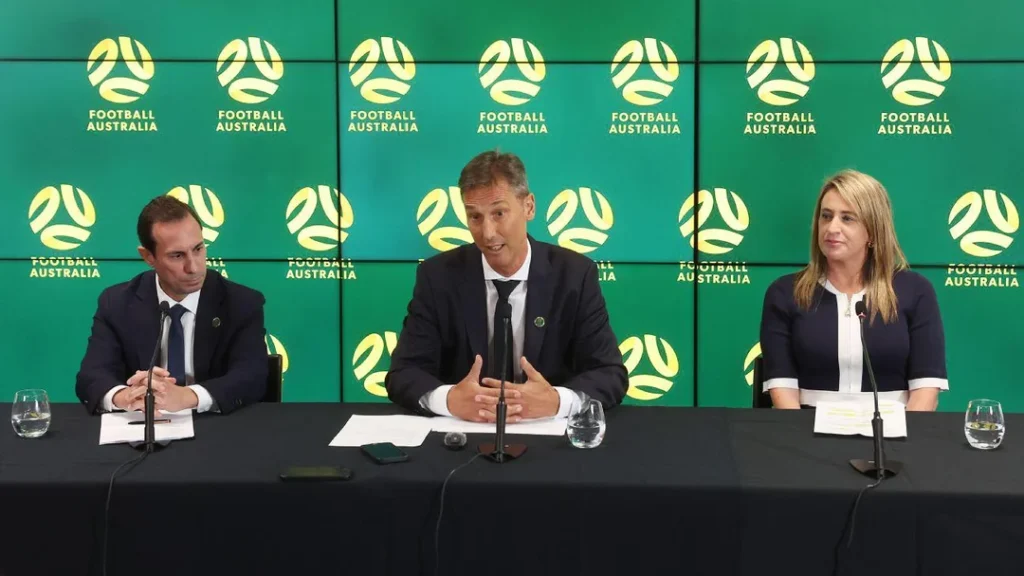





Australia’s top-flight football competition is back and whilst much has changed it is clear that there is still a lot of work ahead.
The clubs are no longer driving from the back seat, and they have wasted no time and spared little expense in committing to a major makeover to Australia’s top-flight competitions, A-Leagues Men and Women.
A glossy new look, an inclusive new name that bundles the premier men’s and women’s competition, sleek new graphics, a bumper free-to-air deal as well as a new streaming service and dedicated football news platforms all represent solid wins for the Australian Professional Leagues ahead of their debut season on the back of a mountain of preparation that has gone into the promotion of the competition.
Whilst only the most naïve will have expected the efforts to deliver an instant return, the sobering numbers from the opening round of the 2021/22 A-Leagues Men season demonstrate just how much work lies ahead.
Not even the gloss of all the stellar exertion put into revamping the look and feel of the A-Leagues and the fantastic efforts that went into broadcasting the competition to Australia’s audience could completely deflect from the real issues that football continues to face in Australia.
Put simply, they are the same issues that have plagued the sport in Australia for decades, including infrastructure and failing to connect with every part of the Australian football fraternity.
The embarrassing relocation of Macarthur FC’s opening round clash with Wellington Phoenix due to the dire state of the pitch at Campbelltown Stadium will have resonated with hundreds, if not thousands of football administrators all over the country who rely on third parties to maintain their playing surfaces.

It’s one thing for a third-tier state league team to have to relocate a game due to a bad pitch.
It’s another thing for it to happen in the top-flight. Put bluntly, it’s completely unacceptable.
The issue serves as an urgent reminder for the needs of football owned and operated infrastructure.
The sub-10,000 attendance figures at four out of six games highlight the top-flight’s ongoing struggles to get bums in seats and build genuine support for expansion sides.
Off the back of a championship-winning season, Melbourne City would have to be disappointed with a crowd of 7,213, whilst the 8,210 who turned out for Western United’s home game against Melbourne Victory were largely supporters of the away team.
The relocated 1-1 draw between Macarthur and Wellington attracted a touch over 1,000 people, with a contingent of the people in the ground having stuck around following the earlier F3 Derby between Central Coast Mariners and Newcastle Jets – a fixture which was attended by less than 7,000 people.
They are numbers that must concern the clubs involved, regardless of the various mitigating circumstances that have been offered as explanations.
Macarthur’s relocation to Newcastle for the weekend was undoubtedly a major issue. However, excuses in Melbourne that with lockdown over, people have other priorities will not hold up in the long run.
The reality is that the pool of ‘new fans’ without attachment to an A-Leagues team or another club is dwindling in an extremely competitive market and this is not something that the APL will be able to expand its way out of.
For football and economic reasons, there is no denying that the A-Leagues needs more teams – as Adelaide United coach Carl Veart passionately advocated for last week. The methods for adding those teams is a critical component of the discussion moving forward.
There are clubs that exist today all over Australia that bring comparable, if not larger, crowds to Macarthur FC, Western United and at times Melbourne City.
Surely, at some point, these clubs deserve an opportunity. One of the biggest obstacles to making this happen is undoubtedly football’s first big problem – infrastructure.
Encouraging further investment in existing football infrastructure through the carrot of opportunities to access the top-flight could be a turnkey solution that will help solve both of football’s biggest issues.
The main short-term issue that was highlighted in round one was the varying quality of stream quality on Paramount+.
Personally, this was not something I experienced watching at least parts of every game via the Apple TV app on my television.
I did notice what seemed like a slightly reduced quality when simulcasting the Western United v Melbourne Victory game on my phone whilst watching the Sydney Derby on TV, but the second half seemed to be an improvement on the first.
Of course, it’s not all bad.
Technical streaming issues are nothing new when it comes to new services launching their live products.
We all remember the hugely frustrating buffering issues many users experienced when the Premier League first arrived on Optus Sport and the issues faced with the 2018 World Cup in times of peak demand.
Optus Sport rose to the challenges remarkably well and at this point, there’s no reason to doubt Paramount’s ability to do the same.
Elsewhere, a sell-out crowd packed into HBF Park to watch Perth Glory’s entertaining 1-1 draw against Adelaide United.
No doubt many of the 17,198 who attended the fixture were attracted to the game for the chance to get a glimpse of former Chelsea, Manchester City and Liverpool star Daniel Sturridge, highlighting the power of genuine marquees in attracting a crowd in Australia.
A healthy 23,118 at the Sydney derby at Commonwealth Bank stadium bodes well for two of the competition’s big teams in a crucial market, too.
The derby also attracted a free-to-air audience of 146,000. On face value alone, that’s not a hugely impressive number, but it is a number that bodes well for the competition according to industry experts, with well-known sports industry commentator @footyindustryAU suggesting that the number was “almost certainly” the highest-rated non-final A-League game in the last five years.
At a glance, Id say this is the best FTA rating for a non final in some time. Almost certainly the highest Metro FTA rating for a non final in at least 5 years. Closest I can see is a 93k metro rating for R1, 2018-19 Melb derby and a 90k metro rating for R2, 2017-18 Melb Derby
— sportsindustry (@footyindustryAU) November 21, 2021
Like most things in life, the marketing gloss will never hide every flaw and the flaws don’t necessarily mean the world is coming to an end.
Round one 2021/22 represents progress and steps forward for Australian football.
The steps forward, however, are on a journey that still has miles to be walked.