


Mingle Sport: Transforming grassroots football management

Mingle Sport is designed to take the hassle out of team management, providing grassroots clubs with the tools they need to operate seamlessly and efficiently.

With three features: Team Management, Performance Tracking, and Scorekeeping. Mingle Sport brings a professional-level experience to local teams. Here’s a closer look at how each feature can enhance your club’s operations.

  1. Team Management:

Keeping a team well-organised requires more than just setting a match schedule. Mingle Sport helps coaches and managers save time, improve communication, and keep everything in one place.

Key Features:

Match & Training Scheduling – Plan all upcoming fixtures, training sessions, and team events in one place. Add locations, arrival times, and additional notes for complete clarity.

RSVP System – Know exactly who’s attending each session or match. No more last-minute confusion—ensure your squad is always prepared.

Transport Coordination – Arrange carpooling and ridesharing within the app, making sure no player is left without a lift.

Attendance Insights – Track attendance trends and understand why players miss sessions, helping coaches improve participation.

Team Chat & DMs – Keep all team communication within Mingle Sport. Share updates in the official team chat, send direct messages, or comment on specific training sessions.

Minutes Played Tracking – Keep a record of each player’s game time to ensure fair rotations and better performance assessment.

Automated Reminders – Reduce no-shows by sending automated RSVP reminders. If a player can’t attend, they can provide a reason within the app.

Formation Builder – Create your ideal team lineup with a drag-and-drop formation builder, whether for an 11-a-side match or a five-a-side tournament.

For those who like a desktop-friendly experience, Mingle Sport Homebase acts as an advanced planning hub. It allows coaches to analyse trends in training attendance, track minutes played and manage lineups more efficiently.

  1. Performance Tracking:

Statistics aren’t just for professionals—Mingle Sport brings the power of data-driven performance analysis to grassroots teams. By tracking key player and team stats, coaches and players alike can measure progress, compare results, and compete for top rankings.

Key Features:

Team & Player Stats – Keep track of match scores, goal differences, win ratios, and overall team performance.

Leaderboards – Rank players and teams based on their stats, fostering healthy competition.

Player Voting – After each match, vote for three key players:

MVP (Most Valuable Player) – The standout performer of the game.

Playmaker – The most creative and influential player.

Workhorse – The hardest-working player who put in the most effort.

Personalised Player Profiles – Each player gets a dedicated profile tracking goals, assists, match highlights, and past performances. Compare stats with previous seasons to track improvements over time.

Performance Metrics (Coming Soon) – Mingle Sport is working on exciting new features to measure shot quality, top speed, stamina, and other key performance indicators.

Attendance Tracking – Monitor individual player attendance across matches and training sessions, helping coaches manage commitment levels.

Goal Trends – Get insights into your team’s scoring patterns over the season.

Win Ratio Analysis – Identify trends in match results—does your team perform better at home or away? Against specific opponents? Use these insights to fine-tune strategies.

With all these features available in one platform, Mingle Sport makes it easier than ever to track, analyse, and improve player and team performance.

  1. Scorekeeping:

Keeping track of match statistics shouldn’t be complicated. Mingle Sport’s scorekeeping tools allow teams to record match events in real time, track player contributions, and share updates with fans and followers.

Key Features:

Goals & Assists Tracking – Keep an accurate record of every goal and assist, with the data automatically updating leaderboards and season stats.

Cards & Substitutions – Log yellow cards, red cards, and player substitutions for a complete match report.

Minutes Played – Use the in-app match timer to track each player’s time on the pitch.

Live Scoring & Match Reports – Share real-time match updates within the app or online, allowing followers to keep up with the action.

Match Ratings & MVP Voting – After each game, players can rate the match from 1 to 5 stars and vote for standout performers.

Season Trends & Team Awards – Identify long-term trends in goal ratios, win percentages, and other crucial team statistics. Recognise top performers with awards like Top Scorer of the Month.

For deeper match analysis, Mingle Sport Homebase on desktop allows coaches to take a detailed look at season statistics, match ratings, and player performance trends.

Conclusion

Mingle Sport isn’t just another team management app—it’s a game-changer for grassroots football. With a focus on efficiency, engagement, and performance tracking, it provides local teams with the tools they need to operate like the pros.

From scheduling and communication to live scorekeeping and performance stats, Mingle Sport brings everything together in one powerful and easy-to-use platform. Whether you’re a coach, manager, or player, this app ensures your team runs smoothly—both on and off the pitch.

 

Previous ArticleNext Article

Football West’s Female Football Week draws record engagement from Metropolitan Perth to Remote Kunurra

Football West has wrapped up its 2026 Female Football Week with activations spanning metropolitan Perth, regional Western Australia and national online platforms, as participation data from the state’s most remote football association underlined the scale of demand for women’s and girls’ football beyond the city.

Kununurra Soccer Association, situated in the East Kimberley more than 3,000 kilometres from Perth, recorded 47 new female registrations aged 7 to 12 across the first two terms of 2026 through Football West’s Junior Girls United program, representing a 30 percent increase in female membership that coaches Hannah Grominsky and Evie Marchetti described as overwhelming.

“The support from the community has been simply awesome,” Grominsky said. “We’re up to nearly 50 registered girls now. The majority of them have never played before or aren’t part of our association, so it’s great to give them a positive football experience in a comfortable environment.”

The program, supported by the Federal Government’s Play Our Way grant, now runs every Wednesday and has extended football activity into the cooler months of the Kimberley calendar, a season when the association would not traditionally operate. The result is a cohort of players new to the game, in a region where access to organised sport has historically been constrained by geography, infrastructure and seasonality.

Recognition across the state

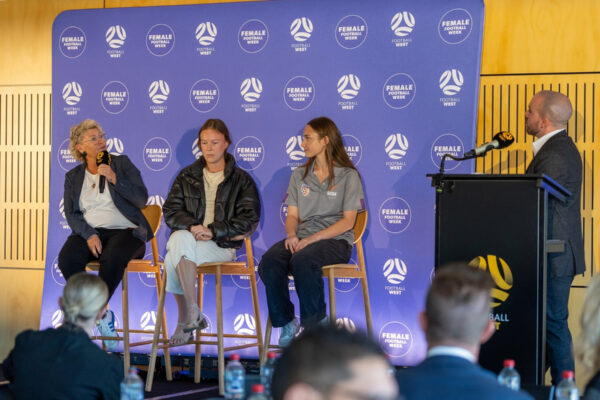
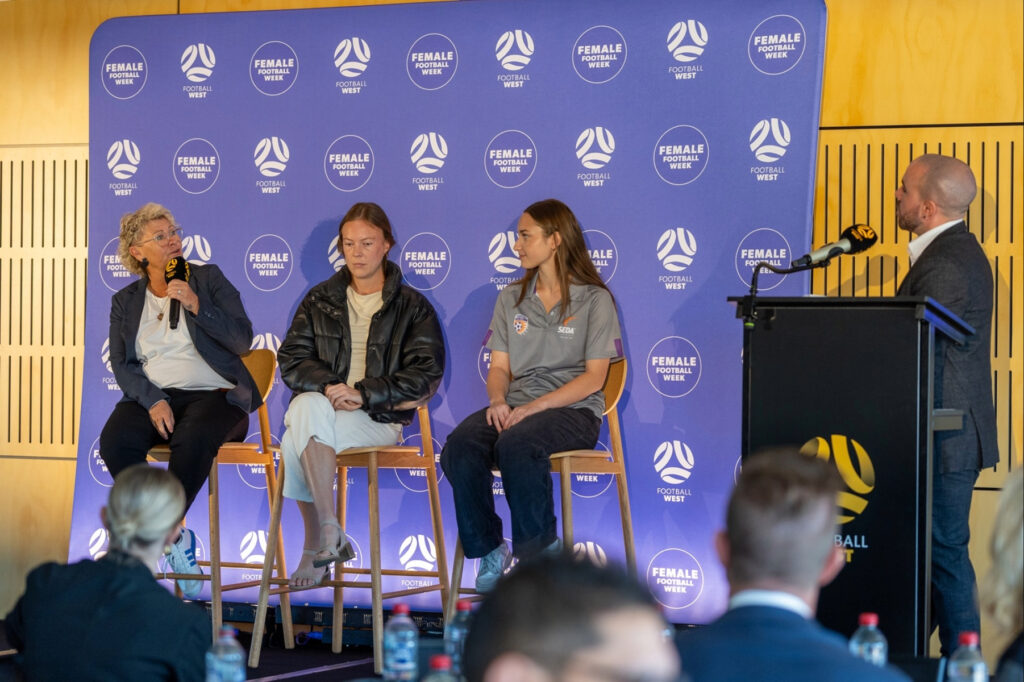
Back in Perth, Female Football Week’s centrepiece event was the Women in Football Celebrate You Breakfast at the Sam Kerr Football Centre, featuring two panel discussions covering officiating pathways, coaching development and advocacy for women in football.

Subiaco AFC NPL Women’s head coach Christine Coppin, who is one of few women coaching at her level in the region, said events like the breakfast were critical to making the pathway visible for others.

“I’d love to see more women coaches putting their hat in the ring, both at junior and senior levels, realising that there’s more to football than just playing,” Coppin said. “They can stay involved in the sport as they get older in different ways.”

A regional Women in Football Breakfast in Albany drew more than 30 attendees, while a Girls Day Out event in the same city attracted more than 50 participants aged 6 to 16 for a come-and-try introduction to the game, extending the week’s reach into the Great Southern and reinforcing Football West’s stated commitment to building women’s football outside metropolitan areas.

Recognising those who make it happen

The week’s awards, nominated by the WA public, recognised five individuals whose contributions to female football across the state were judged most significant over the past year. Cassandra Paxman of Albany Rovers FC was named Coach of the Year, Georgia Whitelaw of Great Southern JSA and Albany JSA took Referee of the Year, Karen Harris of Carramar Shamrock Rovers FC was named Volunteer of the Year, Georgia Aiesi of Mandurah City FC received the Player of the Year award, and Melissa Spillman of Football Futures Foundations was named Community Champion of the Year— a recognition she also received at the national level.

Football West Female Football and Advocacy Manager Sarah Carroll said the week had reinforced both the momentum and the responsibility facing the sport.

“Female Football Week continues to showcase the incredible passion and growing appetite for the women’s game,” Carroll said. “It’s a reminder of how important it is that we keep working together to drive the game forward.”

The contrast between a packed breakfast at the Sam Kerr Football Centre and a Wednesday afternoon program in Kununurra working around wet season schedules captures something essential about where women’s football in Western Australia actually lives. The growth is real, and it is happening in places the cameras do not always reach.

FCA to Host Exclusive Two-Part Goalscoring Workshop Series with Dr Ron Smith

One of Australian football’s most respected coaching minds shares decades of research ahead of the FIFA Men’s World Cup.

Football Coaches Australia (FCA) has announced an exclusive two-part coach education series featuring renowned coach educator and football analyst Dr Ron Smith, offering coaches a rare opportunity to explore the evolving science of goalscoring through the lens of one of Australia’s most influential football thinkers.

The online workshops, scheduled for June 1 and June 8, will examine the historical development, modern trends and future direction of goalscoring in football, drawing on extensive research that formed the foundation of Dr Smith’s doctoral studies.

For FCA, the sessions represent the culmination of more than a year of planning and provide a timely opportunity for coaches to deepen their understanding of attacking play ahead of the FIFA Men’s World Cup.

“Ron’s work on goalscoring has been years in the making and continues to evolve,” FCA President Ian Greener said.

“We felt there was no better time to bring this knowledge to the coaching community than in the lead-up to the World Cup, when coaches around the world will be analysing the game’s best teams and players.”

Across the two sessions, Dr Smith will present findings from his extensive research into goalscoring patterns and trends, examining how the game has changed over time and what coaches can learn from football’s biggest tournaments.

Topics covered throughout the series will include:

  • Historical analysis of goalscoring trends
  • How goalscoring has evolved in the modern game
  • Key patterns identified through Dr Smith’s research
  • Scoring trends across the last six FIFA Men’s World Cups
  • Comparisons between men’s and women’s World Cup tournaments
  • The role of pressing, transition moments and direct play in creating goals
  • Practical coaching implications for improving attacking performance

The two-part structure has been intentionally designed to build upon itself. Session One will focus on the evidence, data and research underpinning Dr Smith’s findings, while Session Two will explore the practical applications and coaching interventions that can emerge from that analysis.

Football Australia has accredited both workshops with one Continuing Professional Development (CPD) hour each, allowing coaches to earn two CPD hours by attending both sessions.

Dr Smith’s coaching and coach education credentials span decades. He has worked extensively with Football Australia, the Australian Institute of Sport and the Socceroos, while also holding coaching roles internationally in Iceland and Malaysia, as well as within the A-League.

His contributions to coach development have helped shape generations of Australian coaches, making this series a valuable opportunity for coaches across all levels of the game.

Event Details

History and Future of Goalscoring – Session One
Date: Monday, June 1, 2026
Time: 7:30pm AEST
Format: Online
CPD: 1 Football Australia-accredited CPD hour

Following the completion of the FIFA Men’s World Cup, FCA is also planning a special panel discussion featuring leading Australian and international coaching voices to analyse the key tactical developments, trends and lessons emerging from the tournament.

Further details regarding that event are expected to be released later this year.

FCA members can attend the workshops free of charge, while guest registrations are available through Eventbrite.

Most Popular Topics

Editor Picks

Send this to a friend