


LAFC’s connection with renowned Swiss powerhouse forms long-term strategy

Major League Soccer’s Los Angeles FC (LAFC), put pen to paper on a strategic partnership between Swiss Super League powerhouse Grasshopper Club Zürich, making them shareholders of Grasshopper Football Ltd.

The two organisations will provide unique platforms for the development of young talent, through a further expansion of LAFC’s network which has Austria’s FC Wacker Innsbruck and Germany’s FC Bayern München.

Having played their first professional season in 2018, LAFC are trailblazers across the MLS, in establishing themselves as a competitive club so early in their existence.

Since 2019, The Black and Gold have accumulated a total of seven domestic titles, also including an appearance in the CONCACAF Champions League Final, in which they fell narrowly short to Mexican outfit, Leon.

High-quality players including Georgio Chiellini, Carlos Vela and Gareth Bale all shared stints in the City of Angels. The partnership LAFC have entered proposes the idea that the American club are looking to sustain a European feel.

Co-President Larry Freedman praised the Zurich-based club.

“Grasshopper Club Zürich is an iconic brand in both Swiss and European football, with an incredible tradition of success and a foundation built on developing top-level talent,” he said via media release.

“LAFC is honoured to work together on this long-term partnership with the GC Zürich community and all the supporters as we begin our collaboration.”

The Grasshoppers are a staple within Switzerland. Founded in 1886, the reign as the longest serving Swiss club across Europe. Throughout their 138 year tenure, the Hoppers hold the most League and Cup Titles respectively, accumulating 51 titles.

However, their most recent major trophy success came in the 2012-13 season. Since then, Their decline has been swift. For the first time in 68 years, the club succumbed to relegation in 2019.

Although bouncing back out of the second tier two seasons later, the club have not been able to reach their past dominance. Financial hardship, the COVID-19 pandemic, and lack of ambition were the ingredients to the clubs spiral out of form on the pitch.

The American acquisition will leave Hoppers fans hopeful.

Given the financial freedom the American outfit possesses, the combination of clubs is a benefit to both parties.

On one hand, The Grasshoppers are able to rejuvenate their youth system, in which it has bred players the likes of Stephen Lichsteiner, Roman Burki and Yan Sommer.

Furthermore, players within their youth academy can gain senior football experience in the MLS, before competing against Switzerland and Europe’s finest.

Given the ambition in which LAFC possesses, the partnership between both clubs can ultimately breed a new plethora of Swiss superstars – helping the Hoppers get back to heights they have reached before.

Previous ArticleNext Article

Tasmania’s State Budget Commits $350,000 to Football Facility Planning as $80 million Home of Football Moves Closer to Reality

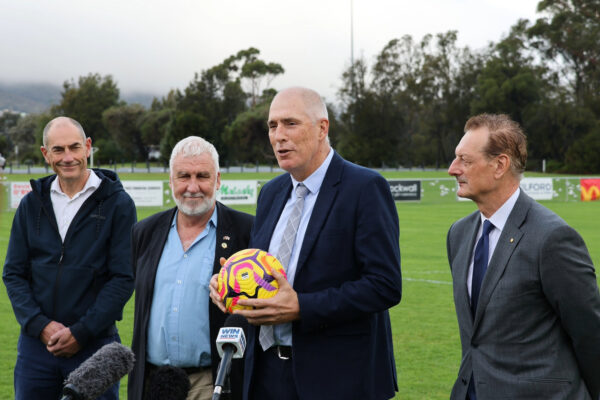
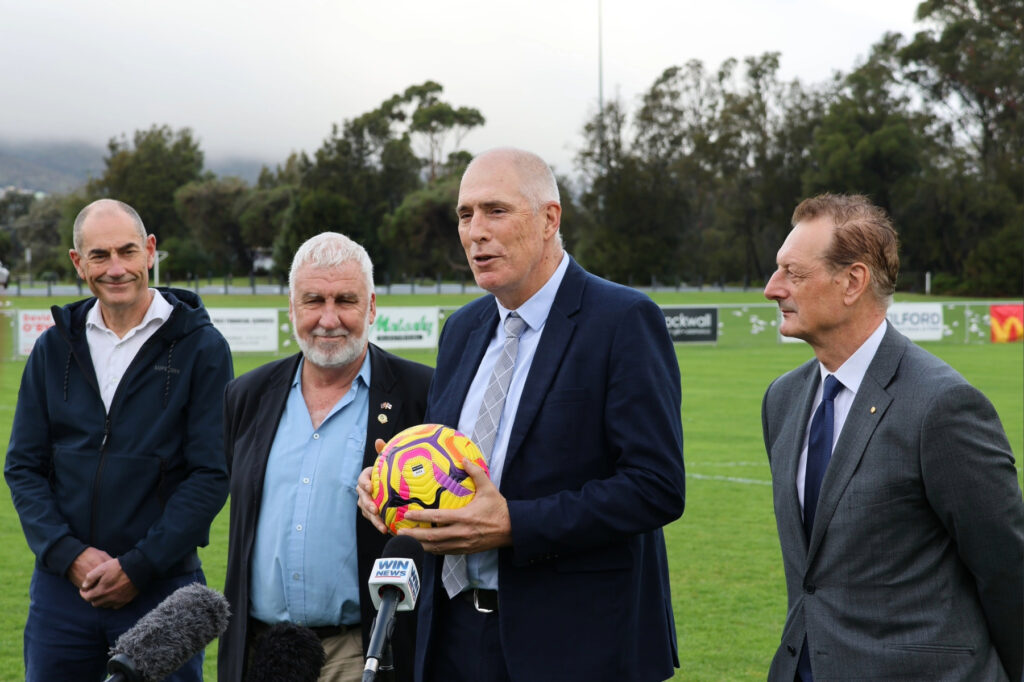
The Tasmanian State Government has committed $350,000 in seed funding for the next stage of planning for Football Tasmania‘s proposed Home of Football, moving the state’s most significant football infrastructure project closer to construction and signalling political recognition that demand for rectangular facilities in Tasmania has outgrown what currently exists.

The funding, confirmed in the 2026-27 State Budget handed down last week, sits within an almost $200 million investment in sport and recreation across the budget and forward estimates: a package the government describes as designed to improve access and participation for Tasmanians of all ages. The football allocation is listed alongside a $25 million community sporting infrastructure commitment at Kingborough, $12.5 million for new multipurpose indoor sporting courts at New Town Bay, and $8 million for the Domain Tennis Centre redevelopment.

Football Tasmania CEO Tony Pignata OAM welcomed the commitment as an acknowledgement of the structural gap between participation numbers and available infrastructure, particularly in the state’s south.

“The State Government’s delivery on this commitment shows us that they understand that demand outstrips supply for rectangular facilities in the state,” Pignata said. “If we are to continue to grow and develop future Matildas and Socceroos, we need to invest in the infrastructure our game so desperately needs.”

The proposed $80 million facility would include six full-sized pitches, three synthetic and three turf, alongside four five-a-side pitches, modern changerooms for both men and women, and dedicated training facilities. The design is intended to serve every level of the game simultaneously, from grassroots junior competitions through to national-level tournaments.

From grassroots to A-League ambitions

Football Tasmania has framed the facility’s purpose across a deliberately wide range of uses. At the community end, it would provide a permanent home for junior games and regional tournaments that currently compete for limited rectangular ground availability across the state. At the elite end, it would create the capacity to host national competitions including the Emerging Matildas and Emerging Socceroos Championships, flagship state competitions such as the Statewide Cup finals, and potentially, in time, an A-League team.

That last ambition is the most significant and the most distant. Pignata was measured but direct in raising it, situating a Tasmanian A-League club alongside the NBL’s Jackjumpers, the WNBL’s Jewels and the AFL’s Devils as part of the state’s emerging identity as a home for national sporting competition.

“One day down the track, we anticipate this would become home to our very own A-League team, so that we take our rightful place in the nation’s elite competition,” he said.

The pathway from planning funding to A-League admission is long and would require sustained political and commercial support well beyond the current commitment. But the logic is consistent with how football infrastructure investment has worked elsewhere in Australia. The facility comes first, and the competitive pathway follows. Without a purpose-built ground that meets the standards required for elite competition, the conversation about an A-League team cannot begin in earnest.

The equity dimension

The inclusion of modern women’s and men’s changerooms in the facility’s design carries more weight than it might appear. Community and semi-professional football facilities across Australia have historically been built to male standards, with women’s changerooms added as afterthoughts or not included at all. That inadequacy has been consistently identified as a barrier to female participation and to the hosting of women’s competitions at venues that cannot accommodate them properly.

A purpose-built facility that treats women’s infrastructure as a design requirement rather than a retrofit positions the Home of Football to serve the growth of women’s football in Tasmania in a way that existing facilities cannot. The state recorded 41,395 registered football participants in 2025, a number that has been growing and that the current rectangular facility stock was not built to support at this scale.

Additionally, the government’s Ticket to Play program, which provides eligible children with two vouchers worth up to $100 each for sporting participation, and the Ticket to Wellbeing program offering $100 vouchers to eligible seniors, represent indirect but meaningful support for football participation across the state’s communities.

Pignata also acknowledged outgoing Football Tasmania President Bob Gordon, who he said had dedicated almost a decade to the organisation and had been instrumental in lobbying for this and other facilities across the state.

The $350,000 planning commitment is a beginning. The $80 million facility it is intended to progress remains subject to further government investment and development approval.

FCA to Host Exclusive Two-Part Goalscoring Workshop Series with Dr Ron Smith

One of Australian football’s most respected coaching minds shares decades of research ahead of the FIFA Men’s World Cup.

Football Coaches Australia (FCA) has announced an exclusive two-part coach education series featuring renowned coach educator and football analyst Dr Ron Smith, offering coaches a rare opportunity to explore the evolving science of goalscoring through the lens of one of Australia’s most influential football thinkers.

The online workshops, scheduled for June 1 and June 8, will examine the historical development, modern trends and future direction of goalscoring in football, drawing on extensive research that formed the foundation of Dr Smith’s doctoral studies.

For FCA, the sessions represent the culmination of more than a year of planning and provide a timely opportunity for coaches to deepen their understanding of attacking play ahead of the FIFA Men’s World Cup.

“Ron’s work on goalscoring has been years in the making and continues to evolve,” FCA President Ian Greener said.

“We felt there was no better time to bring this knowledge to the coaching community than in the lead-up to the World Cup, when coaches around the world will be analysing the game’s best teams and players.”

Across the two sessions, Dr Smith will present findings from his extensive research into goalscoring patterns and trends, examining how the game has changed over time and what coaches can learn from football’s biggest tournaments.

Topics covered throughout the series will include:

  • Historical analysis of goalscoring trends
  • How goalscoring has evolved in the modern game
  • Key patterns identified through Dr Smith’s research
  • Scoring trends across the last six FIFA Men’s World Cups
  • Comparisons between men’s and women’s World Cup tournaments
  • The role of pressing, transition moments and direct play in creating goals
  • Practical coaching implications for improving attacking performance

The two-part structure has been intentionally designed to build upon itself. Session One will focus on the evidence, data and research underpinning Dr Smith’s findings, while Session Two will explore the practical applications and coaching interventions that can emerge from that analysis.

Football Australia has accredited both workshops with one Continuing Professional Development (CPD) hour each, allowing coaches to earn two CPD hours by attending both sessions.

Dr Smith’s coaching and coach education credentials span decades. He has worked extensively with Football Australia, the Australian Institute of Sport and the Socceroos, while also holding coaching roles internationally in Iceland and Malaysia, as well as within the A-League.

His contributions to coach development have helped shape generations of Australian coaches, making this series a valuable opportunity for coaches across all levels of the game.

Event Details

History and Future of Goalscoring – Session One
Date: Monday, June 1, 2026
Time: 7:30pm AEST
Format: Online
CPD: 1 Football Australia-accredited CPD hour

Following the completion of the FIFA Men’s World Cup, FCA is also planning a special panel discussion featuring leading Australian and international coaching voices to analyse the key tactical developments, trends and lessons emerging from the tournament.

Further details regarding that event are expected to be released later this year.

FCA members can attend the workshops free of charge, while guest registrations are available through Eventbrite.

Most Popular Topics

Editor Picks

Send this to a friend