





Juventus Creator Lab: a novel strategy for football media

Over the years Juventus FC has had to endure substantial challenges on and off the field, however, they are making a robust return in the digital space. The club’s digital team is working diligently to establish new, stable revenue sources through the Juventus Creator Lab, initiating partnerships and launching new online platforms.

It is evident that the Italian giants have not been very forthcoming about their vision, strategy, and future plans for the club in recent years.

Considering the pressure they’ve faced after being docked 10 points by the Italian football federation’s appeals court, it’s understandable why they’ve been less communicative. This penalty resulted from an investigation into the club’s transfer activities.

The legal case remains unresolved, as the club maintains they have operated within the rules. Additionally, several executives were banned from football due to their involvement, leading to the appointment of a new executive team to bring stability to Turin.

One of the newer executives at Juventus Football Club is Mike Armstrong, who became Chief Marketing Officer in September 2021. The Canadian leader brings a diverse background in technology, having worked with Google and YouTube, and in advertising, with experience in fast-moving consumer goods brands like Kraft Foods and AB-Inbev, as well as in an esports start-up.

The Juventus Creator Lab is the birthplace of Juventus’ digital products, a fresh creative approach inspired by LA-style creator houses and gaming studios, designed to cater to a global fanbase.

The Juventus Creator Lab is designed to enhance accessibility and foster a closer connection across all areas of Juventus, including the men’s and women’s first teams, Next Gen, legends, esports teams, and even the innovative animated kids’ series dedicated to the younger fanbase, Team Jay.

With a rich background in corporate America, Armstrong objective is where the overarching aim has always been clear ever since he joined: to outpace competitors in growth while simultaneously enhancing profit margins.

This mentality is what Juventus and the entire football industry needs, a defined objective of consistently generating revenue to fund the development of a football team capable of competing with the world’s top clubs.

Armstrong talks about the instability within the industry via an interview for Off The Pitch, which he acknowledges as a fundamental aspect of sports. Success or failure in qualifying for competitions can cause substantial revenue fluctuations.

“For me, this is the approach we need to pursue. Players are always crucial, but they come and go, and their presence can be unpredictable. So, I believe all football clubs need to explore ways to make their business less susceptible to volatility. In my case, along with my colleagues, we confront a reality where players serve as key distribution drivers due to their social media followings,” he explains.

“However, recently, out of necessity, we decided that we had to develop a business model capable of ensuring substantial revenues even when major players departed the club. With this goal in mind, we’ve witnessed a significant transformation in our approach and operations, and we believe we’ve made considerable strides in recent years.”

With an annual revenue of $741 million, Juventus has faced difficulties in their digital operations after the departure of key social media influencers such as Cristiano Ronaldo, Angel Di Maria, Leandro Paredes, and Paul Pogba.

To determine the type of content creator you should become, it’s essential to understand your audience. Armstrong recognised that with 90 percent of Juventus fans living outside Italy and 40 percent of them being under 24 years old, the club needed to significantly rethink their approach.

They have achieved impressive milestones with 60 million followers on Instagram, 30 million on TikTok, and 7.5 million on YouTube. Armstrong mentions that they have exceeded initial expectations, and he anticipates substantial revenue growth from sponsors in the coming years.

A clear indicator of their progress is the addition of 2 billion more video views last season compared to the one before, and an overall increase of 159 percent in video views across their ecosystem over the past two seasons.

Simultaneously, they initiated several partnerships, including one with Celine Dept, a rapidly growing digital sports creator with 43 million followers. Juventus also partnered with 433, one of the world’s leading football communities boasting 115 million followers, and Wave Sports + Entertainment, which has over 130 million followers across its various accounts.

The difficult part for Juventus, as with all other clubs, is making sure they create content that connects with all their fans.

Looking at all this from a football landscape in Australia, it seems too good to be true to have a physical laboratory of where a clubs digital products are born, this would greatly benefit the Isuzu UTE A-League men’s and Liberty A-League women’s to enhance the clubs around the country not only on social media platforms but also both in a traffic and engagement aspect to be seen by global brands.

Previous ArticleNext Article

The Future of AI Motion Analysis: From Biomechanics Research, to the ISS, to Juventus Forward

In the fast-evolving field of sports technology, KineMo’s trajectory in early 2026 reflects a piece of a wider movement- one powered by AI, single-camera biomechanics, and a drive to democratise motion tracking across sport, rehab, and even astronaut training.

For Australian club administrators, physios, coaches, and technology partners, KineMo’s recent engagement with Juventus Football Club and the European Space Agency offers both a reflection and a challenge on where athlete monitoring and performance development are heading.

In Turin: Juventus’ Bet on Startup-Led Innovation

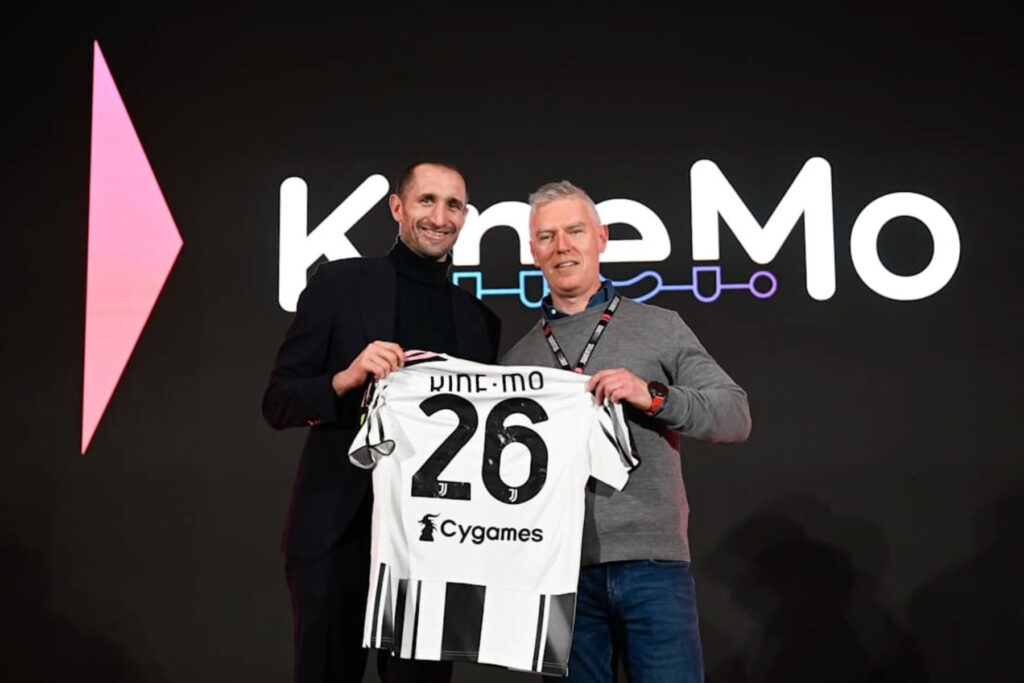
The whirlwind started in Turin. KineMo was announced as part of the inaugural cohort of the Juventus Forward innovation program, a next-generation initiative positioning the iconic Italian club as a hub for open innovation in elite sports. The launch event put KineMo’s founders beside Juventus legends and leading sports strategists, confirming the club’s intent to overhaul performance workflows by welcoming global tech startups directly onto the stadium floor.

As part of the initiative, Juventus Forward embeds startups across athlete development, content creation, and guest management, with the club’s staff collaborating in a “live fire” model that lets technology address complex problems in athlete health, rehabilitation, and skills progression. KineMo’s mandate within this environment is clear: deliver scalable, on-demand 3D functional movement screening from ordinary mobile video, no matter the athlete’s level or setting.

For Australian football, especially at NPL or A-League level, this open-access model holds specific appeal. The legacy of expensive, marker-based lab systems has left grassroots teams and independent physios excluded from best-practice movement analysis, a gap that often translates into missed talent, misdiagnosed rehab, and higher injury risk. KineMo levels this by bringing a clinically validated platform, only requiring a phone and no wearables or calibration. The technology delivers peer-reviewed kinematics across a 33-joint skeleton in 3D, turning club footage, rehab videos, or match film into actionable data for coaches and medical staff.

Expanding the Ecosystem: Milan, Irish Tech, and Global Collaboration

KineMo’s Italian tour continued in Milan, where the team joined other standout Irish sports tech businesses for a market mission tied to Fondazione Milano Cortina 2026. The event, led by Enterprise Ireland, gave KineMo direct access to Olympic officials, ministry representatives, space medicine researchers, and leading kinematics academics.

What began within Trinity College Dublin, as a research thread exploring rugby head injury assessment, now breathes a spectrum of disciplines. The KineMo core AI, capable of extracting force and joint movement from video, is being iterated for use cases in yoga, pilates, gym, remote physiotherapy, and broadcasting. These are not just lateral moves; they’re part of a grander vision to break the silo of high-performance motion tracking and return it to the everyday athlete, rehab professional, or remote coach.

ESA BIC Ireland: Space Medicine Meets Sport Science

Perhaps most symbolically, KineMo recently joined the ESA BIC Ireland incubation program, making its single-camera motion platform part of European astronaut screening, in-flight exercise monitoring, and post-mission rehabilitation. Partnering with the European Space Agency moves KineMo’s AI out of the sports hall and onto the International Space Station, where every movement pattern is a data point in keeping astronauts safe and healthy over long-duration missions.

ESA’s Space Medicine Office described the collaboration as an advance in “resource-efficient assessment of pre, in and post-mission astronaut movement patterns.” For KineMo, and by extension, for every coach or clinician monitoring movement in football or rugby, it’s both validation and opportunity: if the tech is good enough for space medicine, it’s likely robust and adaptable enough for club athlete care.

The Science: Validated Motion Analysis at Scale

KineMo’s published work reinforces its credibility. Trials using multicamera setups for contact scenarios and single-camera video for common strength and rehab exercises showed error margins comparable to gold standard lab outputs. Applying open-source pose estimation and proprietary learning algorithms, the platform can lift 2D joint markers into 3D space. Tests with Vicon systems and mobile phones returned small errors in knee angle and torso metrics, confirming the tech’s accuracy and reliability out in the field.

For sports like football, where injury patterns, return-to-play decisions, and load management are all contingent on movement quality, KineMo’s model enables clubs to run mass screenings, establish robust kinematic baselines, and maintain objective tracking throughout an athlete’s career. For Australia, whose geographically dispersed talent pipeline often makes in-person testing unfeasible, remote video-based motion analysis could spell a revolution in player welfare and recruitment.

The Road Ahead: Integrations, Gamification, and Scaling

Looking ahead, KineMo has positioned itself to integrate directly with partner platforms, offering longitudinal tracking, remote consults, gamified skill monitoring, and population-level screening for youth and senior athletes. Its ability to quantify and visualise movement is already influencing rehabilitation protocols and talent frameworks in European football, but also in allied sectors like healthcare, broadcasting, and at-home fitness.

For Australian football, the lesson is clear. Open innovation isn’t just for the Champions League. Its application has become increasingly relevant for every club, physiotherapy clinic, and federation seeking efficient, scalable athlete monitoring. KineMo’s rise signals a new era where peer-reviewed, lab-grade movement analysis is as close as your smartphone.

Clubs willing to invest now in these solutions will not only improve athlete health but will be at the forefront of a transformation. Objective data will be what underpins all key decisions about player recruitment, return to play, and long-term athlete development. The next decade of sport will belong to those ready to act, test, and iterate and it’s up to clubs in Australia whether to embrace the change or fall behind.

Ochy and Juventus Forward: How AI Biomechanics Is Reshaping Elite Performance

In sports technology, evolution is rarely linear. The story of Ochy’s journey from running retail to global football is proof that the right bet, on athletes’ movement and real, usable data, can fundamentally shift the landscape.

For stakeholders in Australia’s football, performance and tech sectors, Ochy’s rapid rise in 2025 and its recent partnering with Juventus FC in 2026 is a window into where athlete monitoring and retail technology are headed.

Scaling Insights: Ochy’s Breakout Year

Over the past year, Ochy has infiltrated key segments in the running industry, carving a presence at Paris, London, Berlin, and Frankfurt marathons, and finding its tech preferred by a spectrum of runners, coaches, retailers, and medical professionals. Through strong showings at VivaTech, CES, ISPO, and the Running Industry Alliance Summit, Ochy’s team grew as fast as its presence, validating the bet that running, like every sport rooted in movement, deserves better, more actionable biomechanical insight.

This wasn’t a single-shot innovation. In 2025, feature launches mattered. Back-view analysis unlocked new clinical insight into pelvis control and knee alignment, bringing science to runners during shoes-on demos at expos and in-store. The proprietary Shoe Recommendation Engine reimagined fitting: translating gait data into smart recommendations reduced guesswork for both runners and retailers, giving shops the power to offer data-backed advice. Ochy’s admin panel and shoe model management brought scalable control, inventory mapping and data tracking to retailers, sealing the loop between analysis, product, and the consumer experience.

From Demo App to Connected Ecosystem

The future shift will be a seamless blend between product and infrastructure. With a connected Web App, Ochy finally became an ecosystem: retailers, brands, and performance clinics could seamlessly move from mobile gait analysis to web-based management.

By the numbers, the results were compelling. More than 85,000 analyses in 2025, an average of 102 customers assessed each month per running shop, and runners using the system on themselves three times every thirty days. Side-view analysis remained the most popular tool; user feedback drove a sharper brand and clearer message. Partnerships with HOKA, Runners Need, England Athletics, and more signalled that Ochy’s core premise had strong industry buy-in.

A Mission That Became Personal and Global

Ochy’s founding story still resonates through its technology. CEO and co-founder Khaldon Evans’s injuries as a college athlete underpinned the platform’s core belief: movement science should not be reserved for elite labs or expensive research centres. Real prevention and performance require objective insight, and lack of access shouldn’t compromise health or career progression. This message- that running form matters, moved from blog posts and marathon expos into retail, and now, with its deal in Turin, across the football pitch.

AI in Motion: The Partnership with Juventus

The leap into elite football began at Allianz Stadium in February 2026, as Ochy was named an official partner within the Juventus Forward innovation initiative. Chosen from dozens of startups, being part of Juventus’ Forward Squad marks not just commercial success, but institutional validation: a professional club, renowned for its vision and resources, was betting on AI-powered markerless biomechanics.

For Ochy, the transition is logical. Football is the ultimate application for running science, it’s a sport defined by repetitive sprints, high-load pivoting, changes of direction, and cumulative stress over long seasons. Movement mechanics drive output and underpin injury prevention.

With Ochy, footballers and staff access lab-quality analysis using only a camera. The system translates match or training videos into insights about gait efficiency, asymmetry, and injury risk, all powered by proprietary AI. What was confined to the running shop or the track now becomes central to decisions about player rehab, boot selection, and long-term load monitoring.

Why This Partnership Matters for Football and Beyond

Juventus’ choice to integrate startups like Ochy demonstrates tech’s new role at elite clubs: not just for post-game data but for all-year-round management. The pitch is now the laboratory, and decisions in coaching, physio, and even retail reflect biomechanical data.

For Australia, there are direct implications. NPL and A-League clubs, currently facing constraints in resources and analytics staffing, can benefit from democratised biomechanics. Markerless solutions such as Ochy’s break the dependency on wearables, making high-quality insight available during regular training on public grounds. In Australia’s multicultural, injury-prone football ecosystem, AI-powered, multilingual, and field-tested technology stands to drive better player outcomes, sharper recruitment, and improved return-to-play protocols.

A Retail Revolution for Sport

Ochy’s shoe recommendation engine and admin tools make specialist retail a central part of the performance loop. By tying gait analysis to in-store inventory, Ochy ensures that runners and footballers alike get the shoe, support, and advice that fit their actual, measured movement.

The partnership with adidas via the adiClub program introduced Ochy’s insights to loyalty customers worldwide, proving that biomechanics is as relevant to the mass market as it is to the professional clinic. By allowing adiClub members access to Ochy’s analysis with redeemed points, the company blurred lines between community, data, and product.

If AI is to be trusted as the next frontier for sport, Ochy’s work in 2025 and its expansion into elite football in 2026 represent the standard. The transition from running to football is not just logical; it was inevitable, and every stakeholder in Australian sport should pay attention to what comes next.

Most Popular Topics

Editor Picks

Send this to a friend