


In the Cluch: Meet the team powering NPL.TV

Coronavirus, lockdowns and associated crowd caps have brought forward the sports streaming industry three or five years, according to Cluch Managing Director Gus Seebeck.

With Cluch powering the NPL.TV platform in 2022, the organisation will be live streaming in excess of 100 football matches from around the country once the Victorian, New South Wales, South Australia and ACT branches of the National Premier Leagues competitions are all up and running.

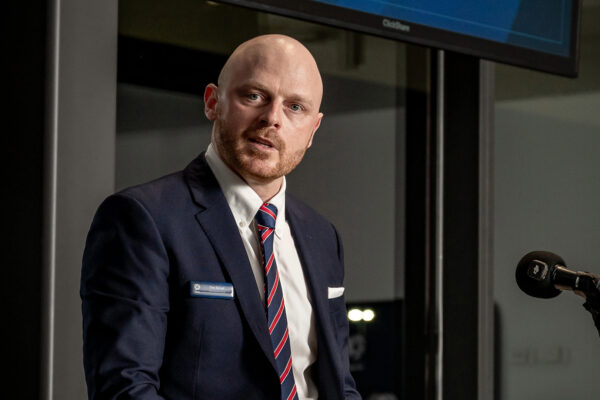
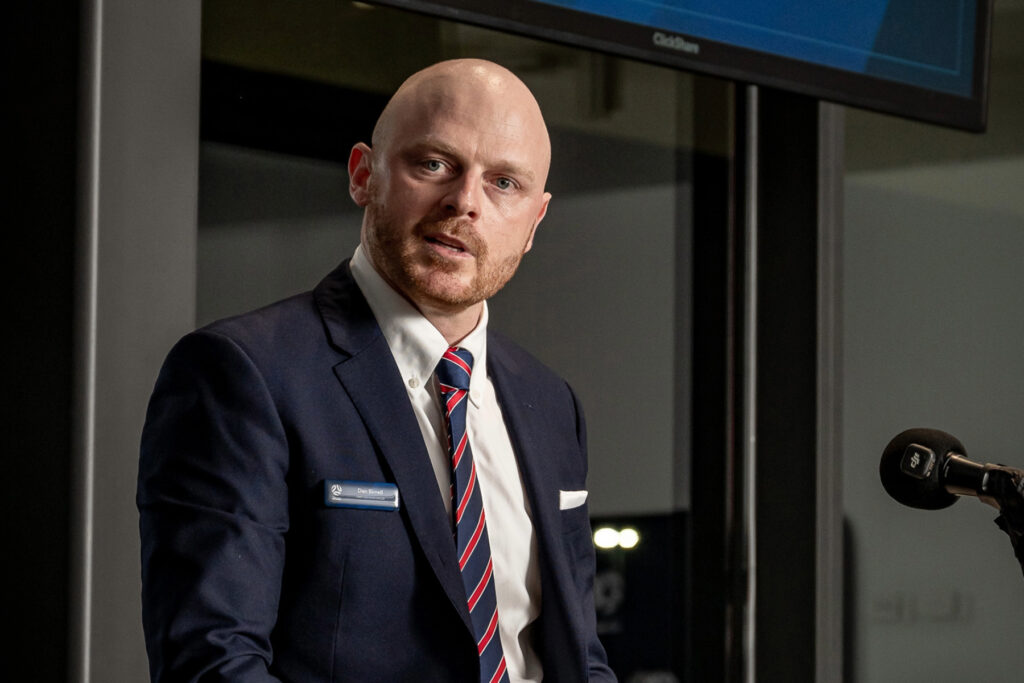
Speaking ahead of last night’s National Premier Leagues Victoria clash between South Melbourne and Heidelberg United, Seebeck outlined a rise of sports streaming at the semi-professional level has been propelled forward due to the circumstances of recent years.

“A lot of community clubs and organisations have had to deal with tight crowd restrictions has probably seen this space propel forward three-to-five years in terms of how quickly it’s been adopted,” he told Soccerscene.

“Football fans now have a multitude of choice in terms how they get their content and expectations have increased for the quality of that, which I think is quite reasonable.”

Cluch launched in August 2020, in between the first and second wave of COVID-19 and associated lockdowns and was mainly streaming community sports in New South Wales at the time of its launch.

However, that window activity proved crucial in empowering the platform to grow.

“It was really critical in terms of us being able to get some proven data and a little bit of a look at what’s possible with this technology and the opportunities it can provide,” Seebeck said.

The National Premier Leagues has long been on the hit-list for Cluch and Seebeck is excited that the platform is now powering the NPL.TV product.

“We’ve been speaking to Football New South Wales for some time and particularly around the launch of the initial NPL.TV concept,” he said.

“Whilst this is our first year involved, it was really interesting for us to sit back and just watch how it played out and that allowed us to pick up the conversation when we knew the original deal might be ending.

“We’ve worked really hard with the various federations from August through to Christmas to address any issues or things they wanted to improve on, because we understand that this is a huge audience and we really feel that responsibility.

“It’s very easy for this exercise to become a huge drain on resources given the number of matches that will need to be streamed every week, so we had to be clear on our systems and workflows and we also have to worry about the commercial considerations of the federations and clubs as well and make sure that they are worked into the platform.”

The NPL.TV product will work as a stand-alone app, separate from the Cluch app, which was an important consideration for the participating members.

The addition of the Victorian competition, which had previously been streaming games for free on YouTube and Facebook Live, was the product of a consensus that the NPL.TV had more power as a product showcasing several leagues as opposed to just one.

“Each member federation controls their own destiny in that respect and will make their own decisions on what they think is best for them,” Seebeck said.

“What became really apparent from the very start of the conversation was that the aggregated model was the way to go. Bringing everything into one place and ideally being able to bring the commercial opportunities and value opportunities to the entire audience.

“Obviously streaming to YouTube or Facebook is not difficult, so as a platform we had to make sure that working with us does not add any further resource drain.”

Seebeck believes it’s also important for Cluch to ensure that the commercial opportunities made possible through the platform were not just limited to itself or the member federations.

“We felt that it’s important that every single club that has exposure on the platform has the ability to commercialise and advertise. If they don’t see any value in it for them, then they’re not going to push it to their communities and fans and it’s not going to work because it’s not going to be embraced by everybody,” he said.

“It was important from our perspective that we’re able to allocate inventory right up the value chain.”

The NPL.TV platform will be completely free for fans to watch, with no subscription, meaning revenues will be driven by advertising and sponsorship.

Cluch will sell pre-roll advertisements, with member federations and clubs sharing in-stream advertisements, with the terms of that split to be handled by the federations.

The streams themselves will continue to be produced by the Federations, but Seebeck said that Cluch had outstanding existing relationships with the companies currently producing the streams on the ground.

The NPL.TV app is available globally, meaning the streams can be viewed from anywhere in the world with an App Store or an internet connection. The app itself was launched on Apple’s App Store and the Google Play store on Wednesday, ahead of the Thursday night NPL Victoria season opener.

Speaking to Soccerscene prior to kick-off between the South Melbourne and Heidelberg United derby, Seebeck revealed the TV apps would also be available very soon, if not at the time of publication.

“We’re fine-tuning the TV apps, but we think that’s really important,” he said.

“For us, it doesn’t matter if you want to watch your favourite Premier League team or Champions League team or your local NPL club, if you want to watch that on TV, you should be able to do that with a single remote.

“It’s important to us that you can watch these streams on the TV without having to go and get a cable for your laptop et cetera, et cetera, so it’s something we’re fine-tuning and hope it will be available soon.”

Previous ArticleNext Article

Football NSW supports Female Coaches CPD as Women’s Football Surges

Football NSW has used the platform of the AFC Women’s Asian Cup to deliver a targeted professional development workshop for female coaches, bringing together scholarship recipients for an evening of structured learning and direct engagement with elite women’s football.

Held at ACPE last month, the session was open to female coaches who received C or B Diploma scholarships through Football NSW in 2025. Coaching accreditation carries a financial cost that disproportionately affects women, who are less likely to have their development subsidised by clubs or associations operating in underfunded community football environments. Scholarship access changes that equation at the point where many women exit the pathway.

Facilitated by Football NSW Coach Development Coordinator Bronwyn Kiceec, the workshop focused on goal scoring trends from the tournament’s group stage, with coaches analysing attacking patterns and exploring how those insights could translate into their own environments. The group then attended the quarter-final between South Korea and Uzbekistan at Stadium Australia.

The structure of the evening mattered as much as its content. Female coaches in community football rarely have access to elite competition environments as a professional resource. The gap between the level at which most women coach and the level at which the game is analysed and discussed tends to reinforce itself. Placing scholarship recipients inside a major tournament, as participants rather than spectators, closes that gap in a way that a classroom session cannot.

Female coaches remain significantly underrepresented across all levels of the game in Australia. The pipeline that will change that depends not only on accreditation access but on the professional networks, peer relationships and exposure to elite environments that male coaches have historically taken for granted.

The workshop forms part of Football NSW’s ongoing commitment to developing female coaches through scholarships and structured learning opportunities.

“20 Years Ahead”: The System Quietly Reshaping Korean Football

For all its consistency, Korean football has long carried an underlying tension.

On paper, it works. The national teams remain competitive, the player pool is technically sound, and the country continues to produce athletes capable of performing on the continental stage. But beneath that surface-level success, a more uncomfortable question has persisted about whether Korea has been simply maintaining its position while others evolve.

That question has driven the Korea Football Association (KFA) toward one of the most ambitious structural overhauls in modern football development: the Made in Korea (MIK) Project. Rather than focusing on short-term gains or isolated improvements, the initiative attempts to do something far more complex. It is rebuilding the foundations of how football is taught, understood and executed across the entire ecosystem.

Internally, the project has been described as having “brought Korean football 20 years ahead.” Whether that claim ultimately proves accurate remains to be seen, but what is already clear is the scale of the shift taking place.

From talent to system

The starting point was not talent, but structure. For years, concerns had been growing within Korean football circles about a lack of uniqueness in players, inconsistencies in long-term planning and an over-reliance on safe, risk-averse styles of play. The system, while producing disciplined and technically capable footballers, was not consistently producing players equipped to thrive in the most demanding environments. Environments such as Europe, where tempo, decision-making speed and adaptability define success.

Rather than attempting to patch these issues, the KFA chose to reimagine the system itself.

At the core of the MIK Project is the idea that high performance is not the result of individual excellence alone, but of an interconnected structure that allows that excellence to emerge consistently. Coaching, sports science, performance analysis, leadership and education are no longer treated as separate pillars, but as components of a single, integrated system designed to evolve continuously.

A new operating model

This philosophy is most clearly expressed through the project’s adoption of a cell-based operating model. In place of traditional hierarchies, the system is organised into small, cross-functional units, called “cells”. These cells are given autonomy over their work while remaining connected through shared frameworks and objectives. Each unit is responsible not only for delivery, but for learning, adapting and refining its approach on a constant cycle.

The intention is to bring decision-making closer to the pitch, allowing those working directly with players to respond faster and more effectively to the realities of the game. In an environment where marginal gains are often decisive, that speed of adaptation can be critical.

Closing the gap

Yet structure alone is not enough. The project is equally shaped by a clear-eyed assessment of where Korean football currently stands in relation to the world’s elite.

Comparative analysis has highlighted several consistent gaps: technical execution under pressure, the ability to operate at higher game speeds and effectiveness in decisive moments such as one-on-one situations. These are not deficiencies of talent, but of context. Korean players, while highly capable, have often developed within systems that prioritise control and precision over risk and spontaneity.

The consequence is a style that can become predictable under pressure.

Training for reality

To address this, the MIK Project has fundamentally shifted training methodology. Sessions are increasingly designed to replicate the intensity and unpredictability of real matches, placing players in situations where decisions must be made quickly, under pressure, and often in confined spaces. The focus is no longer on rehearsing ideal scenarios, but on preparing players for imperfect ones.

This approach reflects a broader philosophical shift that prioritises adaptability over perfection, and decision-making over repetition.

Evolving the Korean identity

Importantly, this evolution does not come at the expense of Korea’s existing strengths. Discipline, work ethic and technical proficiency remain central to the national identity. What the MIK Project seeks to do is build upon those foundations, combining them with the creativity, speed, and tactical awareness required at the highest level of the game.

It is, in many ways, an attempt to reconcile tradition with modernity.

A global ambition

The ambition underpinning the project is unmistakable. The KFA is not simply aiming to remain competitive within Asia, but to re-establish itself among the world’s leading football nations. That means producing players capable of not only reaching Europe, but succeeding there.

More than a project

What makes the MIK Project particularly compelling is that it does not present itself as a finished solution. Instead, it is designed as a system that evolves, adjusts and refines itself over time. In a sport where trends shift rapidly and competitive edges are constantly eroded, that capacity for continuous development may prove more valuable than any single innovation.

For other football nations, Korea’s approach offers an instructive case study. While many federations continue to debate philosophical direction, the KFA has committed to structural transformation, embedding its ideas not only in theory, but in practice.

Whether the project ultimately delivers on its boldest ambitions will depend on time, execution, and the unpredictable nature of the game itself. But one thing is already evident.

Korean football is no longer standing still.

Most Popular Topics

Editor Picks

Send this to a friend