


How to use podcasting to boost your football club

With so many ways to connect to different communities, it is important to be able to understand and effectively use a range of mediums to reach your members and fans.

Podcasting stands as one of the most personal and intimate of these techniques and can allow your community to gain a deeper insight into and greater connection with your club.

Often thought of as a difficult or expensive form of media to create, podcasting can actually be quite simple.

Here are a number of tips and tricks to help you get started.

Tone and Content

Before diving into equipment or beginning recording, it is crucial to know what type of podcast you wish to create.

As an audio format, podcasts lend themselves well to interviews and conversations. Consider inviting players or coaches on for a chat before or after a game or during the week to discuss how the club is travelling.

Alternatively, you could incorporate members of your club’s community such as volunteers, former players and coaches or club historians to highlight special stories from your club’s past or present.

If you would prefer to create easily made quickfire content, your club could release match reports in the form of podcasts, which convey what happened to those who may have missed the game.

Similarly, a short club news podcast can update listeners about the upcoming fixture or club events, or important information such as administration or fee changes.

Furthermore, its essential to find ways to make your podcast more interesting and set it apart from others.

Natural sound provides one way to add spark. On gameday, try to get snippets of natural sounds such as crowd noise, or the kick of the ball to weave into your podcast to give it life.

Additionally, you can also choose to incorporate cameras to create an audiovisual podcast.

Above all, your podcast should draw in listeners and attempt to grow the club, so you need to avoid content which could degrade the club’s image.

Overly negative analytical podcasts can hurt the confidence of players and fans, while an ill-fitting tone will fail to garner an audience.

It is important when creating your podcast that you capture a tone that sounds authentic. If your audience finds you honest, they are far more likely to connect with your content and potentially listen to more of what you release.

After you have decided on what you wish to create, try to maintain a familiar style. If the form of your podcast frequently changes it can become difficult for your audience to remain attached.

Equipment and Software

Many people dread the costs of the equipment or software they need to begin podcasting but there are range of solutions available.

While professional cameras or microphones will deliver professional quality, it is possible to achieve sufficient results from modern smartphones.

However, your equipment will not matter if you do not set up your recording environment properly.

To get the best audio quality, always attempt to find a place where outside noise will not disrupt you or where your voice won’t echo. Noise will bounce off hard and sharp surfaces, so try to find areas with soft surfaces like curtains and carpets to dampen echoes.

If you do not have access to a good place to record, recording in a car or with a blanket over your head can provide makeshift solutions.

There are also a range of accessories available to help make your podcasting journey much smoother:

  • Pop filters, to help reduce harsh speech sounds.
  • Stands and mounts, to help set up your equipment comfortably.
  • Lights, to illuminate your face to your audience.

To record and edit your podcast you will need software programs.

Free options such as Audacity and GarageBand stand as good beginner options, while Adobe Audition, Hindenburg Pro and Descript provide professional alternatives.

For long distance audio visual recording between different parties, Zoom will allow you to record on a free plan.

Marketing Your Podcast

After you have created your podcast, try to release it on as many platforms as you can to reach your audience anywhere.

Spotify, Apple Podcasts, and YouTube are among some of the most popular podcast platforms available, but if you have a club website attempt to release your podcast there too.

You do not have to release your podcast frequently, but it should maintain a consistent release schedule, so your listeners know when to listen to it.

A bonus of podcasting is that it can also feed into your regular club media.

In your club newsletters, match reports and social media posts, consider quoting interviews or reposting clips from your podcast to continually build its following.

If you would like to know more, click here.

Previous ArticleNext Article

Alibaba Group allies with UEFA and UC3 as new strategic partner

Alibaba Group will become the global AI, Cloud Computing and E-Commerce Partner for the UEFA Euro 2028 tournament and UEFA men’s club competitions from 2027-2033.


Uniting two global giants

The partnership will see Alibaba position itself as a strategic partner for UEFA and UC3 at both club and international level.

As one of the world’s leading tech and e-commerce companies, Alibaba will team up with European football’s governing body to deliver exciting new ways of bringing fans closer to the game through innovate technologies.

“We are delighted to welcome Alibaba as a global partner for UEFA EURO 2028 and as a future partner of our men’s club competitions,” expressed UEFA President Aleksander Čeferin via media release.

“Together we can bring fans closer to the game in new and meaningful ways – making our competitions feel even more captivating, engaging and accessible, while preserving the traditions, emotions and spirit that define European football.”

Furthermore, Chairman of Alibaba Group, Joe Tsai, outlined how the company will pursue a shared vision with UEFA to unite fans from all over Europe and the entire world.

“We believe that football is a shared language around the world, and the unifying power of the game at all levels for all fans is the mission that brings Alibaba and UEFA together,” said Tsai via media release.


Where innovation meets tradition

Indeed, this is a partnership which is unique in its potential impact.

On one side is a global tech giant, capable of leveraging innovative e-commerce platforms and AI expertise. On the other, a governing body which oversees some of the most popular football competitions in the world.

It is an alliance which embodies the current and future state of the football landscape, which includes innovation and technology at the heart of its operations.

Tech platforms of the future, aligning with a sport of deep-rooted history and tradition.

We saw recently another partnership of a similar nature. Arsenal FC – one of the founding Premier League clubs and recent champions – announced a collaboration with Meta to create new ways of uniting fans beyond the 90 minutes on the pitch.

So, now that Alibaba Group, UEFA and UC3 will embark on their own collaboration in the coming years, fans of European football will see this tech-sport revolution up close as they continue to engage with – and enjoy – the sport they love.

Football West’s Female Football Week draws record engagement from Metropolitan Perth to Remote Kunurra

Football West has wrapped up its 2026 Female Football Week with activations spanning metropolitan Perth, regional Western Australia and national online platforms, as participation data from the state’s most remote football association underlined the scale of demand for women’s and girls’ football beyond the city.

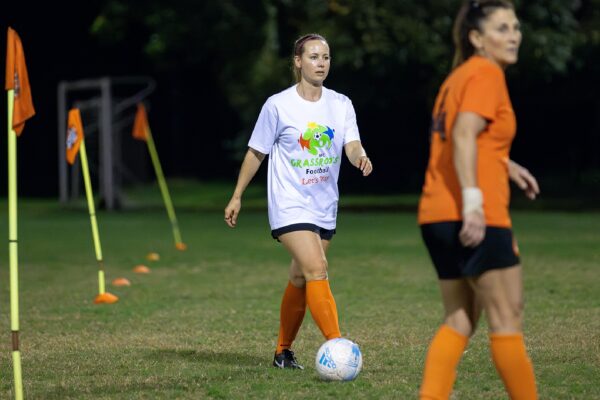
Kununurra Soccer Association, situated in the East Kimberley more than 3,000 kilometres from Perth, recorded 47 new female registrations aged 7 to 12 across the first two terms of 2026 through Football West’s Junior Girls United program, representing a 30 percent increase in female membership that coaches Hannah Grominsky and Evie Marchetti described as overwhelming.

“The support from the community has been simply awesome,” Grominsky said. “We’re up to nearly 50 registered girls now. The majority of them have never played before or aren’t part of our association, so it’s great to give them a positive football experience in a comfortable environment.”

The program, supported by the Federal Government’s Play Our Way grant, now runs every Wednesday and has extended football activity into the cooler months of the Kimberley calendar, a season when the association would not traditionally operate. The result is a cohort of players new to the game, in a region where access to organised sport has historically been constrained by geography, infrastructure and seasonality.

Recognition across the state

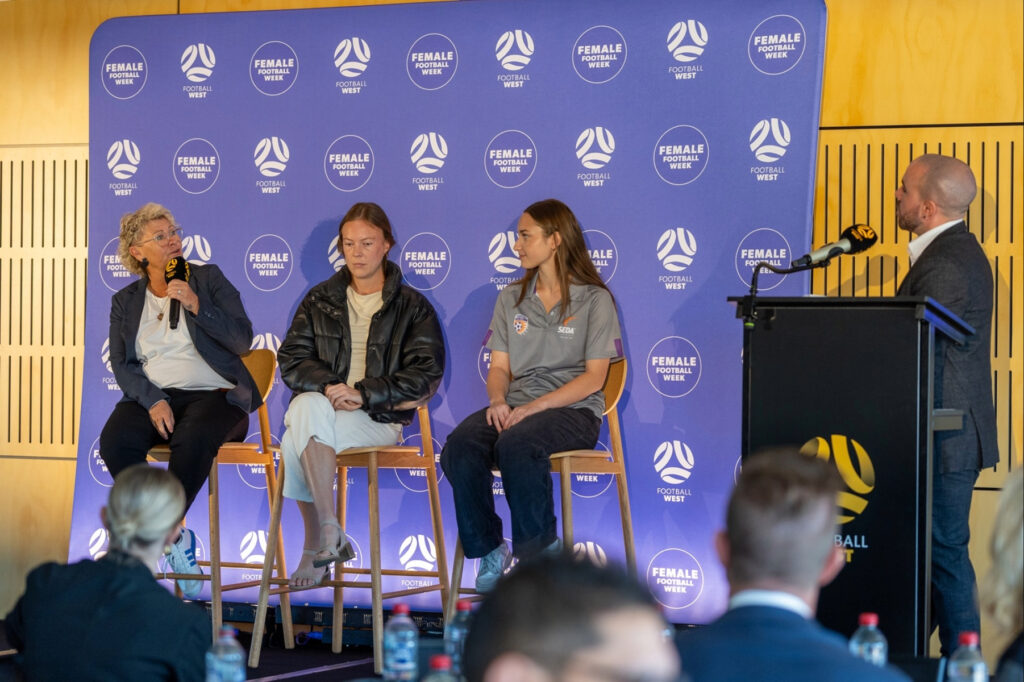
Back in Perth, Female Football Week’s centrepiece event was the Women in Football Celebrate You Breakfast at the Sam Kerr Football Centre, featuring two panel discussions covering officiating pathways, coaching development and advocacy for women in football.

Subiaco AFC NPL Women’s head coach Christine Coppin, who is one of few women coaching at her level in the region, said events like the breakfast were critical to making the pathway visible for others.

“I’d love to see more women coaches putting their hat in the ring, both at junior and senior levels, realising that there’s more to football than just playing,” Coppin said. “They can stay involved in the sport as they get older in different ways.”

A regional Women in Football Breakfast in Albany drew more than 30 attendees, while a Girls Day Out event in the same city attracted more than 50 participants aged 6 to 16 for a come-and-try introduction to the game, extending the week’s reach into the Great Southern and reinforcing Football West’s stated commitment to building women’s football outside metropolitan areas.

Recognising those who make it happen

The week’s awards, nominated by the WA public, recognised five individuals whose contributions to female football across the state were judged most significant over the past year. Cassandra Paxman of Albany Rovers FC was named Coach of the Year, Georgia Whitelaw of Great Southern JSA and Albany JSA took Referee of the Year, Karen Harris of Carramar Shamrock Rovers FC was named Volunteer of the Year, Georgia Aiesi of Mandurah City FC received the Player of the Year award, and Melissa Spillman of Football Futures Foundations was named Community Champion of the Year— a recognition she also received at the national level.

Football West Female Football and Advocacy Manager Sarah Carroll said the week had reinforced both the momentum and the responsibility facing the sport.

“Female Football Week continues to showcase the incredible passion and growing appetite for the women’s game,” Carroll said. “It’s a reminder of how important it is that we keep working together to drive the game forward.”

The contrast between a packed breakfast at the Sam Kerr Football Centre and a Wednesday afternoon program in Kununurra working around wet season schedules captures something essential about where women’s football in Western Australia actually lives. The growth is real, and it is happening in places the cameras do not always reach.

Most Popular Topics

Editor Picks

Send this to a friend