


The Association of Football Coaches and Scouts (AFCAS) have recently undergone its first recruitment and player scouting workshop, focusing on creating scouting reports while also learning footballing scouting skills and techniques to assess players.
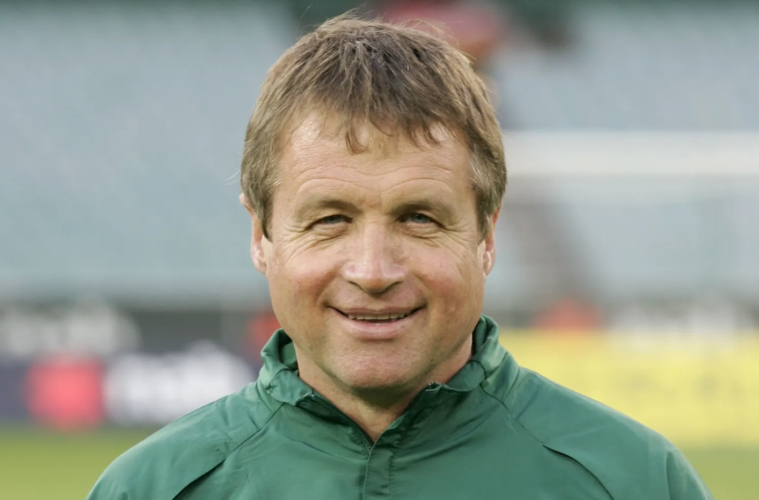
These online workshops are taught by AFCAS Managing Director Ged Searson, who has 15 years of experience to his name as a football scout and almost 30 years of experience as a football coach.
Throughout his footballing journey, Searson got an incredible opportunity to work alongside legendary manager Sir Bobby Robson, while also working in the English Premier League with West Ham United and most recently with the Malawi national team during the 2022 African Cup of Nations (AFCON).
In an interview with Soccerscene, Searson reflects on his experiences as a football scout, what it was like to learn from Sir Bobby Robson, the creation of AFCAS and how he is trying to improve football scouting not only in Europe, but in Australia as well.
How did you start working as a football coach and scout?
Ged Searson: I started coaching when I was 19 due to injury, I wanted to learn and study and hopefully make a career working in football.
I went to monthly coaching seminars across the UK and Europe and I met up with different coaches at different levels. I just went in with an open book and thought I’m going to learn.
At the same time, I had my own academy in Essex across the road from West Ham’s training ground, working with six-year-olds up to the age of 16. I did that for 13 years, built the program and I had about 350 players a week coming to training at one point.
Later on, I started to work in non-league and semi-professional football. Any club that didn’t have money and was struggling in the relegation zones would ring me up and I would try to get them out of trouble, which was a learning experience.
I didn’t want to continue down the academy coaching route anymore because it wasn’t financially viable for me at the time and then I ended up becoming an opposition scout.
However, I will say to become a scout you must learn and then develop the rest of your career. You must go the extra mile, get off your back and try to learn.
My first opposition report was about Brentford, back when they were in League Two. My friend was working for Barnet and he was doing video analysis and he said can we see your report?
I said I’ll send it over but I’m sure your scouts can do it far better than me and he replied we haven’t got any scouts.
Ian Hendon was the manager at the time at Barnet and just started his coaching career. He said he liked the report and asked me if I could do this every week and that was how I started my career as a football scout.
What were some of the highlights throughout your football career?
Ged Searson: Ian Hendon got his big break where he was asked to become the assistant manager at West Ham United to work under his old manager, Sam Allardyce, and recommended me to the club.
The funny thing was that West Ham was my team as a kid and it was a pure coincidence that I got to work for my own club. I worked as an opposition scout and also did recruitment scouting.
In my first year we got promoted from the Championship, winning the playoffs at Wembley. When you think about it, I won a trophy with the team I support, how good is that?
I spent the next two years in the Premier League which was great and I absolutely loved it.
I left West Ham after three years and was offered to become the chief scout of Grimsby Town. I did the opposition scout reports and the recruitment which I’d learned through my time in the Premier League.
We broke the points tally with the most points in the club’s history within one season and had the best away record of any team in the country. We got to the playoffs finals but lost when it went to penalties, which was hard to take.
In regards to my international career, I got a phone call from the technical director of Malawi at the time, Mario Marinica, who I’ve worked with in the past. He asked if I could come over and do your opposition scouting and create a recruitment and scouting team for us.
Heading into AFCON in Cameroon, we were complete and total outsiders. But because we had put together this recruitment team of the guys I’ve worked with and an analysis team with the scouts that I taught, we had a secret weapon.
We were more organised than any other team going into the tournament and we made history. We beat Zimbabwe and we drew with Senegal, who actually won the tournament that year.
We went through to the last 16 and faced Morocco who beat us 2-1, but it was overall a really good experience.

What was it like learning from Sir Bobby Robson?
Ged Searson: I was very fortunate to be able to go to PSV Eindhoven when Sir Bobby Robson was coach.
I just contacted him and said, can I come and study with you and learn from you?
He said absolutely, you’re more than welcome to come over and that was it.
I was 24 at the time and was a young coach. He just took me under his wing.
I was on the training ground with him every day and he had me on the pitch next to him when he was doing his sessions. The supporters thought I was his son or something and they couldn’t work out who this young lad was next to him.
He looked after me and had quite a few visits there and really got to understand more about the game.
He was very old fashioned, a true gentleman and a football enthusiast.
There’s lots of lovely tales about him being a nice guy and giving his time to people. I hear those stories and I know they’re true because he did exactly the same as me.
How was AFCAS created and what made you lean into teaching football coaching and scouting to others?
Ged Searson: The English FA started to bring out their Talent ID courses and I saw it advertised and thought I better go and do it. They were doing a scouting course and I was interested.
However, I spent three days on a scouting course that had no scouting on it. It was mainly regulations and safeguarding but there wasn’t any technical scouting in any form. Of course, I learnt some things, but it wasn’t a scouting course.
There was a small section on opposition scouting, but the guy teaching hadn’t really done any opposition scouting and I think I’d done about 650 games as an opposition scout.
Then there was something setting in motion and in the back of my mind I was thinking, I could write something here that could be helpful for scouts.
It was maybe two or three years later I decided to put something together that was technical and could teach the skills that scouts do need.
I thought I’m going to teach this from a chief scout’s view and we started off at Emirates Stadium in London, where I taught my first class.
I had 15-16 people there; whether that would be coaches, agents, scouts or anyone who’s just interested in football.
I started teaching tactical scouting, then was asked to teach recruitment scouting and that’s where it took off.

What made you decide to provide these online workshops for people in Australia?
Ged Searson: I did a few morning sessions during lockdown and there seemed to be an awful lot of coaches that were quite interested in the Melbourne area.
The guys seemed desperate to do something and they thought coming to do a workshop seemed to be appropriate.
I met a really good group of guys and they did about three levels with me as well.
For whatever reason, I drifted away and I didn’t do the UK morning workshops. Then recently, I had a few people asking if I would do those workshops again and it was actually agents from Australia.
I said I was happy to do that and so I started lining up the morning sessions again.
From conversations I’ve had with agents, there seems to be players at the moment that are slipping through the net and are being missed out.
They said there’s a need for scouting here to help players get identified and move them into clubs and progress from there.
That’s why I’m trying to help scouting develop in Australia and maybe clubs could use scouts more to try and make sure players don’t slip through the net and help those guys get an opportunity with clubs.
What will we see next from AFCAS moving forward and will we see you make an appearance in Australia?
Ged Searson: The next stage for AFCAS is to now get these courses across the world.
We’ve created an interactive course where you are learning the necessary skills to observe techniques and assess performances as a scout and a coach.
It would be nice to go over to Australia and do a workshop there if there was any interest by a club. It would be a fantastic opportunity.