

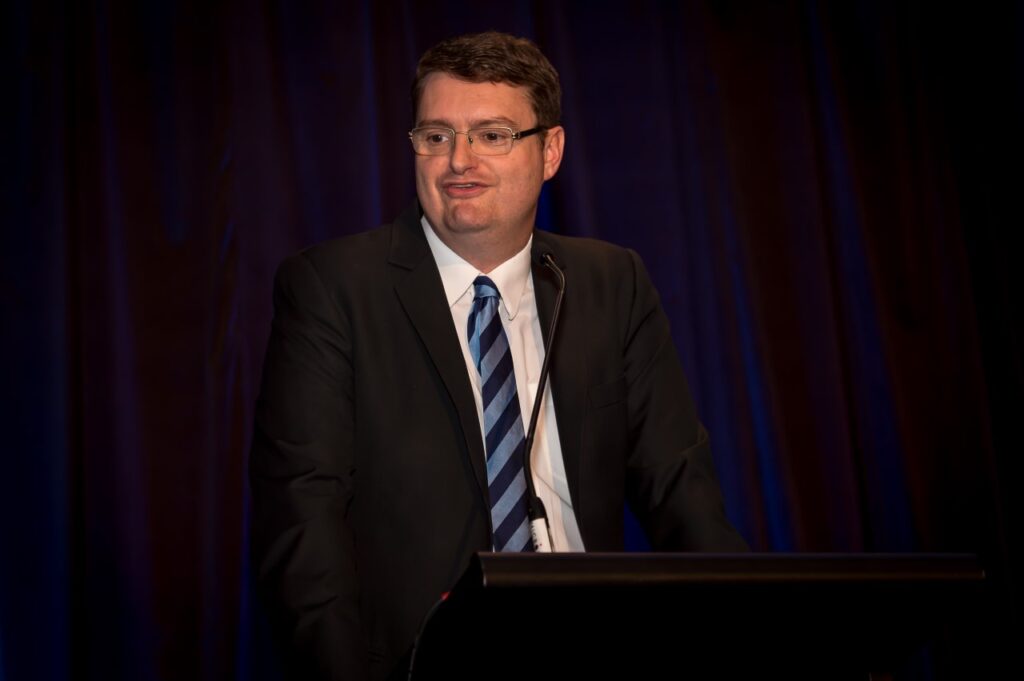
A long-time adherent of the world game, Football NSW Chief Executive Officer Stuart Hodge has been in charge of the state footballing body since 2017. His time in the role has included navigating back-to-back major lockdowns through a pandemic in NSW, with the current lockdown period beginning in late June.
The surge in COVID-19 cases across NSW left football in a tentative place nearly two months ago, but an extended lockdown has forced Hodge and Football NSW to ultimately cancel the remaining NSW-based state league seasons and its National Premier Leagues competitions.
Steering not just an organisation, but a state with such an engrained passion and commitment to football through a pandemic not once, but twice, has been a major challenge of Hodge’s time at the helm of Football NSW. If anything, leading the Football NSW family through such tough times has made Hodge appreciate the game to an even greater extent.
Q: It’s been announced that all Football NSW seasons have been officially cancelled following a board meeting on Wednesday evening. How challenging was it for yourself and the board to make this difficult decision?
Stuart Hodge: Any decision to cancel a competition is a serious one, and one that you wear with a heavy heart. We all would have loved to have seen all of the competitions come to an end and all of the effort from the players, coaches, volunteers, everyone rewarded with a proper conclusion.
Unfortunately, the circumstances that we’re in now with the pandemic and with the extended lockdown that we’ve been in – we’re coming up towards two months now that we wouldn’t have had teams training – it’s getting later into the year and understandably without a roadmap from the government as to how sport’s going to come out of this, it was the sensible conclusion.
Really, it was the decision that we had to take. And as hard as that is, at least it now gives certainty to everybody, and we can now start to plan how the 2022 season now looks like.
We would’ve loved to have been able to play on. If you look at some of our competition structures, especially around our women’s league, we have around 80 players from the W-League playing in our WNPL which is a demonstration of what a fantastic league that is. We were facing significant crossover with the W-League, and then as every week of the lockdown went on it became pretty obvious that we weren’t going to be able to play out a season without a significant clash with the W-League.
Q: Obviously, it’s a challenging time at the moment with NSW (in addition to other states) going through a severe lockdown. How are Football NSW working to aid clubs throughout this period?
Stuart Hodge: I think the decision that we made gave our NPL clubs certainty. That’s one of the things I think many clubs wanted clarity on. Being in limbo and wondering whether you’re going to return means that they’re holding on and waiting for the decision, at least now they can take the appropriate action and move on.
We’ve revised our club entry fees to ensure some financial relief for the clubs. We’re also advocating for government support. We were successful in doing that last year and hope that further support from government will come.
And then with our association clubs, most of our metropolitan associations have already decided to cancel the rest of their season. So, again it’s about how we can support clubs to get through this period and make sure they’re strong for next year.
Q: Football NSW this week encouraged clubs to get involved in initiatives like the Club Facility Project Plan, what do these initiatives do for clubs looking to get government support during this period of financial duress?
Stuart Hodge: It’s a challenging time and I guess what has been a positive from the recent NSW Government budget is the significant investment into infrastructure. And in particular, sporting facilities.
We’re like many other states in that we have a chronic shortage of facilities, both quality and quantity. And it really is the main thing that’s holding us back from increasing even more so in terms of participation.
So, we’ve undertaken some projects including a facilities audit and facilities strategy to position us , our associations and clubs well to capitalize on some of the upcoming grant programs that the government has announced. There’s a Greater Cities Fund, a Centre of Excellence Fund and there’s a Multi-Sport Facility Fund that will all open soon from the NSW Government and we are working hard to make sure football is well-prepared to apply for those grants.
In addition to that, we have the Women’s World Cup coming and we’re working closely with the Office of Sport in proposing a Legacy Fund. And we’re working with Football Australia on that as well. It would be specific to the football community to be able to access. We’ve been doing a lot of advocating directly with ministers to really emphasise the need for investment into football facilities, and we’ve been pleased with some of the NSW Government’s grant programs in recent times.
We’ve seen a large portion of the available funds being allocated going towards football projects.
Q: How are you feeling following the announcement of the Domestic Match Calendar by Football Australia recently?
Stuart Hodge: I think it’s a really important project to undertake. Having a really fixed calendar where there’s more alignment in the game is very positive.
As I mentioned earlier, we’ve got some challenges we face in regards to some crossover with the W-League and our competition. So, we’re working to see how we can better position that. I think the Domestic Match Calendar is really important in that it gives everybody a clear view of when everybody’s playing and where they’re playing. I guess then it opens up opportunities for discussion around other competitions and where they fit in.
It gives us opportunities to build our activities around national team matches. We of course know with the Women’s World Cup coming – and once we become available again to have national teams come there – I’m sure there’ll be a lot of matches involving the Matildas and national teams will want to come and play here.
So, having that Match Calendar and that visibility is going to be very important for us all to plan as we head into the future.
Q: Beyond the impact of COVID-19, what are your most significant priorities for Football NSW for the rest of 2021?
Stuart Hodge: Obviously, at the moment the stability of everyone involved in Football in NSW is our priority. And making sure that we don’t leave anyone behind and everybody comes through this pandemic.
We’ve also got summer football coming up which is important for us, and that’s what we’re also working with the government on in terms of looking at how we can operate summer football.
The facility grant programs that I mentioned earlier that will open up during this year are vital for our community and putting in place a fantastic legacy program with the government will be absolutely vital.
So, I think that they’re the key things that we want to be focusing in on, not just for after this pandemic but now. Because they’re so vital to the future of the game and with the Women’s World Cup coming up, it’s really a once in a generation opportunity to capitalise on having such a massive event here.
The legacy starts now – we’ve already seen a significant increase in female players and a 15% increase in female referees.
Q: How do you see the responsibilities of the state federations evolving over the next few years?
Stuart Hodge: I think that state bodies play an important role in the whole structure of football in Australia. There was an announcement that Football Australia had made that collectively we’re looking at a review into the game and looking at how the game is operated. And I think what’s really important is that we have clear roles and responsibilities across the different areas of the game.
Every aspect of the game plays an important role. And I think if we can get clarity and alignment together then I think we can see football reaching its potential here in Australia.
Q: What do you want to say to the Football NSW community during this tough period?
Stuart Hodge: I know it’s a difficult time at the moment for everybody, but if there’s a general message out there that I’d like to say to the football community of NSW that they stay strong.
When football resumed last year and I visited clubs, the overwhelming feedback I received was how playing and being involved at a club was a huge boost to the mental health of participants. We appreciate the physical benefits of sport, but the mental side of it is vital.
I want to thank everybody, especially the volunteers, for their understanding and patience during this difficult time and we wish everybody to stay safe as well. We can’t wait to have everybody back on the field in the near future.