


Football Australia confirms adoption of FIFA’s newly implemented loan provisions

Socceroos

Football Australia have confirmed the adoption of recently implemented FIFA loan provisions and specific domestic loan provisions for professional players in Australia.

At international level, FIFA has recently implemented a series of new loan provisions, including a limit on the total number of international loans, as outlined below:

  • Eight players loaned out and eight players loaned in at any given time during a season from 1 July 2022 – 30 June 2023
  • Seven players loaned out and seven players loaned in from 1 July 2023 – 30 June 2024
  • Six players loaned out and six players loaned in from 1 July 2024 and beyond

Additionally, a maximum of three players may be loaned out to the same club and a maximum of three players may be loaned in from the same club.

Member Associations are required to adopt these international provisions and include regulations on a domestic loan system that are aligned with the FIFA provisions.

These provisions are designed to uphold the principles of ensuring integrity of competitions, developing young players, and maximising competitive match minute opportunities for players. There is a transition period permitted over the next two years for the implementation of the international and domestic loan limits.

These changes work hand in hand with Football Australia’s football structural reform, particularly, the aligned Domestic Match Calendar, and modern and progressive Domestic Transfer System, where a positive step was taken earlier this year to remove the cap previously placed on domestic transfer fees for contracted players and our continued quest to improve player development.

Following consultations with stakeholders, Football Australia has also updated its domestic loan provisions in compliance with the FIFA regulations and principles but with specificities included for the Australian landscape.

Men’s domestic loan limits mirror the FIFA international loan limits, with A-League clubs being permitted two intra-league loans out and two intra-league loans in as part of the total domestic limits (i.e. only two players loaned in and two players loaned out between A-League clubs at anyone time) . A maximum of three players can be loaned out to the same club and a maximum of three players can be loaned in from the same club, consistent with the international provisions.

Women’s domestic loan limits have been set at 12 players loaned out and 12 players loaned in until 30 June 2023, 10 loaned out and 10 loaned in until 30 June 2024, and eight loaned out and eight loaned in from 1 July 2024. Additionally, a maximum of six players can be loaned out to the same club and six players can be loaned in from the same club until 30 June 2024, with this maximum decreasing to four loaned out to the same club and four loaned in from to the same club from 1 July 2024.

For both international and domestic loans, the loan of a player is exempt from the total loan limits if the professional is a club-trained player with the parent club, as defined in the National Registration, Status and Transfer Regulations (NRSTRs),and the loan occurs before the end of the season in which the player turns 21.

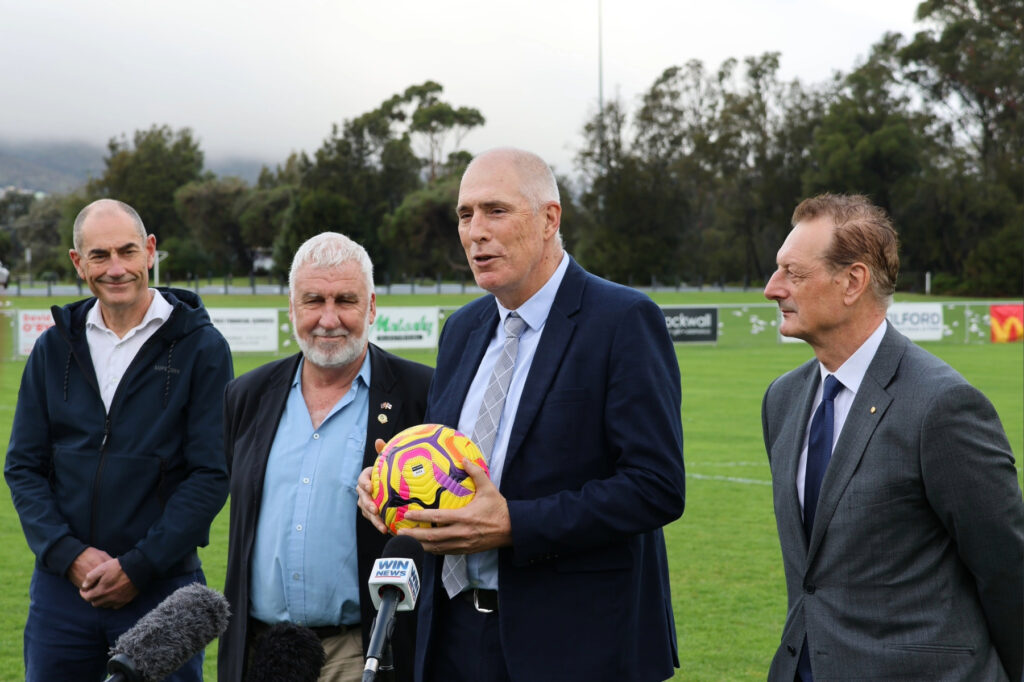
Football Australia Chief Football Officer Ernie Merrick applauded this latest wave of reform to the domestic transfer system.

“We are focused on transforming the domestic football landscape by aligning our domestic regulations with global best practice and to ensure we are addressing our current player development challenges,” Merrick said in a statement via Football Australia.

“These updates to the domestic loan provisions complement our ongoing reforms to the domestic transfer system which promote longer term professional playing contracts and will provide more opportunities for players, particularly younger players, to gain quality match minutes in instances where these opportunities are not available at their contacting club in the short term.

“The longer-term impacts of these core football decisions are all crucial elements to the continued football development outcomes in Australia.”

Football Australia has updated the NRSTRs to incorporate the international and domestic loan provisions, for both the Men’s and Women’s competitions.
Previous ArticleNext Article

Victory unites with Roasting Warehouse in culture-led partnership

The Melbourne-based anf family-owned business will join the Victory family, uniting two institutions which represent the city’s culture and identity.

A partnership with local roots

As the newest partner of Melbourne Victory, Roasting Warehouse joins forces with a vital part of the city’s sporting landscape.

The club’s Managing Director, Caroline Carnegie, outlined why the partnership bears so much value to both parties.

“We are excited to collaborate with Roasting Warehouse, a community-oriented destination for high-quality coffee, proud of its foundations in Melbourne,” said Carnegie via official media release.

“Football and coffee sit at the epicentre of Melbourne’s culture. The two go hand-in-hand, consistently at the centre of the conversation that stirs Melburnians, which is no different to the conversation sport and Melbourne Victory stir in the State.”

Indeed, this is a partnership which combines the identity, passions and culture of an entire city, therefore giving it the foundations required for long-term, mutual success.

Representing the best of Melbourne

Both Victory and Roasting Warehouse are hugely successful in their respective industries. They are institutions with community-oriented philosphies, who pride themselves on craft and quality.

“We’re incredibly proud to partner with Melbourne Victory, a club that represents the heart, passion, and ambition of Melbourne,” revealed Roasting Warehouse Head of Brand, Alexander Paraskevopoulos.

“As a Melbourne-founded, family-run business, supporting a team that means so much to the local community feels very natural for us.”

Furthermore, through their high-quality blends, Roasting Warehouse will look to prepare Victory’s players and staff for high performances on the pitch as the seasons nears completion.

But this is about far more than just fueling athletes.

This is a partnership which embodies and unites two of Melbourne’s greatest strengths and cultural markers – a connection forged from the city’s very own DNA.


For more information about Roasting Warehouse, click here.

Marie-Louise Eta makes history as new Union Berlin head coach

In an historic appointment, Eta will take over as head coach of Union Berlin until the end of the season.

History in the making

Previously the first female assistant coach in Bundesliga history with Union Berlin, Eta will now take the reigns of the men’s first team on an interim basis.

Currently, the club sit in 11th place in the Bundesliga table, but with only two wins so far in 2026, relegation appears an all-too-real prospect, and one which the club is desperate to avoid.

“Given the points gap in the lower half of the table, our place in the Bundesliga is not yet secure,” said Eta via official media release.

‘I am delighted that the club has entrusted me with this challenging task. One of Union’s strengths has always been, and remains, the ability to pull together in such situations.”

Eta will begin as Union’s new head coach with immediate effect, and will be in the dugout for the club’s matchup against Wolfsburg this weekend.


A step into an equal future

Eta’s appointment signals a major step towards a more level playing field in the football landscape.

Furthermore, Eta joins other coaches including Sabrinna Wittmann, Hannah Dingley and Corinne Diacre who, in recent years, have blazed a trail for female coaches to step into the men’s game.

Wittmann currently manages FC Ingolstadt in Germany’s third division, and was the first female head coach in Germany’s top three divisions.

In 2023, Dingley became caretaker manager of Forest Green Rovers, and thus the first woman to lead a men’s professional team in England.

Diacre, now head coach of France’s women’s national team, managed Ligue 2’s Clerment Foot between 2014 and 2017.


Final thoughts

The impact therefore, is that Eta’s appointment will show future generations of aspiring female coaches that men’s football is an equally viable and possible pathway as the women’s game.

The time is now to level the playing field.

And while it may be a short-term role, its effect on attitudes towards equality and fair opportunities in the game will hopefully resonate long after the season ends.

Most Popular Topics

Editor Picks

Send this to a friend