




FA Women’s National League strategy to strengthen women’s football pyramid

The FA Women’s National League has launched a new strategy with an ambition to strengthen the third and fourth tiers of women’s football in England.

The strategy, titled Empowering For Success, is backed by a £1 million ($1.7 million AUD) investment per season for the next three years from the Premier League.

The strategy aims to ensure the advancements in quality across the professional game are also harnessed throughout Tiers 3 and 4 of the women’s football pyramid.

Empowering For Success is focused across eight priority areas – each with their own strategic goal – ultimately enabling FA WNL clubs to flourish both on and off the pitch through the development of players, workforce, and infrastructure.

The eight priority areas are:

  1. Players: Developing the training, playing and overall environment players experience so they can be the best they can be, on and off the pitch.
  2. Coaches and Leaders: Developing coaches to be exceptional across The FA WNL, ensuring they are representative of society.
  3. Referees: Driving upwards the standard of refereeing alongside improving the opportunity and experience of match officials in The FA WNL.
  4. Club Development: Creating an inclusive, player-centered and sustainable club network.
  5. League Development: Ensuring The FA WNL keeps pace with the growth of the women’s game and offers the best-possible development opportunities to member clubs.
  6. Facilities: Ensuring FA WNL and clubs have access to the required infrastructure on matchdays, at training venues and off-field.
  7. Commercial: Defining The FA WNL’s commercial value and engaging with partners to grow revenues and inward investment.
  8. Marketing and Communications: Growing the reach and appeal of The FA WNL by increasing exposure and awareness through matchday activity and league channels, driving bigger attendances and league following.

Baroness Sue Campbell, The FA’s Director of Women’s Football, said in a statement:

“The launch of this strategy is game-changing for the women’s football pyramid. It will ensure The FA WNL can maintain pace with the wider growth of the women’s game, and the clubs and their players can thrive both on and off the pitch.

“We want to say a huge thank you to the Premier League for their support, without which none of this would be possible. The money they are investing will transform the experience of everyone who plays in the third and fourth tiers of women’s football.”

The Premier League has also announced additional support for clubs in Tiers 3 and 4 of the women’s football pyramid through the Premier League Stadium Fund. Eligible clubs can apply for grants of up to £20,000 ($35,000 AUD) to support the improvement of their stadium facilities, making grounds more welcoming for all and enhancing the playing and spectating experience within women’s football.
Previous ArticleNext Article

Football West’s Female Football Week draws record engagement from Metropolitan Perth to Remote Kunurra

Football West has wrapped up its 2026 Female Football Week with activations spanning metropolitan Perth, regional Western Australia and national online platforms, as participation data from the state’s most remote football association underlined the scale of demand for women’s and girls’ football beyond the city.

Kununurra Soccer Association, situated in the East Kimberley more than 3,000 kilometres from Perth, recorded 47 new female registrations aged 7 to 12 across the first two terms of 2026 through Football West’s Junior Girls United program, representing a 30 percent increase in female membership that coaches Hannah Grominsky and Evie Marchetti described as overwhelming.

“The support from the community has been simply awesome,” Grominsky said. “We’re up to nearly 50 registered girls now. The majority of them have never played before or aren’t part of our association, so it’s great to give them a positive football experience in a comfortable environment.”

The program, supported by the Federal Government’s Play Our Way grant, now runs every Wednesday and has extended football activity into the cooler months of the Kimberley calendar, a season when the association would not traditionally operate. The result is a cohort of players new to the game, in a region where access to organised sport has historically been constrained by geography, infrastructure and seasonality.

Recognition across the state

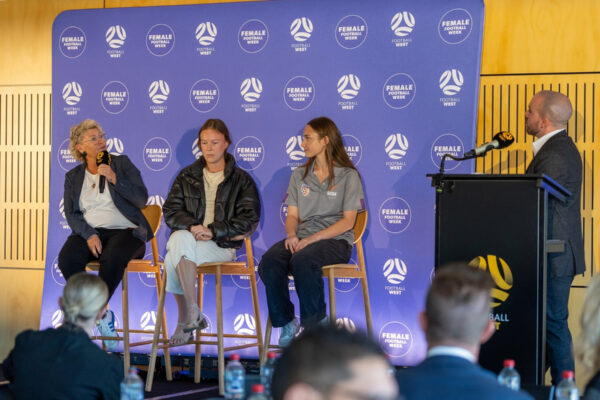
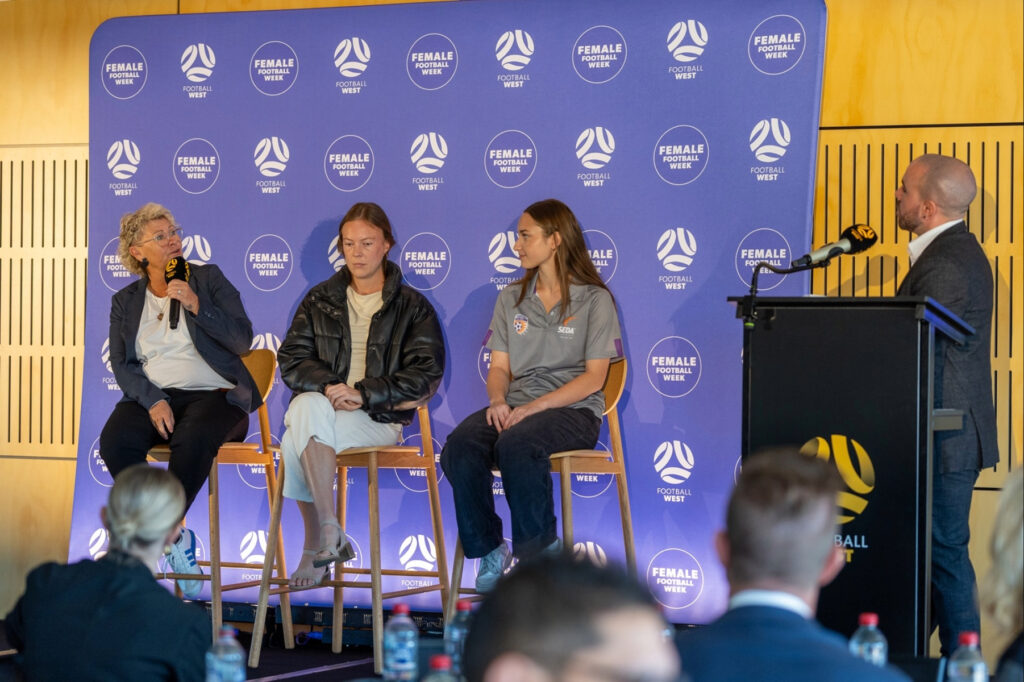
Back in Perth, Female Football Week’s centrepiece event was the Women in Football Celebrate You Breakfast at the Sam Kerr Football Centre, featuring two panel discussions covering officiating pathways, coaching development and advocacy for women in football.

Subiaco AFC NPL Women’s head coach Christine Coppin, who is one of few women coaching at her level in the region, said events like the breakfast were critical to making the pathway visible for others.

“I’d love to see more women coaches putting their hat in the ring, both at junior and senior levels, realising that there’s more to football than just playing,” Coppin said. “They can stay involved in the sport as they get older in different ways.”

A regional Women in Football Breakfast in Albany drew more than 30 attendees, while a Girls Day Out event in the same city attracted more than 50 participants aged 6 to 16 for a come-and-try introduction to the game, extending the week’s reach into the Great Southern and reinforcing Football West’s stated commitment to building women’s football outside metropolitan areas.

Recognising those who make it happen

The week’s awards, nominated by the WA public, recognised five individuals whose contributions to female football across the state were judged most significant over the past year. Cassandra Paxman of Albany Rovers FC was named Coach of the Year, Georgia Whitelaw of Great Southern JSA and Albany JSA took Referee of the Year, Karen Harris of Carramar Shamrock Rovers FC was named Volunteer of the Year, Georgia Aiesi of Mandurah City FC received the Player of the Year award, and Melissa Spillman of Football Futures Foundations was named Community Champion of the Year— a recognition she also received at the national level.

Football West Female Football and Advocacy Manager Sarah Carroll said the week had reinforced both the momentum and the responsibility facing the sport.

“Female Football Week continues to showcase the incredible passion and growing appetite for the women’s game,” Carroll said. “It’s a reminder of how important it is that we keep working together to drive the game forward.”

The contrast between a packed breakfast at the Sam Kerr Football Centre and a Wednesday afternoon program in Kununurra working around wet season schedules captures something essential about where women’s football in Western Australia actually lives. The growth is real, and it is happening in places the cameras do not always reach.

The Man Who Built a Women’s Football Program from Nothing is now an Award-Winning Gender Equity Leader

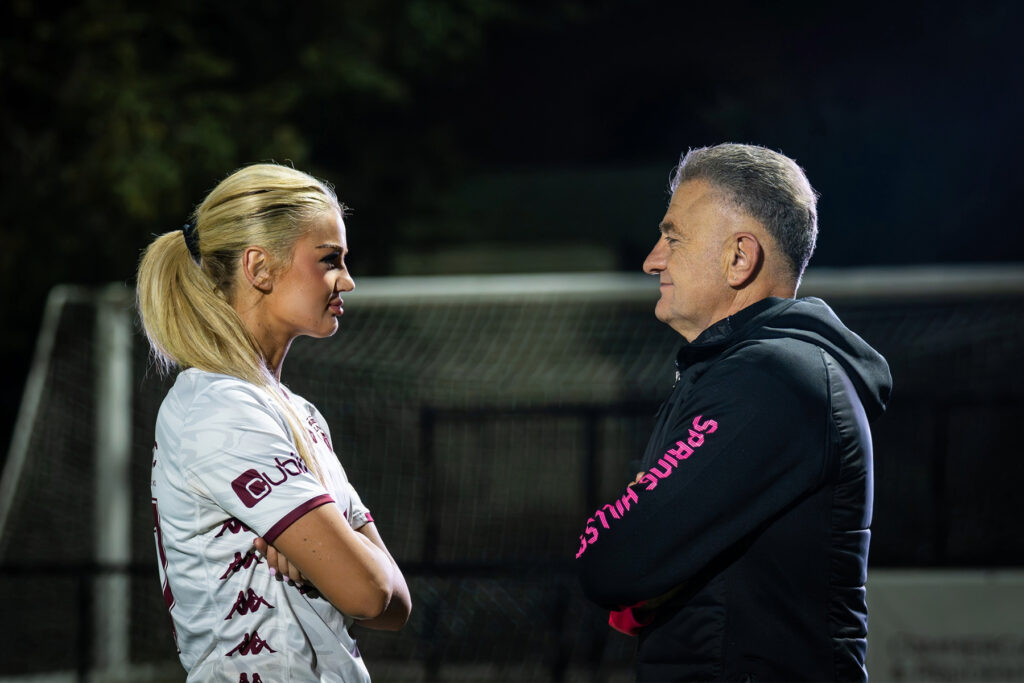
Eight years ago, Spring Hills Football Club did not have a girls’ team. Today it has one of the most recognised women’s programs in Melbourne’s west, a senior NPLW side, and a head coach who has just been named Gender Equity Leader of the Year at the Melton City Council Volunteer Achievement Awards.

Tom Markovski, Spring Hills’ NPLW Head Coach, received the award at a ceremony coinciding with National Volunteer Week, recognised for his community leadership, promotion of gender equality and commitment to advancing the status of women and people of all genders in sport. The recognition comes from outside the football community entirely, awarded by a local council celebrating volunteers across every sector of civic life in one of Melbourne’s fastest-growing regions.

Building from scratch

When Markovski arrived at Spring Hills, women’s football at the club did not exist. His first act was to champion the establishment of the club’s first all-girls team, a process that required persuading a club culture built around men’s football that the investment was worth making.

Women’s football in community clubs has historically struggled to access the same facilities, scheduling priority, coaching resources and institutional support as the men’s game. Clubs have been slow to invest in programs whose return is less immediately visible than a senior men’s premiership, and in a growing outer-suburban community like Melton, where volunteer capacity is finite and demand across every program is high, the case for building something new always has to compete with the urgency of maintaining what already exists.

Markovski made the case anyway, and kept making it across eight years of coaching senior and junior NPL teams while simultaneously building the structural foundations of a women’s program designed to outlast any individual’s involvement. The club’s first all-girls team became multiple junior girls teams. Those junior teams created the pipeline for a senior women’s side. The senior women’s side created visible pathways for younger players to see where the game could take them within their own club.

The outcome is a program that Spring Hills now holds up as central to its identity rather than supplementary to it. The club has become a leader in female participation in Melbourne’s west, and recently made history within the NPLW Victoria structure by fielding junior teams coached entirely by female coaches, a milestone that reflects the depth of the program Markovski helped build.

What the Award Recognises

The Melton City Council’s decision to name Markovski its Gender Equity Leader of the Year places his work in a frame that extends beyond football. Melton is one of the fastest-growing local government areas in Australia, a diverse and rapidly expanding community where the institutions that bring people together, like schools, councils, sporting clubs, carry an outsized responsibility for social cohesion.

Mayor Cr. Lara Carli, speaking at the awards ceremony, reflected on the role volunteers play in communities like Melton’s. “Volunteering creates friendships, strengthens communities and builds a sense of belonging,” she said. “It helps people feel connected, supported and valued, and those things are more important than ever in a growing and diverse community like ours.”

For the girls now playing football at Spring Hills who were not playing anywhere eight years ago, Markovski’s contribution is not abstract. It is the specific and concrete fact of having somewhere to play, someone to coach them, and a pathway that leads somewhere.

Most Popular Topics

Editor Picks

Send this to a friend