
Despite a lack of funding and support, Arnold’s Olyroos are punching well above their weight

Graham Arnold’s recent comments on ABC Grandstand in regards to the lack of funding and support given to Australian football’s junior national teams, were laced with frustration.

He should know.

The Socceroos boss is currently fulfilling his second most important job and attempting to guide the Olyroos to the 2020 Tokyo Olympics via the AFC U-23 Championships in Thailand. It would be an impressive achievement should the former Sydney FC manager pull it off, with Australia having failed to qualify for the previous two games and only ever twice advancing beyond the group stage.

That reality is a far cry from the Olyroos inaugural appearance in 1992, where a creditable fourth place was achieved in Barcelona. Since, things have been lean. Until now that is.

Watching potentially the best crop of youthful talent we have seen for some time advance to the semi-finals has been thrilling.

Al Hassan Toure’s extra-time goal against Syria sent Australia into the final four, with all remaining countries well aware that there are only three spots up for grabs due to Japan’s automatic qualification as hosts.

Draws with Iraq and Bahrain, along with an absorbing win over Thailand in the group stage, preceded the victory over Syria. Now South Korea becomes the next target, with Arnold’s men confident and more assured as they move within one victory of a ticket to an Olympic experience.

Arnold’s frustration around the money and support given to Australia’s best young footballers stems from his immense experience as a domestic and international player, championship winning A-League manager and his current role as the mentor of both the Olyroos and Socceroos.

The 56-year-old made it abundantly clear of his dissatisfaction at having just two of his Olyroos with experience in and around the Socceroos squad; gaining experience and knowledge.

Opposition teams in Thailand are nurturing their youth, exposing them at the top level and preparing for the next generation of footballers. They do so by investing money and resources that in turn create more matches and tournaments within which their national team competes. That allows for developmental players to enjoy a taste of what potentially lies ahead in their careers; creating a fluid link between the U-23 squad and the full national team.

Both Bahrain and Jordan arrived in Thailand with six players having already been granted full national caps. Arnold’s disappointment lies in the fact that of his squad, Thomas Deng has just the solitary appearance for the Socceroos, whilst Alex Gersbach has played six times in full national colours.

Sadly, without further investment and subsequent opportunity, Arnold’s Socceroo teams will continue to be picked with limited developmental intention. The current reality for the Socceroos is World Cup qualification and Asian Cup play or bust, with an absence of further friendlies or tournaments for the manager to see the next wave of Socceroos perform.

When combined with the fact that many of Australia’s best young players are given only limited opportunity abroad with their clubs, it could be suggested that Australia’s talented youth is playing less football than many of their counterparts across the globe.

Despite Arnold’s concerns and the need to address the current structures and level of investment, the squad has taken a typically Australian approach to its work in Thailand, punching well above its weight and now seeming capable of winning the event.

Even without the recently returned from injury Daniel Arzani and the suspended quartet of Lachlan Wales, Nathaniel Atkinson, Brandon Wilson and Riley McGree, the team has gelled under Arnold. Nicholas D’Agostino, Reno Piscopo and Toure have announced themselves to the football world.

Tom Glover looks a goal keeper of immense promise, whilst Dennis Genreau and Connor Metcalfe appear to have a kit bag of tools that should one day seem them as important members of the Socceroos. With McGree permitted to play in Tokyo should Australia qualify, Arzani back into calculations and Arnold keen to increase the opportunities for a selected group of Olyroo players with a trip to the Copa America this winter, the future holds much promise.

No doubt Arnold will remain frustrated in the near future; desperately keen to see more of what appears to be an exciting wave of talent appearing in Australia. Vast sums to invest are simply not available in the current climate and shrewd management of resources is required to ensure that these young emerging stars fulfil their potential.

As for now, let’s hope they keep punching well above their weight, despite the challenges, and find their way to the Olympics for the adventure of a lifetime.


Previous ArticleNext Article

FCA to Host Exclusive Two-Part Goalscoring Workshop Series with Dr Ron Smith

One of Australian football’s most respected coaching minds shares decades of research ahead of the FIFA Men’s World Cup.

Football Coaches Australia (FCA) has announced an exclusive two-part coach education series featuring renowned coach educator and football analyst Dr Ron Smith, offering coaches a rare opportunity to explore the evolving science of goalscoring through the lens of one of Australia’s most influential football thinkers.

The online workshops, scheduled for June 1 and June 8, will examine the historical development, modern trends and future direction of goalscoring in football, drawing on extensive research that formed the foundation of Dr Smith’s doctoral studies.

For FCA, the sessions represent the culmination of more than a year of planning and provide a timely opportunity for coaches to deepen their understanding of attacking play ahead of the FIFA Men’s World Cup.

“Ron’s work on goalscoring has been years in the making and continues to evolve,” FCA President Ian Greener said.

“We felt there was no better time to bring this knowledge to the coaching community than in the lead-up to the World Cup, when coaches around the world will be analysing the game’s best teams and players.”

Across the two sessions, Dr Smith will present findings from his extensive research into goalscoring patterns and trends, examining how the game has changed over time and what coaches can learn from football’s biggest tournaments.

Topics covered throughout the series will include:

  • Historical analysis of goalscoring trends
  • How goalscoring has evolved in the modern game
  • Key patterns identified through Dr Smith’s research
  • Scoring trends across the last six FIFA Men’s World Cups
  • Comparisons between men’s and women’s World Cup tournaments
  • The role of pressing, transition moments and direct play in creating goals
  • Practical coaching implications for improving attacking performance

The two-part structure has been intentionally designed to build upon itself. Session One will focus on the evidence, data and research underpinning Dr Smith’s findings, while Session Two will explore the practical applications and coaching interventions that can emerge from that analysis.

Football Australia has accredited both workshops with one Continuing Professional Development (CPD) hour each, allowing coaches to earn two CPD hours by attending both sessions.

Dr Smith’s coaching and coach education credentials span decades. He has worked extensively with Football Australia, the Australian Institute of Sport and the Socceroos, while also holding coaching roles internationally in Iceland and Malaysia, as well as within the A-League.

His contributions to coach development have helped shape generations of Australian coaches, making this series a valuable opportunity for coaches across all levels of the game.

Event Details

History and Future of Goalscoring – Session One
Date: Monday, June 1, 2026
Time: 7:30pm AEST
Format: Online
CPD: 1 Football Australia-accredited CPD hour

Following the completion of the FIFA Men’s World Cup, FCA is also planning a special panel discussion featuring leading Australian and international coaching voices to analyse the key tactical developments, trends and lessons emerging from the tournament.

Further details regarding that event are expected to be released later this year.

FCA members can attend the workshops free of charge, while guest registrations are available through Eventbrite.

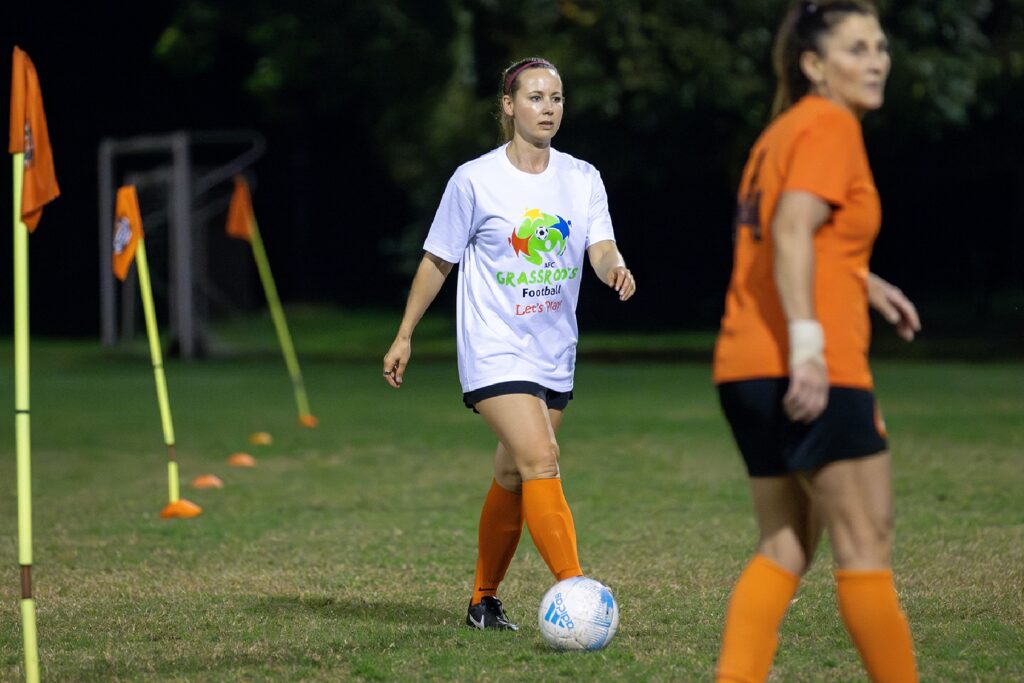
Community Spirit Shines on AFC Grassroots Football Day 2026

This week, Football Australia (FA) celebrated AFC Grassroots Football Day 2026, championing the people and communities who continue to hold up a safe, inclusive and supportive environment in the football landscape.

‘For all, for life’

In collaboration with Football NSW, Canterbury Football Association and community club, Balmain & District Football Club, the day reflected the very best of what football provides.

The event brought in participants of all ages – from 4-74 years-old – and reached a total of 400 people. Girls-only programs, all-abilities sessions and over-age football ensured all were catered for.

Such a diverse range of participants builds on a wider drive during FIFA World Football Week, which seeks to promote the sport not just as the dazzling lights of 100,000-seater stadiums, but as a way to foster community spirit and social development.

Furthermore, FA support through its Club Changer program was a welcome addition to the action, emphasising the organisation’s commitment to nurture a real love for the game across communities in Australia.

“Through Club Changer we support our clubs to provide a safe, fun and enjoyable environment where everyone is welcome; whether that be as a player, volunteer, referee or supporter,” explained National Program Manager Club Development at FA, Grace Lambourne.

“Everyone should feel they belong and are welcome to play, stay, and love the game.”


A welcome celebration

While the upcoming FIFA World Cup will no doubt inspire millions of future Socceroos and Matildas, events like the AFC Grassroots Football Day represent something beyond just inspiration.

It is a platform. An opportunity to express a love for football and to connect with others while doing so.

And connections between the professional and grassroots game is more important than ever if Australia is to nurture the next generation of talent.

This is particularly clear in the rise of women’s football across the nation. Since the FIFA Women’s World Cup, female participation rose by 32%, and registrations for the MiniTillies Program skyrocketed from 264 in 2023, to 1223 in 2024.

The professionals spark passion. But communities turn that passion into playing time.

That is why celebrating grassroots football – and the volunteers and families who sustain it – is a vital part of Australia’s football future. Together, FA and the AFC are creating strong foundations built on positivity, engagement, and inclusivity for all with a love for the beautiful game.

Most Popular Topics

Editor Picks

Send this to a friend