


South Melbourne FC is one of the most successful and famous Australian clubs, a powerhouse in the National Soccer League and Victorian NPL and is now set to be part of the establishment for the National Second Tier (NST) to arrive in 2025.
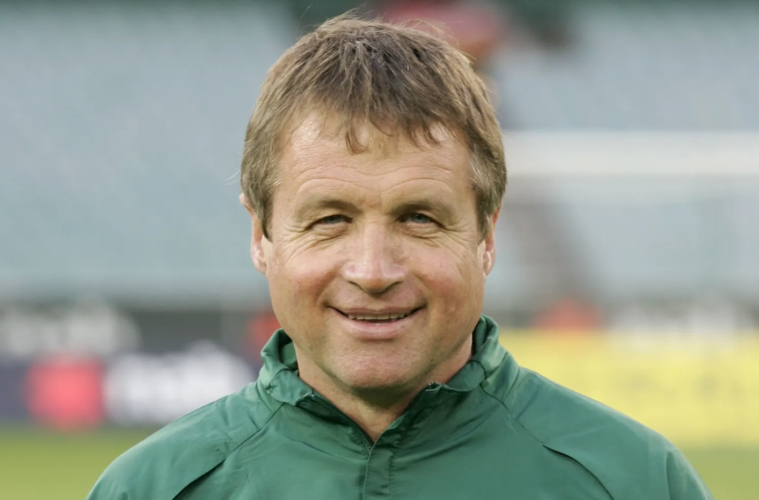
David Clarkson is a hall of famer at South Melbourne and one of the prominent players during the golden years of their dominance in the NSL from 1996-2003.
After years in the A-League within development, he has recently returned to the club to become their Head of Community Football Programs.
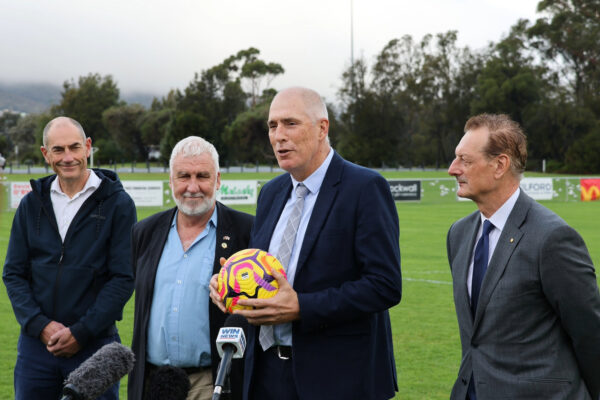
Soccerscene recently sat down with Clarkson, alongside South Melbourne FC President Nicholas Maikousis, to ask about why he joined the club, what are some of the new initiatives, and how these fit into the club’s position in the NST and also the local community.
Congratulations on your new role David, what made you return to this club?
David Clarkson: I had played before with the club for seven years and had an amazing time. What we did speaks for itself with a great bunch of people on and off the pitch.
Nick’s been at the club for 35 years and he was around when I was playing, we have had a strong relationship and we’ve remained friends.
Why do you think you wanted to participate in this initiative?
David Clarkson: I do my best thinking when I’m running and one day I was out and thought I wanted to speak to Nick again, and I wanted to put another proposal.
Nick said that ultimately it was the timing that worked.
I’ve learned a lot over the journey and for many years I worked in the A-League.
As the football environment changed, I believe I’m able to bring those learnings back to this club which is part of my DNA and always in my heart; I know it sounds cliché but it’s the truth.
Where I feel I can add benefit to the club is in this community space, working with juniors and bringing people back. South Melbourne is a big brand, and a big brand must deliver.
I’m really excited about the opportunity for myself and the club.
What are the initiatives and strategies you were planning to roll out?
David Clarkson: We wanted to start with the basics and that is setting up holiday camps. We know in this day and age that parents are looking for things for their kids to do during the school holidays.
Why not go to your local football club and do something you enjoy?
We had very little lead-in time for these school holidays, and we got around 50 boys and girls each doing the program.
From these camps, we plan to grow and add in more initiatives, including things such as pre-academy programs and squad development programs.
Nicholas Maikousis: Due to our history, we have a lot of community clubs that are South Melbourne-friendly clubs for decades.
As a resource, David will be able to further support the relationship with these community clubs, so his role is critical in managing those relationships and adding value to those South Melbourne community clubs.
David Clarkson: On top of that, we must respect our past. This Club has an unbelievably rich history with not just players but terrific individuals.
We won four national championships over the journey and for these individuals, South Melbourne is still who they are. I want to reach out to those old members and bring them back, and I feel that’s an important part of this role.
South Melbourne is one of the establishment clubs for the upcoming National Second Tier. With the announcement of this community initiative, we were wondering how these two projects are connected.
Nicholas Maikousis: Unlike the A-League franchises, we are still a members-based club, our community owns this club and so the value we add to the NST can really take us back to our roots.
The national second division allows us to add resources back into the club. If we are truly back onto the national stage, then there are certain parts of the business that need to be strengthened – with the community support program being one of those areas.
David Clarkson: On that, we have a wonderful opportunity to create something special; the foundation is what you build on, we need a strong foundation for the future.
The NST is a pathway for young players, they don’t need to look elsewhere and they can come into the South Melbourne system that is structured and set up and now they can play in a national competition.
This really takes the ceiling off for the club to progress.
Nicholas Maikousis: We were Australia’s biggest club before the turn of the century and although we maintained momentum for years, thanks primarily to David’s team, we are only recently seeing that diminishing.
I believe the National Second Tier will be a renaissance for us.
The opportunity lets us play on the national stage and still maintain relationships with the clubs that are from the broader South Melbourne family. This will be key to David’s role.
Are these initiatives going to engage with these partner clubs and will it be solely football or aspects of the business be involved as well?
David Clarkson: Everything we do with our partner clubs has to be a 50/50 benefit for both. This is the way I’ve set up these programs before in the A-League. Because the question you need to ask is if there’s no profit, why are these clubs sending the kids to us?
What we plan to do is run programs in conjunction with the clubs, including player development programs which means the money that comes in will go to the club’s players, parents, and the registration.
This grows the game, and the money coming in from this can be reinvested back into football, new facilities and new equipment, and scholarship programs. These are really important to us.
From what you guys have said currently, do you think the National Second Tier is allowing the club to be more ambitious?
Nicholas Maikousis: The reality is we got to invest in the club and build its resources; the NST will double our expenses and revenue streams.
South Melbourne will turn into a four-million-dollar business from a two-million-dollar business right now including expenses.
In the old NSL days, we had about 4-5 individuals in the administrative team, and that is where we are going to be in this new second tier.
Also, the amount of talent these old clubs produced was because kids got an opportunity in the old NSL. We’d sell players overseas, it’s good for the game to have this back.
We only tick the basic boxes now, so much more we could and should be doing, David’s appointment is an example of that progression.
David Clarkson: There is money in football, the NST just needs to be supported and it will grow.
On the other hand, with the new NST in conjunction with these community initiatives, do you think South Melbourne and other NST clubs will be able to bridge the gap in Australian football between community clubs and the A-League?
Nicholas Maikousis: Football Australia has talked about building a proper football pyramid, which has been lacking because of the gap between the A-League and state competitions.
Our clubs in the NSD will be able to bridge that gap.
With the history and heritage of the club, is there a sense of responsibility for South Melbourne to deliver development to the community and the game in the NST?
Nicholas Maikousis: I’ve heard this argument before, of trustworthiness and integrity which is critical to us and something unique to us.
We have a responsibility to our own community and the broader footballing community because we have delivered before on so many levels.
So many of the great stories and personnel for the A-League and Australian football are from South Melbourne, the greatest of all of course is Ange Postecoglou.
Any final messages about your initiative and goals?
David Clarkson: South Melbourne is a club of the people, serving the community, girls, boys, and persons with disabilities, you are welcome at our football club.
We are going to provide programs and look after people, players and parents to try and give them everything from their first experience into football, to playing for the Matildas or Socceroos.
This badge means a lot to people but only if it keeps delivering and that’s what we intend to do.
David Clarkson and Nicholas Maikousis are proud of their club and ambitious about their new goals combining both community initiatives with their rise to the National Second Division.
More will come in the coming months from the “Oceania Club of the Century” both in the community and wider footballing spheres.