


Season 2023/24 has been crucial for Melbourne Victory as Managing Director Caroline Carnegie is guiding the Club in the right direction.
There was a tricky period for the organisation, but that has not slowed Victory both on and off the park, as the A-League Men’s and Women’s sides have both performed well in their respective campaigns, with the former bouncing back superbly.
Coupled with significant business partnerships and acquisitions, Victory is establishing a gameplan for long-term growth ahead of its 20th year of existence in 2025.
In this interview with Soccerscene, Carnegie discusses the A-Leagues landscape, the partnership deals Victory have made, tackling the infrastructure problem and maintaining the World Cup legacy.

How are things travelling with Melbourne Victory?
Caroline Carnegie: We’re heading in the right direction with both the men’s and women’s team doing very well.
There’s always going to be noise in different sports – with the Australian Professional League’s situation there’s no doubt we have a lot of work to do and room to grow, both from the league and Club.
Part of it is that despite being a world game, it just hasn’t taken off from a professional perspective in comparison to the participation.
That doesn’t happen in 30 seconds, so there’s a lot of work to get where we want to be as a code, and we all have got to contribute.
That includes every stakeholder that sits around it too and I totally understand that can be difficult to do if there’s no agreement in decisions or directions.
Ultimately, our number one to build our Club and code is to fill stadiums week in, week out and we can’t do that without passionate people who want to be part of it.
You say that the A-Leagues is still in its infancy stage, your thoughts?
Caroline Carnegie: We have a lot of work to do, but there’s so much potential.
I know people have heard that a lot and get tired of the same messaging, but there have been numerous phases from a regulation perspective that we all have to grow, adapt and move with.
Next season is our 20th season and that is super exciting, but the Club is still so young in context with what’s happening in other professional sports so that needs to be factored in.

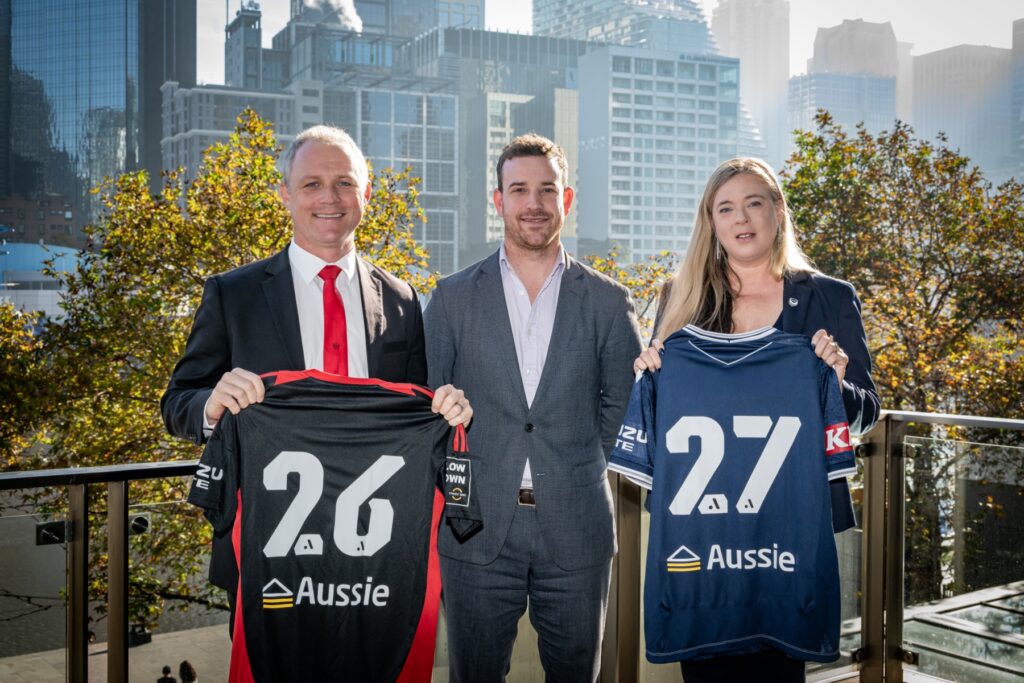
You’ve acquired numerous partnerships in the past few months including Turkish Airlines, ASICS and Lite n’ Easy, your thoughts on acquiring and retaining them?
Caroline Carnegie: We work incredibly hard to retain our partners and proud of the quality and calibre of them such as Turkish Airlines.
We’ve got wonderful partners that have been with us on the journey such as La Ionica, KFC and Checkpoint that have been around for a very long time, among many others.
When we sat in a room and announced the Turkish Airlines deal, Prof. Ahmet Bolat was talking about flying 90-95 million people around the world next year – all of whom will have exposure to their partnerships, which is a massive win for us. It’s also a win for the football code to get exposure as well.
In addition, having 777 Partners as a strategic shareholder is important to us.
We have General Managers across the business who meet regularly to look at leveraging better opportunities across the network. There’s a good analytical group that really supplements what we can do.
It’s still early days with 777 Partners, but still a positive relationship so far.

Infrastructure is an ongoing challenge for all clubs, how is Victory managing it?
Caroline Carnegie: It’s a big challenge. There are so many people that want to play our sport off the back of the men’s and women’s World Cups, but not enough pitches to play at.
It’s a constant challenge but not necessarily unique to us – we want to try and solve the infrastructure problem but the one good take out of it is the number of people wanting to engage in our sport.
There’s work to do for infrastructure and that comes from us as well – these things don’t happen in 30 seconds either.
You need to find the right place, they need to be funded and it’s hard to find green open spaces to the extent that we would like, but it’s an exciting journey with it being better than people not interested in our sport.
We’ve found that people such as in council are happy to work with us, but as we can imagine the number one priority for us may not be the number one problem that those people have to solve as well.
Whenever we have those discussions, there’s a myriad of stakeholders that each party must deal with.
There is an impetus towards football grounds, more so than 5-10 years ago and that’s really pleasing to see because that is what the community is asking for.
Victoria is multicultural and people come together from all different backgrounds, so all of those people have probably played football from where they’ve come from, not so much from domestic sport.
There’s no shortage of appetite to work with people, it’s just a shortage of time for everybody to have their priorities lined up.

You’ve spoken about preventing a ‘sugar hit’ from the World Cups, how do we sustain the momentum?
Caroline Carnegie: I don’t think there’s a reason why the game shouldn’t be a success.
Because we have a lot of different layers when we all work together, all stakeholders and state/national bodies need to help each other build what we aim to do.
The number one factor is people – when they lose interest, then sponsors and broadcasters would do the same and has a massive flow on effect.
We need to work together to ensure that the product going out there is what people want to see. Watching the Socceroos and Matildas was amazing, but we need people to have their heroes from domestic competitions.
The kids that love the game off the back of the World Cup are not able to see their heroes if they don’t follow the A-League every week.
In an ideal world, they love it when they play for their team, but then for the country loving them plus others that galvanise the national sides.
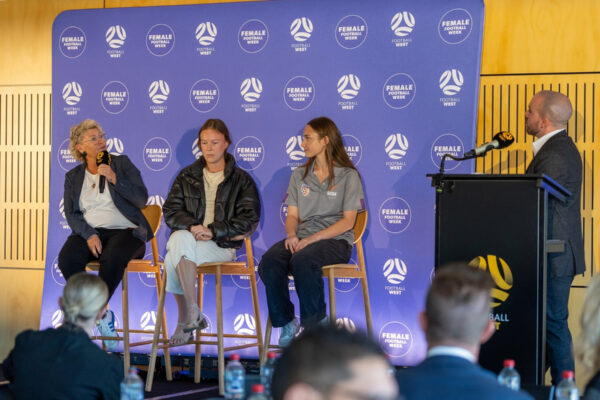
Victory has set up the Female Development Fund, how has that been incorporated?
Caroline Carnegie: For our A-League Women matches, we have not charged patrons for entry this year.
What we did was create the Female Development Fund and what we ask people to do if inclined is to put their money into that for female programs only and for people to apply for grants to help with program development.
It’s a tricky one because it’s not that we don’t value the girls, but it’s because we didn’t want to have any barriers to people not jumping on the women’s game when we had such a successful World Cup tournament.
In the women’s space, it’s those things to make sure that people have greater access to games and that they can watch their heroes and want to aspire to be like them.
No tickets for games is a different approach, but we have a long-term view to keep people involved and engaged with the game, eliminating those barriers.

How has the move been to The Home of Matildas?
Caroline Carnegie: It has been really well received.
As with any stadium, it’s more convenient for some compared to others, but it’s the elite nature of the facility from both a training and playing perspective has been welcomed by the girls.
A couple of years ago we had a member forum and we had more double headers coming up – there were people concerned around that.
We were clear at the time that we wanted to do the right thing by our members but also for our players, because the more they play the more you want to watch them.
If you speak to any of the girls, the difference in terms of how elite they feel having the home base with the quality it presents is huge. We are really pleased with how it’s turned out.
It’s a mindset shift as well, as our female players are still semi-professional and need to do other things given the nature of how the league is structured.
In your role, what does the future look like?
Caroline Carnegie: Our partners and shareholders are crucial to what we do.
However, our members and fans are number one. We can’t fill stadiums without them, and the players don’t want empty seats.
We had a course that we provided content for around 12 months ago, where the Director of Football, Coach, Chairman and I came and did a presentation.
Somebody asked me what does success look like for you; Success is not one thing, it’s always football first, but we want to be successful across everything we do.
From a membership perspective it is not just numbers – it is engagement, people who want to be part of Victory and us doing the right thing by them; In a tough environment where they decide what to do with their money, we don’t get questioned because they feel that relationship and value.
Commercially, we want partners to feel like they get a lot out of the alignment with Victory through business.
People should say win trophies, but if you do that in an empty stadium then that’s not success.
We are continuing to evolve and having a member working group helps us understand and validate the decisions we make through feedback.