

Ange Postecoglou’s trail blazing J-League success finally silences the critics

Former Socceroo manager Ange Postecoglou stands just 90 minutes away from potentially the most significant achievement by an Australian football coach.
For the past two seasons, the 54-year-old has been at the helm of J-League club Yokohama F Marinos. With a three point lead on the ladder heading into the final round of play and a comfortable seven goal advantage in the tie-breaking for and against column, Postecoglou’s men appear sure things; a done deal and J-League champions.

Barring some sort of bizarre final day flake out or the most stunning of all victories by their opponent this weekend and second placed FC Tokyo, an Australian manager will for the first time, have his hands on one of the most valuable pieces of silverware in Asian football.

The club is emerging as a potential Japanese powerhouse, with the City Football Group investing in a minority share in 2014. It had an obvious eye towards leading the club back to J-League success after what had been a ten year stretch of disappointment.

Not that the club could ever have been described as a minnow of Japanese football. Three league championships and a J-League Cup in 2001 are testament to its success. However, aside from a second place finish in the league in 2013, Yokohama has recently done little more than sniff around the fringes of the top rungs.

It’s most proud achievement is quite probably the fact they have played in the top flight of Japanese football since its inception. Never suffering relegation and always being competitive.

The involvement of the City Football Group usually signifies immediate change, thanks the increased investment and resourcing undertaken at the clubs with which they become involved. There are now eight such clubs across the globe, with trophies and more trophies a clear motivation for the owners.

A key part of the new investment in Yokohama and a potential change in fortune was to find the right mentor and Postecoglou, after successfully qualifying Australia for the 2018 World Cup in Russia, accepted the challenge laid out before him. He would follow in the footsteps of the now Melbourne City manager Erick Mombaerts in Japan, who was unable to produce the results which City Football Group demanded.

For the Aussie, it required a forgoing of another trip to the world’s biggest football tournament, something for which Postecoglou took much criticism. Many believed there was a sense of desertion. However, the manager had been explicit that his term was to only ever cover the four year period for which he had signed. When family ramifications, an attempt to sure up his long term future and his continued development as a manger were also considered, Postecoglou had a simple choice to make.

Yokohama it was to be and after moments of promise in 2018, his first season saw the club finish in 12th place on the J-League ladder. In truth, there were moments late in the season where they appeared a far better team than that result indicated.

Consistent with his past, Postecoglou was content to experience two steps backwards to eventually take a commanding three forward. It has long been his approach. Postecoglou has a plan, vision and philosophy about football. The chances of him stepping into a role and continuing with the style and methodologies of the previous boss are slim and none.

It was the approach he took with Brisbane Roar and Melbourne Victory in the A-League. It brought about multiple championships. At the helm of the Socceroos he took the same approach, starting from scratch and trialling a vast number of players before settling on the men he knew had completely bought into his way of thinking and could best execute his plan on the big stage.

Such an approach will potentially be the greatest legacy he leaves when the clip board is eventually shelved and his career is done and dusted.  An Australian with the confidence to back his own systems and without the need to replicate the approaches of managers at the helm of some of the biggest European and South American clubs, is a new phenomenon.

Postecoglou never sought the tick of approval from those whose methods are supposedly the ‘right’ and ‘tested’ way to approach the game. He always had a clear plan and had the courage to back it no matter the outcome, fallout or any personal criticism that may come his way because of it.

Even Postecoglou’s critics, and there were many at times, would applaud him for having the courage of his convictions.

Now the Greek born manager will have a rather impressive J-League title to add to his resume. In a week where Soccerscene’s own Philip Panas’ interview with Phil Moss as Australian football coaches deserve better explored some of the challenges faced by domestic coaches, Postecoglou’s success is timely.

With Moss correctly identifying the limited opportunities presented to Australian coaches and the need for a solid support network to aid them in their development and growth, Ange Postecoglou has once again set the bar, broken the glass ceiling and pioneered the way forward.

It is a success most Australian football fans will celebrate, whilst a few doubters may be forced to eat a rather large piece of humble pie.


Previous ArticleNext Article

FCA to Host Exclusive Two-Part Goalscoring Workshop Series with Dr Ron Smith

One of Australian football’s most respected coaching minds shares decades of research ahead of the FIFA Men’s World Cup.

Football Coaches Australia (FCA) has announced an exclusive two-part coach education series featuring renowned coach educator and football analyst Dr Ron Smith, offering coaches a rare opportunity to explore the evolving science of goalscoring through the lens of one of Australia’s most influential football thinkers.

The online workshops, scheduled for June 1 and June 8, will examine the historical development, modern trends and future direction of goalscoring in football, drawing on extensive research that formed the foundation of Dr Smith’s doctoral studies.

For FCA, the sessions represent the culmination of more than a year of planning and provide a timely opportunity for coaches to deepen their understanding of attacking play ahead of the FIFA Men’s World Cup.

“Ron’s work on goalscoring has been years in the making and continues to evolve,” FCA President Ian Greener said.

“We felt there was no better time to bring this knowledge to the coaching community than in the lead-up to the World Cup, when coaches around the world will be analysing the game’s best teams and players.”

Across the two sessions, Dr Smith will present findings from his extensive research into goalscoring patterns and trends, examining how the game has changed over time and what coaches can learn from football’s biggest tournaments.

Topics covered throughout the series will include:

  • Historical analysis of goalscoring trends
  • How goalscoring has evolved in the modern game
  • Key patterns identified through Dr Smith’s research
  • Scoring trends across the last six FIFA Men’s World Cups
  • Comparisons between men’s and women’s World Cup tournaments
  • The role of pressing, transition moments and direct play in creating goals
  • Practical coaching implications for improving attacking performance

The two-part structure has been intentionally designed to build upon itself. Session One will focus on the evidence, data and research underpinning Dr Smith’s findings, while Session Two will explore the practical applications and coaching interventions that can emerge from that analysis.

Football Australia has accredited both workshops with one Continuing Professional Development (CPD) hour each, allowing coaches to earn two CPD hours by attending both sessions.

Dr Smith’s coaching and coach education credentials span decades. He has worked extensively with Football Australia, the Australian Institute of Sport and the Socceroos, while also holding coaching roles internationally in Iceland and Malaysia, as well as within the A-League.

His contributions to coach development have helped shape generations of Australian coaches, making this series a valuable opportunity for coaches across all levels of the game.

Event Details

History and Future of Goalscoring – Session One
Date: Monday, June 1, 2026
Time: 7:30pm AEST
Format: Online
CPD: 1 Football Australia-accredited CPD hour

Following the completion of the FIFA Men’s World Cup, FCA is also planning a special panel discussion featuring leading Australian and international coaching voices to analyse the key tactical developments, trends and lessons emerging from the tournament.

Further details regarding that event are expected to be released later this year.

FCA members can attend the workshops free of charge, while guest registrations are available through Eventbrite.

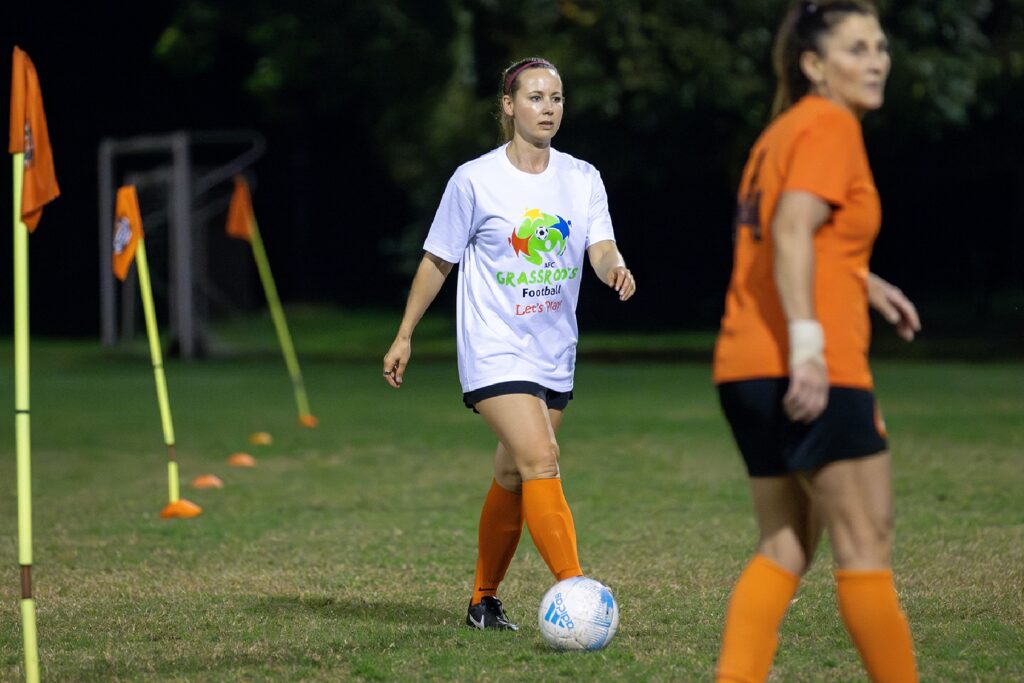
Community Spirit Shines on AFC Grassroots Football Day 2026

This week, Football Australia (FA) celebrated AFC Grassroots Football Day 2026, championing the people and communities who continue to hold up a safe, inclusive and supportive environment in the football landscape.

‘For all, for life’

In collaboration with Football NSW, Canterbury Football Association and community club, Balmain & District Football Club, the day reflected the very best of what football provides.

The event brought in participants of all ages – from 4-74 years-old – and reached a total of 400 people. Girls-only programs, all-abilities sessions and over-age football ensured all were catered for.

Such a diverse range of participants builds on a wider drive during FIFA World Football Week, which seeks to promote the sport not just as the dazzling lights of 100,000-seater stadiums, but as a way to foster community spirit and social development.

Furthermore, FA support through its Club Changer program was a welcome addition to the action, emphasising the organisation’s commitment to nurture a real love for the game across communities in Australia.

“Through Club Changer we support our clubs to provide a safe, fun and enjoyable environment where everyone is welcome; whether that be as a player, volunteer, referee or supporter,” explained National Program Manager Club Development at FA, Grace Lambourne.

“Everyone should feel they belong and are welcome to play, stay, and love the game.”


A welcome celebration

While the upcoming FIFA World Cup will no doubt inspire millions of future Socceroos and Matildas, events like the AFC Grassroots Football Day represent something beyond just inspiration.

It is a platform. An opportunity to express a love for football and to connect with others while doing so.

And connections between the professional and grassroots game is more important than ever if Australia is to nurture the next generation of talent.

This is particularly clear in the rise of women’s football across the nation. Since the FIFA Women’s World Cup, female participation rose by 32%, and registrations for the MiniTillies Program skyrocketed from 264 in 2023, to 1223 in 2024.

The professionals spark passion. But communities turn that passion into playing time.

That is why celebrating grassroots football – and the volunteers and families who sustain it – is a vital part of Australia’s football future. Together, FA and the AFC are creating strong foundations built on positivity, engagement, and inclusivity for all with a love for the beautiful game.

Most Popular Topics

Editor Picks

Send this to a friend