



A-League’s bungled restart highlights difficulties in changing Australian football’s narrative

The FFA last week released a discussion paper titled ‘XI Principles for the future of Australian Football’.

In a move which invited the football community to have their say on the future of the game, one of the principles the governing body identified centred around resetting and re-building an optimistic narrative for Australian football.

A focus on this aspect comes after years of negative press, through incidents of political infighting and declining TV ratings across the board.

Sometimes the media attention was justified, sometimes it was not, but the FFA believes the game needs to be in better control of its narrative and unify the footballing public.

In the early hours of Friday morning, a fortnight ago, it had just the perfect news story to get this process underway.

The announcement that Australia were awarded the right to co-host the 2023 Women’s World Cup, was a shot in the arm the game needed.

Let’s not understate this for a second, the FIFA Women’s World Cup is at the very least in the top four biggest sporting tournaments in the world.

Because of this event, football participation will rise significantly, investment in football infrastructure will be prioritised, as well as a host of other positives for the sport.

FFA CEO James Johnson and his team were rightly lauded in securing the event, with the win receiving considerable coverage in the mainstream media.

Importantly, however, it gave football fans in this country a favourable narrative to unify behind, with an event to look forward to, as well as a growing sense of faith in an administration that has promised to put the best intentions of the game first.

How quickly things change in football.

Move forward to this week and the focus is not on the success of the Women’s World Cup bid, but rather the diabolical situation in regards to the resumption of the A-League.

The scenes of players from Victoria’s A-League clubs not being able to leave the state after the rising coronavirus count, were farcical.

It’s an all too familiar moment where the administration has shot itself in the foot, with Supercars facing a similar situation but able to navigate around it in an appropriate, timely manner.

The AFL, NRL and Rugby Union also relocated all of their Victorian teams to other states in advance.

Professional Footballers Australia (PFA) were highly critical of the FFA, after the events that transpired on Monday and Tuesday.

“What the players and their families have had to endure over the past 48 hours is unacceptable,” the PFA said in a statement on Wednesday.

“The lack of clarity, the ad-hoc planning and shifting commitments have left the players embarrassed, frustrated and entirely lacking confidence in the process.

“Whilst the situation is complex, what the players require is simple; a reliable and feasible plan that does not shift the game’s inability to effectively manage these challenges solely on to players and their families.

“Responsibility sits with FFA to present and then execute an achievable resolution that will ensure the completion of the A-League season and does not create further distress for the players.”

FFA’s Head of Leagues, Greg O’Rourke, has accepted responsibility for the stuff up, but ultimately it made the league look amateurish.

This is an example of how quickly the football narrative can change for the worse.

That feeling of positivity and hard work conducted by the FFA to win the hosting rights of The Women’s World Cup has partly come undone.

Instead, the football community is left embarrassed by self-inflicted mismanagement at the top, not by external forces.

It’s once again a case of football being its own worst enemy.

The issue, as of late Thursday night, seems to have been somewhat resolved with an exemption granted to the Victorian clubs to travel to NSW.

James Johnson’s intervention was likely to have been essential, to get his administrative team out of hot water.

“I would personally like to thank the NSW Premier, Gladys Berejiklian, and NSW Heath Minister, Brad Hazzard, for granting this exemption during these extraordinary times,” he said in a statement.

However, if the governing body is to properly project a positive narrative to get its fanbase on board, they must set higher standards and not sit on their laurels.

Previous ArticleNext Article

More Than One in Five Football Australia Staff to Lose Jobs Amid Growing Financial Losses

Australian football finds itself in a curious position.

From the outside, the game appears to be riding a wave of momentum. Attendances, visibility and public interest have all experienced significant uplift in recent years, while major international tournaments and growing discussion around football’s future continue to place the sport firmly within the national conversation.

Yet behind that momentum, Football Australia is now confronting a far more challenging internal reality.


A compounding deficit

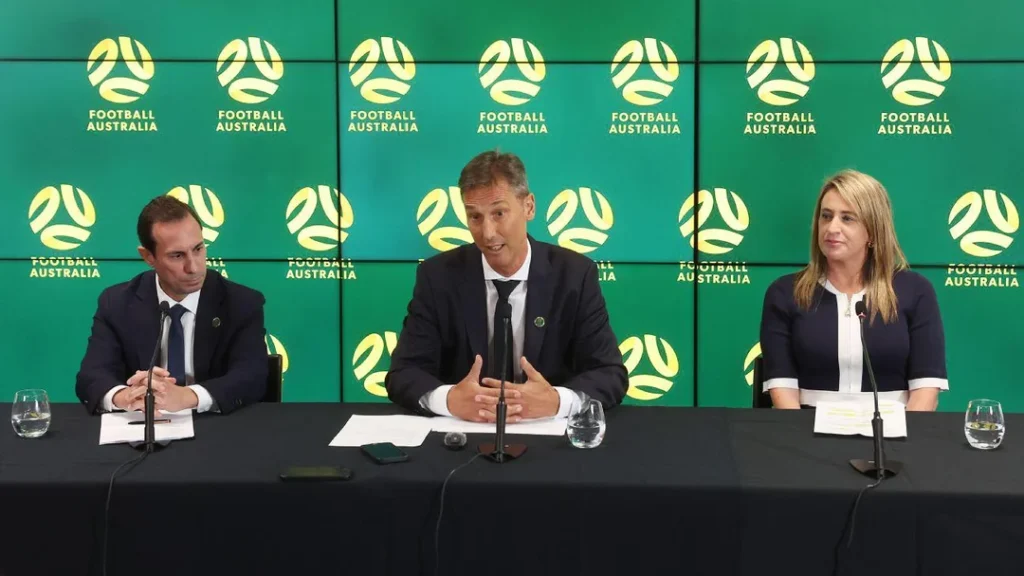
Chief Executive Martin Kugeler has reportedly indicated the governing body’s projected financial losses for 2025 are expected to exceed the organisation’s reported $8.5 million deficit from the previous year. Accompanying the financial outlook are substantial organisational changes, with reporting from Tracey Holmes indicating more than one in five Football Australia employees are expected to lose their positions through restructuring measures.

The figures represent more than a difficult balance sheet. They point toward a significant period of recalibration inside the organisation responsible for overseeing the sport nationally.


Losing the wisdom of existing staff members

For governing bodies, restructures are often framed as strategic necessities for future sustainability. However, workforce changes on this scale also raise broader questions around the challenges of such a transition.

People are often the carriers of knowledge, relationships and long-term strategic understanding. When organisations undergo significant structural change, the effects can extend beyond immediate financial outcomes.


Contradicting timing

The timing is what makes the developments particularly notable.

Football in Australia has spent recent years discussing expansion, growth and long-term opportunity. The conversation surrounding the game has increasingly centred on future potential. Often headlining stronger pathways, larger audiences, infrastructure development and greater visibility.

Against that backdrop, news of deep financial losses and substantial staffing reductions creates a different conversation: one focused not on where the game wants to go, but on what may be required to sustain that journey. Therefore, this announcement points toward stagnancy, rather than growth.

Further detail surrounding Football Australia’s strategy and long-term direction will likely emerge over coming months. For now, the developments serve as a reminder that growth stories are rarely straightforward.

Often, the periods that appear strongest from the outside can also be the moments organisations face their most significant internal tests.

New ‘Unfiltered’ Episode with Paul Klisaris and Oscar Yildiz

The ‘Unfiltered’ podcast by Soccerscene promises honest, thought-provoking conversations about football culture, identity and the stories fans don’t usually hear in mainstream coverage.

In the latest episode, Mihaila Kilibarda sits down with passionate councillors Paul Klisaris and Oscar Yildiz to debate the role of policy in shaping infrastructure, career opportunities and on-field success in the Australian football landscape.

From exposing flaws in policy making, to critiquing the A-League, Paul and Oscar discuss the future trajectory of football in Australia. With strong views on the disconnect between decision-makers and grassroots communities, this is an unfiltered look at the issues holding the sport back—and the urgent need for change.

“Bring back Preston, bring back South Melbourne, bring back that culture into the game. There was nothing wrong with that. Bring it back. Regulate it better, police it better, like they have in Europe. There is rivalry and that’s healthy!” says Paul Klisaris in this episode.

Oscar Yildiz agreed that “We might need to throw a bomb. There is no incentive for clubs to aspire to. You know, you can finish last and still stay in the league. They need to have people from state, from federal, people, again, who know the game, who genuinely know the game. And, it means understanding the politics around the game.”

Listeners can expect Unfiltered to go beyond match reports and transfers. Each episode will dive into the ideas, people and cultural forces that make football one of the world’s most compelling sports. Episode 2 is available now, hoping to challenge, entertain and inspire.

Listen now on Spotify: 

With Unfiltered, Soccerscene is giving fans a space to think, feel and debate about the game they love. Further, it is encouraging conversations that are as engaging as the football itself.

Stay tuned for future episodes, featuring more voices shaping the beautiful game.

Most Popular Topics

Editor Picks

Send this to a friend