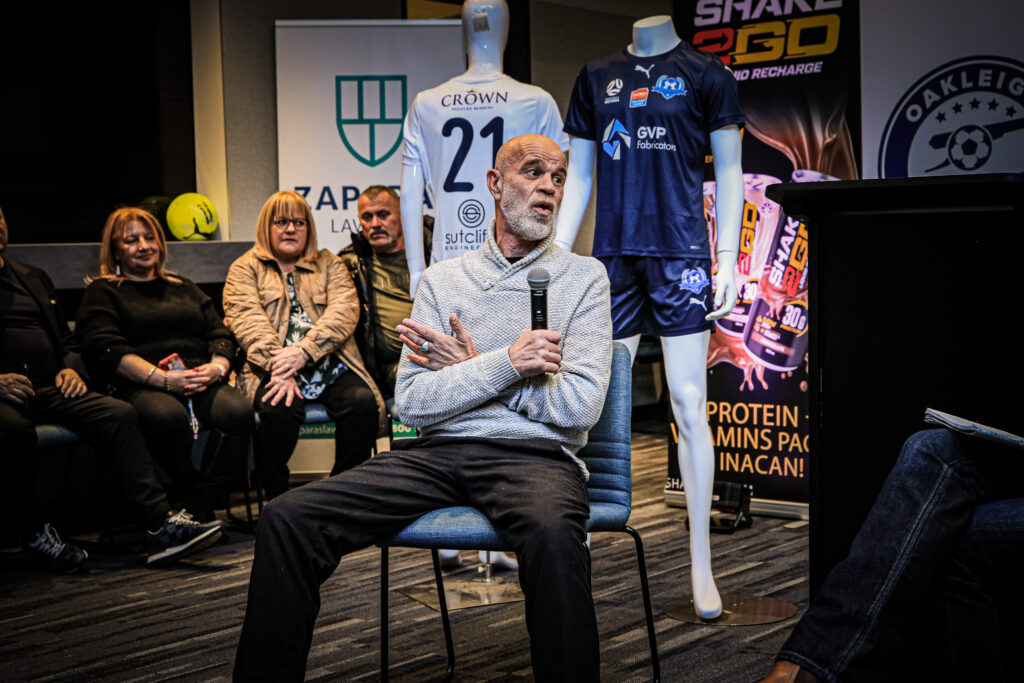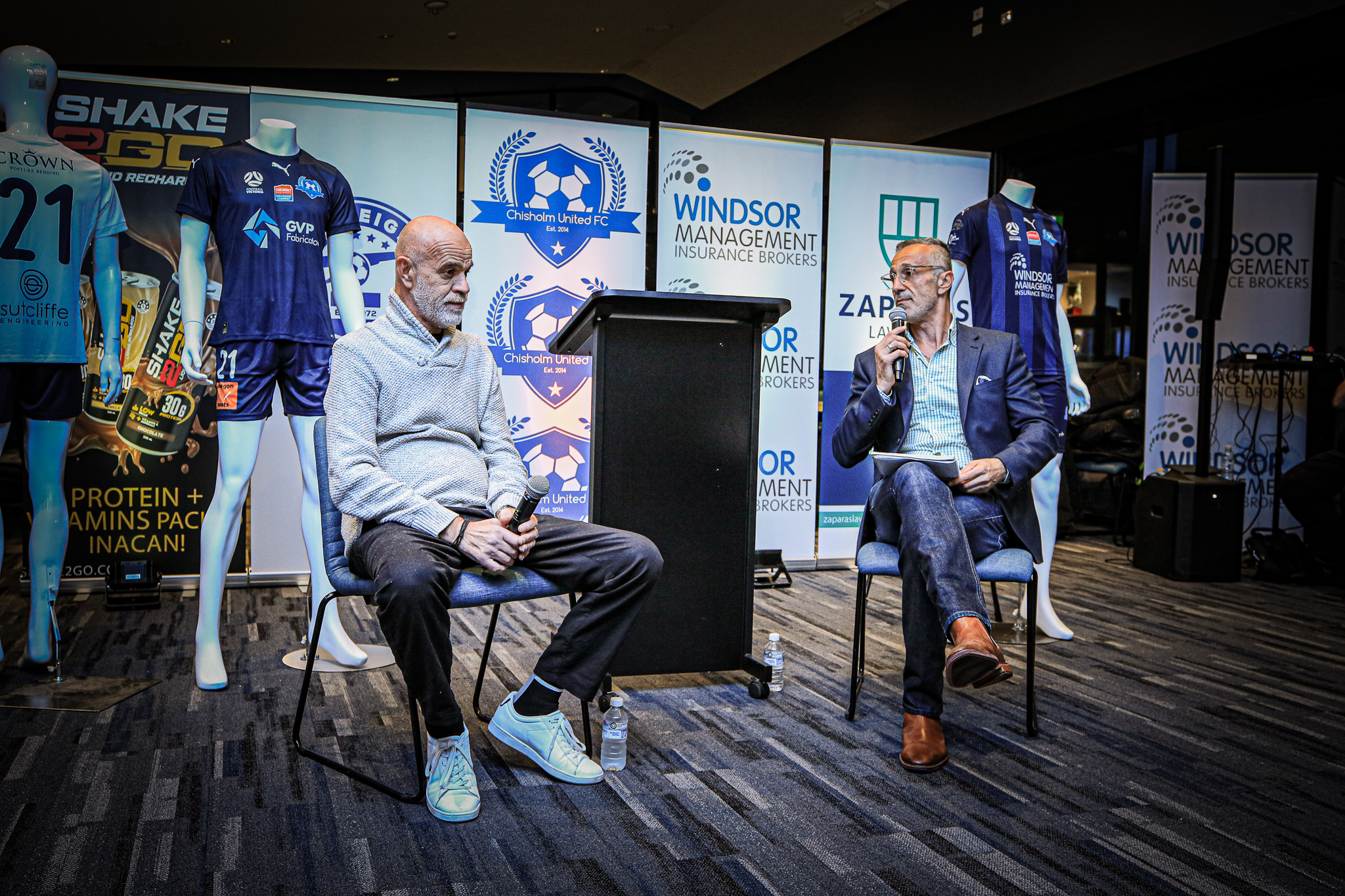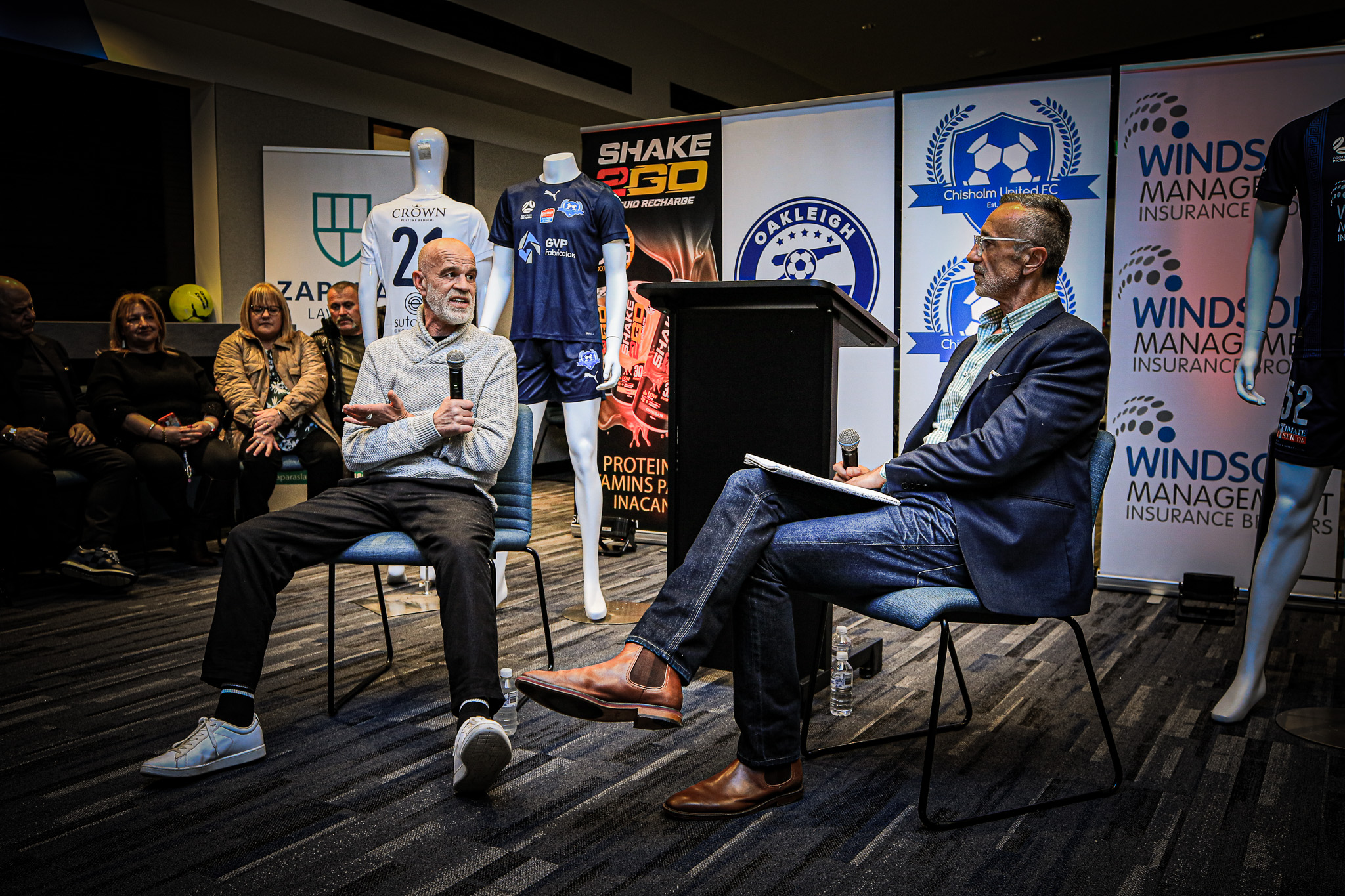



Frank Farina’s Comeback – For the Love of the Game.
They say you can’t keep a good man down and in the life of Frank Farina, former Socceroo striker and head coach, football is like oxygen – he can’t live without it.
Farina first emerged as star quality when he scored the equalising goal for the Young Socceroos against Mexico in their 1-1 all draw at Azteca Stadium in 1983. This all in front of 110,000 fanatical home supporters.
Farina’s career up to 1998 is well chronicled in his biography, “ My World is Round”, but it was only in 2016 that he completed his last coaching assignment in Fiji.
The scorer of 145 goals in 336 senior matches in Australia and abroad, speaks volumes for his lethal striking.
Recently, Farina joined the First X1 which was assembled by the FFA as an advisory panel to recommend measures to improve the game .
Also, he is hoping to take up the position of technical director for the Charles Perkins Academy when Macarthur Bulls start in the next A-League season.
Frank Farina is committed to leaving a legacy for Australian football and in this interview with Roger Sleeman, he reveals his enduring passion for our game.
ROGER SLEEMAN
You were part of the class of 1983 which competed so well in the Mexico World Youth Cup, playing alongside such legends as Rod Brown, Rene Licata, David Lowe, Jim Patikas, Tom McCulloch, Danny Wright and Tony Franken to mention a few.
Apart from Tony Franken and Jim Patikas, most of the squad aren’t involved in the game to any extent.
Why?
FRANK FARINA
It certainly was a great squad and our win against the European champions, Scotland, who boasted some amazing talent in future stars, Paul McStay, Brian McClair, Dave McPherson, Pat Nevin and Eric Black, was one which will live forever in my mind.
Les Scheinflug and Raoul Blanco seemed like tough coaches at the time as they instilled their discipline on the team. Yet, in hindsight, we learned to see the game in a professional way.
After the players finished their football careers, the professionalism of the game was not so advanced so they had to seek opportunities outside of football.
The passion remained but the chances to remain in the game were limited so many of them pursued business interests with great success.
ROGER SLEEMAN
You were selected in the First X1 by the FFA and apart from discussion about a transfer system, what else has been achieved?
FRANK FARINA
We recently had a long discussion about the women’s game and how it can be used as a catalyst to promote the game in all areas.
However, it’s early days and the main concentration is to identify strengths and weaknesses and collect facts so we can make informed recommendations to the Board.
ROGER SLEEMAN
Do you communicate with Brisbane Roar, or have they approached you to provide advice and be involved with the club?
FRANK FARINA
Unfortunately, I haven’t and naturally a lot of people have moved on since I was coaching at the club.
Nevertheless, I still watch their progress closely.
ROGER SLEEMAN
Did you have any contact with Robbie Fowler while he was at the Roar?
FRANK FARINA
No, because he had his own people there.
As a coach, you live and die by your decisions and often the staff you select will have a major impact on the final outcome.
It’s a shame he didn’t remain at the club because the team definitely improved under his management.
ROGER SLEEMAN
What is your opinion of Dylan Wentzel-Halls?
FRANK FARINA
He improved out of sight this season as he increased his speed over 10-15 metres .
Also, rather than coming back on his right foot from the left, he is now running at players with pace and taking them on both ways.
If he can keep this improvement up, he will have a great future.
ROGER SLEEMAN
What is the current status of your proposed appointment as the technical director of the Charles Perkins Academy at the Macarthur Bulls?
FRANK FARINA
With the departure of Football Director, Ken Stead, and when the major backer, Lang Walker left the club, my position became unclear.
With the rise of COVID-19 and the uncertainty surrounding the next A-League season commencement, I’m in limbo.
However, I’m in regular contact with Sam Krslovic and Gino Marra so hopefully something positive will transpire.
ROGER SLEEMAN
In the A-League, there are specialist goalkeeper coaches, but no striker coaches.
Why can’t people like you and Marshall Soper be employed in such roles?
FRANK FARINA
I’ve never seen striker coaches as such but I believe they’re used in Germany, according to Marshall Soper who was at Kaiserslauten in January.
I certainly agree with the concept because finishing is a speciality but today the game has evolved into a total team structure.
If you’re playing a pressing game, dropping off or playing counter attacking football, it doesn’t matter whether you’re a striker, midfielder or defender, you are asked to occupy multiple roles.
ROGER SLEEMAN
At the moment we have coaches, particularly in technical positions, who have never played the game at a high level.
How can somebody coach at a high level when they haven’t played at a high level?
FRANK FARINA
Regarding this issue, I’ve had a problem with the coaching curriculum over the past ten years because people are obtaining Pro Diplomas who haven’t excelled at a playing level. What’s more they’re actually getting the jobs.
It’s a bit like a surgeon who gains his qualifications without ever operating.
I find the whole thing bizarre and I believe the curriculum in a nutshell is the basis of the problem.
There are different opinions on coaching but if you don’t agree with the curriculum, opportunities are limited.
The game in this country is producing robots and the fact is, they’re aren’t enough successful, former players engaged in key coaching roles.
ROGER SLEEMAN
You were a totally two sided player and during last season, I analysed that only 10% of A-League players were competent on both feet.
How can we change this situation?
FRANK FARINA
I only started using my left side at the age of thirteen because I had a problem with my right ankle and wanted to reduce the weight on my right side.
The coaching of young players at grass roots is critical and often they don’t receive adequate skills training by the time they’re fourteen which is the time tactical awareness needs to be introduced.
Also, you have to ask how much time is spent with the ball by young players, away from training and games.
ROGER SLEEMAN
Many of the games we see in senior football are dominated by the ball being played backwards and across the backline, whereas in your playing days, you looked to play it forward.
How can this be corrected?
FRANK FARINA
Once again it comes back to the curriculum which emphasises possession football.
A team can have 70% of possession while making 20-30 passes back and across the park but they’re not doing anything to hurt their opponents.
In rugby league, 70-80% of possession means a team will win easily, while in our game, 90% of possession doesn’t guarantee a team winning if they don’t get enough into forward areas to maximise scoring chances.
The curriculum drums into coaches’ heads to play the ball out from the back but there’s a right and a wrong time to do it.
For example, if you’re 1-0 down, are you still going to play out from the back?
ROGER SLEEMAN
The FFA Board has members with no football background.
Why aren’t we involving people like Jack Reilly, Danny Moulis, Glen Sterrey, Gary Marocchi and Peter Katholos who have achieved major success in business and football?
FRANK FARINA
The answer is simple.
If they’ve put their hands up, these people are all worthy to sit on the Board.
ROGER SLEEMAN
In a recent interview, you stated lack of money was a major problem in our game, particularly with youth development.
Before the recent 70% culling of staff at the FFA, there were as many as 105 people engaged as employees and contractors.
Also, there were significant bonuses and a large wages bill paid for the Asian Cup.
Your comment.
FRANK FARINA
If money is going to the wrong areas, you have to correct that.
You only have to see the resources invested in Asian football to see how successful the game can be. Therefore, in Australia we must find a way to increase the investment in youth development and the game will boom.
ROGER SLEEMAN
You were part of a magnificent era which produced so many players who achieved at a high level overseas.
When will these legends of the game be recognised?
FRANK FARINA
I’ve always said ,to know where you’re going, you have to know where you’ve been and that includes experiencing the highs and lows.
Before James Johnson was appointed CEO, the people in charge were the wrong fit for the game.
Also, the Dutch coaches predicted we would see the fruits of their efforts realised in 10-12 years but it hasn’t happened.
The success of the 2006 World Cup squad was the result of the investment in local players from the late 1980’s but at the moment our national team resembles nothing.
Therefore, the game has to provide more involvement and opportunity for former players to return and contribute, so some semblance of the glory days can be restored.