Image Credit: Football Victoria
Eight years ago, Spring Hills Football Club did not have a girls’ team. Today it has one of the most recognised women’s programs in Melbourne’s west, a senior NPLW side, and a head coach who has just been named Gender Equity Leader of the Year at the Melton City Council Volunteer Achievement Awards.
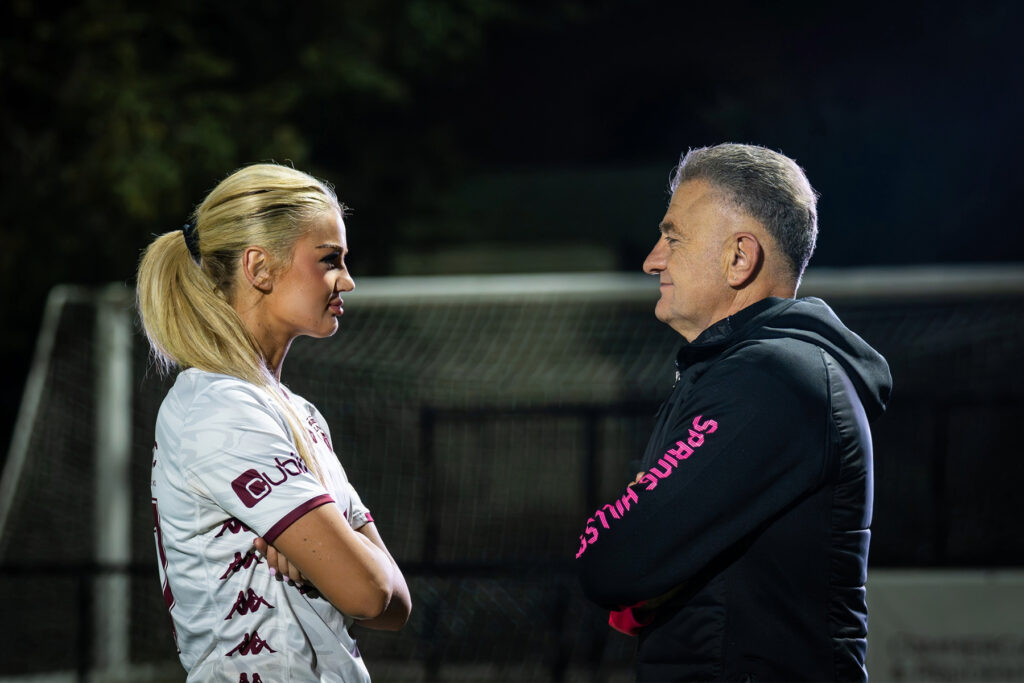
Tom Markovski, Spring Hills’ NPLW Head Coach, received the award at a ceremony coinciding with National Volunteer Week, recognised for his community leadership, promotion of gender equality and commitment to advancing the status of women and people of all genders in sport. The recognition comes from outside the football community entirely, awarded by a local council celebrating volunteers across every sector of civic life in one of Melbourne’s fastest-growing regions.
Building from scratch
When Markovski arrived at Spring Hills, women’s football at the club did not exist. His first act was to champion the establishment of the club’s first all-girls team, a process that required persuading a club culture built around men’s football that the investment was worth making.
Women’s football in community clubs has historically struggled to access the same facilities, scheduling priority, coaching resources and institutional support as the men’s game. Clubs have been slow to invest in programs whose return is less immediately visible than a senior men’s premiership, and in a growing outer-suburban community like Melton, where volunteer capacity is finite and demand across every program is high, the case for building something new always has to compete with the urgency of maintaining what already exists.
Markovski made the case anyway, and kept making it across eight years of coaching senior and junior NPL teams while simultaneously building the structural foundations of a women’s program designed to outlast any individual’s involvement. The club’s first all-girls team became multiple junior girls teams. Those junior teams created the pipeline for a senior women’s side. The senior women’s side created visible pathways for younger players to see where the game could take them within their own club.
The outcome is a program that Spring Hills now holds up as central to its identity rather than supplementary to it. The club has become a leader in female participation in Melbourne’s west, and recently made history within the NPLW Victoria structure by fielding junior teams coached entirely by female coaches, a milestone that reflects the depth of the program Markovski helped build.
What the Award Recognises
The Melton City Council’s decision to name Markovski its Gender Equity Leader of the Year places his work in a frame that extends beyond football. Melton is one of the fastest-growing local government areas in Australia, a diverse and rapidly expanding community where the institutions that bring people together, like schools, councils, sporting clubs, carry an outsized responsibility for social cohesion.
Mayor Cr. Lara Carli, speaking at the awards ceremony, reflected on the role volunteers play in communities like Melton’s. “Volunteering creates friendships, strengthens communities and builds a sense of belonging,” she said. “It helps people feel connected, supported and valued, and those things are more important than ever in a growing and diverse community like ours.”
For the girls now playing football at Spring Hills who were not playing anywhere eight years ago, Markovski’s contribution is not abstract. It is the specific and concrete fact of having somewhere to play, someone to coach them, and a pathway that leads somewhere.