



Debate on the future of the game is essential to become a football nation

In regards to the conversation around Australian football right now, everything is on the table.

Despite the current times we are experiencing with the coronavirus pandemic, it’s refreshing to hear constructive debate around the future of the game.

Football is a game of opinions, after all. Everyone throws in their two cents, even more so when there are no domestic games to watch or participate in, at a grassroots or professional level.

The range of voices we have heard from in recent weeks, including former Socceroos and Matildas, current administrators, as well as past and present coaches, has given the footballing public a sense of belief that the game will finally focus on football first.

The in-depth discussions and dissections of what a Josip Skoko believes is best for the game, or what a Peter Filopoulos thinks, in such a transparent manner, is something we need more of to be a healthy football nation.

Most of these figures have spoken openly on what they think the new FFA CEO James Johnson must attempt to address, ranging from topics such as player development, junior fees, promotion and relegation and governance structures.

The overall consensus? Despite the last couple of years of largely negative press, if we address the long-standing issues of the game, it will have a positive future.

One of those issues is the disregard that was shown to NSL clubs when the A-League was established, despite all the positives they continued to contribute to the game, including youth development, traditional football culture and much more.

Former Socceroo Gary Cole told this publication recently that he felt “the history of Australian football, for a long time, kicked off in 2004.”

It resonated with me a while after. How could you not agree with Cole, in this case?

I was quite young when the NSL folded; most of my life, all I have known is the A-League.

‘Old soccer’ as Cole called it, was barely referred to and when it was, it had a negative or embarrassing connotation attached to it, during the opening years of the A-League and arguably still does now.

Why was this the case? It’s inexcusable. You can’t tell me now that the game has properly recognised our previous national competition or the clubs involved and the heroes of that era.

Younger generations can’t celebrate legends like Cole who paved the way for the likes of the Tim Cahills and Harry Kewells of the world, if they are not told who they were, who they played for and what they achieved.

Clubs like Cole’s Heidelberg United are central to one of the other pressing debates discussed by those in the game, a national second division.

Ex-Socceroos goalkeeper Mark Schwarzer put forward his plan during a ‘State of Football’ chat with Optus Sport on Sunday, in which he outlined a region-based conference system for a national second division setup.

“It minimises travel costs, but creates a second tier, semi-professional, with a view in the future to lift it up,” he said.

“In Germany for example, the third division is regional. The top two teams, depending on the region, (size of) participation, go into a play-off for eventual promotion.

“Why can’t we create a similar structure?”

Will everyone agree with Schwarzer’s idea for the second division? Absolutely not.

But that’s beside the point. The more these matters are spoken about and debated, the urgency increases for administrators to take all views into account and move forward with plans to implement.

There are those who think some former Socceroos, without any administrative experience, are not best placed to make calls on the future of complex governance decisions within the Australian football system.

That’s a fair enough criticism, but that doesn’t mean their involvement in the discussion of the game’s future, through different online platforms and now FFA’s Starting XI panel, hasn’t already been effective and will continue to be so.

Their influential voices form part of the narrative from all corners of the game who now support a national second division, with a point being reached where no other option will be accepted.

Call me an optimist, despite the game’s governance track record over its history, with James Johnson at the helm, football can finally be its unique self and stand on its own two feet.

There is renewed confidence that decisions will be made in the best interests of the sport, not simply trying to replicate what rival codes do.

In the end however, while discussion and debate around the game’s future is important, it’s the actions that count.
Previous ArticleNext Article

More Than One in Five Football Australia Staff to Lose Jobs Amid Growing Financial Losses

Australian football finds itself in a curious position.

From the outside, the game appears to be riding a wave of momentum. Attendances, visibility and public interest have all experienced significant uplift in recent years, while major international tournaments and growing discussion around football’s future continue to place the sport firmly within the national conversation.

Yet behind that momentum, Football Australia is now confronting a far more challenging internal reality.


A compounding deficit

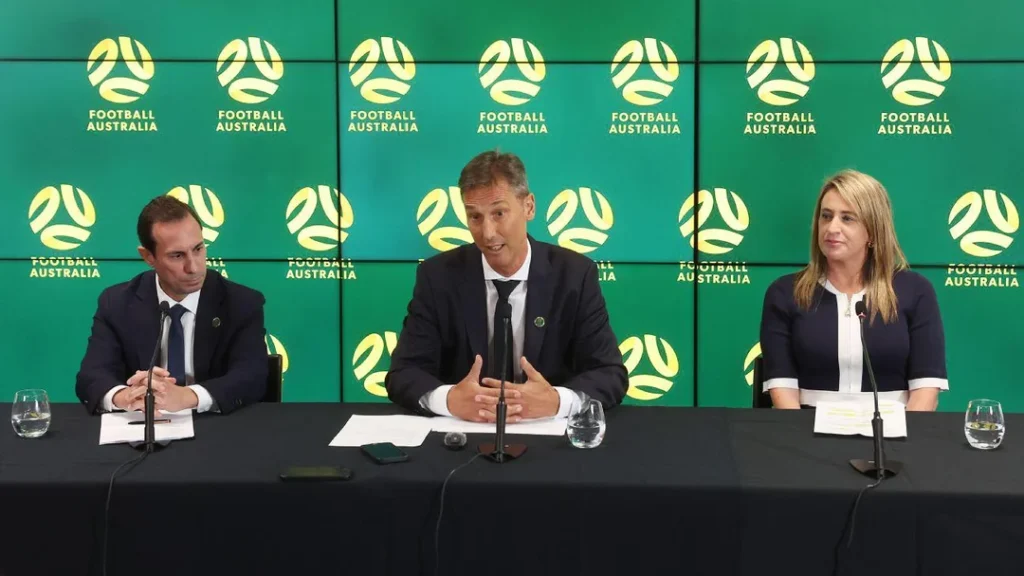
Chief Executive Martin Kugeler has reportedly indicated the governing body’s projected financial losses for 2025 are expected to exceed the organisation’s reported $8.5 million deficit from the previous year. Accompanying the financial outlook are substantial organisational changes, with reporting from Tracey Holmes indicating more than one in five Football Australia employees are expected to lose their positions through restructuring measures.

The figures represent more than a difficult balance sheet. They point toward a significant period of recalibration inside the organisation responsible for overseeing the sport nationally.


Losing the wisdom of existing staff members

For governing bodies, restructures are often framed as strategic necessities for future sustainability. However, workforce changes on this scale also raise broader questions around the challenges of such a transition.

People are often the carriers of knowledge, relationships and long-term strategic understanding. When organisations undergo significant structural change, the effects can extend beyond immediate financial outcomes.


Contradicting timing

The timing is what makes the developments particularly notable.

Football in Australia has spent recent years discussing expansion, growth and long-term opportunity. The conversation surrounding the game has increasingly centred on future potential. Often headlining stronger pathways, larger audiences, infrastructure development and greater visibility.

Against that backdrop, news of deep financial losses and substantial staffing reductions creates a different conversation: one focused not on where the game wants to go, but on what may be required to sustain that journey. Therefore, this announcement points toward stagnancy, rather than growth.

Further detail surrounding Football Australia’s strategy and long-term direction will likely emerge over coming months. For now, the developments serve as a reminder that growth stories are rarely straightforward.

Often, the periods that appear strongest from the outside can also be the moments organisations face their most significant internal tests.

Heidelberg United denied qualification to AFC UCL 2

In an announcement made yesterday, Football Australia revealed that, in place of Heidelberg United, Melbourne Victory will now take the AFC UCL 2 spot.

A premature ending

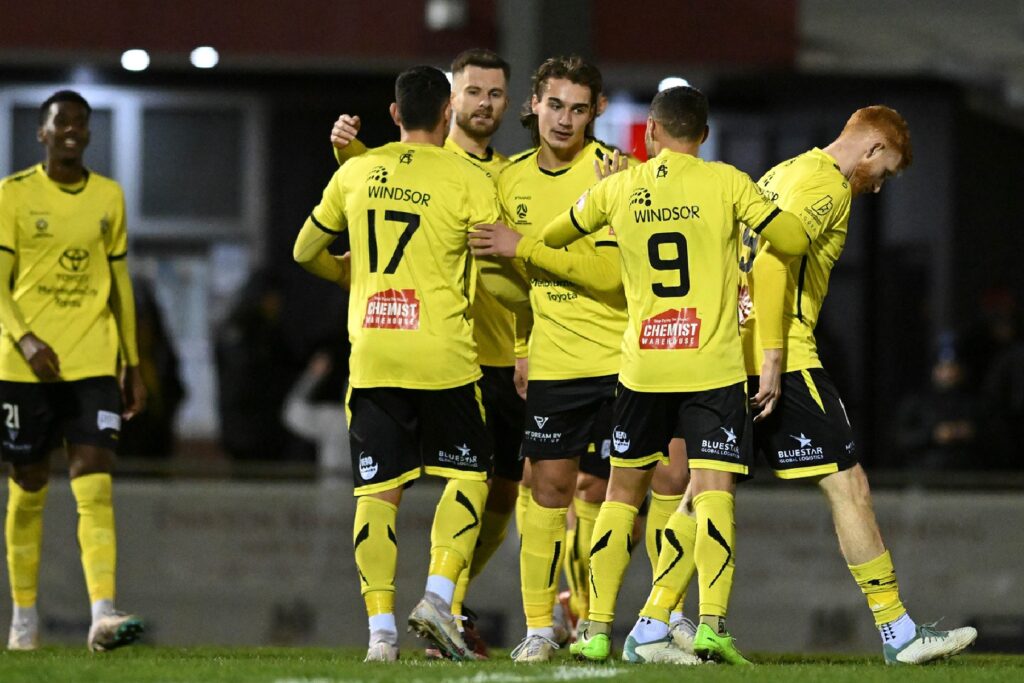
In what is sure to be a disappointing verdict for Heidelberg’s fans, staff and supporters, the NPL VIC side will no longer compete in next season’s AFC CL 2.

The decision comes despite Heidelberg meeting the necessary criteria outlined in Football Australia’s National Club Licensing Regulations.

“We understand that this will be a disappointing outcome for everyone connected to Heidelberg United FC,” said FA Executive Director of Football, Heather Garriock, via press release.

“The club earned enormous respect through its performances this season and should be proud of what it achieved both on and off the pitch.”

Indeed, through defeating several A-League outfits en-route to the Australia Cup Final against Newcastle Jets, Heidelberg did earn widespread respect and admiration across the landscape. Football Australia also strongly advocated for the side’s place in the AFC CL 2 following Newcastle’s qualification to the AFC CL Elite.

But despite the determined efforts of the club’s board to meet all necessary criteria, the Asian Football Confederation (AFC) ruled the side ineligible to compete.


Victory emerge as replacements

Filling the now-vacant position in next season’s competition is Melbourne Victory, who finished 4th in the A-League this year.

As 3rd-place Auckland FC are based in New Zealand, thus falling under the Oceania Football Confederation (OFC), they are also ineligible to compete.

So while the AFC CL 2 will still be arriving in Melbourne next season, fixtures will no longer be built on the underdog success story of Heidelberg’s immense rise from NPL to AFC CL matchdays.

The club, however, will appeal the decision, and has written to Football Australia for further clarity on the Appeals Process.

It remains uncertain whether the appeal will be successful or not, but Heidelberg will undoubtedly enjoy the backing not just of its own staff and supporters, but of the entire Australian grassroots community.

Most Popular Topics

Editor Picks

Send this to a friend