
Stuart Hodge addresses future for Football NSW

Stuart Hodge

Football NSW Chief Executive Officer Stuart Hodge has addressed key topics on the association’s radar in the midst of the Covid-19 pandemic.

Speaking on the CDSFA Community Football Podcast, Hodge is keen for the league to restart as soon as it’s safe to do so.

“I certainly think the government have to take in a lot of factors as we’ve seen with the pandemic – anything can change one day to the next,” he said.

“It was a positive step forward that they’ve got the national principles and the government and NSW will now review those and look at guidelines.

“They’ll have to balance that up with other information that they have and state-specific information here in NSW.

“We’re hopeful given that from some of the surveys which we’ve seen that most people are keen to get out and play again.

“The physical, mental and social benefits are well documented, but we have to make sure we do it under the right conditions and that is when the government says it’s okay.”

The flow on effect of the competition’s postponement will be how clubs juggle summer sports with councils if they clash later down the line, something Hodge is aware of.

“It’s a challenge for all of them and we’re in discussions with some summer sports to try and get some principles in place that if we get football resumed, we’ll have some additional time beyond what we normally get,” he said.

“From some associations, the feedback is from councils have been very sympathetic.

“We’ve collectively lost a couple months of the season already so the opportunity to play a little bit later into the year would be welcomed.

“We’re also conscious that we want to try and keep things on track for next year when hopefully we return on time.

“It’s a balance because we appreciate that there’s also participants that are involved in multiple sports so we’re wanting to help them out and not over-burden them.

“Councils also need to turn fields around although I noticed some of them looking magnificent at the moment.

“We’ve had some very big discussions and hopefully it’s just a fair and reasonable approach which is all we’re asking for.”

One of the main issues across all sports due to postponements has been the topic of refunds, with games in professional sport being played behind closed doors.

While there’s still the unknown about when fans can return to grounds in 2020 and beyond, Hodge has clarified how Football NSW will look to navigate through this tricky time.

“I think in the interim if people are facing financial hardship then of course they should be in touch with their club to get a refund,” Hodge said.

“If the season gets underway then we’ll have to redo our modelling and look at what the fee structures are.

“I hope we do get back on the field and we can go down that path – if the season doesn’t get played then everyone will have to sit and remodel what the costs are and things like that.”

Since this podcast was published on 5th May, Football NSW have moved a step closer to resuming training at the very least with the NSW Government confirming an easing of restrictions – taking affect from Friday 15th May including:

  • outdoor gatherings of up to 10 people
  • cafes and restaurants can seat 10 patrons at any one time
  • up to 5 visitors to a household at any one time
  • weddings up to 10 guests
  • indoor funerals up to 20 mourners, outdoor funerals up to 30
  • religious gatherings/places of worship up to 10 worshipers
  • use of outdoor equipment with caution
  • outdoor pools open with restrictions.

In a recent press release, it’s mentioned the Office of Sport is working closely with government agencies about how sporting organisations can safely return to action.

Previous ArticleNext Article

Two NPL VIC clubs receive funding boost from State Budget

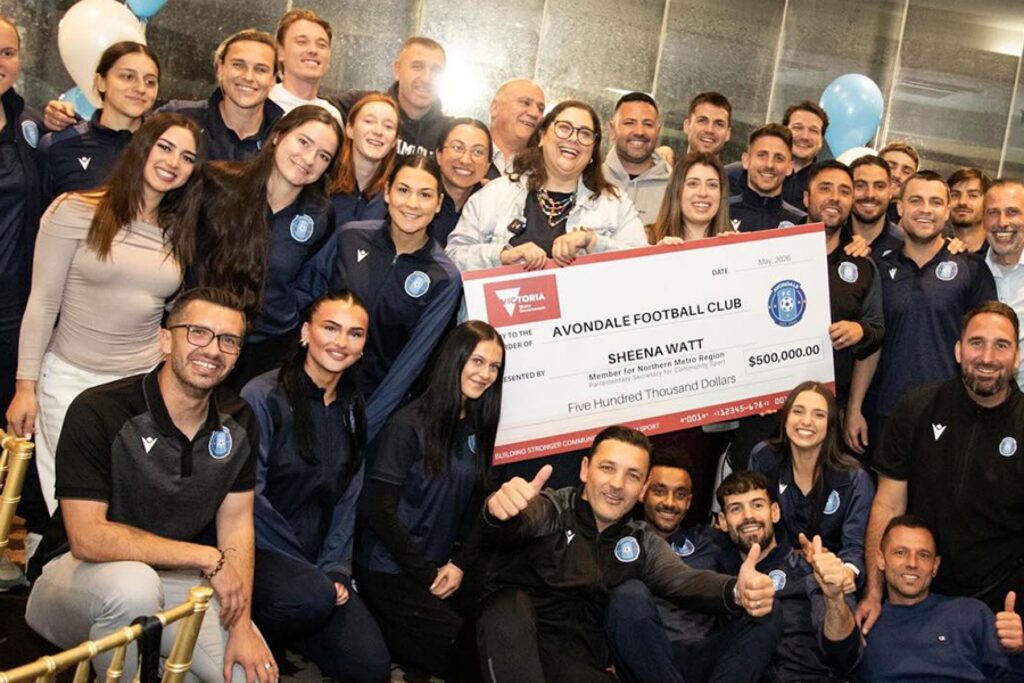
Following the announcement of the 2026 Victoria State Budget, Avondale FC and Hume City FC will both receive major backing for facility upgrades.


Valuable support for future projects

Avondale and Hume City now have immensely valuable financial support for infrastructure and facility upgrade projects.

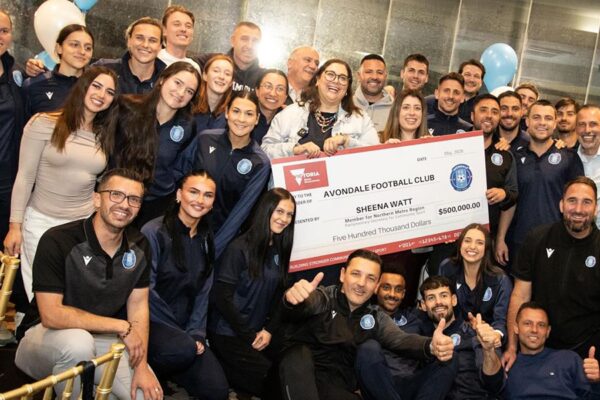
Avondale will see an injection of $500,000 for lighting developments at its home ground, Avenger Park. Meanwhile, Hume City FC, will receive $250,000 to further improve its home ground, Nasiol Stadium, which opened in 2009.

Both clubs expressed their delight at the funding from the State Labor Government, and what the backing may bring to club facilities and overall development going forward.

“We are incredibly grateful to the Victorian Government and Sheena Watt for their support through this $500,000 lighting upgrade investment, which will have a lasting impact on our players, families and the wider Avondale community,” said Avondale Club President, Stephen Strano.

“We have hundreds of players across all age groups utilising these facilities each week, and these improvements will help create an even strong environment for excellence, participation, and community engagement,” outlined Hume City President, Ersan Gülüm.

As a result of these respective investments, both NPL VIC outfits appear set for incredibly opportunities to modernise, develop and strengthen their club infrastructure.


Lighting the path to a brighter future

The investments will see features such as lighting upgrades improve facility access for men’s and women’s teams, and LED scoreboards become part of a more modern matchday experiences going forward.

For both clubs, however, lighting upgrades are about more than keeping a pitch open late at night. Improved lighting is a means to a more accessible and supportive future in which both the men’s and women’s teams can utliise local facilities, and matchdays can take place in the excitement of playing ‘under the lights’.

And as Football Victoria CEO, Dan Birrell, highlighted, the improvements made to club facilities are benchmarks for the wider Victorian football community.

“Both Avondale and Hume City are pillars in the Victorian football landscape,” Birrell stated via press release.

“Professional level facilities like Avenger Park and Nasiol Stadium are critical for the development of Victorian football and Football Victoria welcomes the news that they will continue to improve thanks to the support of the Victorian State Government.”


More must follow

While the investments from the State Government come as welcome updates for these two clubs, there is still plenty more to be done to evenly develop facilities and infrastructure across Victoria’s football landscape.

Indeed, Avondale FC and Hume City FC are two fantastic community clubs who will no doubt put the funding towards impactful improvements.

But there are plenty more who still need external backing to build infrastructure not just for now, but for future seasons to come.

Football Community Supports Ange Goutzioulis Following MND Diagnosis

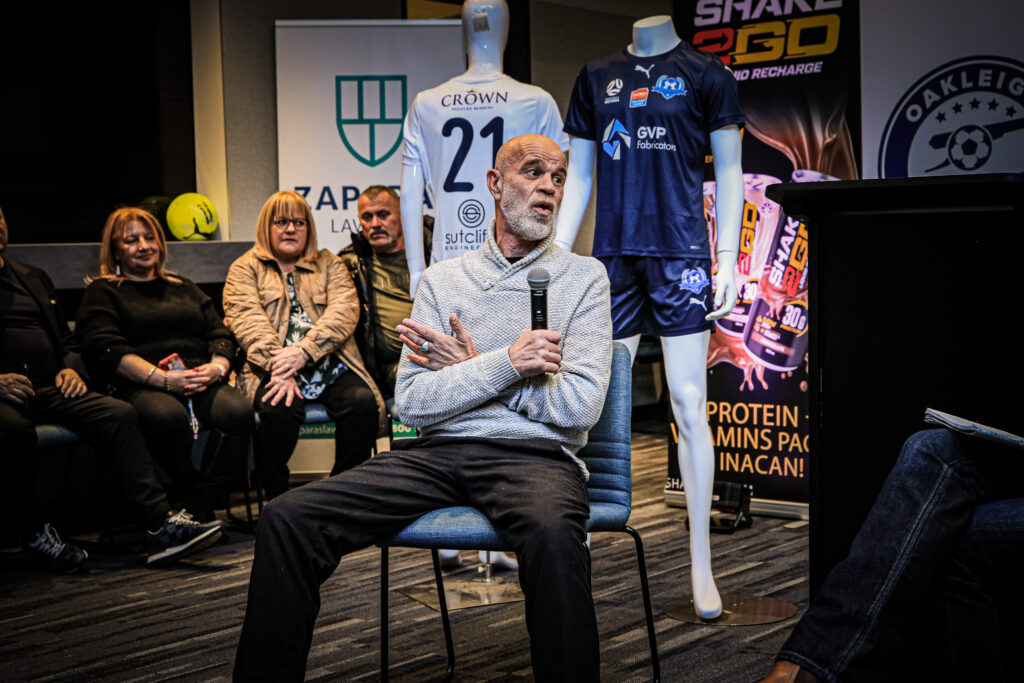
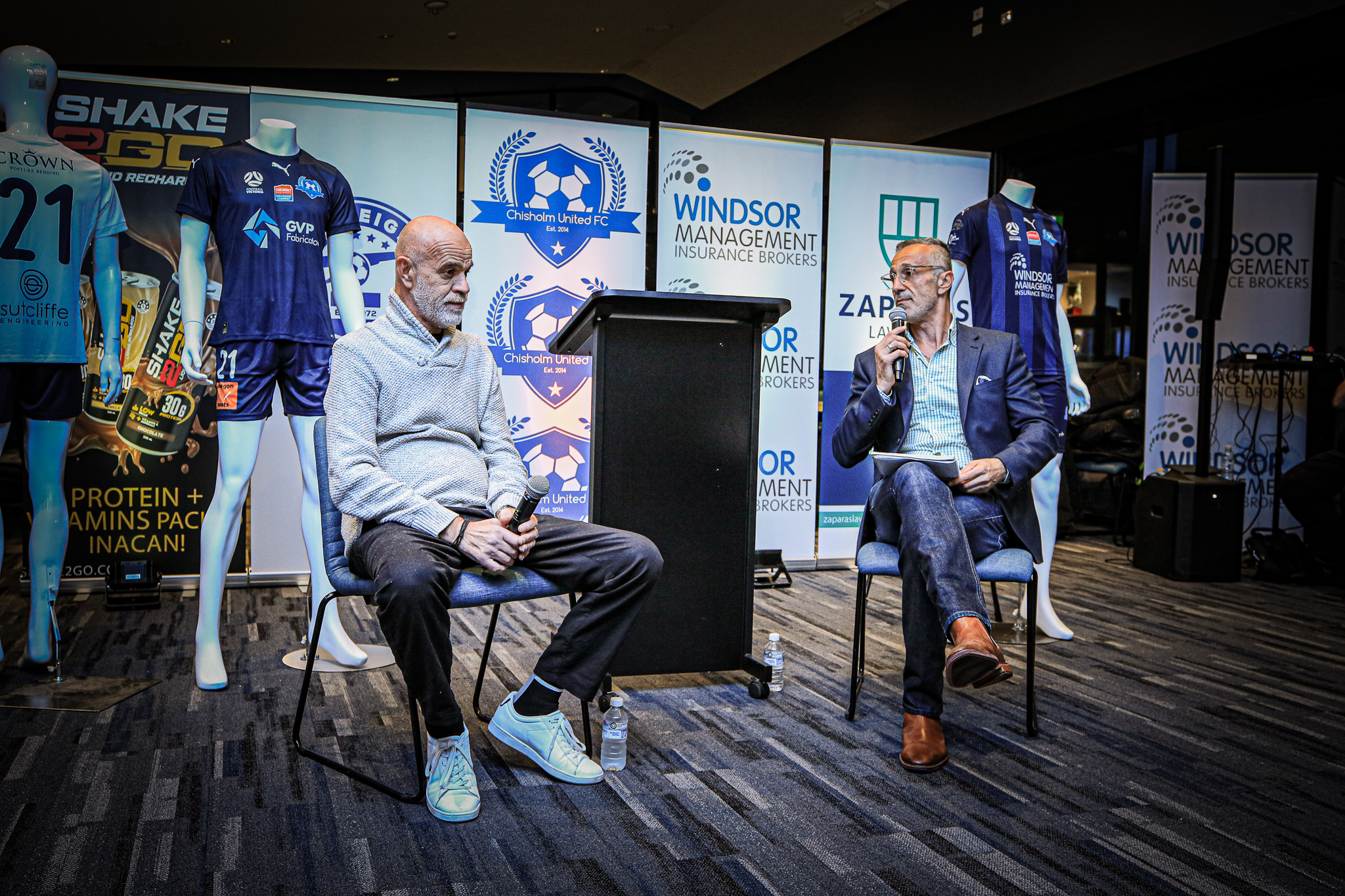
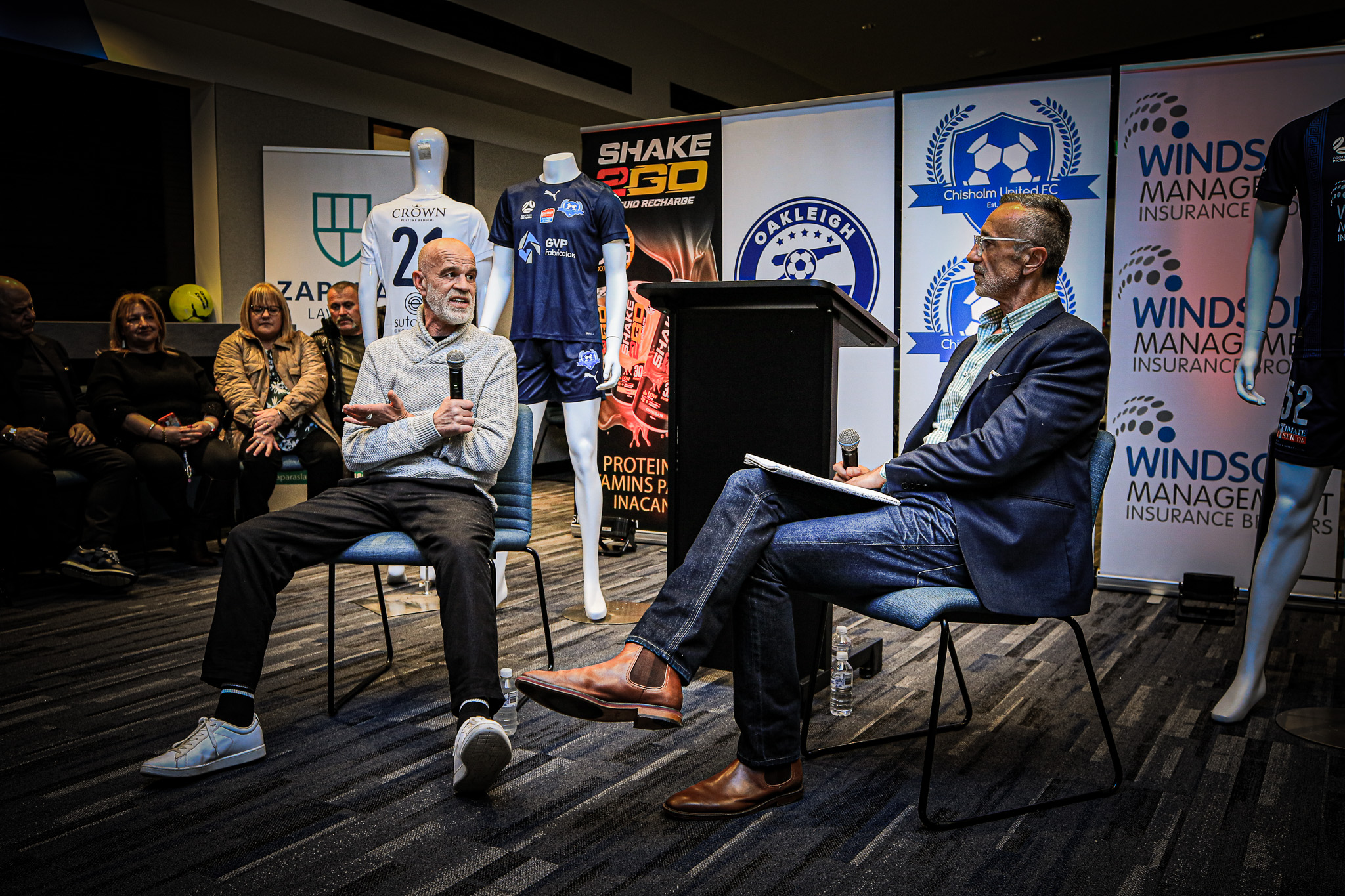
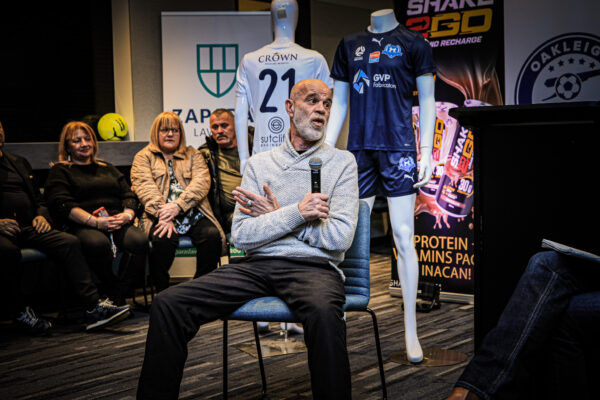
At just 52 years old, former National Soccer League player Ange Goutzioulis stood in front of a packed room at the Chisholm United launch night in Oakleigh and spoke about something no one ever expects to hear: a diagnosis of Motor Neuron Disease.

But rather than retreat into silence, Goutzioulis chose to speak openly. He spoke not just about the disease itself, but about the reality of living with it, the uncertainty ahead and why awareness matters more than ever.


Early stages

For years, football was part of Goutzioulis’ identity. Coaching, movement and routine were all things that once felt natural. Then slowly, something changed.

“I couldn’t even stand properly… I was losing my balance,” he explained.

At first, the signs were confusing rather than alarming. A couple of falls. Difficulty moving. Hospital visits and tests.

“They said, ‘You haven’t got cancer, you haven’t got MS and you haven’t got MND,’” he recalled.

But the symptoms continued worsening. Eventually, further neurological testing revealed the diagnosis: Motor Neuron Disease (MND).

The confirmation came quickly.

“They called it after two or three minutes… they saw the machines and basically said, ‘Yeah, you’ve got MND.’”

The shock was immediate.

So too was the reality.


Understanding Motor Neuron Disease

Motor Neuron Disease is a progressive neurological condition that attacks the nerves controlling movement, gradually taking away the ability to walk, speak, swallow and eventually breathe.

There is currently no cure.

For many Australians, awareness of MND remains limited until it touches someone close to them. Goutzioulis now finds himself confronting not only the physical decline, but the emotional weight of understanding what lies ahead.

“There’s no way to stop it… it’s going to kill me,” he said honestly.

Even breakthrough treatments tomorrow, he acknowledged, may come too late for him personally.

Yet despite the enormity of that reality, his focus has already shifted beyond himself.


Fighting for awareness while fighting the disease

What stood out throughout the evening was not despair, but resilience.

Goutzioulis spoke candidly about refusing to surrender mentally to the disease. Against medical advice centred around conserving energy and managing fatigue, he continues trying to stay active.

“I keep walking,” he said.

“I’ve got a theory in life that if you work out and keep moving, maybe [your] muscles won’t waste away as quick.”

Whether medically proven or not, the mentality reflects something deeper: a refusal to let MND define every remaining moment.

There was also optimism in the small victories.

Doctors believe he may have already been living with the disease for three years — longer than expected given his current condition.

“That’s a positive,” he said. “So, I’ll take it day by day.”

Image Credit: One Nil Media

Football’s power beyond the pitch

The event itself quickly transformed from a club launch into something more profound: a reminder of football’s ability to rally around people during their hardest moments.

As speakers addressed the room, one message became clear — Goutzioulis is not facing this battle alone.

“There’s probably 100 people here,” said Bill Kosmopoulos, who was hosting the discussion,

“I guarantee there’s 100 people cheering for you, 100 people that would do anything to find a solution for MND.”

In community football, conversations are usually dominated by results, signings, tactics and ambition. But nights like this reveal another side of the game entirely.

Connection.

Humanity.

Support.

By speaking publicly, Goutzioulis gave a deeply confronting disease a human face. Not statistics. Not headlines. A person. A father. A football figure. Someone trying to process what it means to slowly lose control of their own body while still showing up for the people around them.

That vulnerability is precisely why awareness matters.

Because awareness drives conversation.

Conversation drives funding.

And funding drives research that could one day change outcomes for future families facing the same diagnosis.

Image Credit: One Nil Media

“We’re behind you”

As the night closed, the room rose behind him.

Showing admiration for someone willing to confront unimaginable news publicly in the hope it helps others understand the devastating reality of MND.

“On behalf of everyone… thank you so much mate,” one speaker told him.

“We’re behind you.”

Support and raising awareness for the disease is what matters.

Most Popular Topics

Editor Picks

Send this to a friend