

The Bundesliga continues to build its reputation as football’s innovation benchmark

The Bundesliga is one of the world’s leading sports brands.

The competition has the highest average attendance figures in world football (over 43,000 per game), as well as huge overall revenues that are only comparable to a few other sporting leagues across the globe.

The German league has used this success to continue to build its digital engagement methods with its worldwide supporter base.

Over the past three seasons the Bundesliga’s digital channels have increased its fanbase by over one hundred percent, becoming the most engaged of all top European leagues.

The Bundesliga’s proactive approach continues to show why it is being labelled as football’s leading league, in regards to its technological enhancements.

Its long-term strategy to produce content that reaches more fans, in more ways, more often, is fuelling its further growth.

In recent years, the competition does have a notable history when it comes to innovation.

In 2011, the Bundesliga launched the world’s biggest digital football archive. The archive has over 33,000 matches on demand and over 140,000 hours of content, with historical data spanning back to the league’s composition in 1963.

In 2012, it became the first professional league to create an E-Football competition which now has over 120,000 players competing each year.

Goal-line technology was implemented in 2015, with games broadcasted in Ultra High Definition (UHD) in 2016.

VAR was introduced in the Bundesliga in 2017, becoming one of the first leagues to use the system.

Virtual advertising began in 2018, with Artificial Intelligence (AI) used to deliver highlights in 2019 to fans, through a partnership with WSC Sports.

In association with Vodafone, the Bundesliga implemented 5G technology in football stadiums for the first time ever this past season. Fans were able to test real-time data and Augmented Reality (AR) on their smartphones during a game, in what was a look into the future for the in-stadium spectator experience.

So, after all of these previous technological innovations, what are the Bundesliga’s future plans in the digital world?

Their long-term approach focuses on a key process, which includes: Monitoring the current industry and engagement levels, building new innovative products and testing their capabilities, then finally implementing those that are successful and will satisfy the league’s high targets.

The league works with educational institutions such as Harvard Business School and Massachusetts Institute of Technology, to keep an eye on new tech and identify changes in consumer behaviour, consumption and how they relate to the league.

Alongside this academic research, data has been collected by Bundesliga subsidiary Deutsche Fussball Liga (DFL) Digital Sports, detailing how fans consume football, on what platforms, how often and what type of content they enjoy the most.

Another Bundesliga subsidiary Sportec Solutions, records around four million pieces of data from each game, equating to roughly 40,000 pieces a minute. Using DFL Digital Sports’ personal preference information, the data gathered can be utilised by delivering content that leads to deeper connections with its fans and building its base in key markets.

“Understanding the needs and interests of Bundesliga fans stands at the centre of our strategic development as an entertainment provider,” Bundesliga’s Executive Vice-President of Digital Innovation, Andreas Heyden, told fcbusiness.

“Innovative technologies don’t only allow us to learn about and identify what consumers want, but also enables us to react to their demand for individualised content whenever and wherever they want. How fast leagues are able to feed in and integrate new technologies, and offer customised content to fans, will determine who will be at the forefront of football innovation in the years to come.”

Partnering with Messe Dusseldorf, the Bundesliga participated in and also hosted various innovation events in different markets.

In May 2018, the first SportsInnovation event was held in Dusseldorf, with SportsInnovation Future Summits held in China and the USA late last year.

A similar SportsInnovation event will be held in the near future.

Messe Dusseldorf’s Director of SportsInnovation, Heinz Kusters, said: “No other football league offers an innovation event on this scale. It offers a platform for interaction and exchange. Decision-makers from clubs, federations and organisations, as well as the media and the broadcasting industry involved in high-performance sports will come together from all four corners of the world, gain exclusive insights into the technologies of the present and future, exchange ideas and set the foundation for innovations to come. With several new technological developments in the areas of match analysis, broadcasting, digital services and stadium experience to be showcased in a live football environment, it’s certainly an event not to be missed.”

The Bundesliga does continue to invest in its bright future.

An investment with German company Athletia, has led to a joint venture product called ‘Ryghts’, which will monitor all levels of international piracy of Bundesliga matches.

Smart financial decisions such as this, will help the league maintain its strong reputation as football’s innovation leader.
Previous ArticleNext Article

The Man Who Built a Women’s Football Program from Nothing is now an Award-Winning Gender Equity Leader

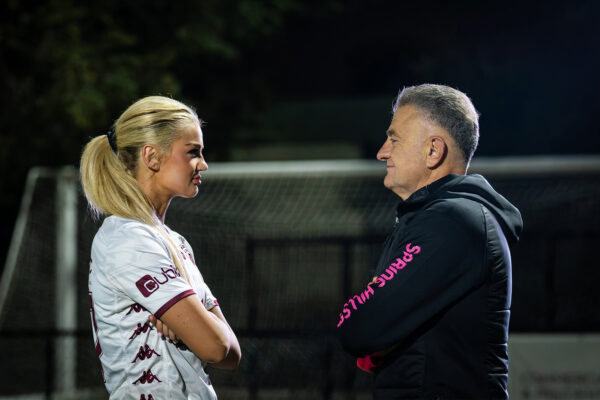
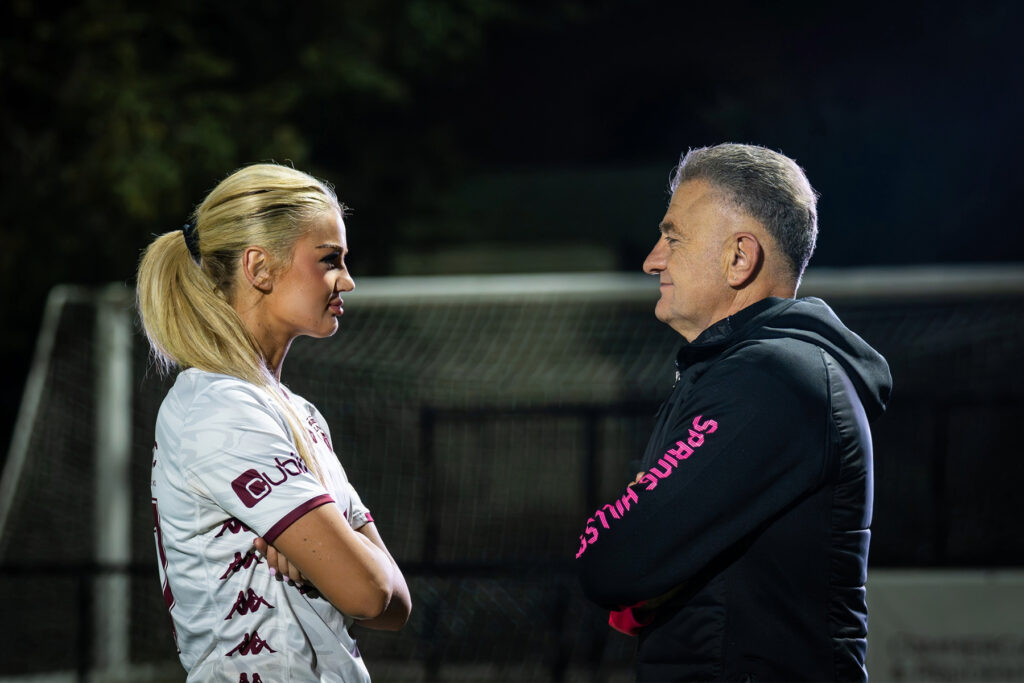
Eight years ago, Spring Hills Football Club did not have a girls’ team. Today it has one of the most recognised women’s programs in Melbourne’s west, a senior NPLW side, and a head coach who has just been named Gender Equity Leader of the Year at the Melton City Council Volunteer Achievement Awards.

Tom Markovski, Spring Hills’ NPLW Head Coach, received the award at a ceremony coinciding with National Volunteer Week, recognised for his community leadership, promotion of gender equality and commitment to advancing the status of women and people of all genders in sport. The recognition comes from outside the football community entirely, awarded by a local council celebrating volunteers across every sector of civic life in one of Melbourne’s fastest-growing regions.

Building from scratch

When Markovski arrived at Spring Hills, women’s football at the club did not exist. His first act was to champion the establishment of the club’s first all-girls team, a process that required persuading a club culture built around men’s football that the investment was worth making.

Women’s football in community clubs has historically struggled to access the same facilities, scheduling priority, coaching resources and institutional support as the men’s game. Clubs have been slow to invest in programs whose return is less immediately visible than a senior men’s premiership, and in a growing outer-suburban community like Melton, where volunteer capacity is finite and demand across every program is high, the case for building something new always has to compete with the urgency of maintaining what already exists.

Markovski made the case anyway, and kept making it across eight years of coaching senior and junior NPL teams while simultaneously building the structural foundations of a women’s program designed to outlast any individual’s involvement. The club’s first all-girls team became multiple junior girls teams. Those junior teams created the pipeline for a senior women’s side. The senior women’s side created visible pathways for younger players to see where the game could take them within their own club.

The outcome is a program that Spring Hills now holds up as central to its identity rather than supplementary to it. The club has become a leader in female participation in Melbourne’s west, and recently made history within the NPLW Victoria structure by fielding junior teams coached entirely by female coaches, a milestone that reflects the depth of the program Markovski helped build.

What the Award Recognises

The Melton City Council’s decision to name Markovski its Gender Equity Leader of the Year places his work in a frame that extends beyond football. Melton is one of the fastest-growing local government areas in Australia, a diverse and rapidly expanding community where the institutions that bring people together, like schools, councils, sporting clubs, carry an outsized responsibility for social cohesion.

Mayor Cr. Lara Carli, speaking at the awards ceremony, reflected on the role volunteers play in communities like Melton’s. “Volunteering creates friendships, strengthens communities and builds a sense of belonging,” she said. “It helps people feel connected, supported and valued, and those things are more important than ever in a growing and diverse community like ours.”

For the girls now playing football at Spring Hills who were not playing anywhere eight years ago, Markovski’s contribution is not abstract. It is the specific and concrete fact of having somewhere to play, someone to coach them, and a pathway that leads somewhere.

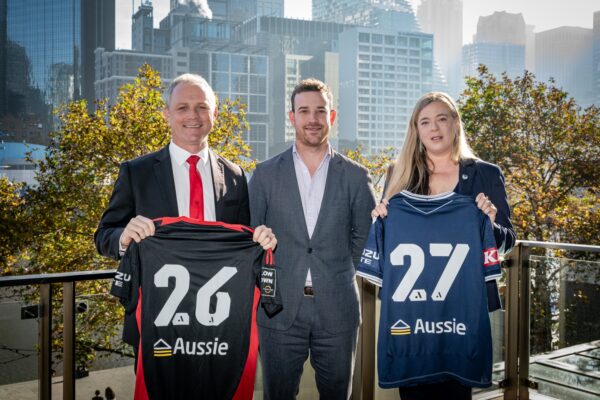
Aussie partners with two A-League clubs in cross-state alliance

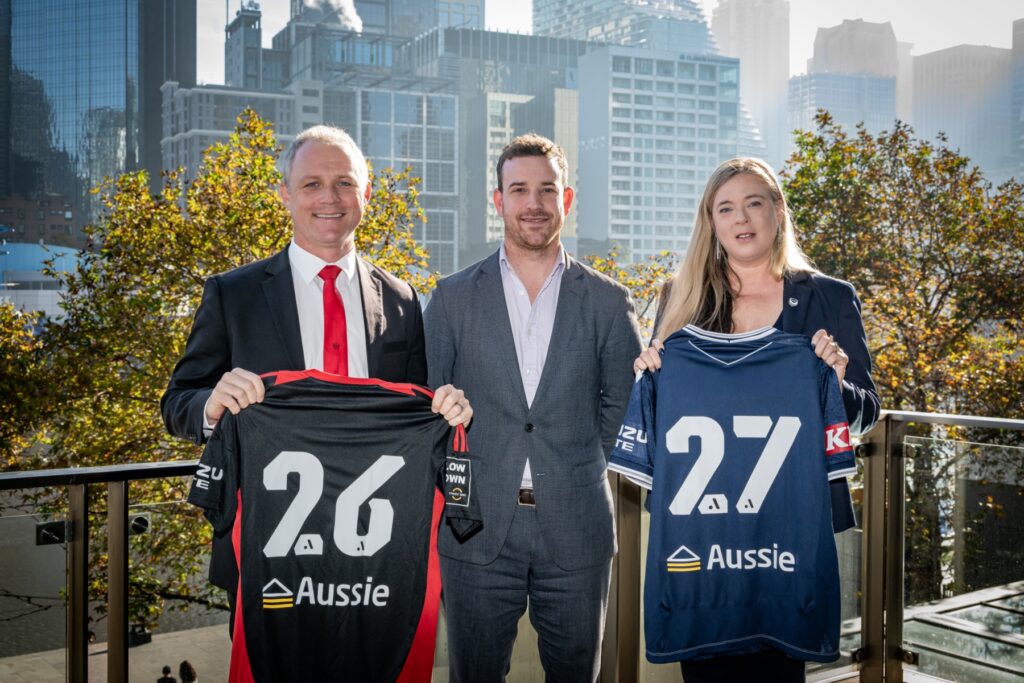
Australia’s largest retail mortgage broker will team up with Melbourne Victory and Western Sydney Wanderers, representing Aussie’s commitment to supporting and connecting people through football.


Opposing teams, United partners

The alliance between Aussie, Melbourne Victory and Western Sydney Wanderers reflects a unique approach to investing in Australia’s football landscape.

It encompasses both communities and supporters across Melbourne and Sydney, with Aussie’s presence in both cities now firmly embedded into local, grassroots networks.

“We’re excited about this partnership because it represents much more than a traditional sponsorship,” explained Aussie National Manager, Strategic Partnerships, Ryan Ferguson via press release.

“It’s about connection, community, and being part of something that reaches people in a meaningful and authentic way.”

Both Melbourne Victory and Western Sydney Wanderers also commented on the unique nature of the partnership.

“The joint venture is a game-changer in how brands and sports teams can collaborate beyond the traditional instruments of a partnership and stands apart from the existing relationships in our sporting landscape for the betterment of our stakeholders,” said Melbourne Victory Managing Director, Caroline Carnegie.

“For the first time, two iconic clubs are coming together in a joint-venture sponsorship that delivers unmatched reach, community impact and business innovation,” added Western Sydney Wanderers CEO, Scott Hudson.


National stage, local commitment

As Australians grapple with soaring property prices and financial uncertainty, having access to a platform like Aussie is immensely valuable.

So now that Aussie will begins its venture alongside Melbourne Victory and Western Sydney Wanderers – two clubs with extensive fanbases – it now has the means to make real, local impact.

Two major cities. Two footballing identities. All aligned under the same vision for community reach, growth and innovation.

“Aussie is a national brand, but at our heart, we are built on local relationships,” continued Ferguson.

“Every day, our brokers are working with customers in their communities, helping them navigate the journey of finding, buying and owning their own home. That’s why this partnership feels like such a natural fit.”

Ultimately, while the alliance will build on the business and community networks of the two A-League outfits, the impact will extend far beyond the boundaries of the pitch.

Most Popular Topics

Editor Picks

Send this to a friend