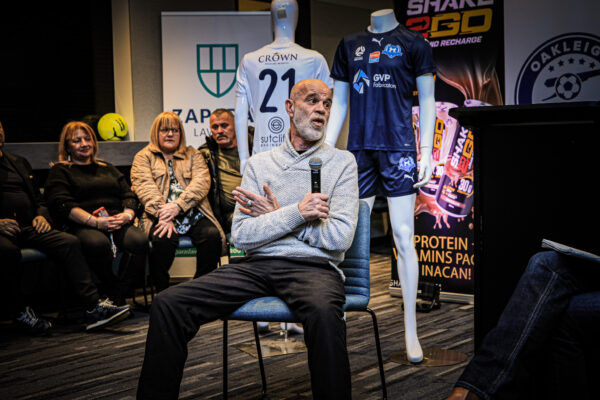

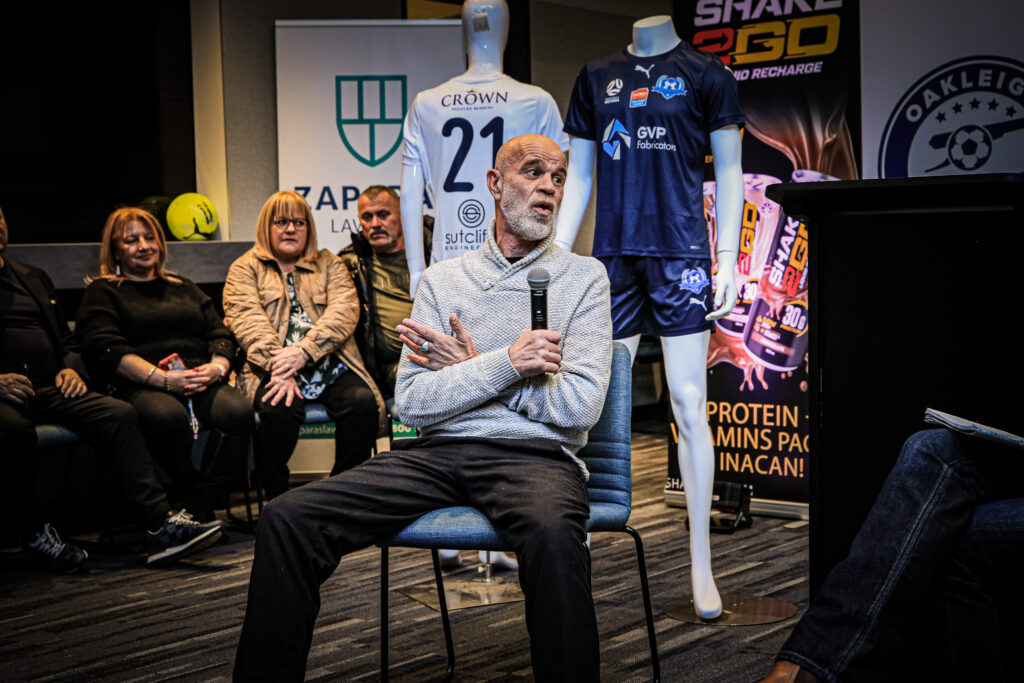
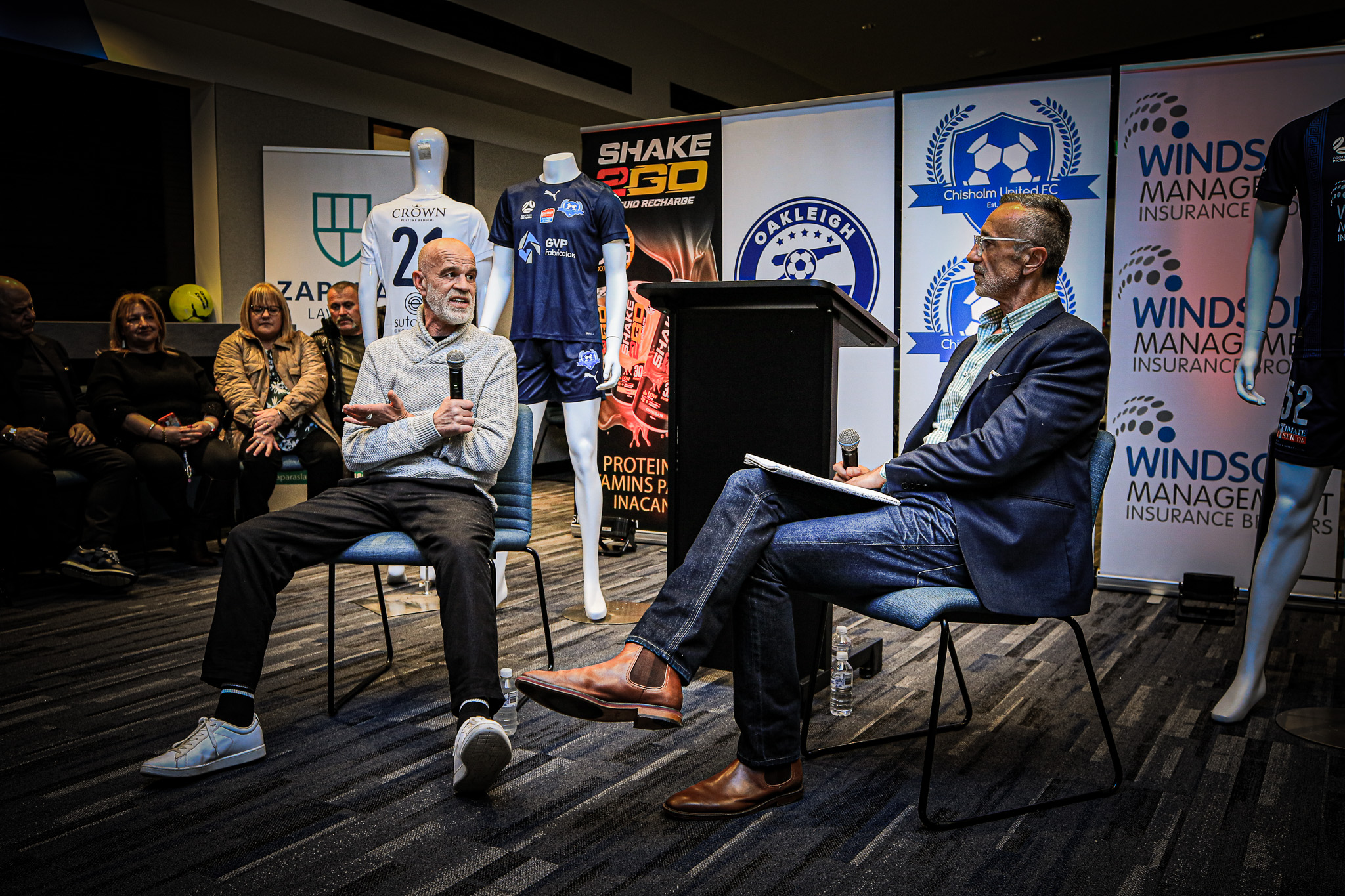
At just 52 years old, former National Soccer League player Ange Goutzioulis stood in front of a packed room at the Chisholm United launch night in Oakleigh and spoke about something no one ever expects to hear: a diagnosis of Motor Neuron Disease.
But rather than retreat into silence, Goutzioulis chose to speak openly. He spoke not just about the disease itself, but about the reality of living with it, the uncertainty ahead and why awareness matters more than ever.
Early stages
For years, football was part of Goutzioulis’ identity. Coaching, movement and routine were all things that once felt natural. Then slowly, something changed.
“I couldn’t even stand properly… I was losing my balance,” he explained.
At first, the signs were confusing rather than alarming. A couple of falls. Difficulty moving. Hospital visits and tests.
“They said, ‘You haven’t got cancer, you haven’t got MS and you haven’t got MND,’” he recalled.
But the symptoms continued worsening. Eventually, further neurological testing revealed the diagnosis: Motor Neuron Disease (MND).
The confirmation came quickly.
“They called it after two or three minutes… they saw the machines and basically said, ‘Yeah, you’ve got MND.’”
The shock was immediate.
So too was the reality.
Understanding Motor Neuron Disease
Motor Neuron Disease is a progressive neurological condition that attacks the nerves controlling movement, gradually taking away the ability to walk, speak, swallow and eventually breathe.
There is currently no cure.
For many Australians, awareness of MND remains limited until it touches someone close to them. Goutzioulis now finds himself confronting not only the physical decline, but the emotional weight of understanding what lies ahead.
“There’s no way to stop it… it’s going to kill me,” he said honestly.
Even breakthrough treatments tomorrow, he acknowledged, may come too late for him personally.
Yet despite the enormity of that reality, his focus has already shifted beyond himself.
Fighting for awareness while fighting the disease
What stood out throughout the evening was not despair, but resilience.
Goutzioulis spoke candidly about refusing to surrender mentally to the disease. Against medical advice centred around conserving energy and managing fatigue, he continues trying to stay active.
“I keep walking,” he said.
“I’ve got a theory in life that if you work out and keep moving, maybe [your] muscles won’t waste away as quick.”
Whether medically proven or not, the mentality reflects something deeper: a refusal to let MND define every remaining moment.
There was also optimism in the small victories.
Doctors believe he may have already been living with the disease for three years — longer than expected given his current condition.
“That’s a positive,” he said. “So, I’ll take it day by day.”
Football’s power beyond the pitch
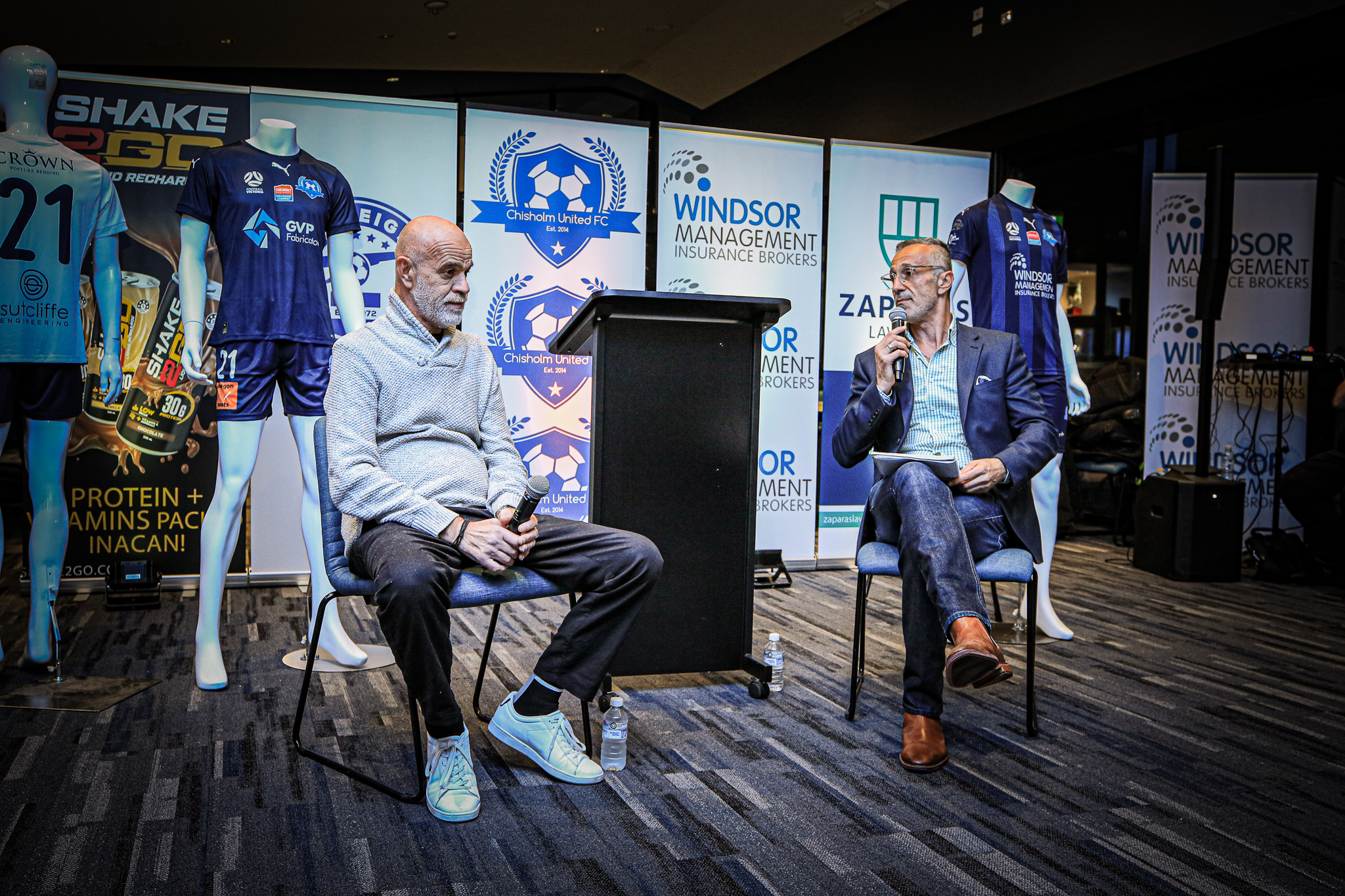
The event itself quickly transformed from a club launch into something more profound: a reminder of football’s ability to rally around people during their hardest moments.
As speakers addressed the room, one message became clear — Goutzioulis is not facing this battle alone.
“There’s probably 100 people here,” said Bill Kosmopoulos, who was hosting the discussion,
“I guarantee there’s 100 people cheering for you, 100 people that would do anything to find a solution for MND.”
In community football, conversations are usually dominated by results, signings, tactics and ambition. But nights like this reveal another side of the game entirely.
Connection.
Humanity.
Support.
By speaking publicly, Goutzioulis gave a deeply confronting disease a human face. Not statistics. Not headlines. A person. A father. A football figure. Someone trying to process what it means to slowly lose control of their own body while still showing up for the people around them.
That vulnerability is precisely why awareness matters.
Because awareness drives conversation.
Conversation drives funding.
And funding drives research that could one day change outcomes for future families facing the same diagnosis.
“We’re behind you”
As the night closed, the room rose behind him.
Showing admiration for someone willing to confront unimaginable news publicly in the hope it helps others understand the devastating reality of MND.
“On behalf of everyone… thank you so much mate,” one speaker told him.
“We’re behind you.”
Support and raising awareness for the disease is what matters.