LaLiga’s growth rests largely on match day experience, is Australian football watching?

Discussions around football attendance figures in Australia are constant.

One school of thought suggests that the challenge of drawing new people towards both the A and W Leagues and enhancing the appeal and reach of NPL competitions across the country is far from being met.

Another cites a more general trend in many sports, where the physical presence of fans has become far less important than what it once was; with broadcasting and streaming rights seen as the most critical factors in providing both exposure and revenue.

It could certainly be said of sports like tennis, golf, and test cricket, where events are often played in near empty venues. Marquee match-ups draw big numbers yet general run of the mill events continue to offer top prize money despite the often ghost-like fan presence.

Football in Australia does not have the luxury of vast television audiences, contracts or streaming services to generously fund the top Leagues or in turn, the game at the grass roots level.

What the game does have is a solid base of over 100,000 A-League club members, passionate support at NPL level through the traditional and community based clubs and a current boom in women’s football that stands to bring more income and growth to the game as a whole.

Without the significant financial investment enjoyed by some international competitions, Australian football should emulate one of the biggest leagues in the world and focus on fans; without them, there may well be nothing left on which to cling.

Spain’s top two leagues are showing quite clearly that enjoying immense media exposure across the globe and possessing massive television contracts need not come at the expense of growing attendance and bums on seats. In fact, improving the match day stadium experience has been a cornerstone of their approach over the last decade, with much success.

If LaLiga’s numbers indicate anything, it is that primal support lies at the very core of growth and subsequent ratings and corporate interest. Australian football’s challenge is to look closely at the model that LaLiga employs and take the best bits of it in order to improve our domestic product.

2019/20 statistics indicate a 1.53% increase in attendance across the top two leagues in Spain. If the trend continues for the remainder of the season, it will be the sixth consecutive increase. Total attendance grew from 13.1 million people in 2013/14 to 14.8 million in 2018/19. Should this season’s numbers hold firm, LaLiga’s top two tiers will surpass 15 million fans for the first time.

No doubt the quality in Spain creates a more conducive environment for growth than many other leagues across the globe, Australia in particular. However, any thoughts that much of that growth stems merely from the presence of Lionel Messi and Cristiano Ronaldo is currently being disproven.

Messi is still brilliant, yet ageing and more often injured, whilst Ronaldo is long gone. The league continues to surge forward despite both realities. It is thanks to astute management, planning and a focus on improving the match day experience of fans, rather than an unhealthy dependence on a couple of world class superstars whose days were always to be numbered.

Whilst both Barcelona and Real Madrid remain strong, the growth has led to the increased competitiveness of Sevilla, Real Sociedad, Valencia and Getafe FC. Clubs like Valladolid, Osasuna and Grenada have had their moments in the sun already this season whilst Villarreal and Valencia have also threatened the top six; with inconsistency proving their Achilles Heel.

As a result of that depth, competitiveness and visibility, LaLiga is surging. The governing body of Spanish football respect and enjoy the EPL, Bundesliga and Serie A, yet aim to make their product the second most watched league around the globe.

It is a bold endeavour and one based on providing a magnificent fan day experience for local people that draws them into grounds at an ever increasing rate; no doubt a lesson for the Australian game.

Removing itself from cavernous stadiums and offering affordable ticketing to encourage attendance during the summer months, should be high on the ‘to do’ list of the newly independent A-League. Putting the next broadcast deal aside and making football fun for Australian fans is paramount in a current climate where many feel over-charged, over-policed and under-valued.

The extra money now available at the top tier should be used to build the game from the local level; forging connections, establishing more feeder clubs and engaging with communities.

Adding ‘bright sparks’ into middle management does little for the domestic product. If LaLiga’s growth and success teaches us anything, it is that large stadiums and television deals are not the ‘be all and end all’ when it comes to growing the game.

What is far more important is giving people a compelling reason to go to a football match.

Previous ArticleNext Article

More Than One in Five Football Australia Staff to Lose Jobs Amid Growing Financial Losses

Australian football finds itself in a curious position.

From the outside, the game appears to be riding a wave of momentum. Attendances, visibility and public interest have all experienced significant uplift in recent years, while major international tournaments and growing discussion around football’s future continue to place the sport firmly within the national conversation.

Yet behind that momentum, Football Australia is now confronting a far more challenging internal reality.


A compounding deficit

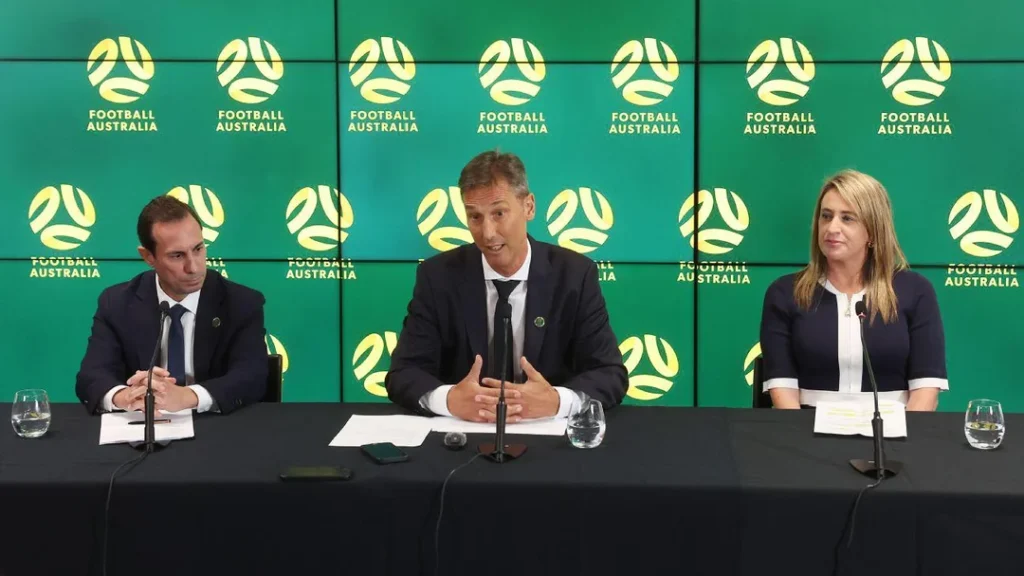
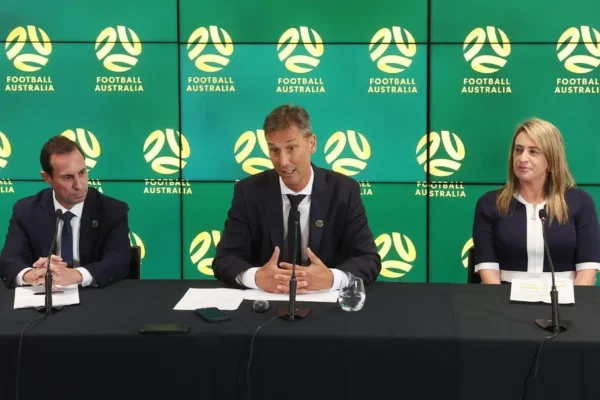
Chief Executive Martin Kugeler has reportedly indicated the governing body’s projected financial losses for 2025 are expected to exceed the organisation’s reported $8.5 million deficit from the previous year. Accompanying the financial outlook are substantial organisational changes, with reporting from Tracey Holmes indicating more than one in five Football Australia employees are expected to lose their positions through restructuring measures.

The figures represent more than a difficult balance sheet. They point toward a significant period of recalibration inside the organisation responsible for overseeing the sport nationally.


Losing the wisdom of existing staff members

For governing bodies, restructures are often framed as strategic necessities for future sustainability. However, workforce changes on this scale also raise broader questions around the challenges of such a transition.

People are often the carriers of knowledge, relationships and long-term strategic understanding. When organisations undergo significant structural change, the effects can extend beyond immediate financial outcomes.


Contradicting timing

The timing is what makes the developments particularly notable.

Football in Australia has spent recent years discussing expansion, growth and long-term opportunity. The conversation surrounding the game has increasingly centred on future potential. Often headlining stronger pathways, larger audiences, infrastructure development and greater visibility.

Against that backdrop, news of deep financial losses and substantial staffing reductions creates a different conversation: one focused not on where the game wants to go, but on what may be required to sustain that journey. Therefore, this announcement points toward stagnancy, rather than growth.

Further detail surrounding Football Australia’s strategy and long-term direction will likely emerge over coming months. For now, the developments serve as a reminder that growth stories are rarely straightforward.

Often, the periods that appear strongest from the outside can also be the moments organisations face their most significant internal tests.

LALIGA and EA SPORTS FC collaborate in community pitch project

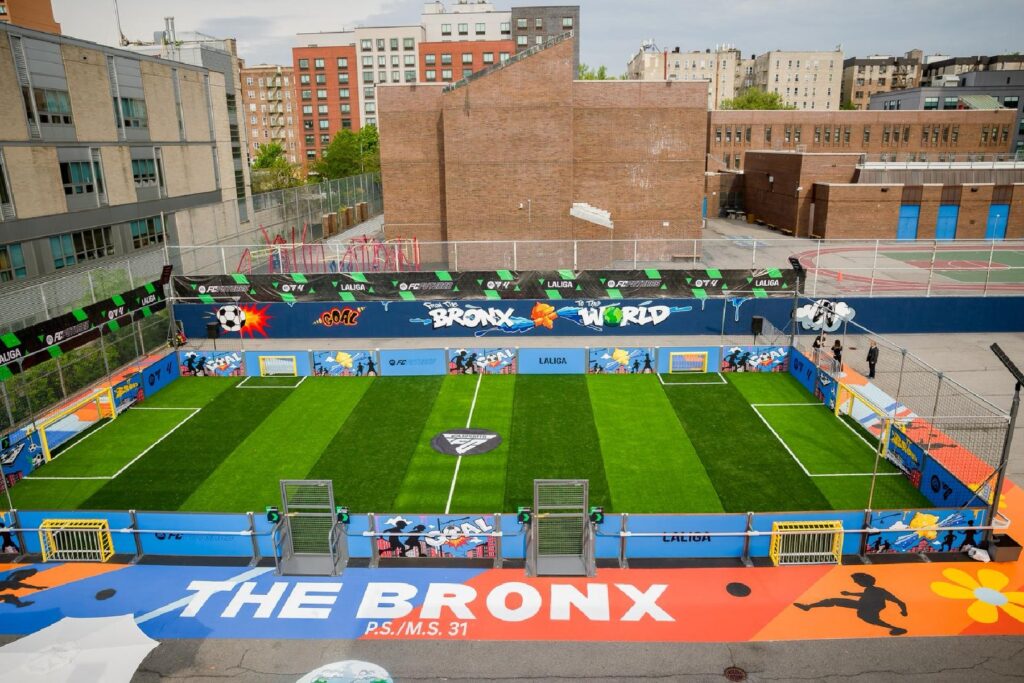
Part of the EA SPORTS FC FUTURES grassroots initiative, the newly refurbished pitch will provide New York kids with a safe, inclusive space to enjoy the game in their community.


From Europe to US

In the heart of the Bronx, New York, LALIGA and EA SPORTS FC unveiled the new space as the 10th collaboration between the two parties to bring pitches to future generations.

It marks an exciting development not just for community infrastructure, but for representing the global reach and connections made possible through football.

Furthermore, with support from local artist, BG183, The William Lloyd Garrison School, and soccer-inspired education and youth support program, South Bronx United, it stands as a symbol of local pride and grassroots commitment.

“This project in New York is especially meaningful because it brings together access to sport, long-term community impact and a strong local identity,” explained LALIGA’s Executive Director of Business, Jorge de la Vega.

“Together with EA SPORTS FC and our community partners, we want this pitch to become a place where young people can play, grow and find new opportunities.”


Using platforms for wider growth

This is a project which provides aspiring young footballers with the facilities they need to thrive in their personal and sporting development.

And although it carries an emphasis on local values, the global work and vision of EA SPORTS FC and LALIGA is undeniable.

The former now supports similar initiatives across Europe, Asia, Africa, the Americas, and right here in Australia. The Sam Kerr Pitch, unveiled in Sydney in 2023, provides young girls with free access to a high-quality space.

Thus, EA SPORTS FC is showing a unique combination in its community investment strategy: the global name of LALIGA, paired with collaboration from local organisations, ultimately establishing something even bigger.

“While EA SPORTS FC lives in the game, our ambition goes beyond it – working with partners like LALIGA and local communities to create spaces where football can be played and experienced physically,” outlined EA SPORTS FC Senior Director, Partnerships Marketing, James Salmon.

“Projects like this in the South Bronx show how football can bring people together and create lasting impact.”


Small space, big impact

Although this may be one small pitch in the Bronx, its signficance resonates with grassroots communities across the world who know its true value.

Hopefully, EA SPORTS FC will continue to show their commitment to next generations for many years to come.

Most Popular Topics

Editor Picks

Send this to a friend