FIFA has multiple bids to consider for 2023 Women’s World Cup

FIFA the global governing body for football has received four bids from those looking to claim hosting rights for the 2023 Women’s World Cup.

Having recently seen Football Federation Australia (FFA) and Football Ferns (New Zealand) join forces to host the prodigious tournament, it won’t be the only bid that FIFA have to consider.

They have received bids from the Brazilian Football Association (CBF), the Colombian Football Association (FCF), and the Japan Football Association (JFA).

With FIFA confirming that the submission deadline of December 13th has passed, they will start to undergo an inspection of each country through a visit between January and February 2020. A final decision is expected to be made at a FIFA Council meeting in Ethiopia’s capital city of Addis Ababa in June 2020.

While FIFA saw a record number of nine nations including Argentina, Bolivia, South Africa and Korea put themselves forward as potential hosts for the 2023 event, only four in total were accepted after FIFA updated their hosting requirements which lead to a reopening of the bidding process earlier this year.

For the joint bid between Australia and New Zealand, the countries’ federations have planned for the 2023 Women’s World Cup to be held in 12 cities combined, with seven from Australia and five in New Zealand.

“Australia and New Zealand have a successful history of both staging and co-hosting major international sporting events – most recently the Rugby League World Cup 2017 and the Cricket World Cup 2015,” said Richard Colbeck, Australia’s Minister for Youth and Sport.

“By hosting such a premier sporting event, we strengthen Australia’s reputation as a world leader in women’s sport.”

FIFA President Gianni Infantino has already announced an increase of participating teams in the next Women’s World Cup from 24 to 32 and spoke about the success of the last tournament in France.

“France 2019 was certainly a watershed moment for women’s football, and now it is FIFA’s responsibility to take concrete measures to keep fostering the game’s incredible growth,” he said.

“With the FIFA Women’s World Cup generating an unprecedented interest across member associations, we are ensuring that the process to select the hosts is seamless, objective, ethical and transparent. By the time the FIFA council announces the hosts, there should be no doubt whatsoever as to why that choice was made.”

 

Previous ArticleNext Article

The Man Who Built a Women’s Football Program from Nothing is now an Award-Winning Gender Equity Leader

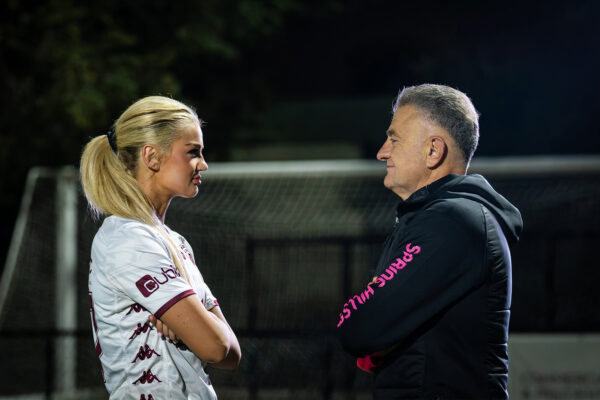
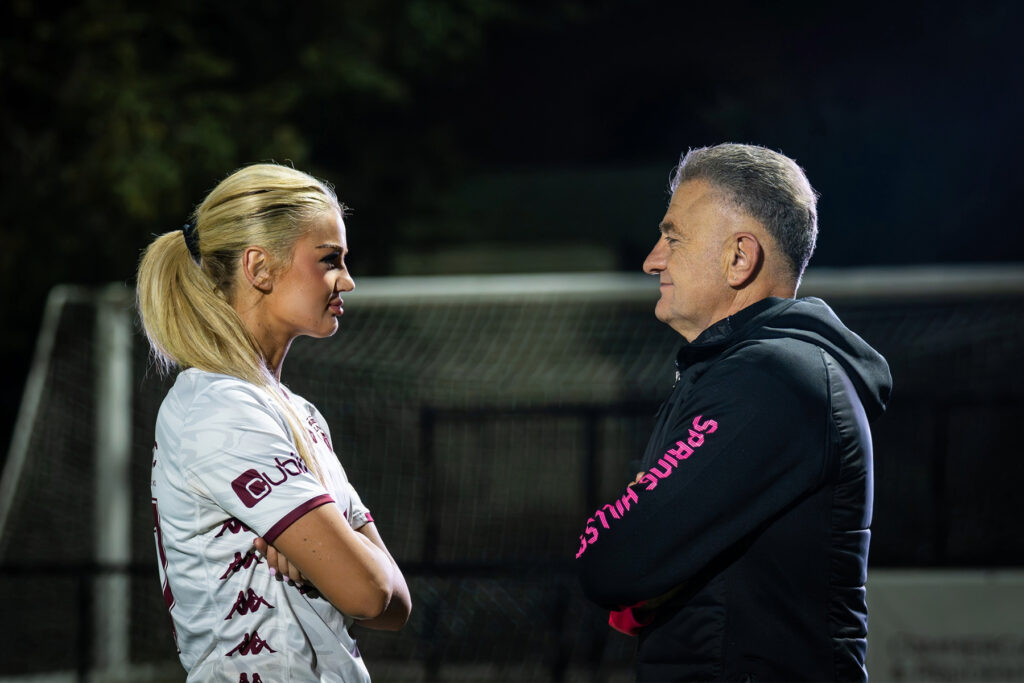
Eight years ago, Spring Hills Football Club did not have a girls’ team. Today it has one of the most recognised women’s programs in Melbourne’s west, a senior NPLW side, and a head coach who has just been named Gender Equity Leader of the Year at the Melton City Council Volunteer Achievement Awards.

Tom Markovski, Spring Hills’ NPLW Head Coach, received the award at a ceremony coinciding with National Volunteer Week, recognised for his community leadership, promotion of gender equality and commitment to advancing the status of women and people of all genders in sport. The recognition comes from outside the football community entirely, awarded by a local council celebrating volunteers across every sector of civic life in one of Melbourne’s fastest-growing regions.

Building from scratch

When Markovski arrived at Spring Hills, women’s football at the club did not exist. His first act was to champion the establishment of the club’s first all-girls team, a process that required persuading a club culture built around men’s football that the investment was worth making.

Women’s football in community clubs has historically struggled to access the same facilities, scheduling priority, coaching resources and institutional support as the men’s game. Clubs have been slow to invest in programs whose return is less immediately visible than a senior men’s premiership, and in a growing outer-suburban community like Melton, where volunteer capacity is finite and demand across every program is high, the case for building something new always has to compete with the urgency of maintaining what already exists.

Markovski made the case anyway, and kept making it across eight years of coaching senior and junior NPL teams while simultaneously building the structural foundations of a women’s program designed to outlast any individual’s involvement. The club’s first all-girls team became multiple junior girls teams. Those junior teams created the pipeline for a senior women’s side. The senior women’s side created visible pathways for younger players to see where the game could take them within their own club.

The outcome is a program that Spring Hills now holds up as central to its identity rather than supplementary to it. The club has become a leader in female participation in Melbourne’s west, and recently made history within the NPLW Victoria structure by fielding junior teams coached entirely by female coaches, a milestone that reflects the depth of the program Markovski helped build.

What the Award Recognises

The Melton City Council’s decision to name Markovski its Gender Equity Leader of the Year places his work in a frame that extends beyond football. Melton is one of the fastest-growing local government areas in Australia, a diverse and rapidly expanding community where the institutions that bring people together, like schools, councils, sporting clubs, carry an outsized responsibility for social cohesion.

Mayor Cr. Lara Carli, speaking at the awards ceremony, reflected on the role volunteers play in communities like Melton’s. “Volunteering creates friendships, strengthens communities and builds a sense of belonging,” she said. “It helps people feel connected, supported and valued, and those things are more important than ever in a growing and diverse community like ours.”

For the girls now playing football at Spring Hills who were not playing anywhere eight years ago, Markovski’s contribution is not abstract. It is the specific and concrete fact of having somewhere to play, someone to coach them, and a pathway that leads somewhere.

Aussie partners with two A-League clubs in cross-state alliance

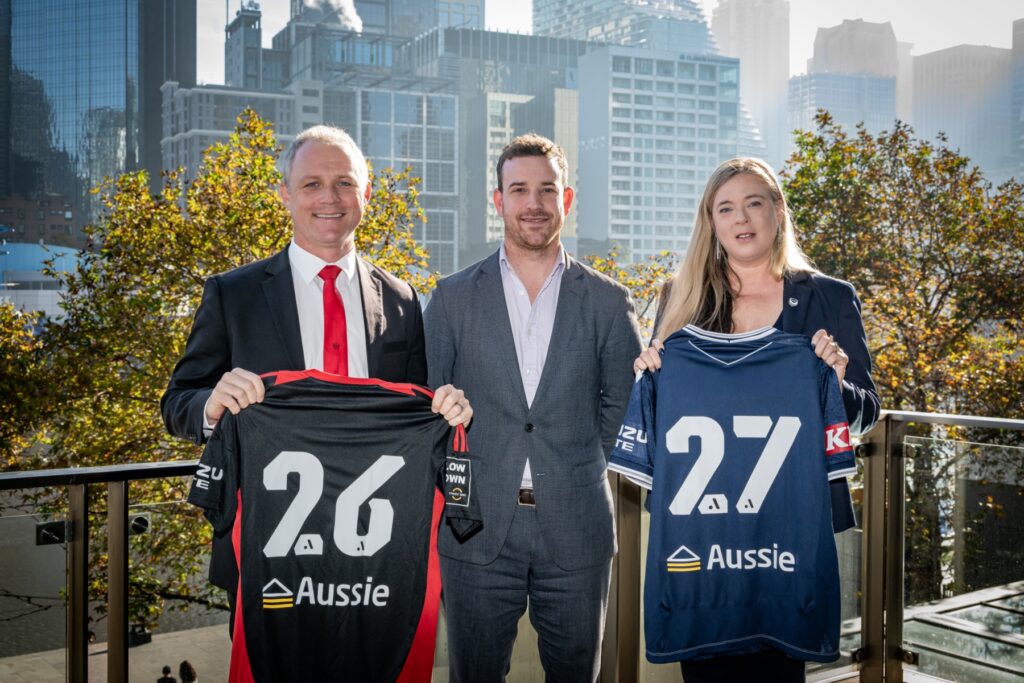
Australia’s largest retail mortgage broker will team up with Melbourne Victory and Western Sydney Wanderers, representing Aussie’s commitment to supporting and connecting people through football.


Opposing teams, United partners

The alliance between Aussie, Melbourne Victory and Western Sydney Wanderers reflects a unique approach to investing in Australia’s football landscape.

It encompasses both communities and supporters across Melbourne and Sydney, with Aussie’s presence in both cities now firmly embedded into local, grassroots networks.

“We’re excited about this partnership because it represents much more than a traditional sponsorship,” explained Aussie National Manager, Strategic Partnerships, Ryan Ferguson via press release.

“It’s about connection, community, and being part of something that reaches people in a meaningful and authentic way.”

Both Melbourne Victory and Western Sydney Wanderers also commented on the unique nature of the partnership.

“The joint venture is a game-changer in how brands and sports teams can collaborate beyond the traditional instruments of a partnership and stands apart from the existing relationships in our sporting landscape for the betterment of our stakeholders,” said Melbourne Victory Managing Director, Caroline Carnegie.

“For the first time, two iconic clubs are coming together in a joint-venture sponsorship that delivers unmatched reach, community impact and business innovation,” added Western Sydney Wanderers CEO, Scott Hudson.


National stage, local commitment

As Australians grapple with soaring property prices and financial uncertainty, having access to a platform like Aussie is immensely valuable.

So now that Aussie will begins its venture alongside Melbourne Victory and Western Sydney Wanderers – two clubs with extensive fanbases – it now has the means to make real, local impact.

Two major cities. Two footballing identities. All aligned under the same vision for community reach, growth and innovation.

“Aussie is a national brand, but at our heart, we are built on local relationships,” continued Ferguson.

“Every day, our brokers are working with customers in their communities, helping them navigate the journey of finding, buying and owning their own home. That’s why this partnership feels like such a natural fit.”

Ultimately, while the alliance will build on the business and community networks of the two A-League outfits, the impact will extend far beyond the boundaries of the pitch.

Most Popular Topics

Editor Picks

Send this to a friend