



Football Australia and the Central Asian Football Association (CAFA) jointly delivered a targeted sports diplomacy initiative in Dushanbe, Tajikistan, from August 4 to 7 2025.
The most significant moment of the effort was a two-day seminar on Women’s Football Development, attended by leading representatives from five Central Asian Member Associations. This included Tajikistan, Uzbekistan, the Kyrgyz Republic, Turkmenistan, and the Islamic Republic of Iran. Representatives from FIFA, the AFC, and FIFPRO Asia/Oceania were also in attendance.
Australia looked to its experience hosting the 2023 FIFA Women’s World Cup to explore strategies for participation growth and legacy building in the Central Asian region, where the 2026 AFC Women’s Asian Cup will take place.
AFC Executive Committee Member and Deputy Chairperson of the AFC Women’s Football Committee, Mijgona Mahmadalieva, highlighted the significance of Australia’s expertise.
“Partnering with Football Australia gives us access to valuable experience, especially from a federation that successfully hosted the FIFA Women’s World Cup,” Mahmadalieva said.
“The exchange of ideas and expertise has been both practical and inspiring, and it’s helping us build a stronger foundation for women’s football across the region.”
The seminar was delivered by key delegates from the Australian women’s football landscape and involved meaningful engagement with local football stakeholders. These representatives included International Partnerships Manager, Tom Engelhardt, Football Australia General Manager of Women’s Football, Carlee Millikin, and former Matilda, Gema Simon.
Millikin shared her thoughts on this collaboration and the long-term vision for women’s football in the region.
“This is about sharing our learnings and building meaningful partnerships that benefit women’s football across Asia,” Millikin said.
“Hosting the AFC Women’s Asian Cup in 2026 is a chance to showcase the power of women’s football throughout the continent. We’re focused on using this platform to build something bigger, supporting growth, sharing knowledge, and creating a lasting impact.”
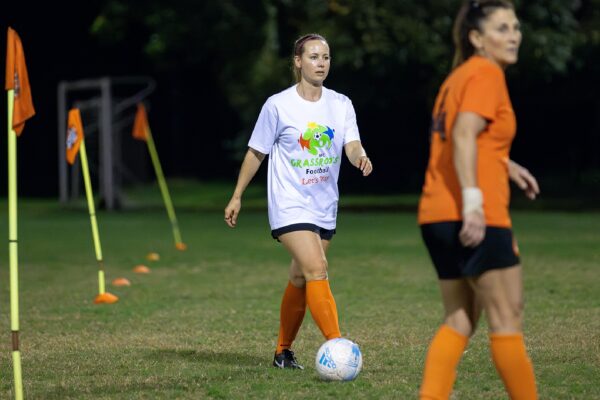
The initiative also featured community engagement activities. This included a training session led by Simon with FC Dushanbe, and several engagements with football stakeholders accompanied by the Australian Deputy Ambassador, Jeremy Guthrie.
Millikin closed her statement by emphasising the impact this initiative will have on Australian football.
“Central Asia is an important region for Australian football, with our national teams competing here regularly. Two CAFA nations — Iran and Uzbekistan — have qualified for the AFC Women’s Asian Cup 2026, and Uzbekistan will host the tournament in 2029,” she concluded.
This seminar was the first sports diplomacy initiative between Football Australia and the Department of Foreign Affairs and Trade in Central Asia, since the success of the 2024 visit to Uzbekistan.