Zlatan to the A-League – the Pros and the Cons

In recent times, rumours have begun circling that Swedish superstar Zlatan Ibrahimovic could be making a move to the A-League.

At face value, ‘Ibra’ in the A-League sounds like a fantastic proposition.

He’s a living legend who has won titles just about everywhere he’s gone. AC Milan, Barcelona, Juventus, Inter Milan, Ajax, Paris Saint-Germain and Manchester United are all huge clubs he has played for during his illustrious career.

Say what you will about his arrogance and ego, but it’s a part of why he’s so revered. He doesn’t put on a mask, he is unequivocally himself.

Zlatan would instantly become the biggest name in the league today and one of the biggest names to ever come Down Under.

The exposure that soccer in Australia would get as a result of his arrival in the country would be phenomenal. When Zlatan first arrived in Los Angeles as a part of his move to the MLS, it was the biggest soccer news story at the time. And the MLS is a much larger competition than the A-League.

People from across the globe would start watching A-League fixtures and stadiums would be packed to the rafters.

In a time where soccer in Australia could use a popularity boost, Zlatan would bring people across from other sports and be the star attraction in Australia.

Shirts sales would skyrocket. Fans from other clubs would buy shirts purely because it’s Zlatan.

I mean, you’d be silly not to.

Zlatan Ibrahimovic in the A-League could be the necessary sugar hit the A-League needs. But that could be all it is. A sugar hit. A flash in the pan.

David Villa was fantastic when he was loaned out to Melbourne City, albeit for the mere four games.

Ibra would probably play more than four matches, but the rumours are also stating that he could be in the country for as little as six weeks.

That’s nowhere near enough time.

Once Zlatan leaves, any overseas exposure that arose from his arrival in Australia would instantly dissipate. Fans from other sports would return to their sports of choice.

Basically, any and all interest garnered from Zlatan being in the league would go with Zlatan.

Australian-based soccer fans would understandably feel aggrieved by his departure. There are also many soccer fans based here that do not follow the A-League, instead preferring the European leagues.

After Zlatan leaves, where do you think they’ll go? Back to their Optus Sport subscriptions.

When you look at Zlatan’s playing career, you’ll notice one recurring theme.

At all but one club he’s played for, he’s never made more than 90 appearances.

He made 122 for Paris Saint-Germain during his four year stint in France’s capital, but he has never been one to stay the course with one club.

Four years is indeed his longest tenure at any club but even that’s lower than most players.

What does all this mean? He’s not a loyal player. He doesn’t play for the club. His character is such that he only ever sees what’s in it for him.

What would that mean for whichever A-League club would pick him up?

It would mean that it’s nothing more than a cash grab for him. It would almost be paid leave for someone like Zlatan.

He would train once or twice and play the weekend’s game. But he wouldn’t be giving it his all. His heart wouldn’t be in it.

Yes, he plays with passion and hunger unlike 99% of every player out there. But it’s not as if he’s playing for any reward other than money.

There wouldn’t be much motivation for him.

As a club, do you want your highest paid player to be someone who would be apathetic? I certainly wouldn’t, nor should any other club’s executives.

Zlatan would be a huge coup for the A-League. His name is enough to draw a crowd wherever he goes.

But if his rumoured stint in the A-League would be as little as six to eight weeks, would it be a worthwhile investment for the league and its stakeholders?

That’s for you to decide.



Previous ArticleNext Article

More Than One in Five Football Australia Staff to Lose Jobs Amid Growing Financial Losses

Australian football finds itself in a curious position.

From the outside, the game appears to be riding a wave of momentum. Attendances, visibility and public interest have all experienced significant uplift in recent years, while major international tournaments and growing discussion around football’s future continue to place the sport firmly within the national conversation.

Yet behind that momentum, Football Australia is now confronting a far more challenging internal reality.


A compounding deficit

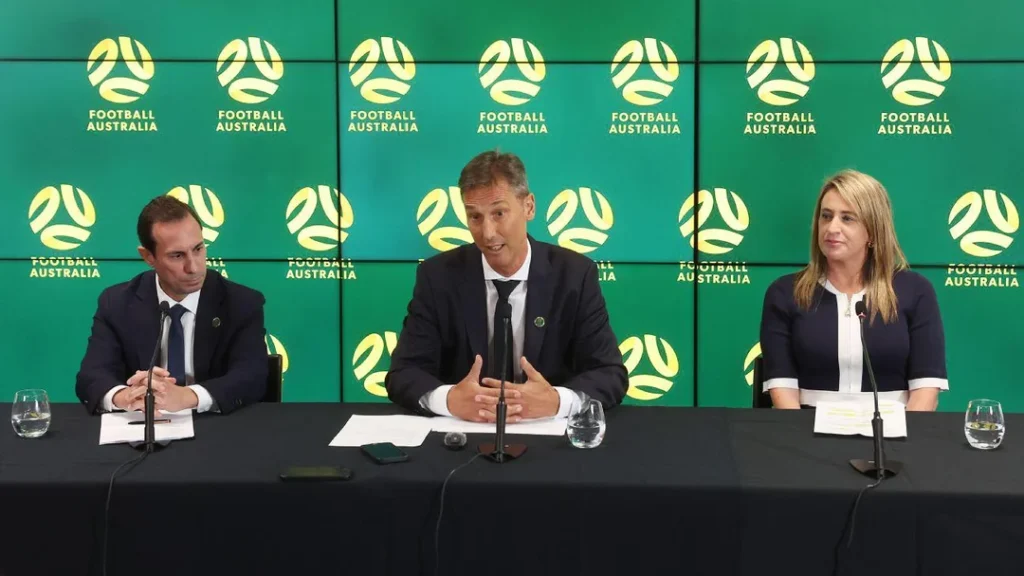
Chief Executive Martin Kugeler has reportedly indicated the governing body’s projected financial losses for 2025 are expected to exceed the organisation’s reported $8.5 million deficit from the previous year. Accompanying the financial outlook are substantial organisational changes, with reporting from Tracey Holmes indicating more than one in five Football Australia employees are expected to lose their positions through restructuring measures.

The figures represent more than a difficult balance sheet. They point toward a significant period of recalibration inside the organisation responsible for overseeing the sport nationally.


Losing the wisdom of existing staff members

For governing bodies, restructures are often framed as strategic necessities for future sustainability. However, workforce changes on this scale also raise broader questions around the challenges of such a transition.

People are often the carriers of knowledge, relationships and long-term strategic understanding. When organisations undergo significant structural change, the effects can extend beyond immediate financial outcomes.


Contradicting timing

The timing is what makes the developments particularly notable.

Football in Australia has spent recent years discussing expansion, growth and long-term opportunity. The conversation surrounding the game has increasingly centred on future potential. Often headlining stronger pathways, larger audiences, infrastructure development and greater visibility.

Against that backdrop, news of deep financial losses and substantial staffing reductions creates a different conversation: one focused not on where the game wants to go, but on what may be required to sustain that journey. Therefore, this announcement points toward stagnancy, rather than growth.

Further detail surrounding Football Australia’s strategy and long-term direction will likely emerge over coming months. For now, the developments serve as a reminder that growth stories are rarely straightforward.

Often, the periods that appear strongest from the outside can also be the moments organisations face their most significant internal tests.

New ‘Unfiltered’ Episode with Paul Klisaris and Oscar Yildiz

The ‘Unfiltered’ podcast by Soccerscene promises honest, thought-provoking conversations about football culture, identity and the stories fans don’t usually hear in mainstream coverage.

In the latest episode, Mihaila Kilibarda sits down with passionate councillors Paul Klisaris and Oscar Yildiz to debate the role of policy in shaping infrastructure, career opportunities and on-field success in the Australian football landscape.

From exposing flaws in policy making, to critiquing the A-League, Paul and Oscar discuss the future trajectory of football in Australia. With strong views on the disconnect between decision-makers and grassroots communities, this is an unfiltered look at the issues holding the sport back—and the urgent need for change.

“Bring back Preston, bring back South Melbourne, bring back that culture into the game. There was nothing wrong with that. Bring it back. Regulate it better, police it better, like they have in Europe. There is rivalry and that’s healthy!” says Paul Klisaris in this episode.

Oscar Yildiz agreed that “We might need to throw a bomb. There is no incentive for clubs to aspire to. You know, you can finish last and still stay in the league. They need to have people from state, from federal, people, again, who know the game, who genuinely know the game. And, it means understanding the politics around the game.”

Listeners can expect Unfiltered to go beyond match reports and transfers. Each episode will dive into the ideas, people and cultural forces that make football one of the world’s most compelling sports. Episode 2 is available now, hoping to challenge, entertain and inspire.

Listen now on Spotify: 

With Unfiltered, Soccerscene is giving fans a space to think, feel and debate about the game they love. Further, it is encouraging conversations that are as engaging as the football itself.

Stay tuned for future episodes, featuring more voices shaping the beautiful game.

Most Popular Topics

Editor Picks

Send this to a friend