

It’s time for Craig Johnston

Craig Johnston

Since 2017, after spending many years in the U.S.A., Craig Johnston – our most decorated footballer with eight medals from his years at Liverpool F.C. – has been based in his hometown Newcastle.

The man who ventured to Middlesborough in 1975 at the tender age of 15 survived the harsh treatment of Jackie Charlton to make his first team debut at the age of 17 and was transferred for a record 650,000 pounds to Liverpool in 1981.

This was the example of his never say die attitude and created a lasting benchmark for many players who followed him.

Critically, Johnston has never lost his passion for the game and if ever there was a time for him to influence the course of Australian football, it is now.

In this interview with Roger Sleeman, Johnston espouses his views on the direction Australian football should be taking.

ROGER SLEEMAN

You’ve been back in Australia since 2017.

What was your plan to integrate your ideas into the Australian footballing landscape?

CRAIG JOHNSTON

I spent a long time travelling the world and after 20 years living in the U.S.A., I wanted to return home to impact player development, coaching and merchandising.

R.S.

How far have you succeeded in your intentions?

C.J.

I’ve spent every waking minute trying to get kids to play football more often.

I’ve made a lot of progress but it hasn’t been an easy task because the same difficulties exist as before.

This is because we live in a wonderful country with so many options to educate and entertain our kids.

There is a perceived public opinion that football is the sleeping giant in Australian sport but I believe the Women’s World Cup will finally awake the sleeping giant.

R.S.

There are a distinct lack of technical players produced in our country, evidenced by the quality of A-League and NPL competitions.

What are your observations?

C.J.

It’s exactly as it’s always been, that if you can’t trap or pass a ball it’s going to be difficult to succeed in football.

Back in the day of the Golden Generation and before, you had sons and daughters of first generation immigrants playing every day in their backyards, as their parents did in their countries.

Therefore, we have to be more innovative to take the kids of today away from their PlayStation and modify their short-term span of concentration.

The kids have to be enticed out of their bedrooms from their PlayStation and shoot up games.

They must be touching the ball more often and it has to become the new toy in their life just like the previous generations.

Image credit: David Cannon /Allsport

R.S.

Do we have the right people holding down technical roles to improve skill factors for youth players?

C.J.

I don’t know these people, but whoever they are, have they got the data to show they’ve improved the skills of young players, or for that matter any data at all?

R.S.

Our recent demise from the u/17 Asian Cup was largely attributed to lack of preparation.

Your comment?

C.J.

Our Asian neighbours have improved so much that the biggest threat is from them, not Europe or South America.

The Asians have approached development in a scientific way by using global currency as a way of being recognised on a global scale while the Australian government ignores it.

In contrast, the Saudis, South Koreans and Japanese are going ahead in leaps and bounds.

R.S.

You returned to Europe last May to watch Liverpool in the Champions League Final in Paris and stayed there a further five months.

What did you achieve in that time?

C.J.

I was involved with a Belgium broadcaster who was producing a documentary on the Heysel Stadium disaster of 1985.

Ironically, there was a riot between the opposing supporters in Paris and despite all the money invested in security, they still haven’t got it right.

I also met officials from FIFA and UEFA about the proposed Super League and expressed my disagreement with the proposal.

Basically, I believed the big clubs were going to take the game away from the supporters and monetise it through a closed shop and franchise model which would’ve resulted in splitting the game in two.

If the Super League had gone ahead it would’ve resulted in 12 owners dominating the game in Europe, mainly from American roots.

What football means to a Mancunian or Scouser doesn’t equate with the perception of an American business tycoon.

R.S.

You’ve been in talks with Northern NSW Football for some time.

Can you outline the progress of these discussions?

C.J.

As a proud Novocastrian, I was involved with previous regimes and the Dutch coaches in raising $9 million dollars to set up an Academy

However, the Dutch never allowed me to get inside the gates because they claimed it was their job to coach skills, and not mine.

Finally, I have an opportunity because of the new Board and the new CEO.

I’m also talking to the Jets and Lake Macquarie club where I played in my formative years.

One of my biggest ambitions is to pass on the secrets of my success which enabled me to leave Lake Macquarie and play first team football in Middlesborough at the age of 17.

R.S.

When will the powers that be engage you to make a significant contribution to the game by improving the development of youth players?

C.J.

I’ve experienced the fame and recognition so its best to have your own clever thoughts to provide solutions.

They know I’m here and they’re all aware of my success so I only have to be tapped on the shoulder.

R.S.

What is your take on the Women’s World Cup and how it can impact the game in Australia?

C.J.

It’s the best thing to happen for Australian football, just as England winning the European Women’s Championship has boosted women’s football in their country.

I well remember when I was living in the States and Bill Clinton was running for President and he was asked who would decide the election victory?

He answered the “soccer mums” because they run round all the week organising their children’s sport and they are the backbone of the nation.

They are a huge audience and they spend the money which will contribute to football’s success.

R.S.

Will you be speaking to Rob Stanton, the new Jets coach?

C.J.

I’ve already had talks with the CEO, Shane Mattiske, to arrange a meeting with Stanton.

R.S.

What is the progress of your concept of the Big Bash of Soccer?

C.J.

Based on the Big Bash of Cricket, plans are moving forward to introduce a pre-season tournament before the A-League season.

We plan to have eight A-League teams and eight NPL teams playing in one-hour matches, consisting of four quarters.

The aim is to produce a new culture, skills and most importantly entertainment.

There will be high scores on a reduced pitch with six players per side.

Players will receive a yellow card if they play the ball backwards and a red card the second time.

On receipt of the red card, the player will be placed in the sin bin for two minutes.

The TV coverage will encourage young players to play Little Bash at school and on training pitches.

Ultimately, I believe this format can be successful like its cricket counterpart.
Previous ArticleNext Article

Beyond the Pitch: Miyuki Kobayashi on the Real Challenges Facing Japan’s Women’s Game

Last week, Soccerscene spoke to pioneer of women’s football in Japan, Miyuki Kobayashi, about the game’s development in Japan and the intersection between sporting and social change in the country.


Talent, quality and recent silverware

After Japan’s recent AFC Women’s Asian Cup victory in the final against Australia, the women’s national team solidified its standing as the No.1 team in Asia.

Throughout the last 15 years, Japan’s women’s national team has grown into a formidable opponent, boasting a World Cup trophy, an Olympic silver medal, as well as three AFC Women’s Asian Cups.

The talent is undeniable. The quality is unwavering. And the team shows no signs of slowing down.

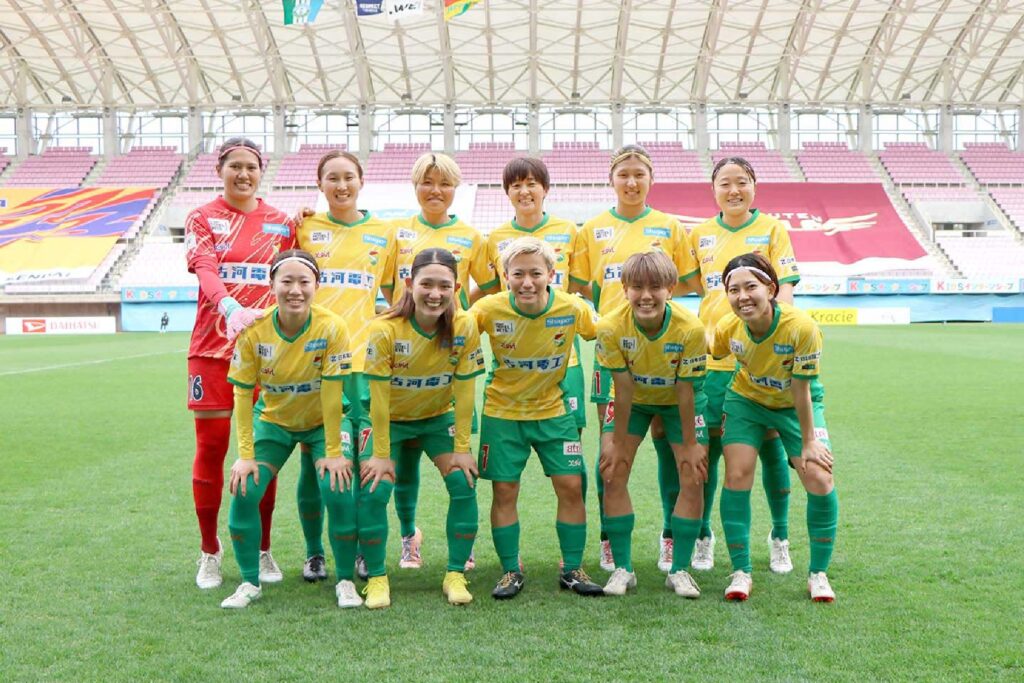
But these victories and trophies on the world stage wouldn’t be possible without the leaders behind the scenes – none more so than Miyuki Kobayashi, former WE League Board Member and current JEF United Ladies Scout and Academy Chief.


Laying the foundations

Kobayashi has led the charge for women’s football in Japan, promoting not only a sport which values success, but one which empowers female footballers across the nation.

“At university, not many girls were playing and we didn’t have an official team. I went to the US and the environment was so different,” Kobayashi explained.

“That opened my eyes – women can play. That’s how I started the women’s soccer league when I came back: to make an environment for girls to play.”

Thus, accessibility and opportunity became driving factors behind Kobayashi’s work, not only for those on the pitch, but for those in the dugout.

“I got involved at the JFA (Japanese Football Association) to promote women’s football. We wanted to create the opportunity for women to be coaches.”

“They are coached by men all the time, so even when the top players leave the football world, they never think to be involved.”

Furthermore, as a former coach of JEF United Ladies Youth and General Manager, Kobayashi was intent on employing as many female coaches as possible. It was not merely a personel change, but a challenge to widespread social attitudes.

“When I started to employ female coaches, the girls’ parents asked why the coach wasn’t a man. But gradually, we started to make it equal – they didn’t talk about the gender, but about the quality of the coach.”


The mission to empower

In 2011, the same year Japan’s women won the World Cup, the domestic league was yet to become professional. Known as the Nadeshiko League, players would work during the day and train in the evenings.

The transition from an amateur to the current professional league required time, resilience and a change in perspective.

“The sports world in Japan is more traditional – it is dominated by men,” said Kobayashi.

“If you want to make the environment even, or (want) more women to come into the (football) world, you can change the mind of the players.”

Since 2021, the WE League has embodied a sense of growth and positive change for the women’s game. In name and nature, it looks to empower players, coaches and all involved in the industry.

“I was in charge of mission achievement for women’s empowerment. We wanted to educate the players, to inspire girls and women who watch the game.”

However, the drive to empower women in football was not without backlash and challenges.

“Some people don’t like that word: ’empowerment’. It’s too strong for them. Some women really appreciate it, but it’s not easy to change the mind of society through football,” Kobayashi admitted.


Growing and attracting talent

Although WE League clubs are accelerating youth development and expanding pathways across U15, U18 and first team football, Kobayashi acknowledged that the overall product must improve to bring foreign players to Japan and entice homegrown talent to stay.

“Most of the national team players go to Europe or North America. I don’t say it’s a problem, but from a young age, girls who can play in the WE League want to go abroad,” Kobayashi outlined.

Indeed, when looking at the starting XI in last month’s AFC Women’s Asian Cup final, only one player – Hana Takahashi – plays in the WE League.

But the key to attracting domestic and international players to the WE League, is aligning financial investment and industry attitudes.

“The reason why women’s football has developed in European countries is the social thinking – you have to be equal and have the same opportunities as men in football. The Japanese way of thinking, especially in the football world, is not that at all,” Kobayashi continued.

“When I speak to people at Spanish clubs, women’s football is not a charity, but an investment.”

“We have assets. We have good, young players, but we’re exporting them, so we need to import too.”

Indeed, Spain is a perfect example of what can happen when investment becomes intentional, not optional. Back-to-back UEFA Women’s Nations League titles, 90% television viewership increase since 2016, and record-breaking crowd numbers reflect what can happen when the industry aligns in vision and commitment.

Japan has the players to compete against any nation in the world. Purposeful investment, combined with its overall quality of players and style, could transform the WE League into a true, global powerhouse.


The vision for the future

Moving forward, Kobayashi hopes that girls progressing through JEF United’s academies develop confidence and resilience, whether as players or people.

“We want to make the girls – even if they aren’t in JEF United – continue playing football and continue to be leaders,” Kobayashi said.

“Some of them have a dream to be a coach or a leader off the field too, so that’s one of the attributes we want to develop.”

This resilience, reflected by the club’s ‘never give up’ philosophy, is testament to the vision of empowerment championed by Kobayashi across the women’s game.

Even in the face of social obstacles and a lack of financial investment, perseverance and hard work is at the bedrock of women’s football in Japan. It is not just that these values exist, but that they are consistently manifested on and off the pitch, which can show future generations that football is a sport for all – men and women alike.


Final thoughts

There is no limit to what the WE League and the national team can achieve if given the resources it deserves. All the ingredients are there: individual quality, a distinct playing style, football philosophy and ambitions to grow.

By following the example of industry leaders like Kobayashi, women’s football in Japan can hopefully continue to make waves of impact – in the sporting landscape and society as a whole.

Victory unites with Roasting Warehouse in culture-led partnership

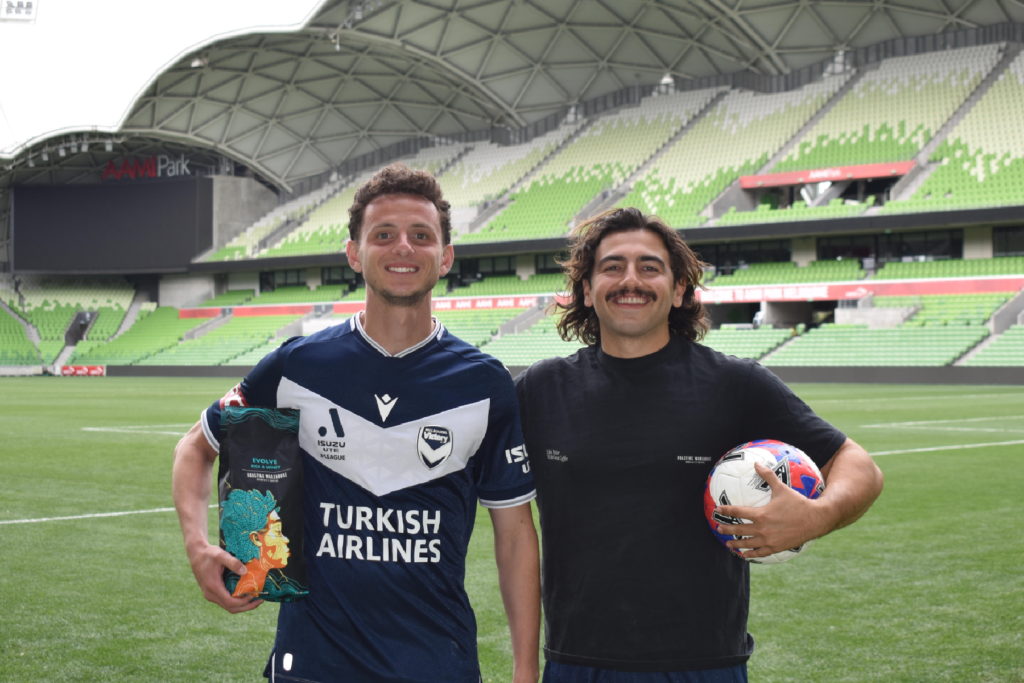
The Melbourne-based anf family-owned business will join the Victory family, uniting two institutions which represent the city’s culture and identity.

A partnership with local roots

As the newest partner of Melbourne Victory, Roasting Warehouse joins forces with a vital part of the city’s sporting landscape.

The club’s Managing Director, Caroline Carnegie, outlined why the partnership bears so much value to both parties.

“We are excited to collaborate with Roasting Warehouse, a community-oriented destination for high-quality coffee, proud of its foundations in Melbourne,” said Carnegie via official media release.

“Football and coffee sit at the epicentre of Melbourne’s culture. The two go hand-in-hand, consistently at the centre of the conversation that stirs Melburnians, which is no different to the conversation sport and Melbourne Victory stir in the State.”

Indeed, this is a partnership which combines the identity, passions and culture of an entire city, therefore giving it the foundations required for long-term, mutual success.

Representing the best of Melbourne

Both Victory and Roasting Warehouse are hugely successful in their respective industries. They are institutions with community-oriented philosphies, who pride themselves on craft and quality.

“We’re incredibly proud to partner with Melbourne Victory, a club that represents the heart, passion, and ambition of Melbourne,” revealed Roasting Warehouse Head of Brand, Alexander Paraskevopoulos.

“As a Melbourne-founded, family-run business, supporting a team that means so much to the local community feels very natural for us.”

Furthermore, through their high-quality blends, Roasting Warehouse will look to prepare Victory’s players and staff for high performances on the pitch as the seasons nears completion.

But this is about far more than just fueling athletes.

This is a partnership which embodies and unites two of Melbourne’s greatest strengths and cultural markers – a connection forged from the city’s very own DNA.


For more information about Roasting Warehouse, click here.

Most Popular Topics

Editor Picks

Send this to a friend