Nike announces USNWT jersey has sold more than any other jersey ever, male or female

The Women’s World Cup in France has been a giant step forward not just for women in soccer. But for women in sport as a whole. After the United States’ reached the final earlier this week with a 2-1 win over England, it was announced they’d broken another barrier.

Nike, one of the world’s premier sports clothing companies, decreed that the 2019 USNWT jersey had become their largest selling shirt ever. Considering some of the domestic clubs and other international teams that use Nike, this is a huge development.

Teams such as Barcelona, Atletico Madrid, Chelsea, Inter Milan and Manchester City use Nike and for the United States women’s team to sell more shirts than these clubs is quite a feat.

Another element to this is that the shirt costs approximately $140 AUD to buy, which isn’t cheap. The fact people are not just purchasing this jersey over others, but for this asking price shows the level of commitment and love for the women’s game at the present time.

Nike’s CEO Mark Parker stated, “The USA women’s home jersey is now the number one soccer jersey, men’s or women’s, ever sold on Nike.com in one season.”

“It’s hard to overstate how important this year has been to the evolution of the women’s offense at Nike.”

“You’re going to see more and more of Nike looking at making sure that women, whatever sport they play, have the right product to play confidently in.”

Australia also made waves with the Matildas’ jersey for their World Cup campaign. Their ‘spew’ inspired kit was considered a wonderful choice, one which made us stand out from the crowd.

Nike isn’t done with its pursuit of ensuring the women’s game reaches the same level as the men’s. More size options are set to be made available for women, ensuring that no one gets left out and that soccer, does indeed become everyone’s game.

Let’s hope the 2019 Women’s World Cup is the catalyst for a wonderful future for the women’s game.

Previous ArticleNext Article

The Man Who Built a Women’s Football Program from Nothing is now an Award-Winning Gender Equity Leader

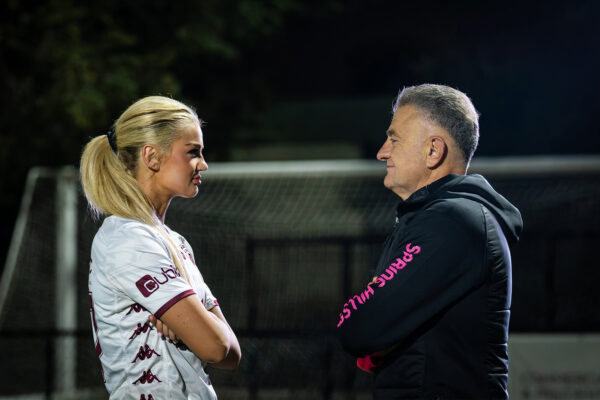
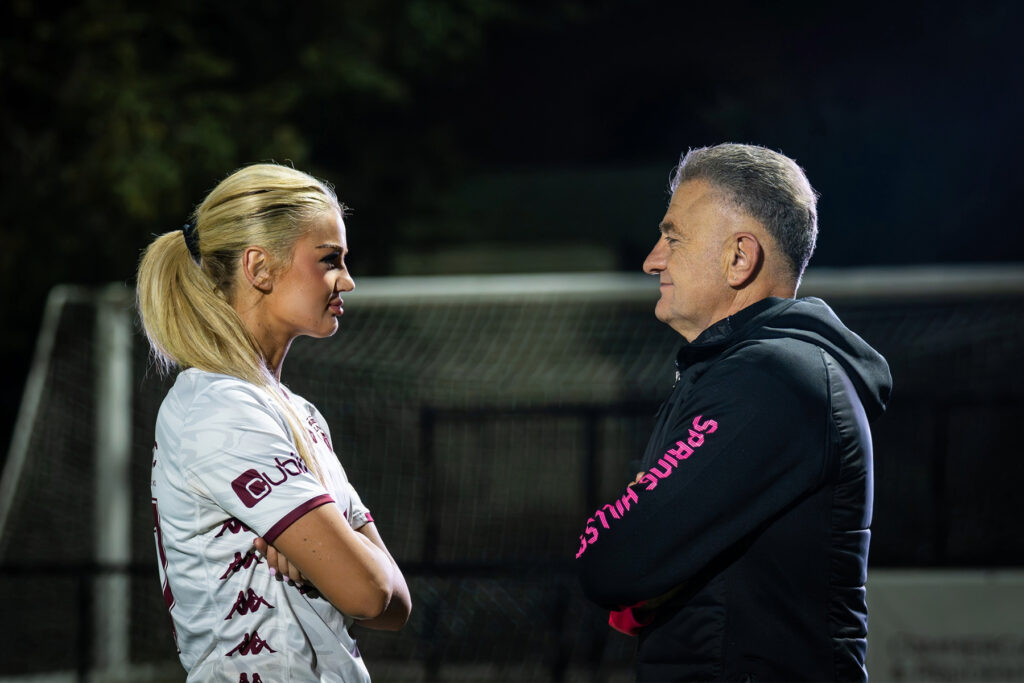
Eight years ago, Spring Hills Football Club did not have a girls’ team. Today it has one of the most recognised women’s programs in Melbourne’s west, a senior NPLW side, and a head coach who has just been named Gender Equity Leader of the Year at the Melton City Council Volunteer Achievement Awards.

Tom Markovski, Spring Hills’ NPLW Head Coach, received the award at a ceremony coinciding with National Volunteer Week, recognised for his community leadership, promotion of gender equality and commitment to advancing the status of women and people of all genders in sport. The recognition comes from outside the football community entirely, awarded by a local council celebrating volunteers across every sector of civic life in one of Melbourne’s fastest-growing regions.

Building from scratch

When Markovski arrived at Spring Hills, women’s football at the club did not exist. His first act was to champion the establishment of the club’s first all-girls team, a process that required persuading a club culture built around men’s football that the investment was worth making.

Women’s football in community clubs has historically struggled to access the same facilities, scheduling priority, coaching resources and institutional support as the men’s game. Clubs have been slow to invest in programs whose return is less immediately visible than a senior men’s premiership, and in a growing outer-suburban community like Melton, where volunteer capacity is finite and demand across every program is high, the case for building something new always has to compete with the urgency of maintaining what already exists.

Markovski made the case anyway, and kept making it across eight years of coaching senior and junior NPL teams while simultaneously building the structural foundations of a women’s program designed to outlast any individual’s involvement. The club’s first all-girls team became multiple junior girls teams. Those junior teams created the pipeline for a senior women’s side. The senior women’s side created visible pathways for younger players to see where the game could take them within their own club.

The outcome is a program that Spring Hills now holds up as central to its identity rather than supplementary to it. The club has become a leader in female participation in Melbourne’s west, and recently made history within the NPLW Victoria structure by fielding junior teams coached entirely by female coaches, a milestone that reflects the depth of the program Markovski helped build.

What the Award Recognises

The Melton City Council’s decision to name Markovski its Gender Equity Leader of the Year places his work in a frame that extends beyond football. Melton is one of the fastest-growing local government areas in Australia, a diverse and rapidly expanding community where the institutions that bring people together, like schools, councils, sporting clubs, carry an outsized responsibility for social cohesion.

Mayor Cr. Lara Carli, speaking at the awards ceremony, reflected on the role volunteers play in communities like Melton’s. “Volunteering creates friendships, strengthens communities and builds a sense of belonging,” she said. “It helps people feel connected, supported and valued, and those things are more important than ever in a growing and diverse community like ours.”

For the girls now playing football at Spring Hills who were not playing anywhere eight years ago, Markovski’s contribution is not abstract. It is the specific and concrete fact of having somewhere to play, someone to coach them, and a pathway that leads somewhere.

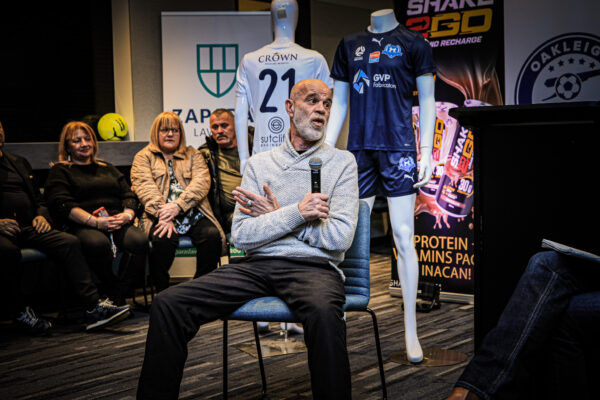
GIS Masterclass: Fan Engagement and Marketing with Terry Lynam and Karen Grega

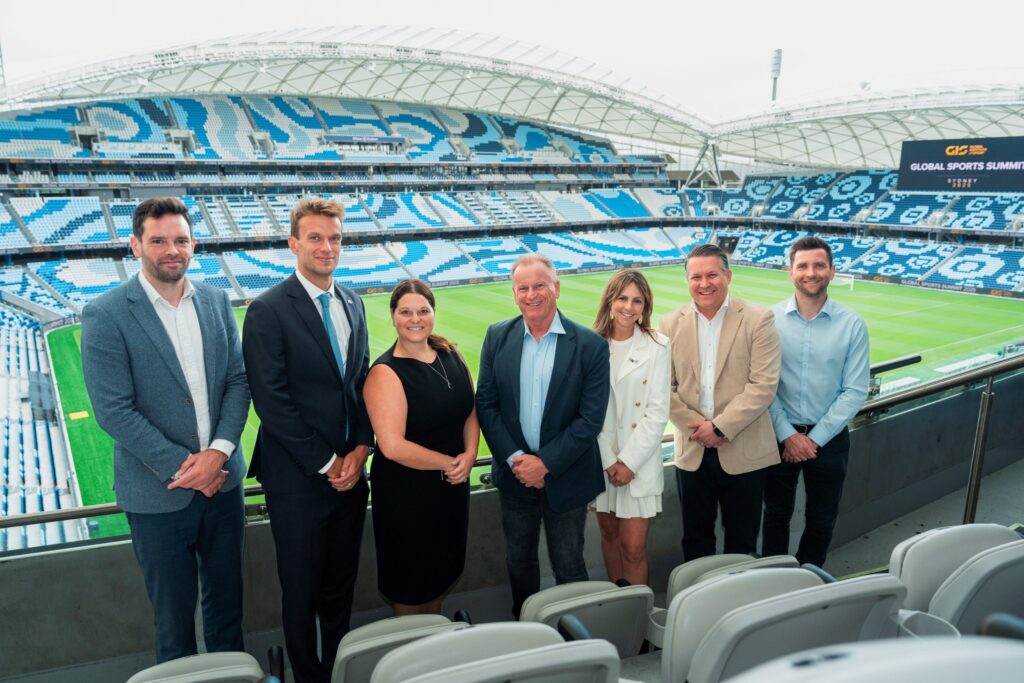
The Global Institute of Sport recently hosted a masterclass on Fan Engagement and Marketing, bringing together two industry leaders to tackle the field’s most pressing issues.

The Global Institute of Sport (GIS), which offers a Master’s in Sports Business and Sports Analytics through the University of Newcastle, regularly holds masterclasses with industry leaders as part of its curriculum.

The latest focused on fan engagement and marketing, covering two key themes: the growing tension between live sport and online streaming, and the role of data in shaping the fan experience.

The panelists 

Terry Lynam recently concluded her role as General Manager of Fan Experience and Events at Football Australia, overseeing the AFC Women’s Asian Cup on home soil.

Karen Grega is an experienced sports management consultant with a multi-code background. She currently represents Football Coaches Australia (FCA) and Heartbeat of Football, and has previously worked with Sydney Cricket Ground, Venues NSW and Sydney FC.

Live Sport and social media.

Terry Lynam opened with a pointed statement — one she acknowledged would be controversial. She argued that the sense of community unique to live sport is being eroded by social media and ‘snippet’ consumption.

Central to her concern is how marketing teams are failing to segment their audiences, treating casual online viewers the same as matchday fans.

“If they aren’t spending money on the sport we shouldn’t count them as spectators to the same level as match going fans.”

“What we want to consider as marketeers is how much we want to give away and how much we want our live sport element to remain,” Lynam said.

Grega echoed the sentiment, arguing fan engagement ultimately comes down to human connection. “It’s not rocket science.”

She suggested the industry revisit the concept of sport as a family outing to recapture that communal experience.

Data Driving Decisions

Both panelists highlighted data and analytics as central to modern fan engagement.

Grega recalled the introduction of computerised turnstiles as a turning point, enabling teams to track crowd movements and optimise staffing and entry times.

She also noted the continued value of fan surveys in informing marketing decisions.

Lynam pointed to ticketing technology as a significant data frontier.

Modern platforms like Ticketmaster’s ticket-transfer system now provide detailed customer insights.

“It allows us to have a better understanding of who’s getting the ticket and how they transport themselves there or when they arrive,”

“We can personalise their journey and sell content to them,” Lynam commented. 

The discussion also touched on data sourced from social media and on-field player tracking, as well as interactive stadium technology gaining traction in the US.

This included holographic assistants and player headset interactions that bring a broadcast-style experience to live events.

Activations That Educate

Activations rounded out the masterclass, with Lynam detailing how she created a fan zone on a modest budget for the Women’s Asian Cup.

The activation featured charitable partnerships focused on women’s health, including Heartbeat of Football, Endometriosis Australia and Share the Dignity.

“I’m very hopeful that that type of idea gets pushed through on other sporting events,” Lynam said.

Grega elaborated on the Heartbeat of Football activation, highlighting how a competitive element built around CPR and heart health kept fans engaged while also educating them.

“The whole health hub ticked all the boxes — it was immersive, it was interactive, it was there for all ages, both sexes.”

“That sort of blueprint is one that should be replicated as much as possible,” Explained Karen Grega

The masterclass offered students and industry professionals a valuable window into contemporary sports marketing.

As the competition for fan attention intensifies, the blend of live experience, smart data use, and purposeful activations can help define the next chapters of fan engagement.

Most Popular Topics

Editor Picks

Send this to a friend