



Phillip Island Breakers SC to benefit from funding for female-friendly facilities

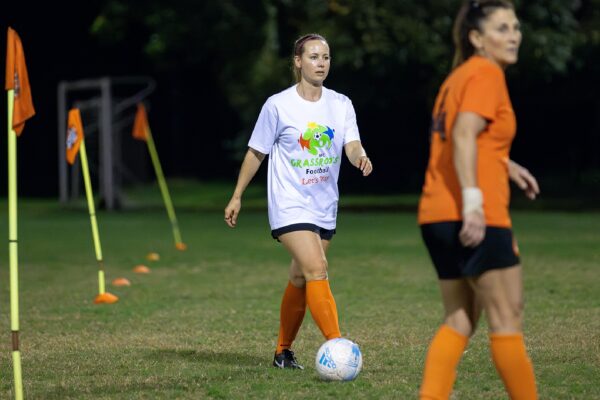
The Phillip Island Breakers Soccer Club have been the beneficiaries of a funding grant from the Victorian Government’s World Game Facilities Fund, upgrading their pavilion at Newhaven Reserve to make it more female friendly.

The club have received around $400,000 in funding from the state government, a significant portion of the $3.8 million the Andrews Government has handed out to 11 community football infrastructure projects since May of this year.

Alongside this, the Bass Coast Shire Council have also financially contributed to the project and played a major role in convincing the government to hand over the funding grant to the club.

“We were selected because of the council’s work; we went to them (Bass Strait Shire Council) and they put the grant application in,” Phillip Island Breakers SC president, Andrea Dempsey, told Soccerscene.

“They were successful last year with another club in the council and they decided to apply for the female friendly facilities at our club because they were needed. It was a thing that we actually had identified well before, that we really needed.”

Under the details of the redevelopments, the club’s changing room space will be expanded considerably, according to Dempsey.

“It will be expanded in a way that will eventually leave the building with four main spaces,” she said.

“We’ll have two big dividable rooms, so we can have two female and two male changerooms with both of them having access to showers and toilets.”

The Phillip Island Breakers SC president is excited for the benefits that are set to coincide with the upgrades, with building set to begin later this year.

“The plan has already been drawn up; Building has to commence by the end of the year – so hopefully in the coming months a bit of work has been done,” she said.

“It’s just so good that we are getting female friendly facilities, we have got more and more girls coming to the club and that was the one thing that we were lacking.

“There wasn’t enough space or very minimal space for the women to change into.

“There was no privacy for the showers for example, it wasn’t female friendly at all. So, hopefully this will allow for more opportunities for women to join the club and feel welcome in an inclusive environment.”

The club itself was founded 27 years ago as an indoor soccer club before transitioning to an outdoor outfit playing its matches in the local Gippsland Soccer League, after moving from the Bayside Soccer League many years ago.

Team ages range from seniors to under 6’s, both boys and girls, with the club hosting over 170 playing members.

According to Dempsey, a push for further upgrades at the club will be pursued in due time to take the club to the next level.

“Yeah we’ll try to (to get more funding for upgrades), everyone always is, aren’t they?

“The next thing we are going to possibly look for is tin shelters on our pitch for those out in the wet weather in winter.

“At the moment we don’t have any protection for teams and those people on the sidelines, so that’s what we will try for next, but for now we are looking forward to the pavilion works.”

Since 2018, the World Game Facilities Fund has invested $13.2 million in 48 football infrastructure projects across Victoria, with an overall value of more than $41 million.

“Better sport and recreation facilities make it easier for Victorians to get active and lead healthy lifestyles,” said Minister for Community Sport, Ros Spence.

“We’re providing clubs with support for really important projects that will make the world of difference for local communities.”

Football Victoria CEO, Kimon Taliadoros, said of the fund: “Football breaks down barriers and brings communities together – we’re delighted to see even more clubs being able to meet community demand through the latest round of the World Game Facilities Fund.”

The next round of applications for the World Game Facilities Fund will be open next month, for more information visit the link here.

Previous ArticleNext Article

Geelong Regional Football Hub vision one step closer to reality

A process five years in the making, the Geelong Regional Football Hub (GRFH) will now build its home at Sutcliffe Reserve in Corio.

A major advancement

The project promises to be a major boost for the football community in Victoria’s west.

But the approval isn’t just about addressing the current issues facing players in and around Geelong (with just one football pitch found per 6,971 people), it symbolises an all-important promise to players, coaches and supporters:

A promise to invest, support and grow.

So now, following an extensive process of potential site assessments and council approvals, Football Victoria (FV) will prepare to lay the physical foundations at Sutcliffe Reserve in Corio – ten minutes away from Geelong CBD.

“This is a brilliant result for the sport in Victoria and the start of something truly exciting for football in Geelong and the surrounding area,” said FV CEO, Dan Birrell, via press release.

But despite the obvious anticipation over site approval, there remains one more bridge to cross to bring this project from blueprint to building block: securing funding.


What is the GRFH?

Beyond a mere community football centre, the GRFH will become a world-class hub for playing opportunities, development pathways and venue for several of FV’s most popular competitions.

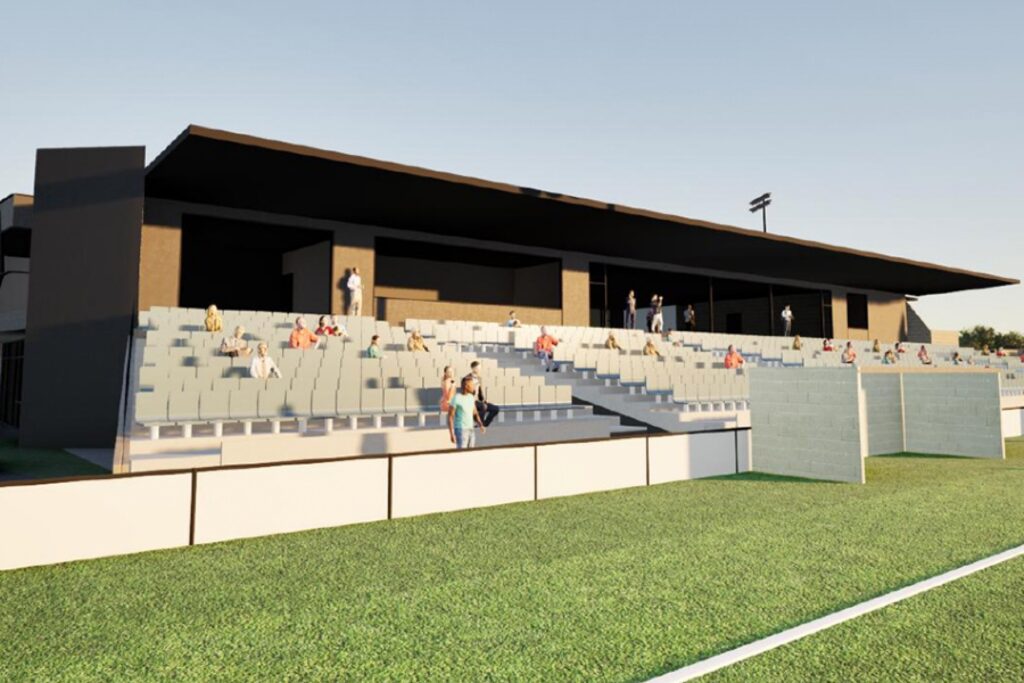
The proposed site will include five pitches, of which two will boast seated stands, as well as two pavilions, social spaces, kitchen and bar areas, media spaces, and facilities for players and match officials.

Such extensive, thorough infrastructure will therefore ensure the site can host an array of competitions for players across the landscape to showcase their talent. From supporting everything from school competitions to NPL VIC Men’s and Women’s games, the GRFH will be a place for player growth, opportunity and community engagement with the beautiful game.

And as Geelong Mayor, Stretch Kontelj, highlighted, the current demand requires investment of this nature as soon as possible.

“With more than 7,370 registered players across the Geelong region, the scale of demand is undeniable. A regional football hub would be genuinely transformational,” Kontelj said via press release.

“It would drive participation across all genders, abilities and levels of the game, strengthen education and development pathways, attract major events and tournaments and deliver lasting social and economic benefits for Geelong and the broader region.

The demand is there. The support is unwavering.

All that remains is the financial backing to bring about real, tangible results for those driving this vision forward.

Football Victoria and VicHealth partner on anti-racism program as community sport data reveals systemic problem

Football Victoria has partnered with the Victorian Health Promotion Foundation to roll out the Set The Standard initiative across the state’s football clubs, in a collaboration that signals a significant shift in how Australia’s most popular club-based sport is approaching racism and cultural exclusion at the grassroots level.

The partnership brings together the state’s peak football governing body and its primary health promotion agency around a shared finding that can no longer be treated as incidental. According to the 2025 report Enhancing the Capacity of Victorian Community Sport to Tackle Racism, 56 per cent of surveyed participants had experienced or witnessed racism in community sport. In a state where football draws participants from some of the most culturally diverse communities in the country, that figure represents a systemic failure the sport can no longer address through conduct policies alone.

Clubs that subscribe to the Set The Standard newsletter will be entered into a draw to win one of three $1,000 vouchers, available for equipment, facility improvements, events or other community initiatives. The incentive is designed to drive early engagement with a program whose ambitions extend well beyond a newsletter subscription.

What the Partnership Signals

Racism in sport has historically been treated as a conduct and governance issue, managed through complaints mechanisms that require incidents to be formally reported and tend to significantly undercount the actual prevalence of harm. VicHealth’s framing of racism as a public health problem repositions the entire conversation.

Experiences of racism are associated with measurable negative health outcomes including anxiety, depression and social withdrawal. When community sport, which governments and health agencies actively promote as a vehicle for physical and mental wellbeing, becomes a source of those same harms, the public health cost is direct and quantifiable.

Resources, not Rhetoric

For Football Victoria, the partnership brings something the governing body cannot provide on its own. VicHealth’s credibility, resources and public health framework give the initiative a foundation that a sporting organisation working alone would struggle to establish. Set The Standard offers clubs practical tools and guidance built around progress rather than perfection, which reflects a realistic understanding of how cultural change works inside volunteer-run community organisations.

The $1,000 vouchers are not a side note. Most community clubs operate on tight margins, depend on volunteer administrators and are already stretched managing growing participation demands. Finding room to invest in cultural development programs on top of everything else is difficult. Providing tangible resources directly addresses that constraint at the point where clubs are most likely to disengage.

The program also arrives at a consequential moment. Football in Victoria is absorbing significant participation growth following the AFC Women’s Asian Cup and sustained increases in junior registrations, bringing new communities into the game in large numbers. The 2025 data suggests the environments those communities are entering are not consistently safe or welcoming. Participation growth and cultural safety work need to move together. A sport that grows larger without becoming more inclusive has not actually improved the experience of the people playing it.

Most Popular Topics

Editor Picks

Send this to a friend