


$1.5 million in fee relief provided to Football NSW Associations and Clubs

To help consolidate losses related to the premature cancellation of the 2021 Winter Football season due to COVID-19, Football NSW has announced $1.5 million in fee relief for its Associations and Clubs.

The Football NSW Board identified the need to provide support to its Associations and Clubs to ensure their ongoing solvency and assist them through these challenging times.

And in spite of the difficult circumstances for all stakeholders involved in the game, Football NSW CEO Stuart Hodge credited the strength of football in coming through previous Covid-enforced lockdowns.

“As we have stated previously, our player numbers can only continue to grow, and football can only remain the most popular participant sport in NSW, if there is sustained financial viability at each tier of the game,” Hodge said.

“The sustainability of a healthy Association and Club framework is fundamental to our continued development and maintaining our capacity to progress and achieve our lofty ambitions.

“With this in mind, and on the recommendation of management, the Board resolved to provide a discount on the Football NSW Capitation Fee for the 2021 Winter season.

Hodge acknowledged the hardworking efforts of each of the Associations and Clubs who have been resilient in the face of the COVID-affected season.

“I want to acknowledge the dedication of our volunteers, administrators, players, referees and coaches that enabled us to still deliver part of a football season,” he said.

“Once again, the Football NSW community has come together to support each other and keep our participants and their families safe, something I feel that’s been truly inspiring.

“Football is a vital part of the lives of our players and other participants, but also vital to our communities.

“Thank you all for your work to keep things going through this period of disruption.”

Football in NSW played a leading role in ensuring the community, and sport as a whole, did their bit in fast tracking a return to sport via the recent NSW Health initiative, ‘Super Sport Sunday’.

“Our collective commitment to a safer community was evident in our recent initiative to offer our facilities as vaccination hubs to the NSW Government,” Hodge said.

“What started as an offer of facilities quickly evolved into a request from NSW Health for football to mobilise its community in certain regions where vaccination rates were desperately needed to be increased.

“Answering the call, we led a campaign for football participants in those regions to get vaccinated and engaged other sports to join as we created a ‘Super Sport Sunday’ for vaccinations at Sydney Olympic Park Authority (SOPA).

“We have since been briefed that the campaign helped set a new single day record of vaccinations at SOPA, with many people wearing the jerseys of their favourite football clubs.

“This is another good example of how, as a code and a football family, we are leaders in our communities and, when we work together, we can achieve great things.”

Previous ArticleNext Article

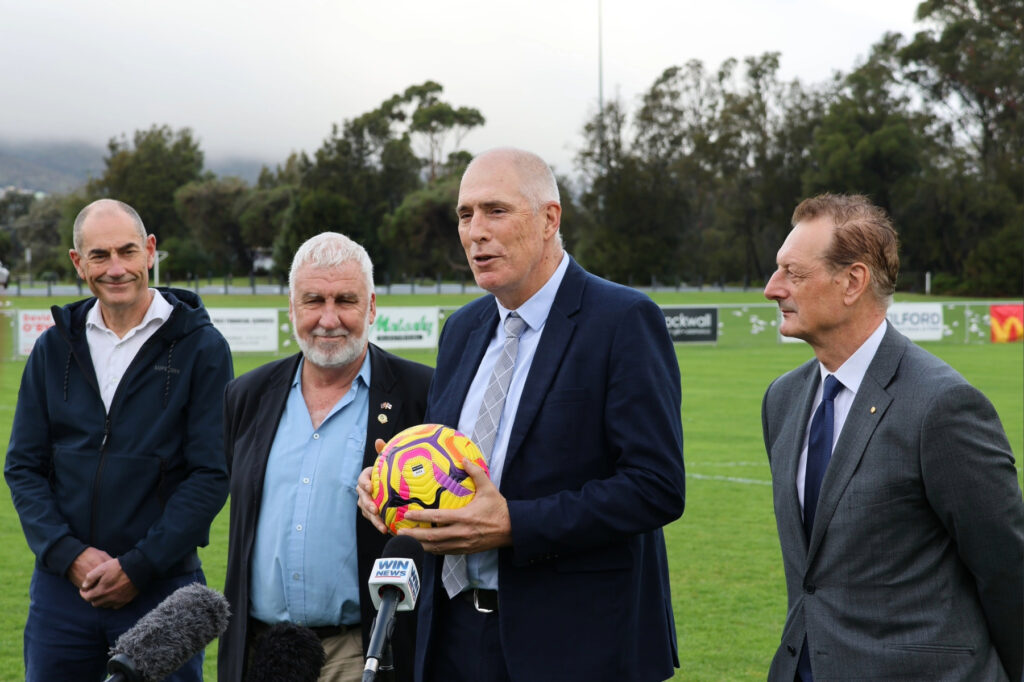
Football NNSW Releases Infrastructure Strategies as Participation Growth Outpaces Facilities

Northern NSW Football has unveiled bespoke infrastructure strategies for each of its seven member zones, providing an evidence-based roadmap for facility investment across the region as continued participation growth exposes critical gaps in the sporting infrastructure available to support it.

The Member Zone Infrastructure Strategies draw on data across participation rates, population growth and existing facility conditions to map what each zone has, what it needs and where investment will have the greatest impact. Identified gaps include drainage, lighting and inclusive changerooms – the foundational infrastructure that determines whether facilities are functional, safe and accessible year-round.

NNSWF Government Relations Manager Gary Fisher said the strategies represented a significant step toward smarter, more targeted investment across the region.

“By bringing together key data on participation, population growth and existing infrastructure, these strategies give us a stronger understanding of where the needs are greatest and where investment will have the most impact,” Fisher said. “Ultimately we want to create more inclusive and accessible environments for everyone involved in the game while building stronger, more sustainable clubs and communities for the future.”

Northern NSW Football has previously noted that participation across the region is at record levels and still rising, with women’s and girls’ football a significant driver of that growth. Infrastructure that was built for a smaller and less diverse participation base is increasingly unable to meet current demand, let alone accommodate future growth.

The strategies are also designed to strengthen NNSWF’s alignment with government funding priorities, providing the evidence base needed to support grant applications and long-term facility planning across all seven zones.

Football Victoria launches inaugural Club State Championships amid World Cup fever

Football Victoria (FV) has unveiled the inaugural Victorian Club State Championships, a new statewide tournament set to transform the winter football calendar and provide a major platform for emerging talent across the state.

Taking place from July 2–5 at The Home of The Matildas, the event will coincide with the FIFA World Cup 2026 period. This alignment a strategic move aimed at capitalising on heightened global football engagement.

The tournament will feature both boys’ and girls’ teams from U9 through to U17 age groups, bringing together clubs from Advanced and Community competitions in a bid to crown Victoria’s best-performing clubs across each division.

A statewide stage for club football

In what shapes as a major addition to the Victorian football landscape, the championships are designed to create a high-level tournament environment outside regular league competition. This offering players valuable exposure to knockout football, elevated match intensity and cross-league competition.

Football Victoria described the event as a celebration of the “strength, depth and talent” within the state’s football ecosystem, while also positioning it as a unique opportunity for clubs to test themselves against opponents they would not typically face throughout the season.

The decision to host the competition at The Home of The Matildas further reinforces FV’s intention to elevate the stature of the event, utilising one of Australia’s premier football facilities as the centrepiece of the tournament.

Creating a World Cup atmosphere in Victoria

FV believes the timing of the championships, running during the FIFA World Cup, will help generate a carnival-like atmosphere around the game at grassroots and pathway level.

Each participating team will play a minimum of four matches, with assistant referees appointed from U12 onwards. Disciplinary outcomes will also carry into regular season records, adding further competitive weight to the tournament structure.

Importantly, academy-only and social teams will not be eligible, reinforcing the event’s focus on recognised club pathways and structured competition.

A new piece in Football Victoria’s long-term strategy

The launch of the Victorian Club State Championships comes as Football Victoria continues to reshape and modernise its competition structures across both elite and community football, with the governing body placing greater emphasis on player development, competitive alignment and statewide engagement initiatives.

For clubs, the tournament presents not only the opportunity to compete for silverware, but also a rare chance to benchmark themselves against the broader Victorian football landscape during one of the sport’s biggest global moments.

With registrations now open, the Victorian Club State Championships could quickly become one of the most anticipated additions to the state football calendar.

Most Popular Topics

Editor Picks

Send this to a friend