
Will Australian football sink or swim in 2020?

A blockbuster calendar provides Australian football with huge opportunities over the next eleven months.

Last week, in what will be music to the ears of new FFA CEO James Johnson, the Olyroos passed a very important test.

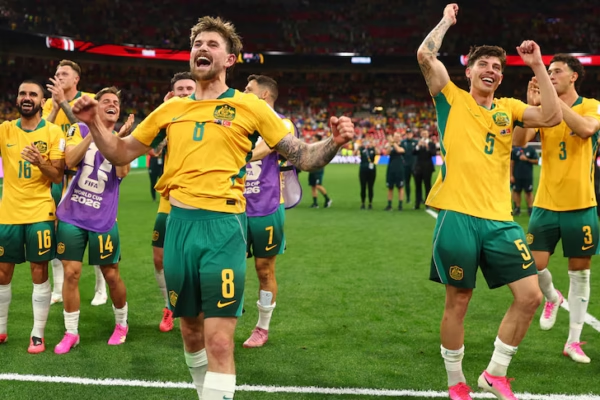
The under-23 national team defeated Uzbekistan in the third-place playoff match at the AFC U-23 Championship, thanks to a solo effort from Nick D’Agostino.

Therefore, for the first time in 12 years, Australia will have a men’s football side competing at the Olympic games in Tokyo.

Discussions have already begun around who will be picked for the tournament, as Graham Arnold can also call up three over-age players for the tournament in late July.

The Copa America which Australia will be a part of this year will also factor into Graham Arnold’s decision making.

The South American continental championship also begins a month before the Olympics and the narrow time-frame between both tournaments poses a lot of questions for the Australian coach.

Will he choose a full-strength squad for the Copa America? Which tournament does he favour? Who will be the over-age players in the Olympic squad? Will the likes of Ryan and Mooy play in both tournaments? Or will their English Premier League clubs’ frown upon that?

These are good headaches to have, with exposure to these tournaments crucial for not only youth development but also to build the profile of Australia’s national teams.

Commercially, the FFA seems to be struggling in recent times with sponsors such as NAB and Caltex ending their partnerships with the governing body.

Participating in worldwide tournaments such as this can only improve the FFA’s situation, as potential sponsors see attractive possibilities.

Whilst the men’s teams may not stand a good chance of placing well in either of these tournaments, the Matildas do.

Unlike the men’s tournament, the women have no age restrictions placed on them at the Olympics, meaning Australia’s top players such as Sam Kerr, Caitlin Foord and Steph Catley are all expected to play.

Australia’s favourite national sporting team playing at the Olympics in a good time zone for Australian viewers, should lead to considerable corporate sponsorship interest.

But let’s not get ahead of ourselves.

The women’s national team are yet to qualify for the Olympics, with qualifiers for the tournament set to be held in Sydney next week.

The qualifiers were under threat due to the outbreak of the coronavirus, which was the reason the games were shifted to Sydney in the first place.

The qualifying tournament will go ahead next week, which will boost the coffers at FFA HQ, with games to be played at Campbelltown and Bankwest Stadium.

However, of greater focus to the FFA is the successful hosting of the tournament on such short notice and impressing FIFA in the year the host of the 2023 Women’s World Cup will be announced.

The announcement of the host for 2023 is due in June, with Japan, Colombia and Brazil vying for the honour (alongside Australia and New Zealand’s co-bid).

If the tournament hosting rights were to be won by Australia and New Zealand, FFA would be rubbing their hands together with glee at the long-term benefits that would have on the sport.

But first, Chinese Taipei at home on Thursday and hopefully one step closer to having both male and female teams at the Olympic Games.

And I haven’t even mentioned the road to Qatar 2022…

Previous ArticleNext Article

Female Football Week kicks off across Northern NSW

Female Football Week has officially begun across Northern NSW, with a program of gala days, networking events and awards ceremonies running until Sunday May 17, marking a ten-day celebration that organisers say reflects both the growth of women’s football in the region and the work still required to sustain it.

The national initiative, now a fixture on the football calendar, provides a dedicated period of visibility for female participants across all levels of the game from players, coaches, referees to volunteers, whose contributions have historically received less recognition than their male counterparts.

NNSWF Participation and Women’s Football Officer Serena Carter said the week offered something for everyone connected to women’s football in the region.

“Female Football Week provides a fantastic chance to highlight the dedication and skill of female players, coaches, referees and volunteers across the northern NSW community,” Carter said. “There’s something for everyone to enjoy, from grassroots participants to elite competitors.”

Women’s football in northern NSW spans remote and regional communities where clubs operate on limited resources, alongside more established metropolitan programs with clearer development pathways. Female Football Week creates a moment of shared recognition across that spectrum and acknowledges the role volunteers play, from running the canteen to progressing through the pathway.

Northern NSW Football has recorded some of its strongest participation numbers in women’s and girls’ football in recent seasons, a trend that has placed increasing pressure on clubs and facilities to keep pace. The week’s events offer clubs an opportunity to showcase their commitment to diversity and inclusion at a time when that commitment is being tested by growth.

Female Referee Mentor Program backed by Football Australia

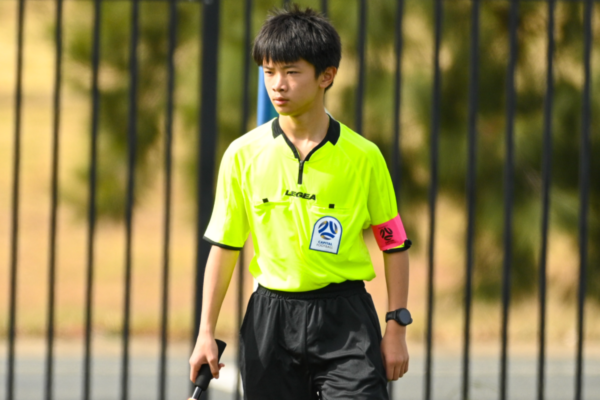
Football Australia (FA) launched the program last week, aiming to champion the next generation of female referees through connections with experienced officials.

Investing in the future

Backed with investment from the Australian Government’s ‘Play Our Way’ grant, FA’s Ref Our Game framework will pair future referees with current and former A-League officials.

Through one-on-one mentorship, development opportunities and a network of experienced professionals, aspiring female referees will have unique insights into match officiating.

“Football Australia has always been a leader in inclusion, setting a global standard for female leadership and development,” said Football Australia CEO, Martin Kugeler, via press release.

“This program reflects a strong commitment to building a more inclusive and sustainable officiating pathway and creating a meaningful connections, increasing confidence and ensuring talented female referees feel supported to stay in the game.”

Furthermore, with the launch coinciding with Female Football Week (running from May 8 to May 18), the program represents a wider drive in Australia’s football landscape to become inclusive and supportive.


About the program

Focused on future referees within the 18-26 age bracket, the program will give participants a deep understanding of match officiating and equip them with both confidence and expertise.

Each participant will benefit from six mentor sessions, which will include individual feedback, guidance and insights into the life of a referee in elite sport.

Combining leadership, communication and a real sense of belonging, the program promises to nurture new female referees and, as a result, ensure football remains a sport in which men and women can participate side-by-side.

“The Albanese Government’s $200 million Play Our Way program is the most significant commitment ever to women and girls sporting programs and facilities and it’s making a real difference,” explained Minister for Sport, Anika Wells.

“We want to see more girls and women involved in sport at every level and supporting programs like this helps make that happen.”

Indeed, programs of this nature align ambition, professional networks, and a vision for improving the landscape.

This is what the industry needs to ensure long-term inclusivity and cohesion for the next generation.

Most Popular Topics

Editor Picks

Send this to a friend