Soccerscene the only online publication dedicated to the Australian and international football industry. It serves as a practical guide for those involved in the business of running a football club and bringing readers up-to-date research and development across all football matters providing insights, discussion and information related to topics that matter.
Why an Australian football Netflix series is needed
Netflix boast just under 200 million subscribers worldwide and have released several sports documentaries over the last few years. However, we are yet to see an Australian football Netflix series – an opportunity that should be taken advantage of.
There is a market for these types of documentaries as Netflix is not the only streaming service that features sport docuseries. Amazon Prime has produced also produced documentaries on Manchester City and Tottenham Hotspur.
One of the most popular football docuseries has been Netflix’s Sunderland ‘Til I Die. The show which provided a behind the scenes view of the club was one of the most watched programs on Netflix in the UK during the week of the release of the second season.
Sunderland has received global recognition off the back of the popularity of the show.
Stewart Donald, owner and former chairman of Sunderland told ChronicleLive that there are lots of reasons why the documentary is good for the club.
“My initial thought with it was, there aren’t many football clubs that can have a global brand, but if you’ve got a Netflix documentary and it goes right, you can get that out to the world and maybe you might get a few people who come along and get emotionally involved in Sunderland who otherwise wouldn’t have,” he said.
“If our name goes out to 20 or 30 million people on Netflix, or however many it might be, that can only be good for the club.”
There are several possibilities for an Australian football docuseries. The show could follow a single A-League club’s season, in the same vein to the Sunderland or Manchester City programs.
Other documentaries have focused on a season of a series or championship as a whole. Netflix’s Formula 1 docuseries Drive to Survive involves several different teams and features a different storyline each episode.
One million households streamed Drive to Survive within the first 28 days of season two’s release according to research agency Digital-i.
An A-League version of this could cover the biggest storylines and moments of the season.
Documentaries have also focused on the national team of a sporing organisation such as Amazon Prime’s The Test which documents the Australian cricket team’s redemption following the ball tampering scandal in 2018.
A series that follows the qualification process of an Australian team for a FIFA World Cup would be a particularly interesting documentary series given the high stakes involved.
The exposure gained from an Australian football Netflix series could be a great opportunity to either introduce people to Australian football or reinvigorate their love for the game.
Drive to Survive has seen an increase an interest for the sport in the US, which is not a traditional market for Formula 1.
Earlier this year Renault Formula 1 Driver Daniel Ricciardo appeared on The Daily Show with Trevor Noah where he discussed the impact that Drive to Survive has had in the US.
“I definitely feel F1 is becoming much more of a thing here in the States. Drive to Survive put it on the map,” he said.
“I spend a bit of time in the States, and up until a year ago, not really anyone would say ‘Hi’ to me – not in a bad way, but they wouldn’t recognise me for being an F1 driver.
“And now it’s all: ‘We saw you on Netflix, it was great, Drive to Survive.’ We wear helmets, so not many people can see our faces a lot of the time.
Given the younger demographic of streaming service users, a docuseries could create a new generation of fans for football in Australia. Depending on the success of the series, it could even inspire more young Australians to play the world game.
At an event for 188Bet in March 2020, F1’s Managing Director of Motorsport Ross Brawn, said that the Netflix series had seen positive impacts for the sport.
“What we’ve discovered is it’s been very appealing to the non race fan: in fact it turned them into race fans,” Brawn said.
“Some of the promoters in the past season have said they’ve definitely measured the increase in interest in F1 that has come from the Netflix series.
“And while Netflix in itself wasn’t for us a hugely profitable venture, in terms of giving greater coverage for F1, it’s been fantastic.
While Football Federation Australia, the A-League and its clubs would not be able to demand the millions of dollars that other clubs and organisations are paid for their participation in a documentary, it could provide a cash boost for the organisations.
Ryan Reynolds has partnered with fellow actor Rob McElhenney to purchase Welsh soccer club Wrexham AFC, who compete in the fifth tier of English football, the National League.
Part of Reynolds and McElhenney’s takeover bid involves plans for a documentary series that follows the events of the team.
Bloomberg spoke to Ampere Analysis analyst Richard Broughton, who said that it would not be unreasonable for a streaming service to pay several hundred thousand pounds per hour for the broadcast rights to a show.
An Australian football Netflix series would be extremely beneficial for the sport in this country.
Football can't police its way to a better future. It needs to build a culture of belonging, accountability and membership that lasts beyond any one administration.
Security manages risk. Membership builds culture. Football Victoria’s greatest legacy won’t be another policy – it will be a connected football community that outlasts today’s administrators.
Every time crowd trouble makes headlines, football tends to reach for the same solutions: more police, more security, stronger sanctions and another statement condemning the behaviour.
But football membership could offer another layer of accountability by creating a stronger relationship between supporters, their clubs and the game.
The recent South Melbourne and Preston Lions fixture has once again placed supporter behaviour under the spotlight. The match finished 0-0, but the football was overshadowed by the actions of a small group of supporters. Football Victoria condemned the behaviour and launched an investigation, while Preston Lions also condemned the conduct and indicated it would cooperate with authorities.
Those responses are necessary. The overwhelming majority of supporters attend football to support their clubs and should be able to do so in a safe and welcoming environment.
But incidents such as this should force a bigger conversation. Instead of continually asking how we punish those responsible, perhaps we should be asking how we build a football environment where accountability is embedded into the relationship between the supporter, the club and the game.
England confronted this challenge more than three decades ago.
Following the dark era of football hooliganism throughout the 1970s and 1980s, English football underwent a fundamental transformation. All-seater stadiums, CCTV, intelligence-led policing, professional stewarding and Football Banning Orders all played important roles in changing the match day environment.
But one principle sits underneath many of those reforms: knowing who your supporters are.
Football became less anonymous, and accountability became more achievable.
Football Membership Makes Accountability Possible
A membership card alone will never eradicate hooliganism. England did not solve football violence simply by introducing membership; it built an integrated system of policing, stadium management, intelligence, sanctions and supporter engagement.
Football membership can, however, strengthen that system.
When someone becomes a member, they are no longer simply an anonymous person purchasing a ticket. They have a relationship with the club. In Australia, that relationship can be even stronger because club memberships commonly provide prepaid match admission and voting rights.
That creates both privileges and responsibilities.
If a member repeatedly breaches a club’s code of conduct, there should be meaningful consequences beyond being removed from one match. Membership can be suspended, voting rights revoked and access to tickets, digital services and other member benefits restricted where appropriate.
The objective isn’t to punish supporters collectively. It is to give clubs and governing bodies the tools to identify, manage and sanction individuals while protecting the overwhelming majority who simply want to support their team.
Membership doesn’t replace policing. It strengthens accountability.
Australian Football Already Has the Foundation
Australian football does not need to start from scratch.
Our existing club membership structures already provide a direct relationship between supporter and club. Members can have voting rights, prepaid gate admission and a formal stake in the organisation they support.
The problem is that the relationship often ends at the turnstile.
Football Victoria has an opportunity to take that existing foundation and build something much bigger: a connected football membership ecosystem across Victorian football.
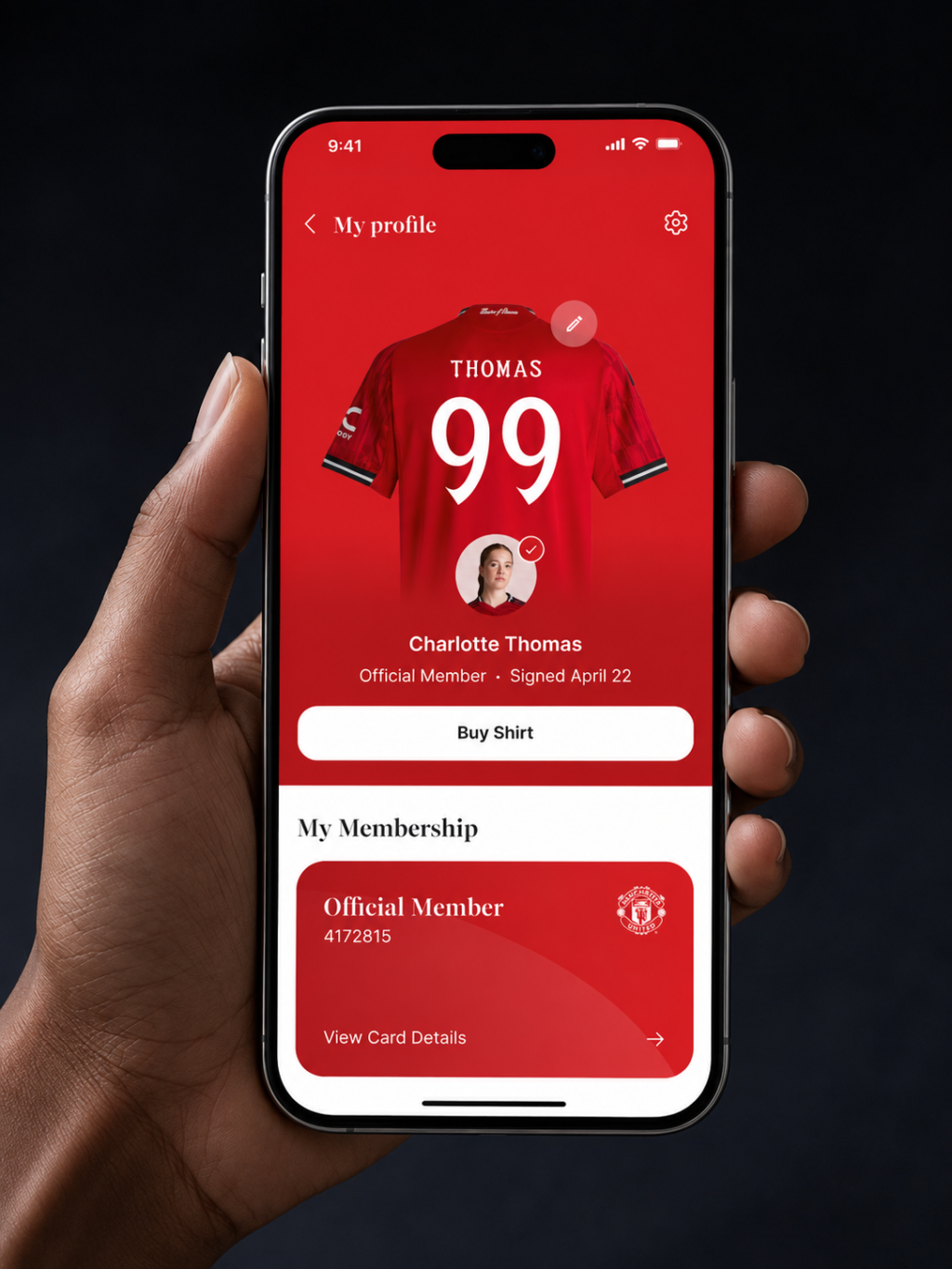
Imagine every supporter receiving a Football Victoria Membership ID linked to their club membership, ticket purchases, attendance, volunteer history, coaching and referee accreditation, junior participation and other interactions with the game.
That identity could become the gateway to the entire football experience.
Visual reference: Manchester United digital membership platform. What could a connected Victorian football membership experience look like?
One Membership. One Platform. One Football Community.
A centrally managed digital platform could provide members with access to live-streamed matches, club news, fixtures, results, exclusive content, merchandise, hospitality, voting, community programs and other services.
For clubs, it would create a direct and trusted relationship with their supporters.
For Football Victoria, it would create a statewide football network. For supporters, football membership becomes more than an annual transaction; it becomes their digital identity within the game.
This is where the proposal moves beyond supporter behaviour and into commercial sustainability.
Football Membership Is a Commercial Asset
The biggest misconception in Australian football is that membership is simply a marketing product.
It is not.
Football membership can become one of the game’s greatest commercial assets.
Every club talks about attracting sponsors, but sponsors increasingly want more than a logo on a shirt or perimeter board. They want access to audiences, measurable engagement and data.
A club with a strong membership base can demonstrate a genuine, identifiable community. It can communicate directly with supporters, promote merchandise and hospitality, measure engagement and provide sponsors with a more compelling proposition.
Now scale that across Victorian football.
Club websites, live streams, fixture pages, newsletters, digital memberships and content platforms collectively become a significant commercial inventory.
Football Victoria could develop statewide commercial partnerships across that network while allowing clubs to maintain their existing local relationships.
Every live stream, digital banner, fixture page, newsletter and member portal becomes valuable commercial inventory.
Revenue generated through that central digital ecosystem should be transparently redistributed across the game.
Football Victoria generates new commercial income. Participating clubs receive a share based on an agreed model that could consider active memberships, digital engagement, live-stream audiences and commercial performance.
That changes the economics.
Clubs are no longer operating entirely as individual commercial islands. They become part of a larger football marketplace where growth in membership and engagement creates value for the entire game.
Building Football’s Digital Infrastructure
The opportunity isn’t simply another membership database.
It is football infrastructure.
Imagine a single platform connecting club memberships, voting rights, match admission, live streaming, club news, supporter communications, merchandise and participation across the state.
It could also give Football Victoria a much clearer picture of the football community.
Not just registered players, but members, supporters, volunteers, coaches, referees and families actively engaged with clubs.
That data matters.
When football is competing for facilities, funding and political attention, credible evidence of community demand is far more powerful than assumptions or isolated attendance figures.
A connected football membership system could give policymakers a clearer understanding of the people behind the game and the scale of the community being served.
The South Melbourne–Preston Fixture Should Be a Catalyst
The recent fixture should not simply become another disciplinary matter that disappears once sanctions are handed down.
It should prompt a broader examination of whether Victorian football has the systems required to create stronger supporter accountability.
There is a legitimate place for security, policing, stewarding and sanctions. But these should sit within a broader framework that connects clubs with their members and gives supporters a genuine stake in the culture they help create.
The goal should not be to turn football into a sterile environment. Passion is one of the game’s greatest assets.
The goal is to protect passionate support while making it increasingly difficult for a small minority to hijack the experience for everyone else.
Football membership can be part of that solution.
A Legacy Beyond Today’s Administrators
Football administrators often ask themselves how they will be remembered.
Will it be another strategic plan? Another governance review? Another infrastructure announcement?
Those achievements matter, but systems create legacies.
The administrators who transformed English football are not remembered simply because they installed CCTV or introduced stronger sanctions. They are remembered because they helped fundamentally change how football operated.
Football Victoria has the same opportunity.
Imagine being the administration that built Australia’s first integrated football membership ecosystem: one that strengthens supporter accountability, creates recurring commercial opportunities for clubs, provides government with credible participation data, increases sponsorship value and connects supporters with their clubs through one trusted platform.
That is a legacy.
Football doesn’t need another reactive policy after the next crowd incident. It needs infrastructure—not just concrete and steel, but digital, commercial and community infrastructure capable of supporting the game for decades.
Because the greatest asset in football isn’t the grandstand, the sponsor or even the competition.
It is the people who choose to belong.
If Victorian football has the courage to transform football membership from a ticketing product into the foundation of accountability, community and commercial growth, it can do more than respond to the next incident.
It can change the way football is experienced, governed and commercially sustained for generations.
History shows us that football doesn’t change after one incident.
It changes when leaders have the courage to build systems that make the next one less likely to happen.
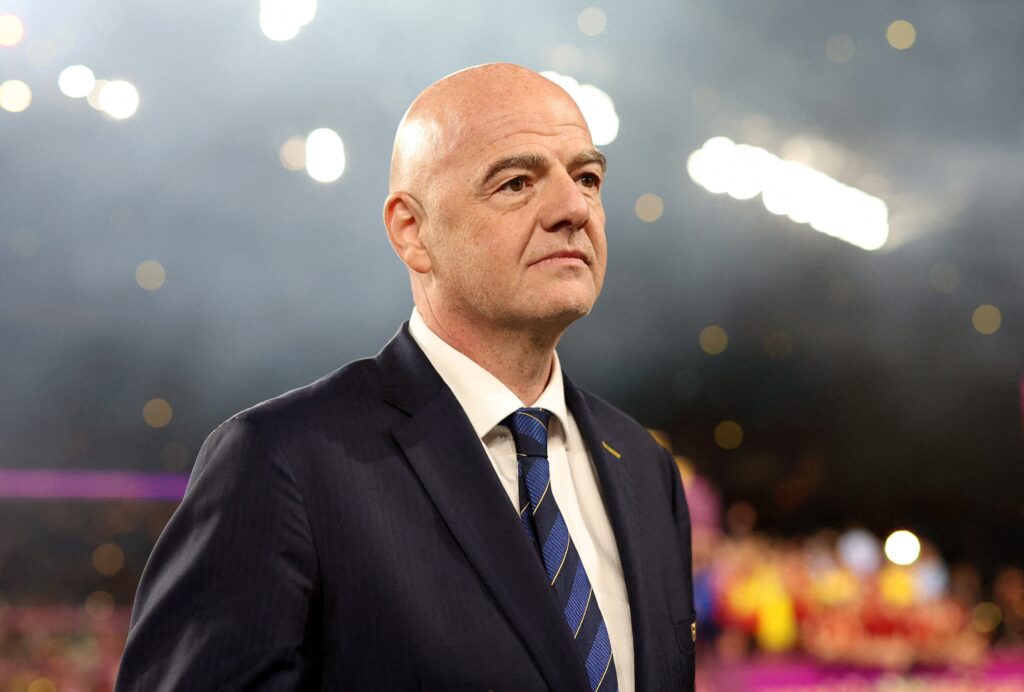
Gianni Infantino was never supposed to become football’s all-powerful figure. Yet he emerged from the chaos of FIFA’s 2015 corruption crisis. He was UEFA’s general secretary and was a close friend of Michel Platini. The crisis exposed the corruption and reckless behaviour at the highest levels of FIFA. Heads rolled. Careers ended. Trust in football’s global governing body was shattered.
In February 2016, Infantino won the FIFA presidency. He promised to rebuild trust. Nine years later, the question is no longer whether Infantino has transformed FIFA. The more uncomfortable question is what he has transformed it into.
His expansion of the World Cup from 32 to 48 teams was a masterstroke for broadcast revenue. FIFA’s cut of ticket sales rose from 10 to 30%, and FIFA’s commercial power has exploded.
FIFA’s revenues are expected to reach $19.5 billion ($14 billion USD) during the next four-year cycle, while Infantino has repeatedly strengthened his position among the 211 national associations that ultimately decide who runs world football.
His political survival has become almost as impressive as FIFA’s financial growth, and that is where the real story begins.
FIFA is richer than ever. So why does football feel short-changed?
The numbers are staggering. FIFA expects to generate at least $18 billion ($13 billion USD) in revenue across the 2019–2026 four-year cycle. The inaugural expanded Club World Cup alone added close to $3 billion ($2 billion USD) to FIFA’s revenue.
That is an extraordinary amount of money for a governing body whose purpose is to develop football across the world. FIFA has always maintained that it is a non-profit organisation and that much of its revenue is reinvested into football. My biggest issue is that the math doesn’t line up.
FIFA says its Forward program will reach $3.75 billion ($2.7 billion USD) during the 2027–30 cycle. That money helps fund the operations and development of FIFA’s 211 member associations. On a simple division, that works out to roughly $4.4 million per association per year.
For smaller football nations, that can be transformational. For established football nations carrying enormous professional, grassroots and infrastructure costs, the picture is very different.
Take Football Australia, which reportedly recorded a $15.4 million loss in its last financial year. Of FIFA’s projected revenue, 19% will be earmarked for member associations.
FIFA obviously has major tournament costs, employees, administration and other expenses. But its reserves tell another story. Across the last two cycles, FIFA’s predicted increase in reserves was approximately $139 million ($100 million USD).
In reality, it added approximately $3.3 billion ($2.4 billion USD). Member associations aren’t getting the funding they need. How much reserve is needed for a non-profit? But this is where politics comes into play.
Top footballing nations such as Brazil, France and England get one vote. But so do governing bodies representing some of the smallest footballing nations.
Their financial contributions to FIFA are worlds apart, but their political weight is the same. Infantino knows that.
The price of supporting Infantino
Infantino’s salary in 2025 reached roughly $8.3 million ($6 million USD). Already more than well compensated, the idea then came to create the FIFA Forward Enterprise proposal. The plan would have created a commercial subsidiary capable of selling a stake in FIFA’s commercial operations to outside investors.
It was eventually withdrawn after public backlash from UEFA and CONCACAF, with the former threatening to boycott the tournament. Other confederations such as the AFC stopped short of rejecting the proposal publicly but expressed concern. Infantino reportedly stood to receive approximately $41 million ($30 million USD) from the transaction.
That is the point at which questions about FIFA’s commercial ambitions became questions about governance. Why should the president of football’s global governing body personally benefit from a commercial transaction involving FIFA’s most valuable assets?
Even if the transaction could be commercially justified, the optics were extraordinary. Therefore, UEFA’s opposition plays a critical role. UEFA has now taken its battle with Infantino beyond political disagreement.
It has decided to take the legal route. UEFA has issued documents in New York and Florida seeking criminal mismanagement tied to FFE. It is far too early to know whether FIFA or Infantino himself could face penalties. One of football’s most powerful confederations is openly challenging FIFA’s president. That does not mean UEFA can remove him, and that is the problem.
Infantino is wounded. But re-election is very possible
UEFA is openly at war with Infantino, and with Italy the latest to withdraw its support for the president, there is pressure on his candidacy at the March elections. Potential rivals could emerge with UEFA and potentially CONCACAF support.
But none of that guarantees Infantino’s defeat. Because the election is not decided by UEFA. It is decided by FIFA’s 211 member associations.
Major players within the AFC, including Qatar and Saudi Arabia, have not necessarily aligned with UEFA’s position on FIFA and with Saudi Arabia set to host the 2034 World Cup, while discussions around future World Cup hosting continue. The relationships between FIFA and powerful Asian associations will remain politically significant. Infantino only requires 106 votes for re-election.
Infantino has spent years building relationships with the associations that hold them. This is not about whether every association believes Infantino is the perfect president. It is about whether enough associations believe FIFA under Infantino delivers more for them than FIFA without him.
That is a very different question, and it is why I believe Infantino remains the favourite heading into March 2027.
The real losers are the fans
This is the part that gets lost in the politics. The fans and football supporters did not ask for FIFA to become a financial empire. They did not ask for endless expansion to the World Cup. They did not ask for more commercial complexity or for the organisation to sell its stakes. Fans did not ask for football’s governing body to become a battleground between federations and investors.
Fans want football, meaningful competitions and affordable prices.
They want trustworthy leadership, and they want to believe that the people running the game actually understand that football belongs to its supporters. Previous administrations were plagued by scandals, allegations of corruption and questions about governance. Infantino inherited that culture. The concern is that instead of dismantling the political machine, he has become exceptionally good at operating it. FIFA generates billions while its president earns millions.
Confederations and national associations fight over money and political influence.
Supporters are increasingly left paying the price.
That is the greatest contradiction in world football.
The danger is that FIFA becomes so financially essential to national associations that challenging its leadership becomes too costly and risky for confederations who hold the majority of the votes.
That is not healthy. A governing body should be accountable to football. Infantino’s greatest achievement may ultimately be that he has made himself incredibly difficult to replace. He has placed himself in hot water with his action, but if he wins again in 2027, the message for modern football is clear. The power isn’t with the people, with the fans. It’s in the votes and politics.